Artwork
Disparate conocido (Well-Known Folly)
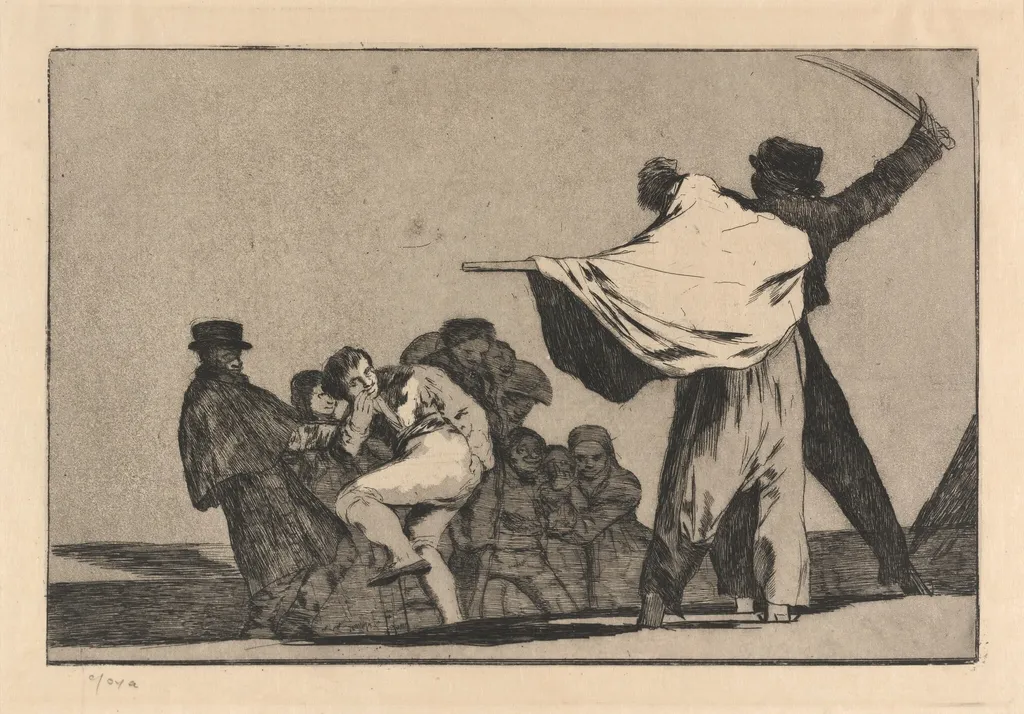
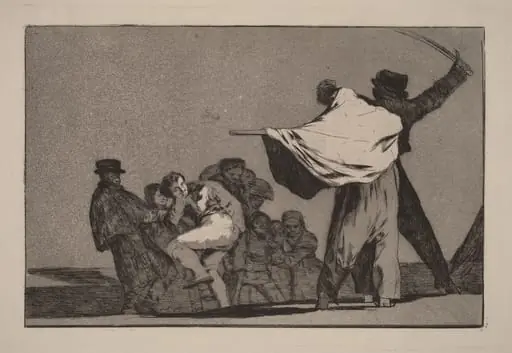
Disparate conocido (Well-Known Folly) is an ink print by the Romanticist artist Francisco Goya. It dates from 1816 and is held in the collection of the National Gallery of Art.
About this work
Overview
These prints were not published in Goya’s lifetime and remained private, reflecting his introspective and critical view of human nature.
Created in 1816, *Disparate conocido (Well-Known Folly)* is one of the etchings from Francisco Goya’s *Disparates* series, a group of prints made during his later years. Executed in etching and burnished aquatint, the work belongs to a body of images that resist straightforward interpretation, instead presenting surreal, often unsettling scenes. These prints were not published in Goya’s lifetime and remained private, reflecting his introspective and critical view of human nature.
Subject & Meaning
The scene depicts a man in light clothing being forcibly dragged by a group of shadowy figures, while another figure, cloaked in dark attire and holding a sword, observes from the periphery. The obscured faces and ambiguous actions suggest a critique of collective violence or social conformity. The title, implying a familiar absurdity, hints at the normalization of cruelty or irrationality within society, a recurring theme in Goya’s late work.
Technique & Style
Goya employed etching and burnished aquatint to achieve rich tonal contrasts and a sense of atmospheric unease. The burnished areas create soft, smoky gradients, particularly in the gray background, which isolates the figures in a void-like space. The rough, expressive lines convey agitation, while the lack of detailed facial features universalizes the figures, transforming them into archetypes rather than individuals.
History & Provenance
The *Disparates* series was produced between 1815 and 1823, during Goya’s self-imposed exile from public life following political repression in Spain. These prints were never officially published; they remained in his possession until after his death. The plates were later acquired by the Royal Academy of San Fernando and eventually entered the collection of the Prado Museum, where they are now preserved as a testament to his private artistic reckoning.
Context
Goya created these works amid the collapse of liberal reforms in Spain and the restoration of absolutist rule under Ferdinand VII. The violence and absurdity in *Disparate conocido* mirror the disillusionment of an era marked by censorship, repression, and the erosion of Enlightenment ideals. His graphic work became a private archive of moral inquiry, distinct from his public commissions.
Legacy
Though unseen in his lifetime, the *Disparates* series profoundly influenced later artists grappling with psychological depth and social critique. Goya’s use of printmaking to explore inner turmoil and collective irrationality prefigured modernist concerns with alienation and the subconscious. The series is now regarded as a pivotal bridge between traditional printmaking and the expressive potential of 20th-century graphic art.
Artist & collection
Artist
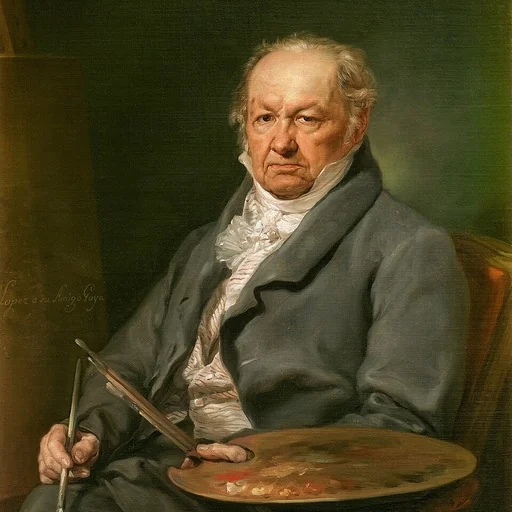
Francisco José de Goya y Lucientes (; Spanish: ; 30 March 1746 – 16 April 1828) was a Spanish romantic painter and printmaker.

 Disparate conocido (Well-Known Folly)
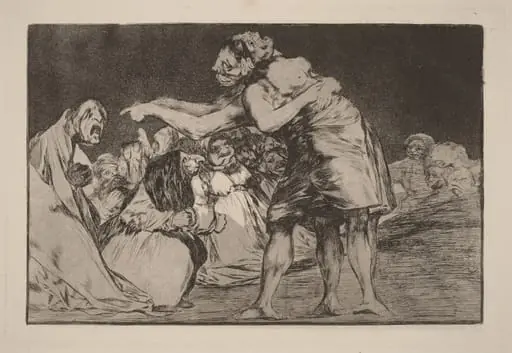 Disparate desordenado (Disorderly Folly)
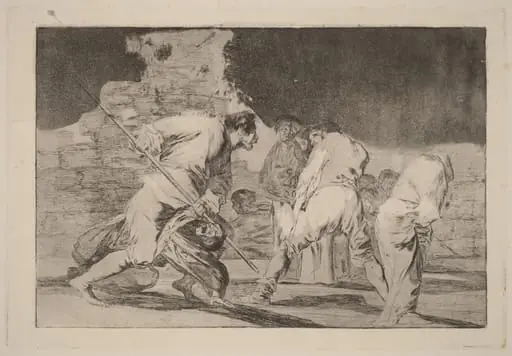 Disparate furioso (Furious Folly)
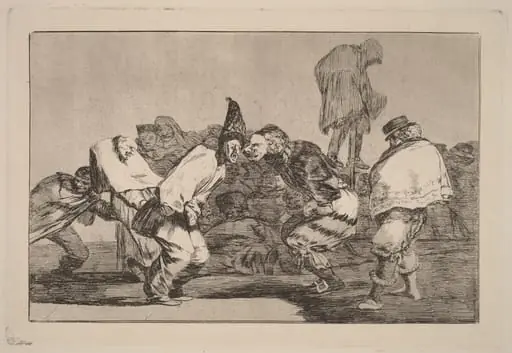 Disparate de Carnabal (Carnival Folly)
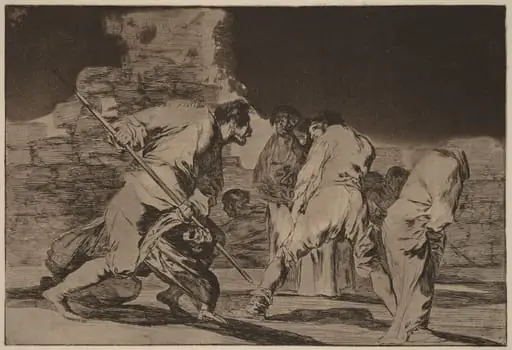 Disparate furioso (Furious Folly)
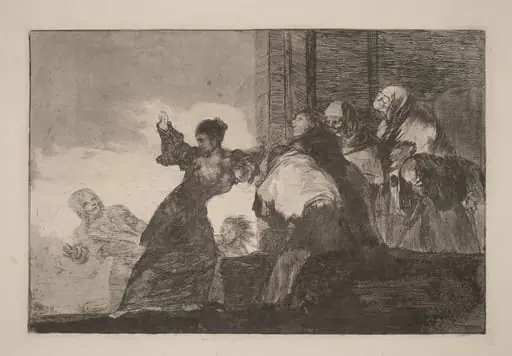 Disparate pobre (Poor Folly)
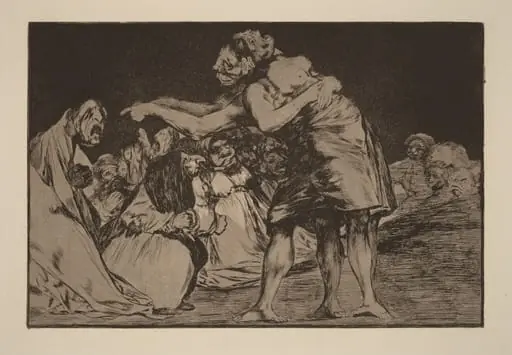 Disparate desordenado (Disorderly Folly)
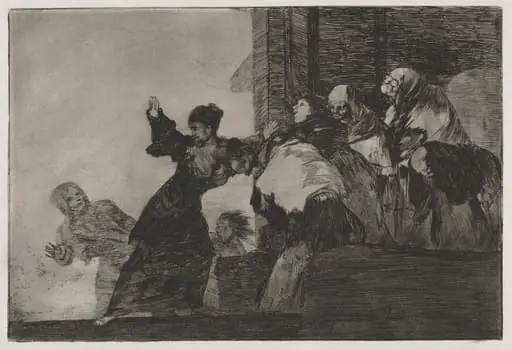 The Proverbs: Poor Folly
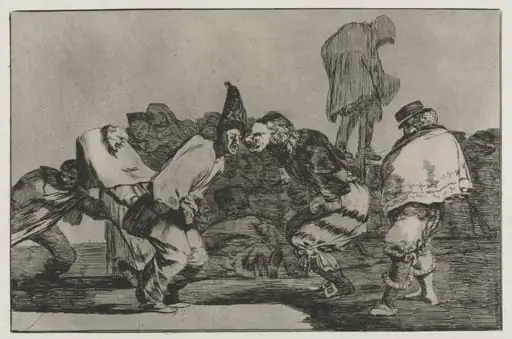 The Proverbs: Carnival Folly
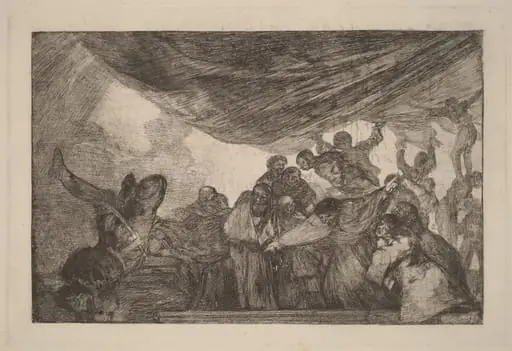 Disparate claro (Clear Folly)
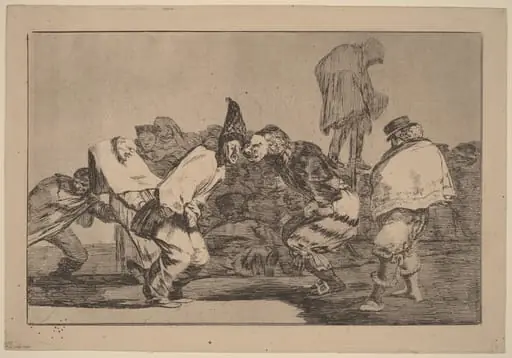 Disparate de Carnabal (Carnival Folly)
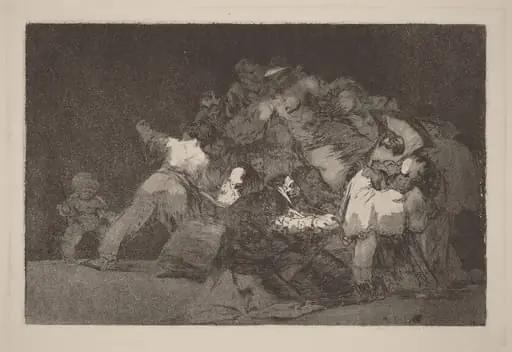 Disparate general (General Folly)