Artwork
Old Man on a Swing
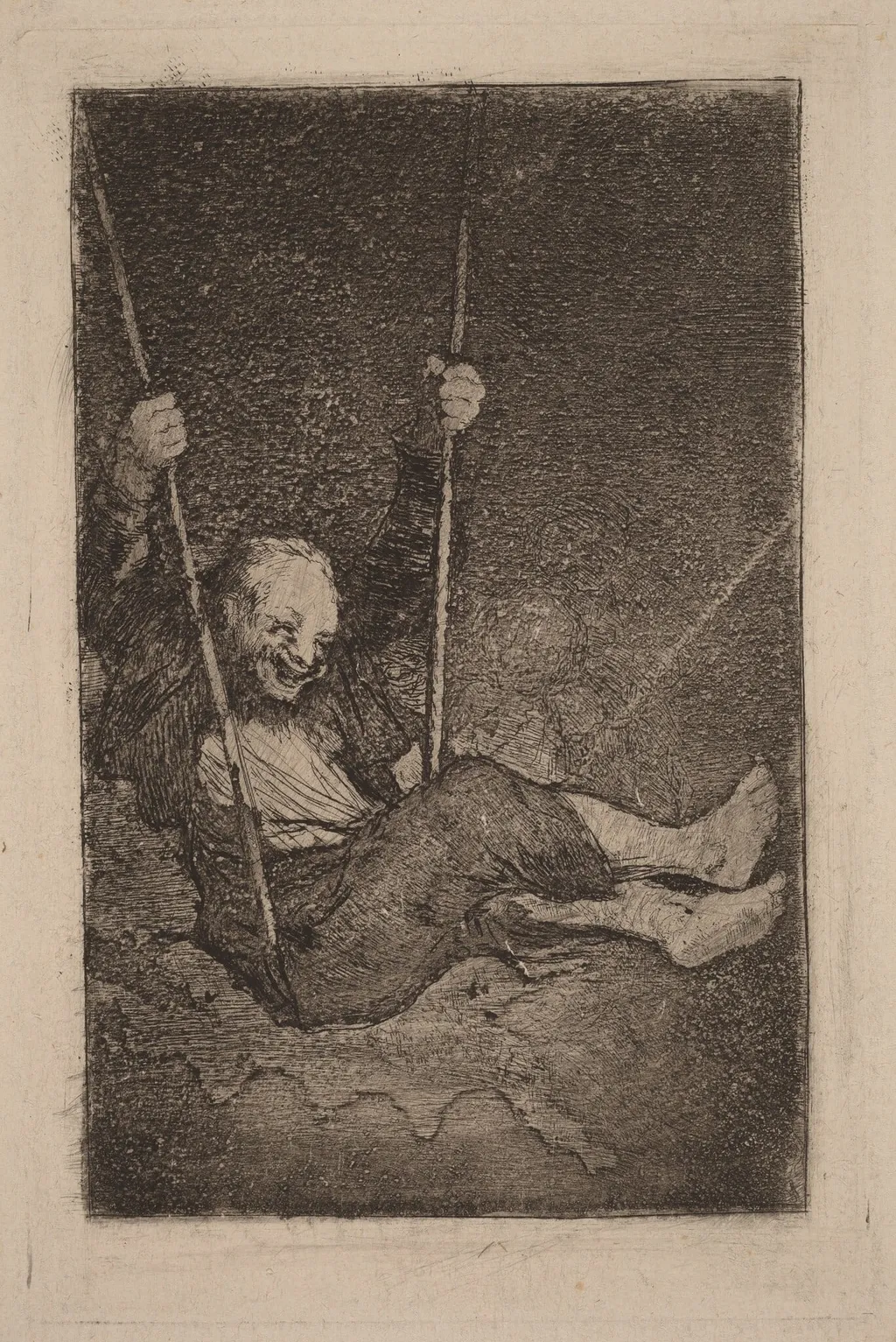
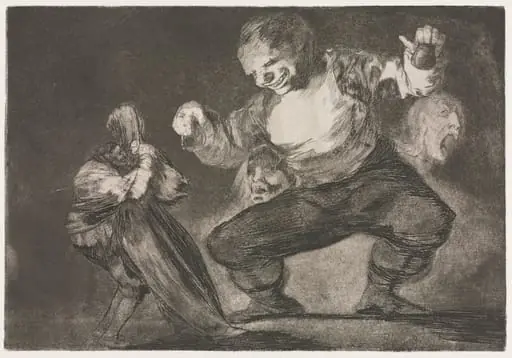
Old Man on a Swing is an ink print by the Romanticist artist Francisco Goya. It dates from 1827 and is held in the collection of the National Gallery of Art.
About this work
Overview
Created around 1827, this etching by Francisco Goya combines burnished aquatint and lavis on heavy laid paper. Though printed posthumously in 1859 for John Saville Lumley, the work originates from Goya’s final years in Bordeaux. It belongs to a series of intimate, experimental prints made after his retreat from public life, reflecting a personal engagement with solitude and the passage of time.
Subject & Meaning
The image depicts an elderly man swinging freely, his expression open and unburdened. Unlike Goya’s darker late works, this scene conveys a quiet, almost whimsical freedom. The figure’s simple attire and unguarded joy suggest a retreat from societal weight, possibly symbolizing a personal release from the anxieties of aging, illness, or political disillusionment that marked his later years.
Technique & Style
The loose, expressive lines and muted ink washes create a sense of movement and lightness, contrasting with the solidity of the figure.
Goya employed etching with burnished aquatint and lavis to achieve soft tonal gradients and atmospheric depth. The loose, expressive lines and muted ink washes create a sense of movement and lightness, contrasting with the solidity of the figure. The simplicity of composition belies technical mastery—each stroke is deliberate, yet unforced, revealing a late style that prioritized emotional resonance over detail.
History & Provenance
The print was produced in Goya’s final years, likely during his exile in France. It remained unpublished until 1859, when the Calcografia Nacional in Madrid issued it as part of a posthumous collection commissioned by John Saville Lumley, a British collector with ties to Spanish art. Its delayed publication reflects the private nature of these works, intended for personal reflection rather than public display.
Context
Made during a period of political repression and personal decline in Spain, Goya’s late prints diverged from official commissions. They turned inward, exploring vulnerability, memory, and the absurd. This etching, with its uncharacteristic levity, may reflect a private defiance—a momentary escape from the grim realities of his time, both personal and national.
Legacy
Though not widely exhibited in Goya’s lifetime, this work has come to represent the emotional complexity of his final output. Its understated humanity and technical innovation influenced later generations of printmakers who sought to convey psychological depth through minimal means. It stands as a quiet testament to the artist’s enduring capacity for observation, even in solitude.
Artist & collection
Artist
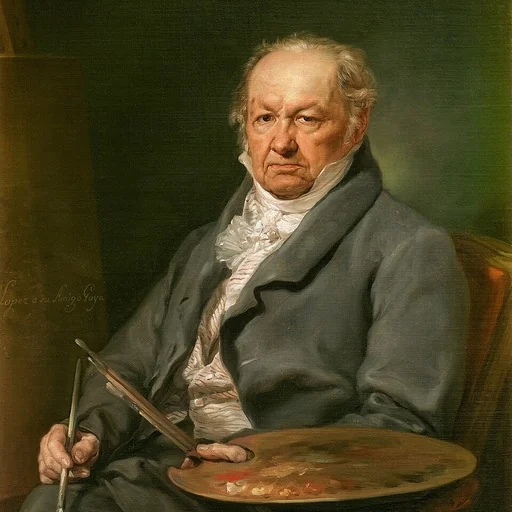
Francisco José de Goya y Lucientes (; Spanish: ; 30 March 1746 – 16 April 1828) was a Spanish romantic painter and printmaker.