Artwork
Untitled
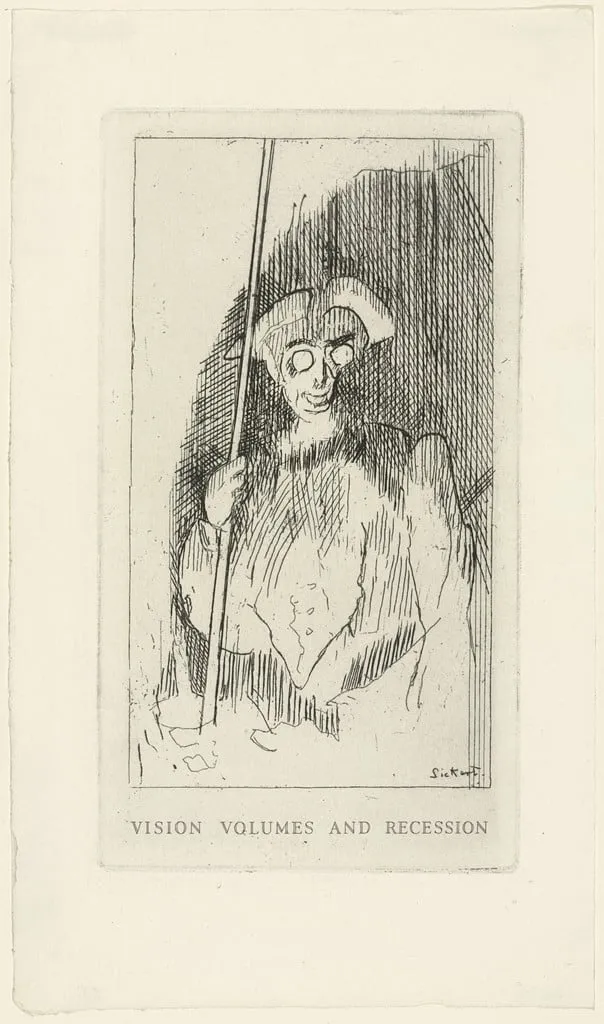
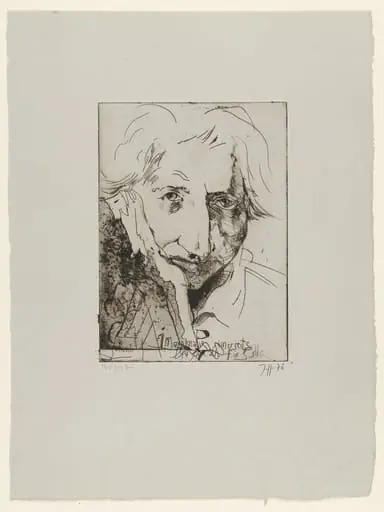
Untitled is an ink print by Walter Sickert. It dates from 1924 and is held in the collection of the Museum of Modern Art. Created in 1924, this etching by Walter Richard Sickert is one of many prints in which he explored the quiet solitude of urban life.
About this work
Overview
Created in 1924, this etching by Walter Richard Sickert is one of many prints in which he explored the quiet solitude of urban life.
Created in 1924, this etching by Walter Richard Sickert is one of many prints in which he explored the quiet solitude of urban life. Born in Germany and active in Britain, Sickert was deeply engaged with the textures of everyday existence. The work belongs to a period when he increasingly turned to printmaking to capture fleeting human presence, often isolating figures against sparse, ambiguous settings.
Subject & Meaning
The figure, hunched and weary, holds a tall stick and wears a broad-brimmed hat and loose coat, suggesting a transient or marginalized individual. The exaggerated eyes and faint, crooked smile convey a sense of internal resignation rather than expression. The title, 'Vision Volumes and Recession,' alludes to perceptual distance and the flattening of form in memory or perception, reinforcing the figure’s detachment from a defined space.
Technique & Style
Sickert employed sharp, incised lines and dense hatching to model the figure, creating strong tonal contrasts against a minimally rendered background. The etching’s economy of detail—shadows suggesting walls, no clear horizon—focuses attention on the subject’s posture and expression. The technique reflects his interest in capturing psychological presence through minimal means, aligning with his broader rejection of decorative embellishment.
History & Provenance
This print was made during Sickert’s mature period, following his involvement with the Camden Town Group and his shift toward more introspective subjects. It was likely produced for private circulation or small exhibitions, as many of his etchings were. No public record of its early ownership exists, but it aligns with his practice of distributing prints through artist-led circles rather than commercial galleries.
Context
In the 1920s, British art was moving away from romanticized depictions of labor and class. Sickert’s etchings offered a quieter, more ambiguous commentary—focusing on isolation, fatigue, and the psychological weight of urban anonymity. His work stood apart from both traditional realism and emerging modernist abstraction, occupying a space between observation and introspection.
Legacy
Sickert’s etchings, including this one, influenced later British figurative artists who valued emotional nuance over narrative clarity. His use of printmaking to explore psychological depth helped legitimize etching as a medium for serious artistic inquiry in Britain. Though less celebrated than his paintings, these works remain vital for understanding his sustained interest in the unseen lives of ordinary people.
Artist & collection
Artist
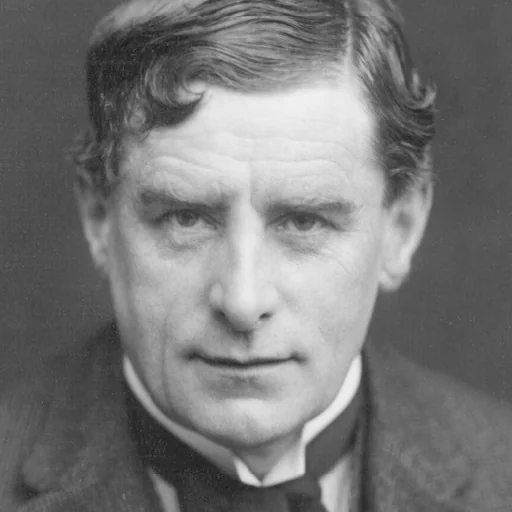
Walter Richard Sickert (31 May 1860 – 22 January 1942) was a German-born British painter and printmaker who was a member of the Camden Town Group of Post-Impressionist artists in early 20th-century London.

 Untitled
 Das Gastmahl des Trimalchio: pl. I (The Banquet of Trimalchio: pl. I)
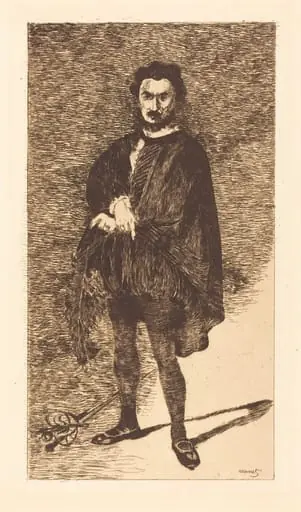 The Tragic Actor (L'acteur tragique)
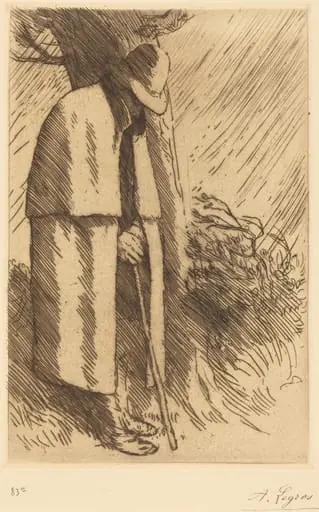 Traveler taking Shelter (Le voyageur a l'abri)
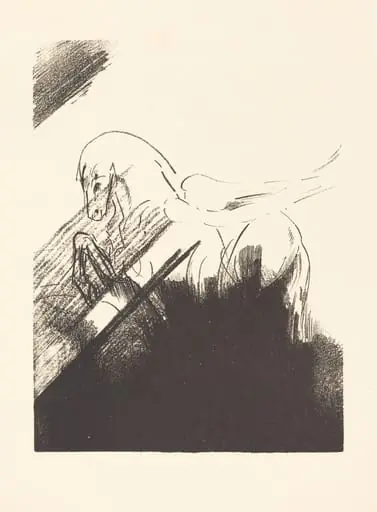 Cheval aile (Winged Horse)
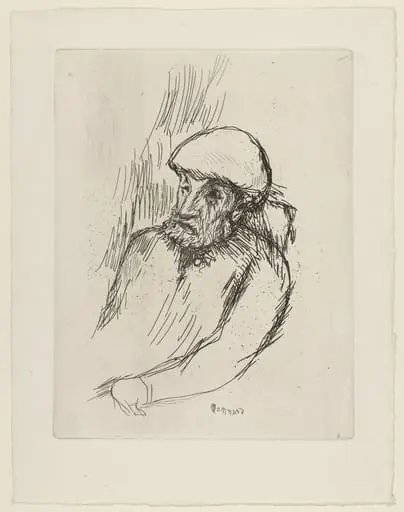 Untitled
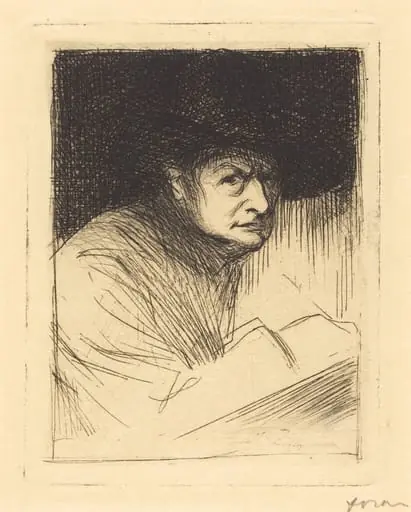 Portrait de Forain (Portrait of Forain)
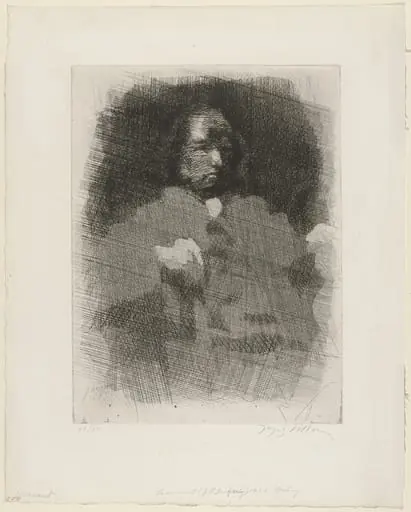 Untitled
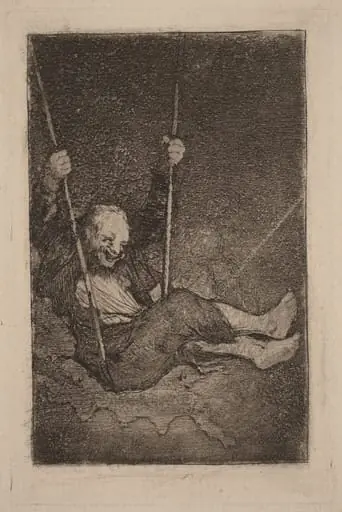 Old Man on a Swing
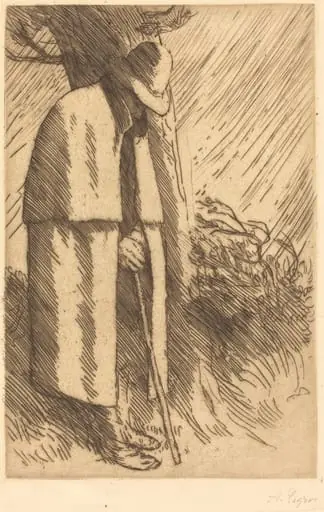 Traveler taking Shelter (Le voyageur a l'abri)
 Untitled
 Untitled