Artwork
Origen de los arpones o banderillas (Origin of the Harpoons or Banderillas)
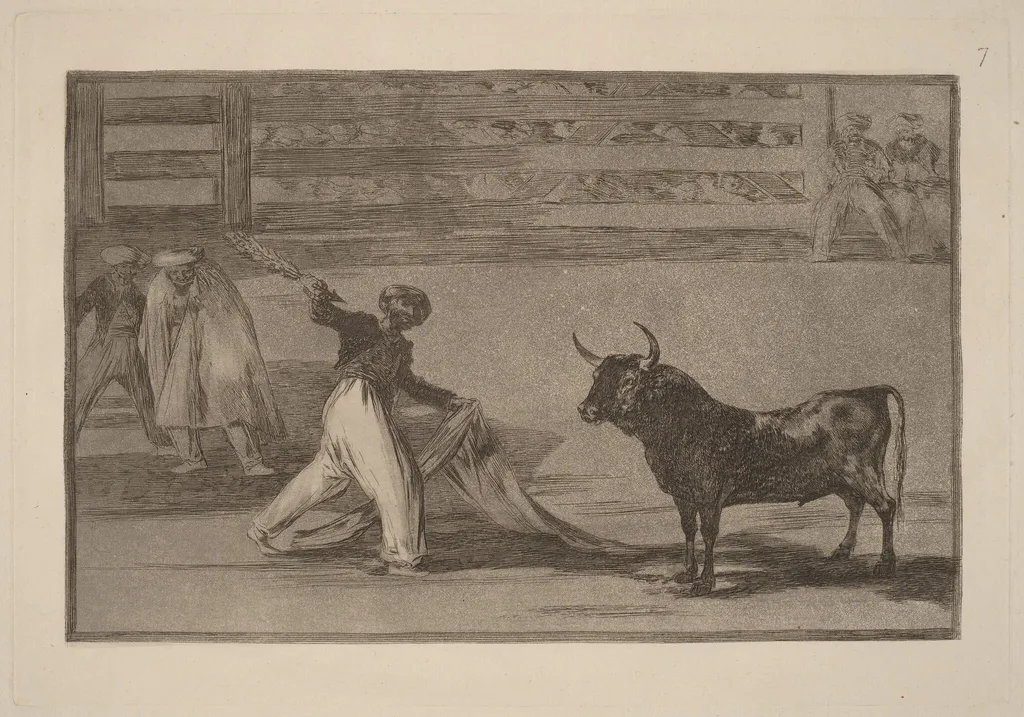
Origen de los arpones o banderillas (Origin of the Harpoons or Banderillas) is an ink print by the Romanticist artist Francisco Goya. It dates from 1816 and is held in the collection of the National Gallery of Art.
About this work
Overview
Origen de los arpones o banderillas (Origin of the Harpoons or Banderillas) is a print created by Francisco de Goya in 1816, utilizing a combination of etching, burnished aquatint, and burin techniques.
Subject & Meaning
The print depicts a tense, dynamic scene of a man, dressed in a black jacket and white pants, poised to engage with a bull. The man holds a trailing cloth, while the bull's shadow stretches across the ground, amplifying the sense of impending confrontation. Three onlookers in the background, two clad in capes, observe the scene against a backdrop of horizontal wooden planks.
Technique & Style
Goya's mastery of mixed printmaking techniques is evident in the expressive shading and textured depth of the image, characteristic of the Romantic movement's emphasis on emotion and drama.
History & Provenance
This first-edition impression was produced during a period of significant historical turmoil, reflecting Goya's practice of responding to the events of his time through his art. The exact provenance of this specific print is not detailed here, but it is part of Goya's influential graphic output.
Legacy
Origen de los arpones o banderillas, as part of Goya's graphic works, later influenced artists of the 19th and 20th centuries, contributing to the enduring impact of his innovative printmaking techniques and thematic explorations.
Own this work as a print
Artist & collection
Artist
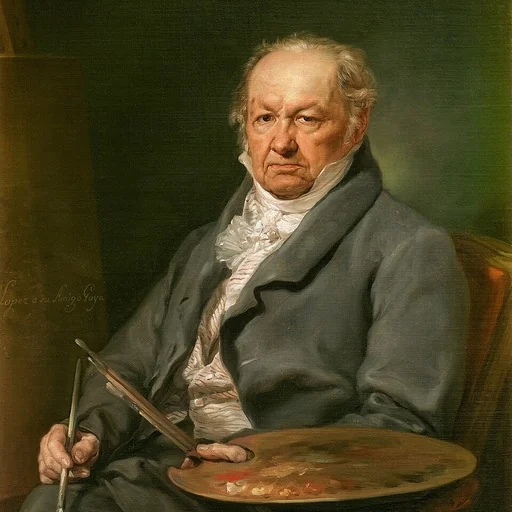
Francisco José de Goya y Lucientes (; Spanish: ; 30 March 1746 – 16 April 1828) was a Spanish romantic painter and printmaker.

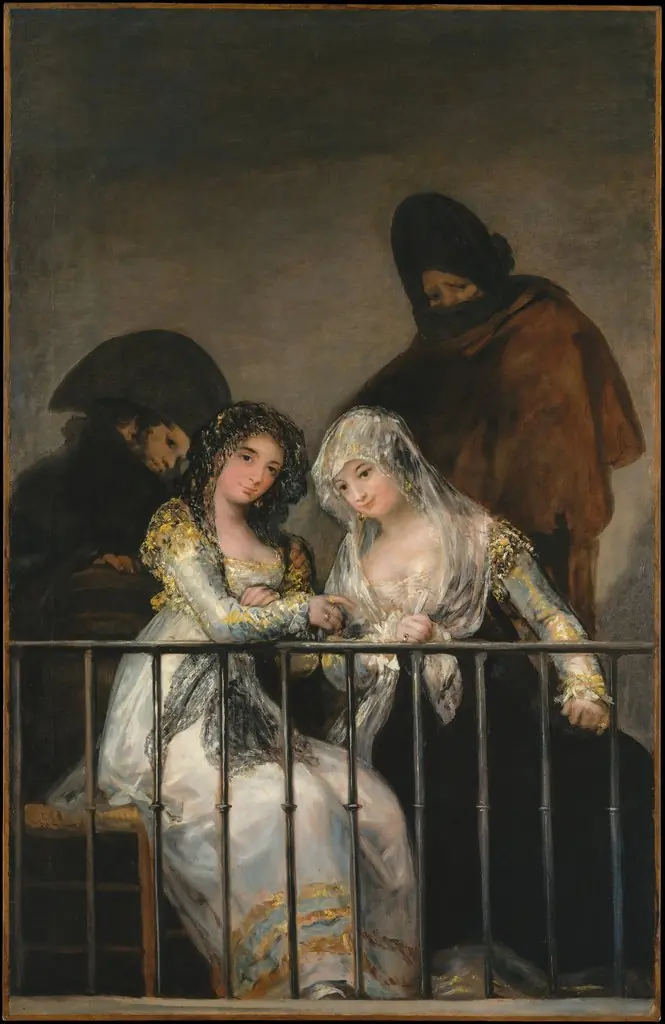
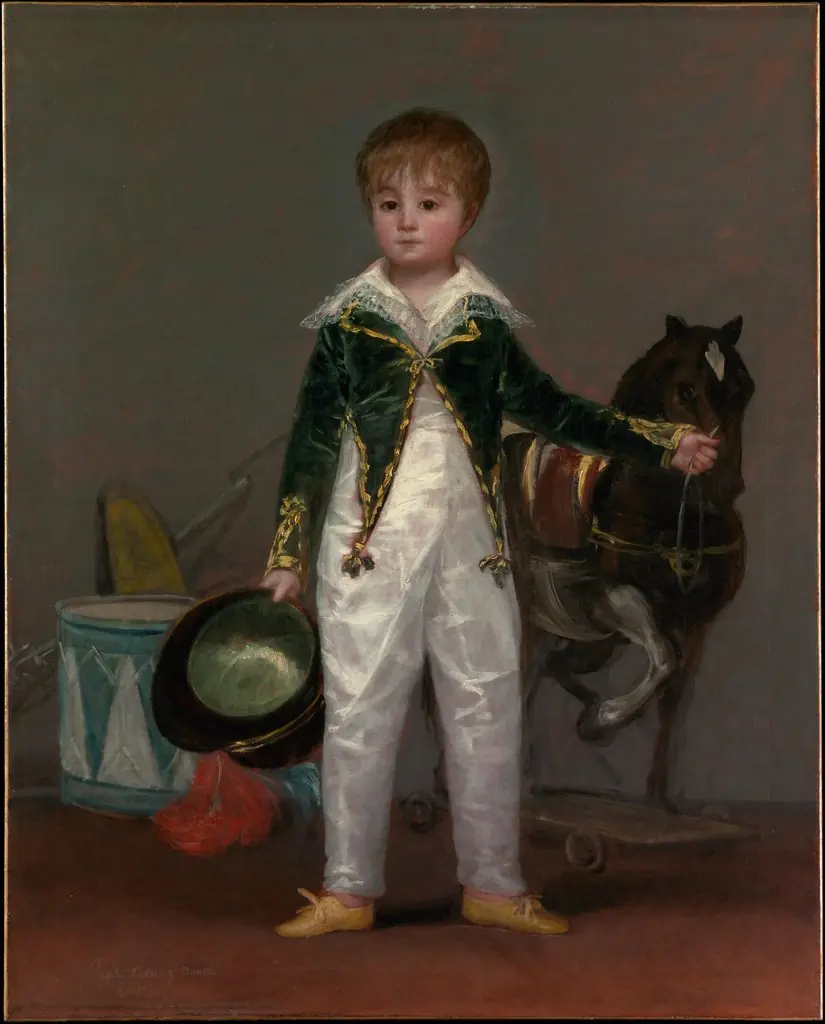
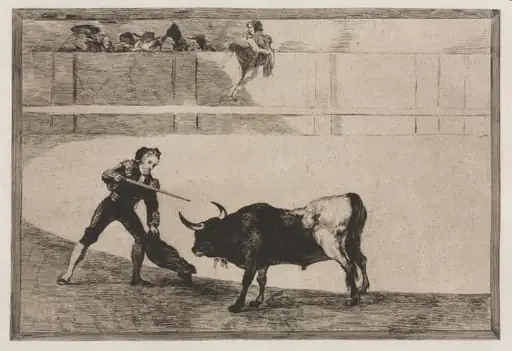 Bullfights: Pedro Romeo Killing the Halted Bull
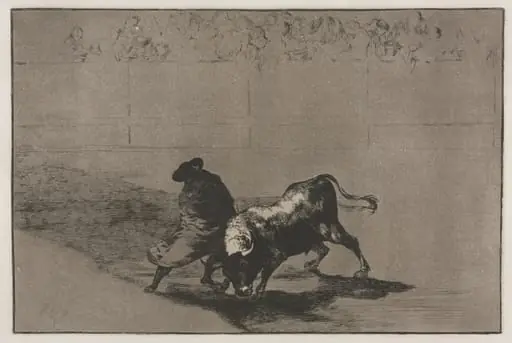 Bullfights: The Very Skilful Student of Falces, Wrapped in his Cape, Tricks the Bull with the Play of his Body
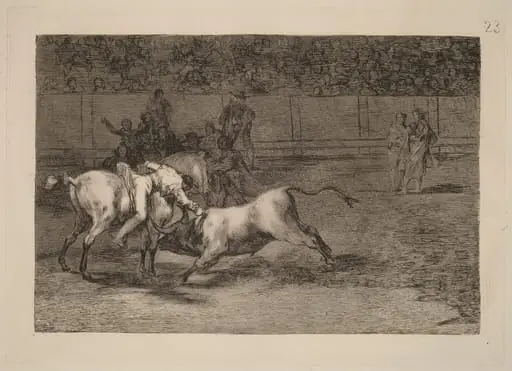 Mariano Ceballos, alias el Indio, mata el toro desde su caballo (Mariano Ceballos, Alias the Indian, Kills the Bull from His Horse)
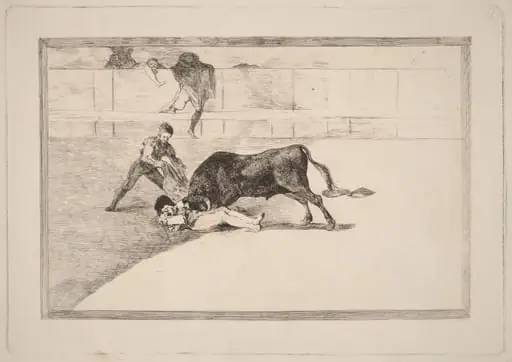 La desgraciada muerte de Pepe Illo en la plaza de Madrid (The Unlucky Death of Pepe Illo in the Ring at Madrid)
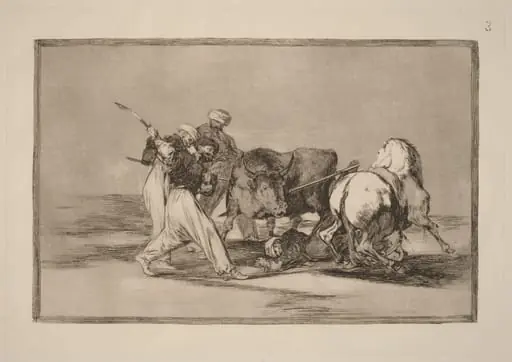 Los moros establecidos en Espana, prescindiendo de las supersticiones de su Alcoran, adoptaron esta caza y arte, y lancean un toro en el campo (The Moors Settled in Spain, Giving up the Superstitions of the Koran, Adopted This Art of Hunting, and Spear a Bull in the Open)
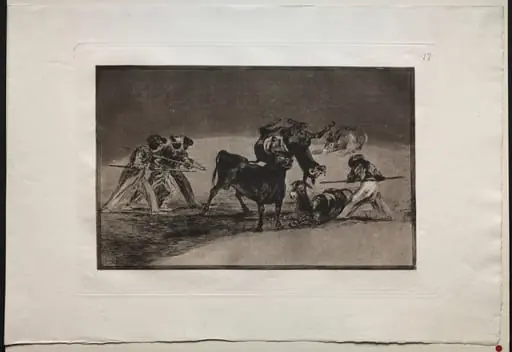 Bullfights: The Moors Use Donkeys as a Barrier to Defend Themselves Against the Bull Whose Horns Have Been Tipped with Balls
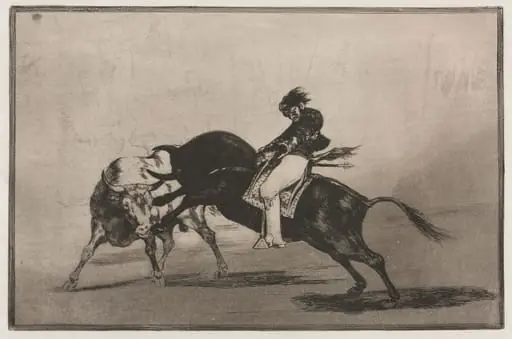 Bullfights: The Same Ceballos Mounted on Another Bull Breaks Short Spears in the Ring at Madrid
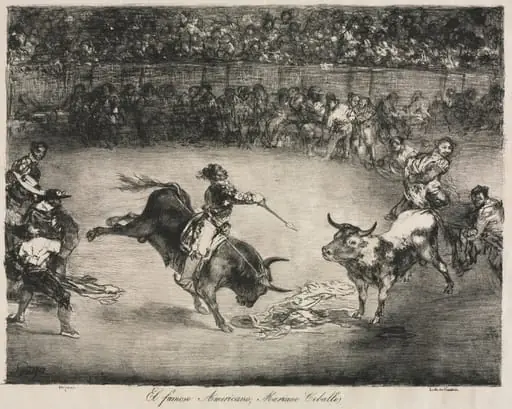 The Bulls of Bordeaux: The Famous American, Mariano Ceballos
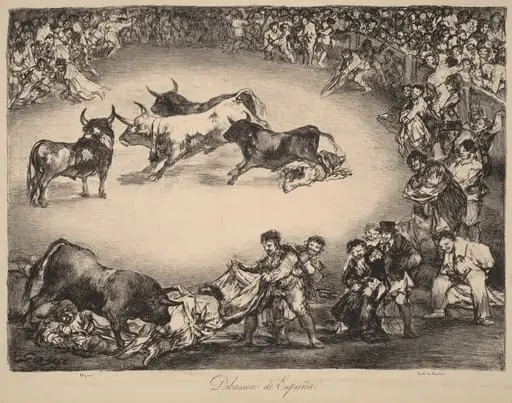 Dibersion de España (Spanish Entertainment)
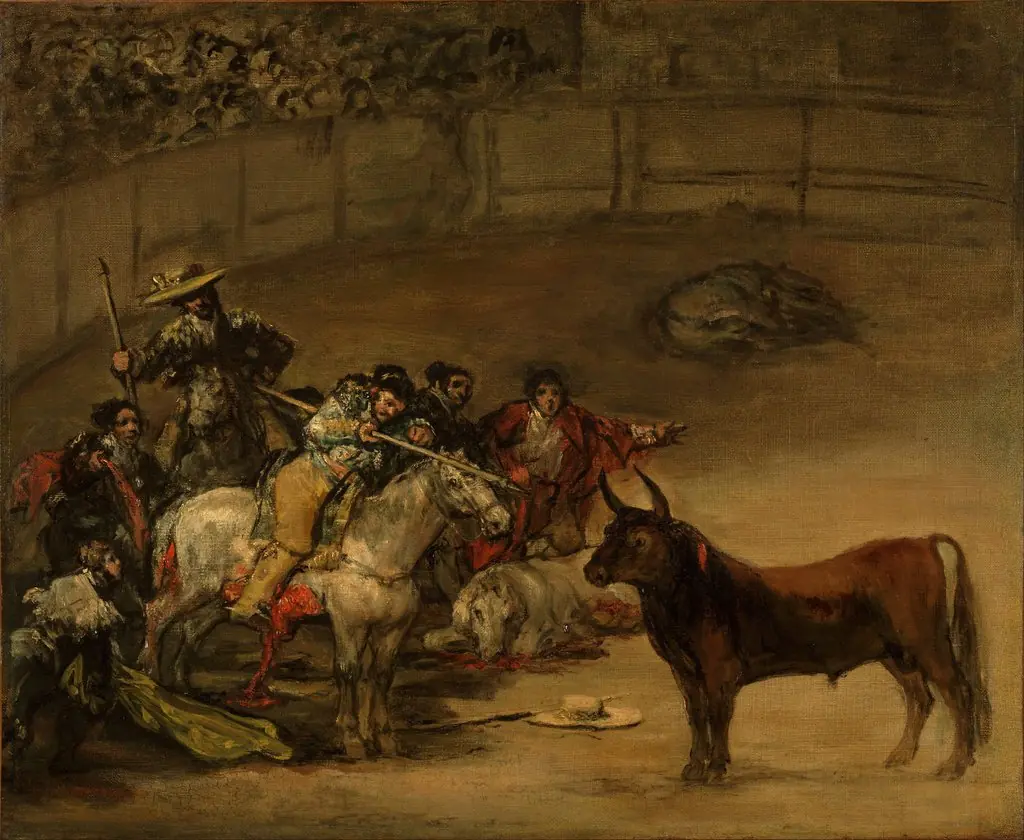 Bullfight, Suerte de Varas