Artwork
Si amanece; nos vamos (When Day Breaks We Will Be Off)
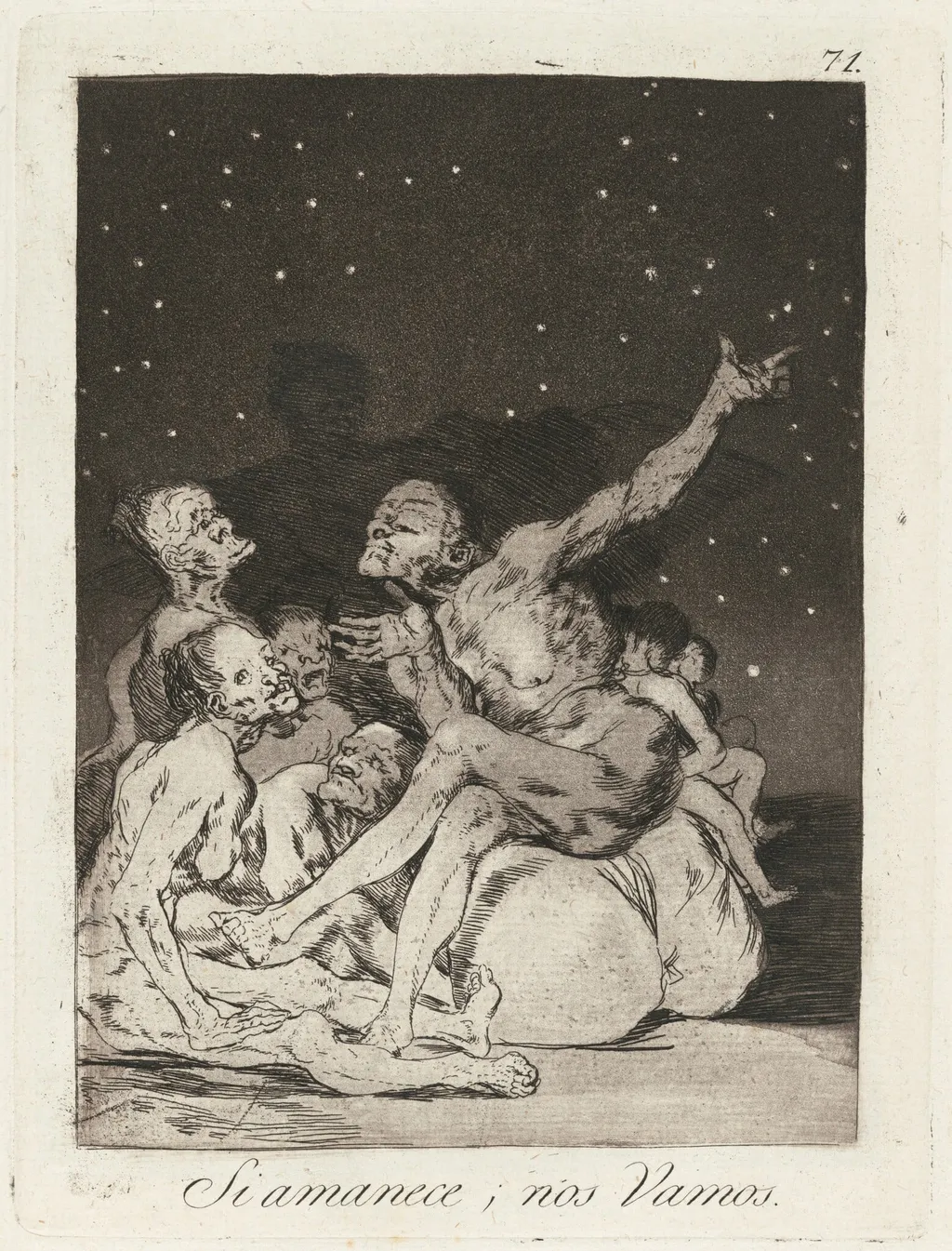
Si amanece; nos vamos (When Day Breaks We Will Be Off) is an ink print by the Romanticist artist Francisco Goya. It dates from 1799 and is held in the collection of the National Gallery of Art.
About this work
Overview
Created in 1799, *Si amanece; nos vamos* is one of Francisco Goya’s etchings from the series *Los Caprichos*. Executed in etching, burnished aquatint, and burin on laid paper, the work reflects his shift toward darker, more introspective themes. Unlike his earlier courtly portraits, this print reveals a preoccupation with fear, uncertainty, and the unseen forces shaping human experience.
Subject & Meaning
A cluster of figures, rendered in shadowed forms, gaze upward in silence beneath a star-strewn night.
A cluster of figures, rendered in shadowed forms, gaze upward in silence beneath a star-strewn night. Their postures suggest apprehension rather than awe, as if awaiting an unseen threat. The title implies an imminent departure at dawn, evoking a sense of forced flight or escape. The scene resists clear narrative, instead conveying an atmosphere of collective dread, possibly alluding to superstition, political repression, or existential unease.
Technique & Style
Goya employed burnished aquatint to achieve velvety gradations of black and gray, enhancing the mood of obscurity. The burin added sharp, incised lines to define figures and textures, while etching provided fluid contours. The absence of light sources and the flattening of spatial depth create a compressed, dreamlike space. His technique prioritizes emotional resonance over detail, aligning with a move away from Enlightenment clarity toward psychological intensity.
History & Provenance
The print was produced as part of Goya’s *Los Caprichos*, a set of 80 satirical prints published in 1799. Though initially met with caution due to their veiled critiques of Spanish society, the series was withdrawn after public backlash. *Si amanece; nos vamos* survived in limited early impressions, later entering institutional collections through private acquisitions and state purchases in the 19th century.
Context
Made during Spain’s turbulent transition from Enlightenment ideals to rising authoritarianism, the print mirrors anxieties surrounding censorship, religious fanaticism, and social decay. Goya, once a royal painter, had become increasingly disillusioned. His prints from this period function as quiet indictments — not overtly political, but deeply human in their portrayal of vulnerability under unseen pressures.
Legacy
Goya’s use of shadow, ambiguity, and psychological tension in this print prefigured later movements such as Romanticism and Expressionism. Artists in the 19th and 20th centuries, including Géricault and Bacon, drew from his ability to convey inner turmoil through visual economy. The work remains a touchstone for its refusal to offer resolution, instead preserving the unease of the moment it depicts.
Artist & collection
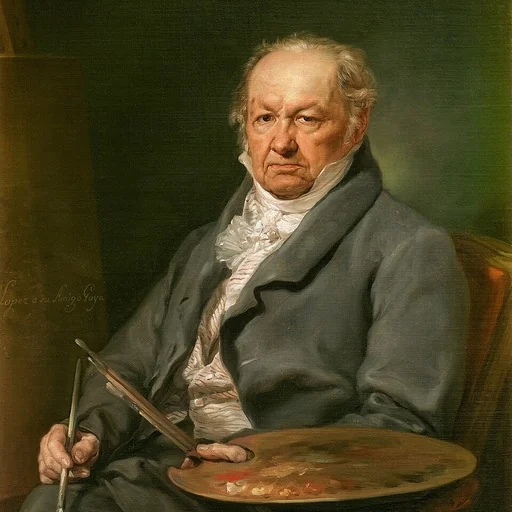
Artist
Francisco José de Goya y Lucientes (; Spanish: ; 30 March 1746 – 16 April 1828) was a Spanish romantic painter and printmaker.

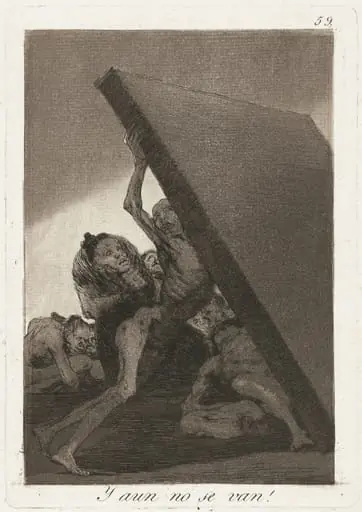 Y aun no se van! (And Still They Don't Go!)
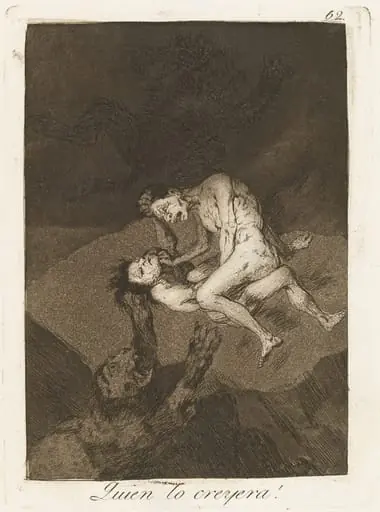 Quien lo creyera! (Who Would Have Thought It!)
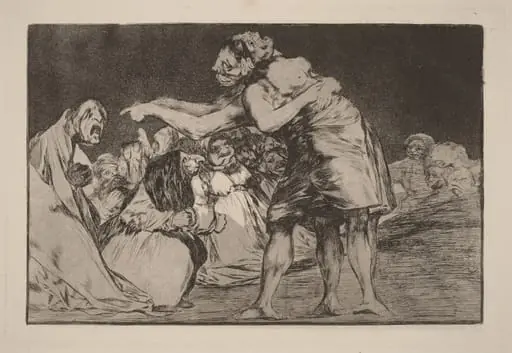 Disparate desordenado (Disorderly Folly)
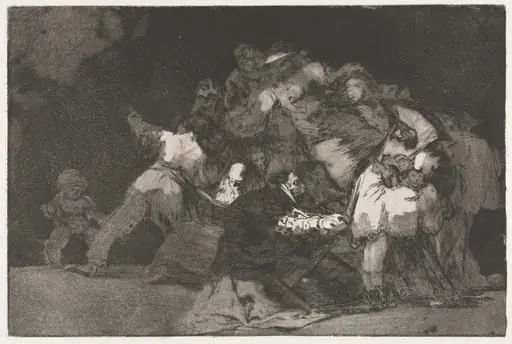 The Proverbs: General Folly
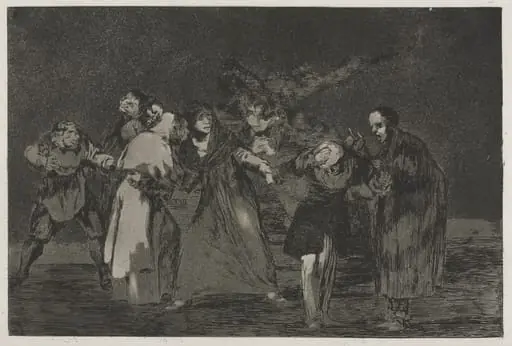 The Proverbs: Wounds Heal Quicker Than Hasty Words
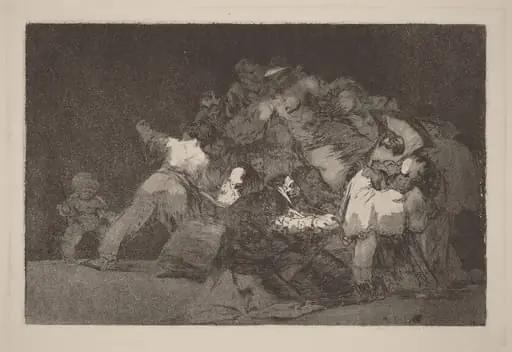 Disparate general (General Folly)
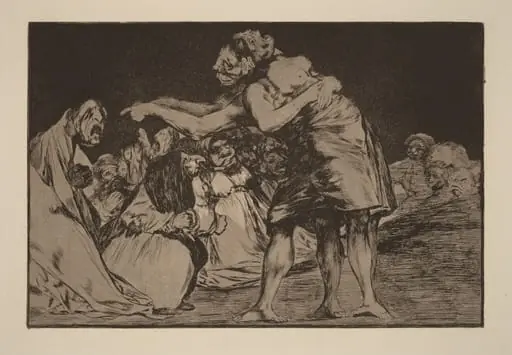 Disparate desordenado (Disorderly Folly)
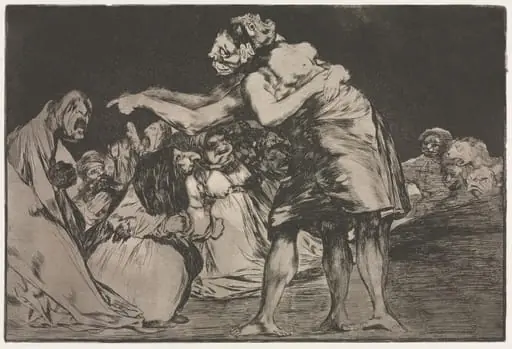 The Proverbs: Matrimonial Folly
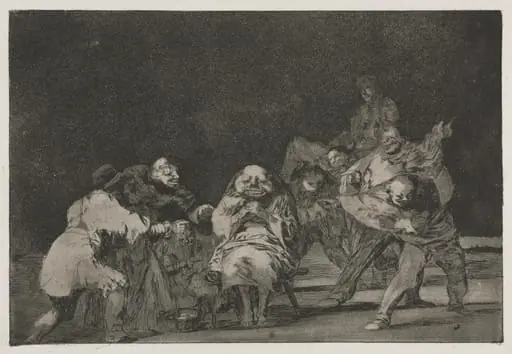 The Proverbs: Loyalty
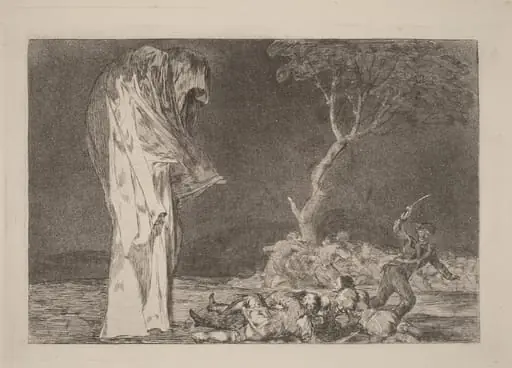 Disparate de miedo (Folly of Fear)
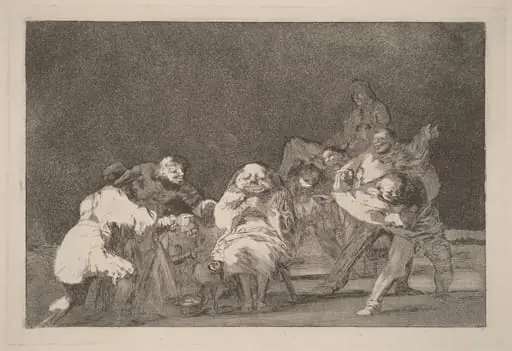 La lealtad (Loyalty)
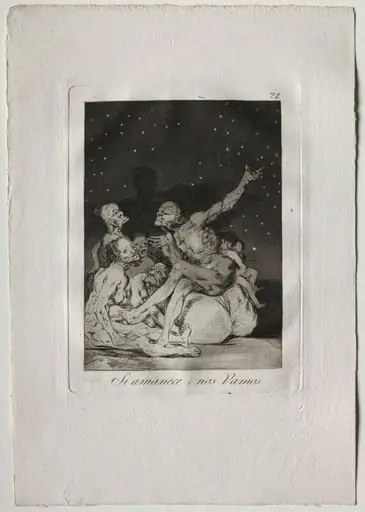 When Day Breaks We Will Be Off, Plate 71