Artwork
Uthina
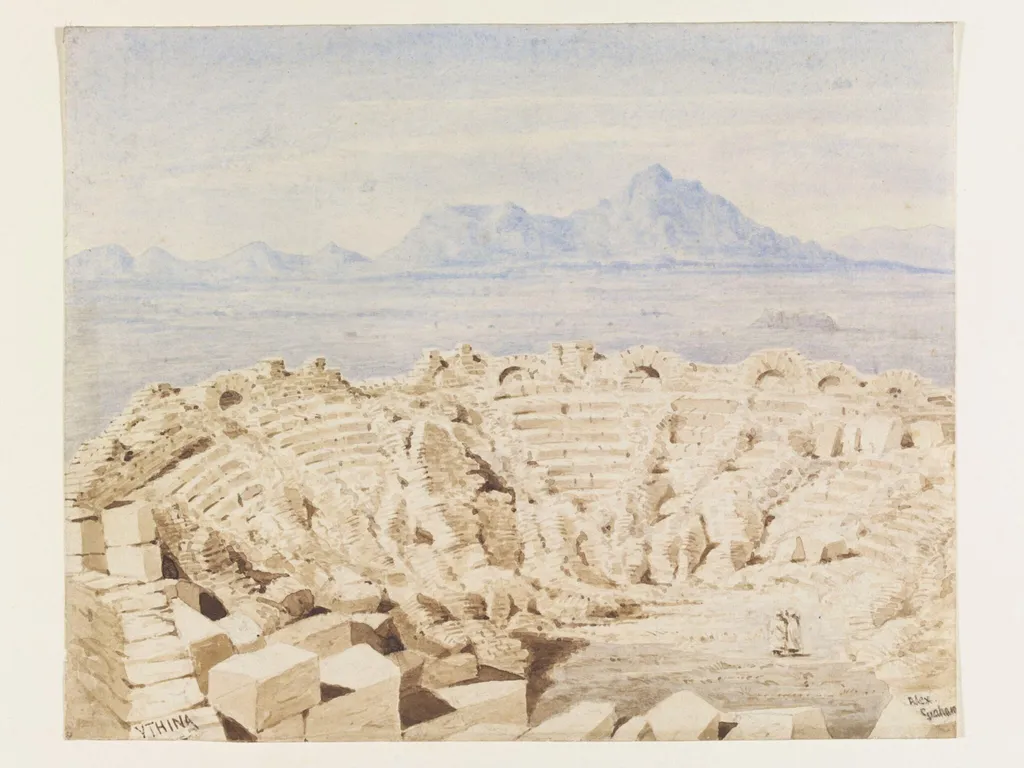
Uthina is a watercolor work on paper by the Impressionist artist Alexander Graham. It dates from 1885 and is held in the collection of the Victoria and Albert Museum.
About this work
Overview
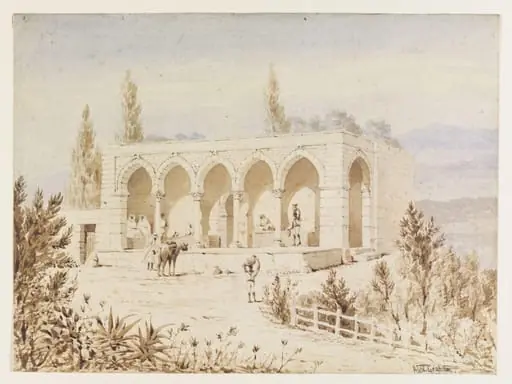
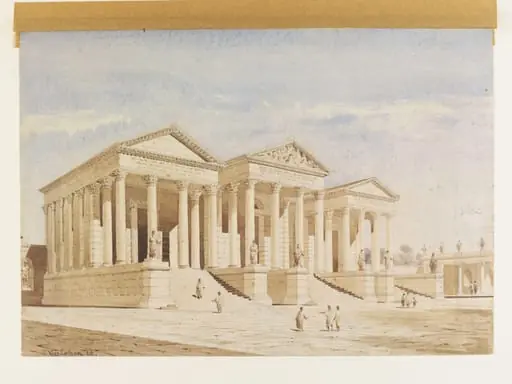
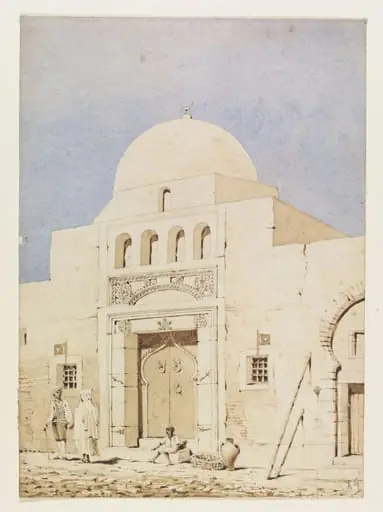
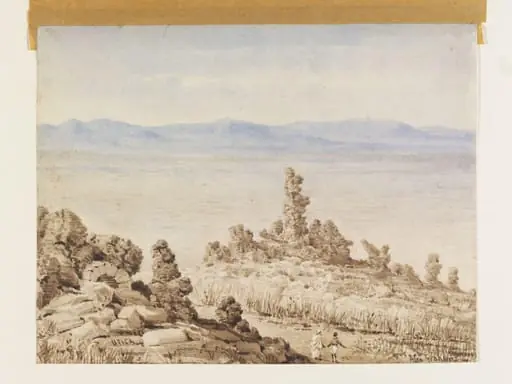
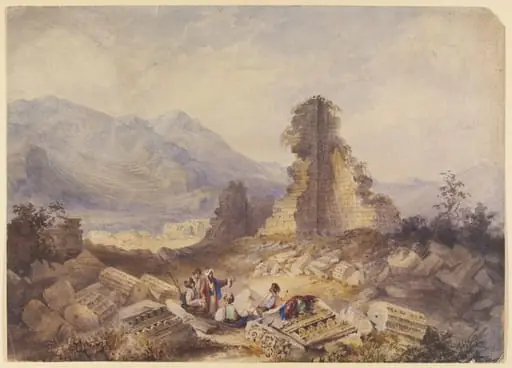
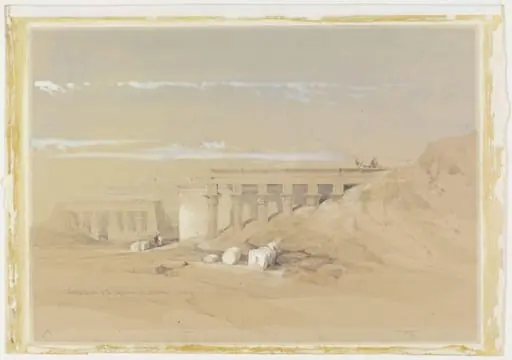
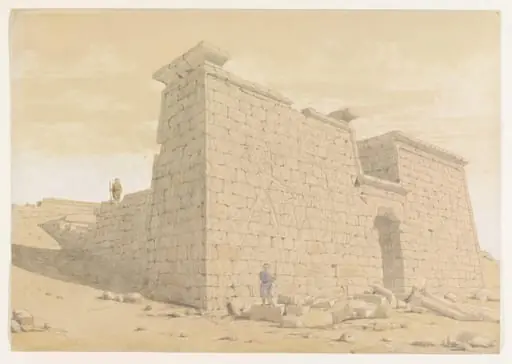
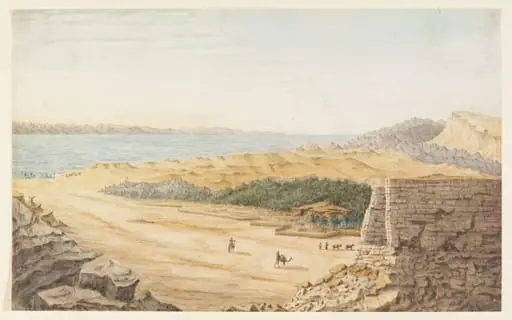
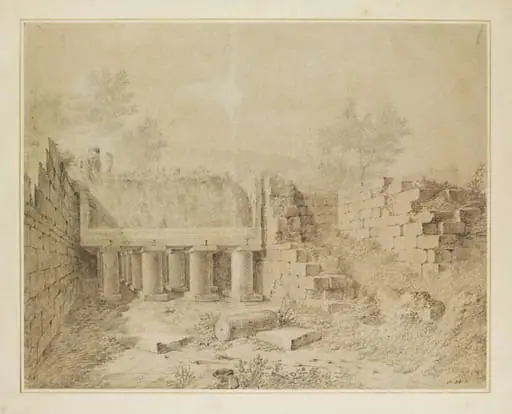
Created in 1885, this watercolour by Alexander Graham portrays the Roman amphitheatre at Uthina, the site now known as Oudna in Tunisia. The composition balances the crumbling stone structure in the foreground with distant, muted mountains, all under a pale sky, conveying a tranquil, archaeological landscape.
Subject & Meaning
The work records the remains of a Roman entertainment venue, emphasizing the passage of time through the juxtaposition of ancient ruins against a natural horizon. By focusing on the amphitheatre’s silhouette, Graham highlights the enduring imprint of Roman architecture within the North African terrain.
Technique & Style
Executed in transparent washes, the watercolour employs a limited palette of beige for the stone, blues and greys for the distant hills, and a soft, light blue for the sky. The delicate layering of pigment creates atmospheric depth, while the fine brushwork delineates architectural details without sacrificing overall impressionistic softness.
History & Provenance
The image appears opposite page 234 of Graham’s 1902 volume *Roman Africa*, where it is captioned as the Amphitheatre at Oudna. In June 1972, the piece was acquired from the auction house Phillips, Son & Neale by collector Rodney Searight for £38, alongside three related works (catalog numbers SD.449 and SD.451–453).
Context
Graham’s Tunisian watercolours, produced between the late 19th and early 20th centuries, reflect a broader European interest in documenting Roman sites across Africa. Similar works from this period are held in institutions such as the Victoria and Albert Museum, illustrating the artist’s systematic study of North African antiquities.
Artist & collection
Artist
Alexander Graham loved to paint North African ruins and coastlines with watercolours and drawings around 1885.