Artwork
Sebela
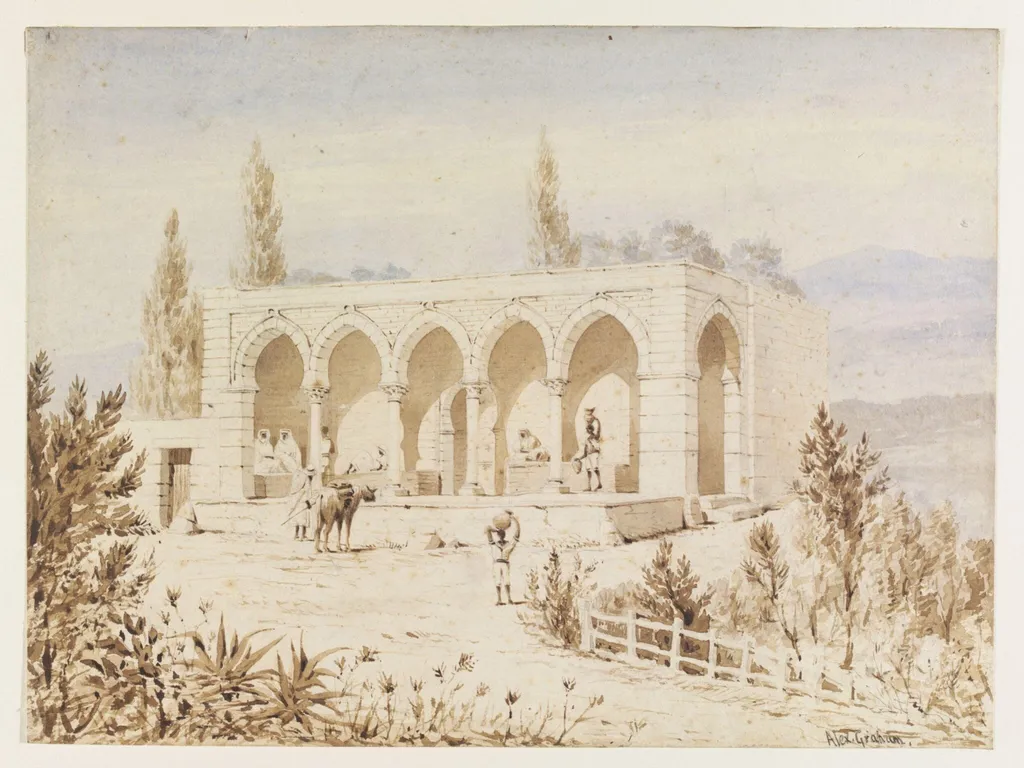
Sebela is a watercolor work on paper by the Impressionist artist Alexander Graham. It dates from 1885 and is held in the collection of the Victoria and Albert Museum.
About this work
Overview
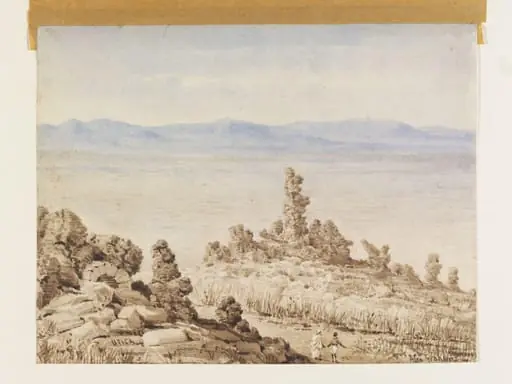
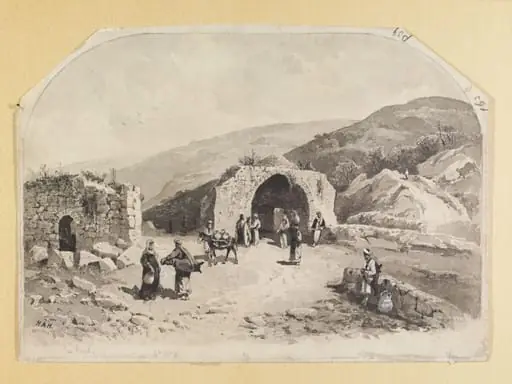
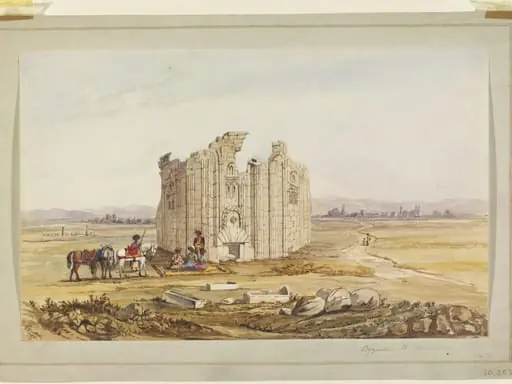
Sebela is a watercolour executed by Alexander Graham in 1885. The composition depicts a ruined stone pavilion with arched openings set against a sun‑baked landscape, a solitary figure in light clothing walking nearby, and a second figure attending a tethered cow. Sparse vegetation and distant trees frame the scene, conveying a quiet, arid atmosphere.
Subject & Meaning
The work presents a modest architectural ruin, suggesting a former place of significance now reclaimed by the desert. The presence of everyday activity—a traveler and a herder—places human life within the lingering traces of history, emphasizing the coexistence of past grandeur and present simplicity in a Tunisian setting.
Technique & Style
Graham employs delicate washes of watercolour to render the play of light and shadow across stone and sand. Soft tonal transitions convey the heat of the environment, while the restrained palette highlights the architectural forms and the subtle movement of the figures.
History & Provenance
The drawing was reproduced as a heliogravure in the 1887 volume Travels in Tunisia, co‑authored by Graham and H.S. Ashbee, appearing opposite page 44. A second Tunisian scene by Graham resides in the Victoria and Albert Museum’s Prints and Drawings department. According to auction records compiled by Rodney Searight, Sebela was sold at Phillips, Son & Neale in June 1972 for £38.
Context
Created during Graham’s travels in North Africa, the piece reflects the 19th‑century European interest in documenting exotic locales. The pavilion motif aligns with contemporary studies of vernacular architecture across Mediterranean and Middle Eastern cultures, offering a visual record of regional building forms.
Artist & collection
Artist
Alexander Graham loved to paint North African ruins and coastlines with watercolours and drawings around 1885.

 En Rogel, Holy Land
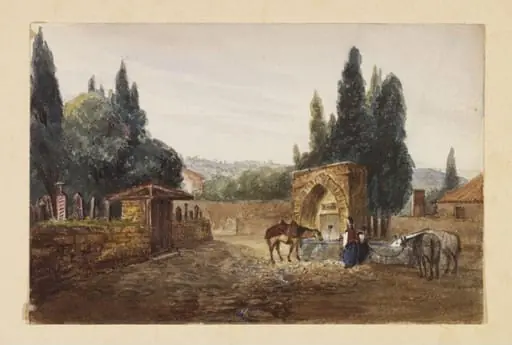 Scene at a Fountain outside a cemetery, probably Smyrna
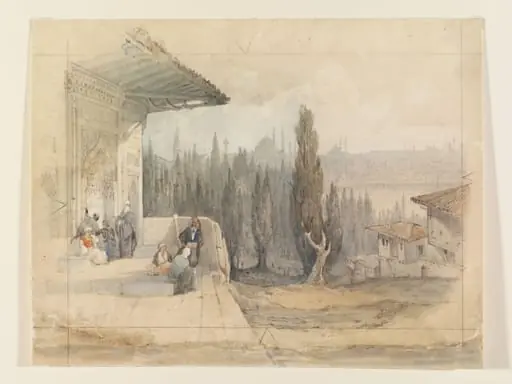 Pera
Pera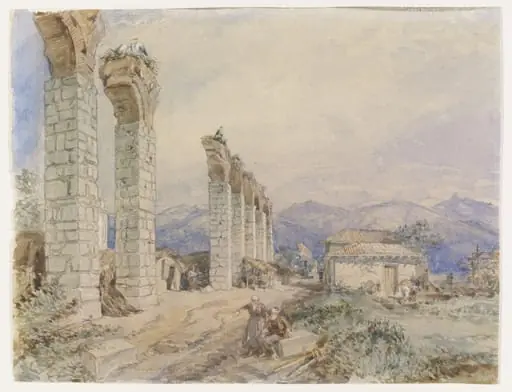 The Aqueduct - Ephesus
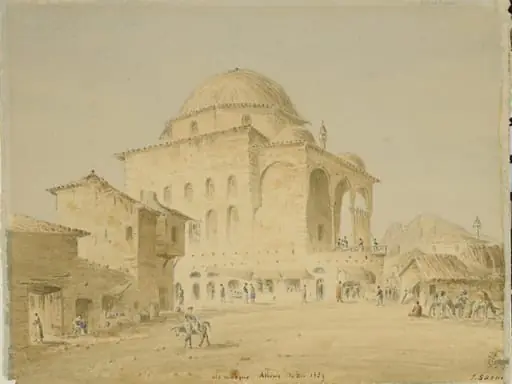 Το Τζαμί του Τζισδαράκη στο Μοναστηράκι
![Yediküle with a Muslim Cemetery, Constantinople, by Michel-François Préaulx [Préaux]](https://artifactworldgallery.com/img/michel-francois-preaulx-preaux--yedikule-with-a-muslim-cemetery-constantinople--c422bdec8e9c6ba8-w320.webp) Yediküle with a Muslim Cemetery, Constantinople
Yediküle with a Muslim Cemetery, Constantinople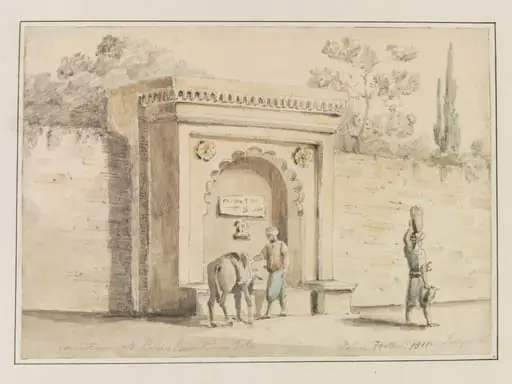 Fountain At Constantinople
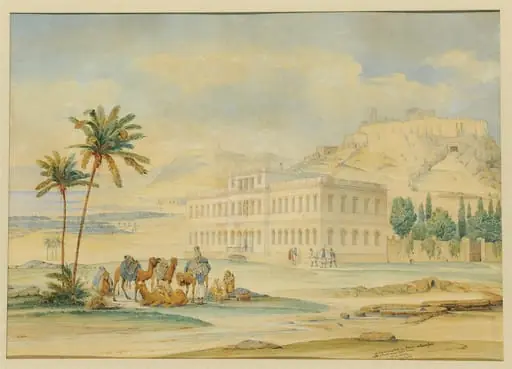 Το στρατιωτικό νοσοκομείο της Αθήνας (Κτήριο Weiler)
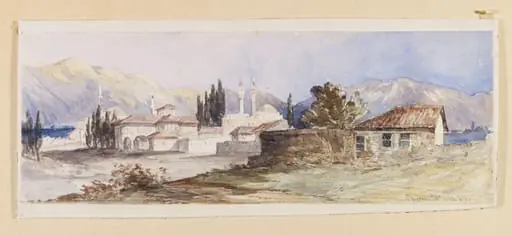 Smyrne
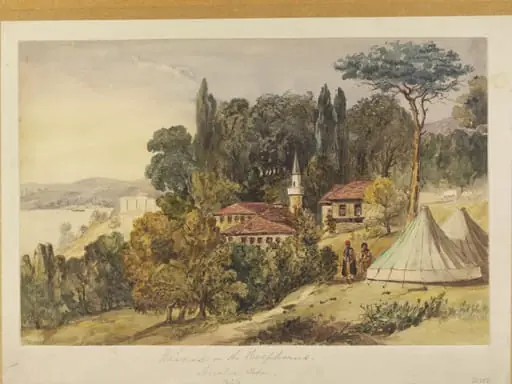 Beicos on the Bosphorus. Asiatic Side
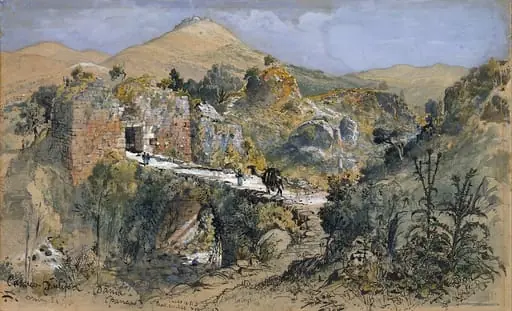 Caesarea Philippi (Banias)
 Ancient Armenian Church at Varzahan