Artwork
Peisaj de toamnă
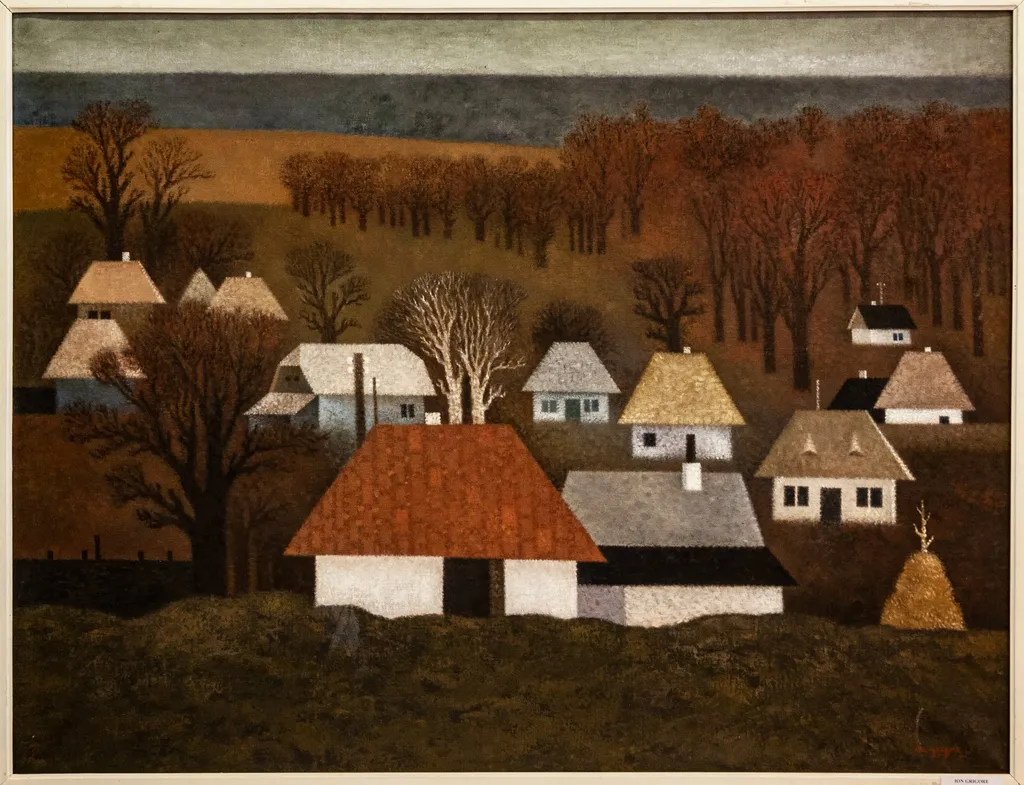
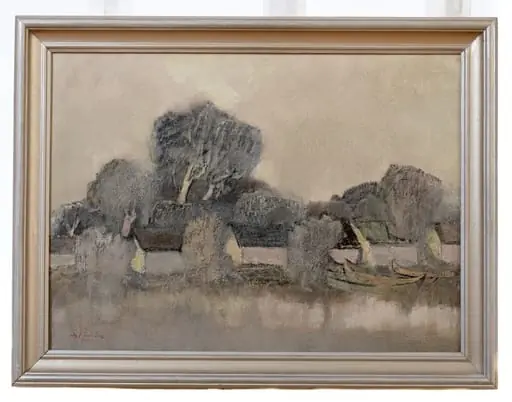
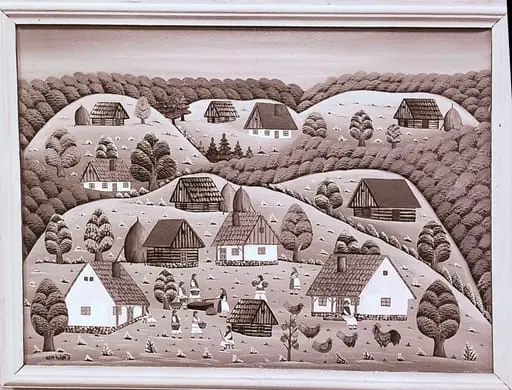
Peisaj de toamnă is a print by Grigore Ion. It is held in the collection of the Gavrila Simion Eco-Museum Research Institute Tulcea. This print depicts a tranquil autumnal village, rendered in restrained earth tones of brown, gray, and muted green.
About this work
Overview
The composition emphasizes stillness, with no human figures or movement, reinforcing a sense of quietude and seasonal transition.
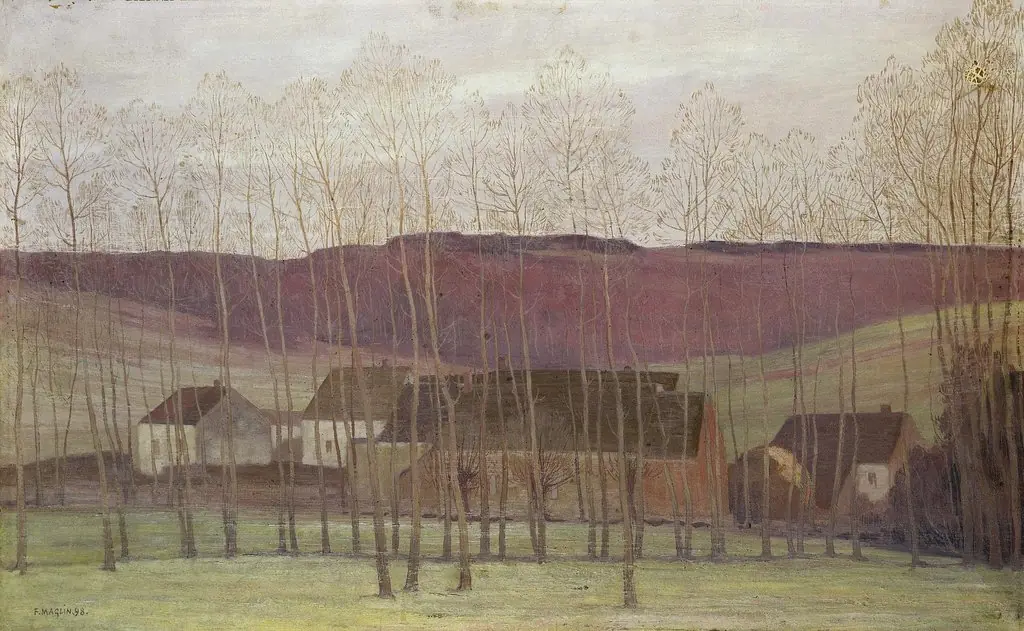
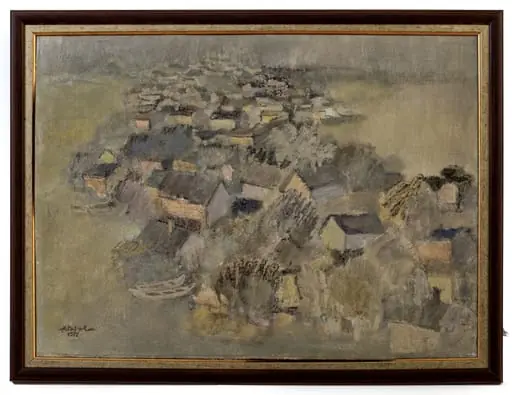
This print depicts a tranquil autumnal village, rendered in restrained earth tones of brown, gray, and muted green. Thatched cottages cluster gently against a quiet landscape, their forms softened by the season’s bare trees. A single red roof introduces subtle contrast without disrupting the overall serenity. The composition emphasizes stillness, with no human figures or movement, reinforcing a sense of quietude and seasonal transition.
Subject & Meaning
The scene presents a rural settlement in late autumn, capturing the stillness that follows the departure of leaves and the retreat of daily activity. The close grouping of dwellings suggests communal life, while the bare trees and muted palette evoke the quiet resignation of nature entering dormancy. There is no narrative drama—only the quiet persistence of human habitation within the rhythms of the season.
Technique & Style
The artist employs simplified forms and flat planes to convey structure without detail, favoring silhouette over texture. Light is diffused and even, eliminating strong shadows, which enhances the calm mood. Color is deliberately limited, with only the red roof serving as a focal accent. The print’s clarity and minimalism reflect an intentional restraint, aligning with traditions that value harmony over ornament.
History & Provenance
The work originates from a regional artistic tradition that documented rural life through printmaking, likely produced in the late 19th or early 20th century. It was collected by the Museum of Ethnography as part of a broader effort to preserve visual records of folk architecture and seasonal customs. Its attribution remains unconfirmed, but its style aligns with local artisans who recorded everyday landscapes for cultural documentation.
Context
This image reflects a broader cultural interest in preserving vernacular architecture and rural seasonal cycles during a time of rapid modernization. Similar prints from the period often focused on village life, emphasizing continuity and resilience. The absence of industrial elements or modern tools underscores a deliberate focus on tradition, positioning the scene as a quiet counterpoint to urban change.
Legacy
The print endures as a quiet record of a vanishing rural aesthetic, valued for its observational honesty rather than artistic innovation. It contributes to museum collections that trace regional identity through domestic and natural landscapes. Its influence lies not in popularity but in its role as a visual archive, offering insight into how communities once lived in harmony with seasonal rhythms.
Artist & collection
Artist
Grigore Ion made prints of local life and landscapes in the early 1900s Romanian tradition.
Museum
Gavrila Simion Eco-Museum Research Institute Tulcea
Continue through works from the same source collection.