Artwork
Nuntă țărănească
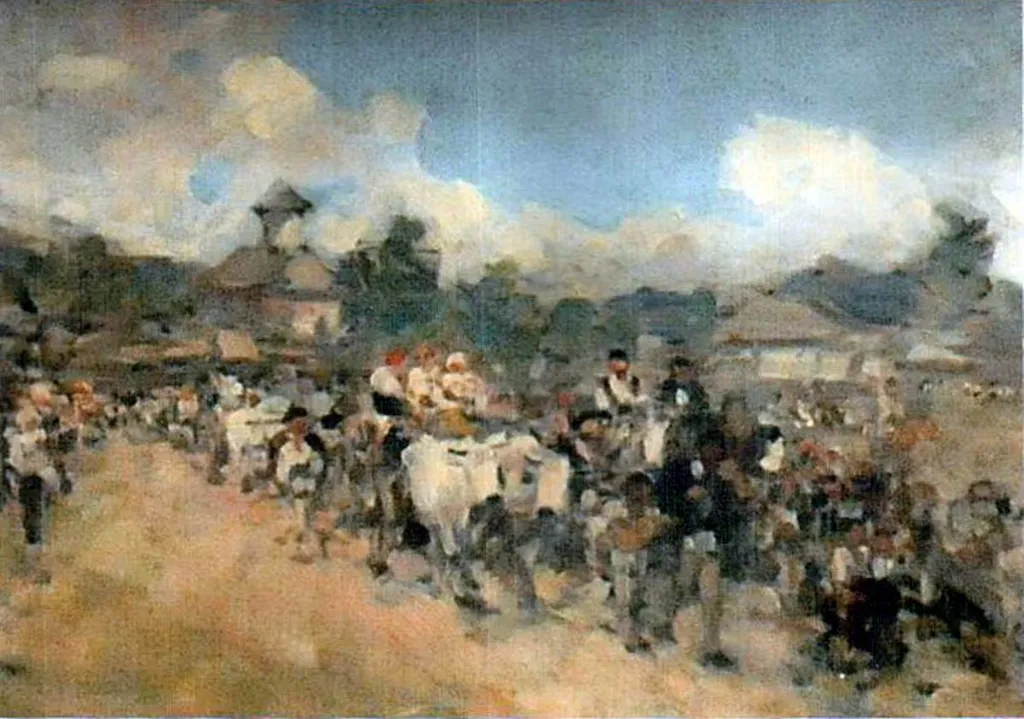
Nuntă țărănească is a print by Nicolae Grigorescu. It dates from 1882 and is held in the collection of the Aurelian Sacerdoțeanu Vâlcea County Museum.
About this work
Overview
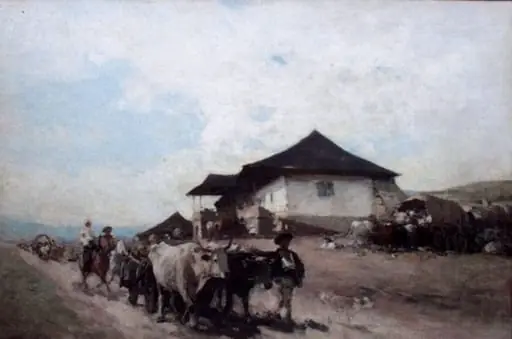
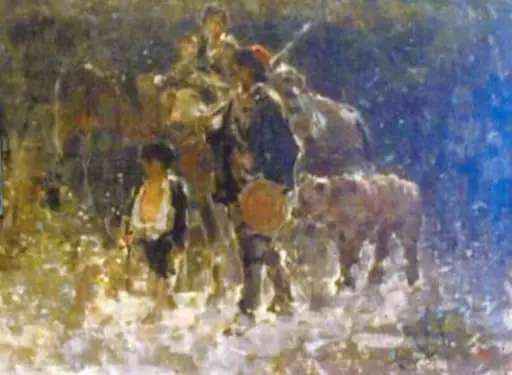
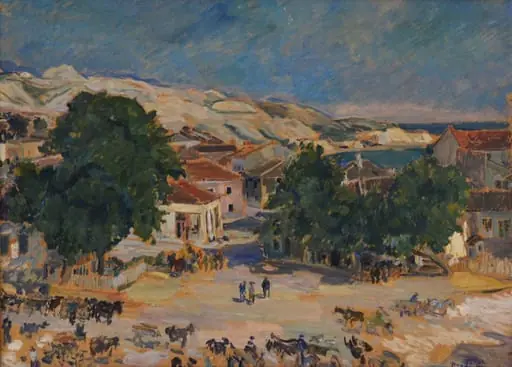
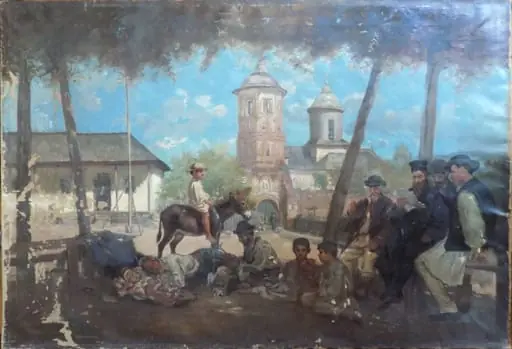
Painted around 1882 by Nicolae Grigorescu, Nuntă țărănească captures a rural Romanian wedding procession. The scene unfolds outdoors, with figures and animals moving through a village landscape under an open sky. Executed in oil, the work reflects the artist’s interest in everyday life, rendered with a spontaneous brushwork that conveys motion and atmosphere rather than polished detail.
Subject & Meaning
The painting depicts a traditional peasant wedding procession, centered on a line of livestock carrying supplies or symbolic items. Figures in period attire walk alongside, observe, or pause, suggesting communal participation. The absence of overt ceremony highlights the integration of marriage into daily rural life, where ritual and labor coexist without distinction.
Technique & Style
Grigorescu employed loose, energetic brushstrokes to suggest movement and light, avoiding fine detail in favor of atmospheric effect. Warm earth tones dominate—browns, ochres, and muted whites—while soft greens in the distance hint at vegetation. The sky, rendered with quick strokes of white and pale blue, adds depth and a sense of open air, reinforcing the painting’s immediacy.
History & Provenance
The painting has been held since its creation by the Museum of Ethnography in Romania, where it remains part of a collection focused on folk traditions. Its preservation in this context reflects its value as a document of 19th-century rural customs, rather than as a purely aesthetic object, aligning with the museum’s mission to record cultural practices.
Context
In the late 19th century, Romanian artists increasingly turned to peasant life as a subject, seeking to define a national identity distinct from urban or foreign influences. Grigorescu, influenced by French Realism and plein air practices, contributed to this movement by portraying rural scenes with honesty and sensitivity, avoiding idealization.
Legacy
Nuntă țărănească endures as a representative example of Romanian Realism, valued for its unembellished depiction of rural customs. It influenced later generations of artists interested in ethnographic accuracy and the dignity of ordinary life. The work continues to be referenced in studies of Romanian cultural history and visual anthropology.
Artist & collection

Artist
Nicolae Grigorescu was one of the founders of modern Romanian painting. He is considered by Romanians the greatest Romanian painter, and one of the founders of modern Romanian art. He is most known for paintings…
Museum
Aurelian Sacerdoțeanu Vâlcea County Museum
Continue through works from the same source collection.