Artwork
La Obor
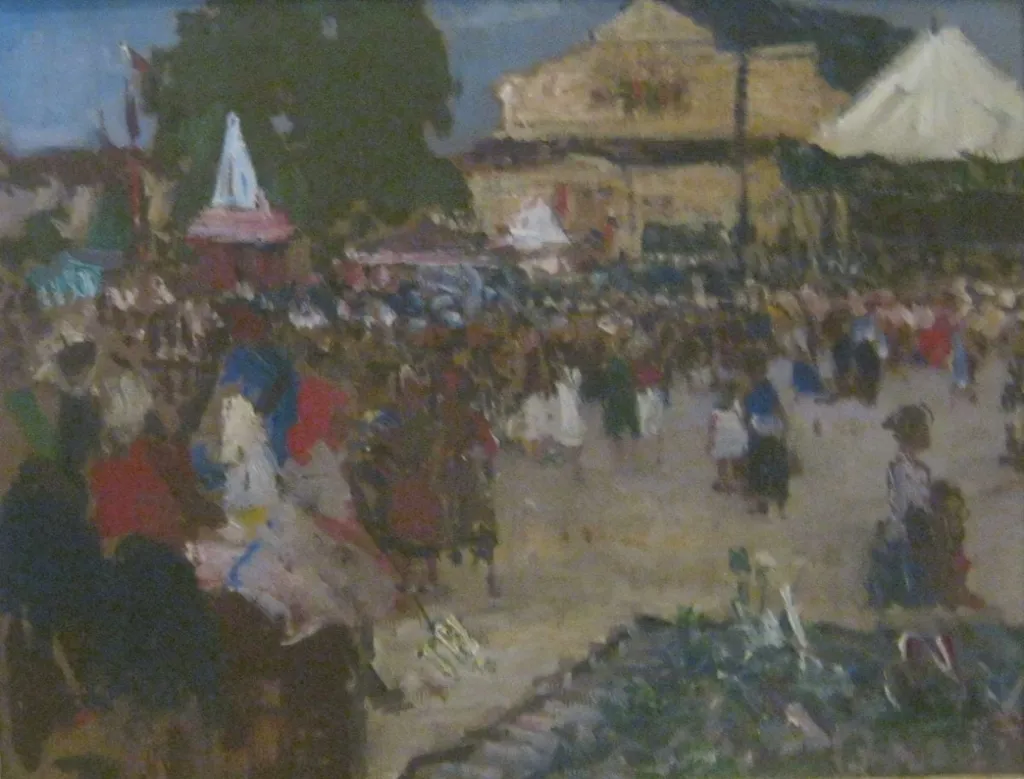
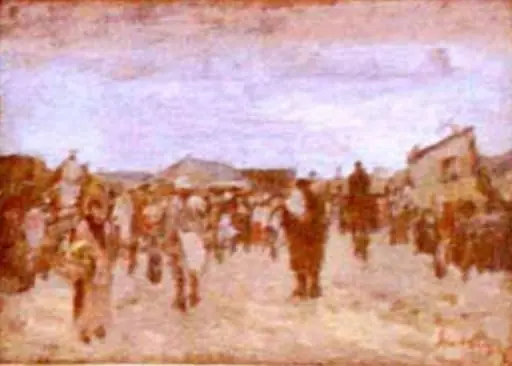
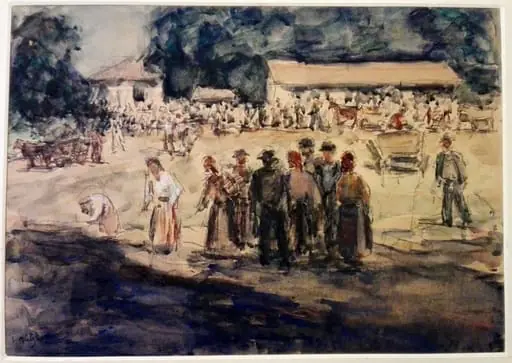
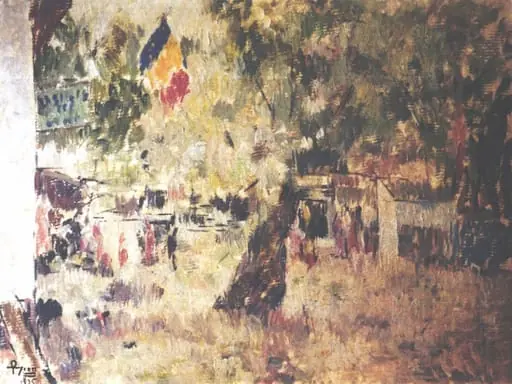
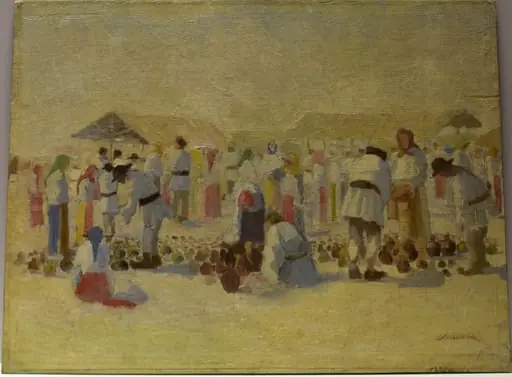
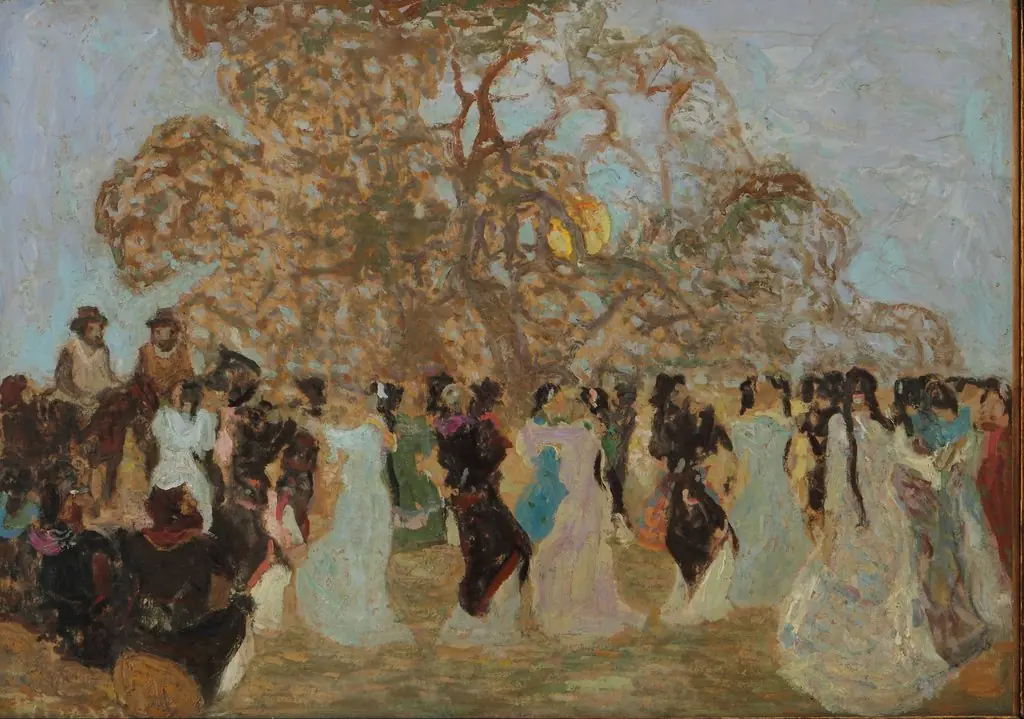
La Obor is an unspecified painting by Ion Popescu-Negreni. It is held in the collection of the Bucharest Municipality Museum.
About this work
Overview
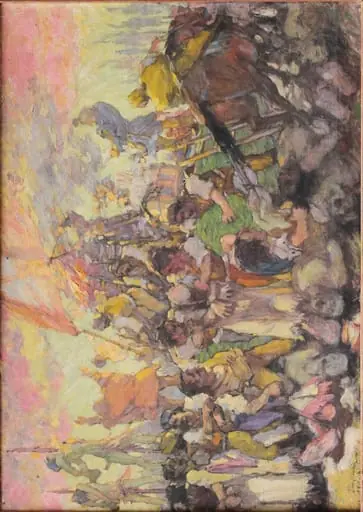
The composition centers on a dense throng of figures in motion, their garments in contrasting reds, blues, and whites creating rhythmic visual pulses.
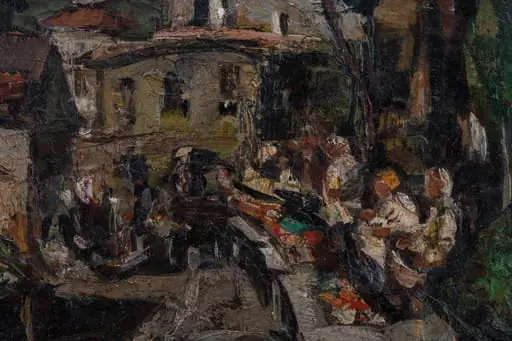
La Obor presents a dynamic public gathering, rendered with vigorous brushwork and saturated hues. The composition centers on a dense throng of figures in motion, their garments in contrasting reds, blues, and whites creating rhythmic visual pulses. Behind them, architectural forms—including a tall steeple—anchor the scene in a recognizable urban or village setting. The painting’s energy arises from its unpolished brushwork and lack of rigid detail, emphasizing movement over precision.
Subject & Meaning
The scene captures a communal event, possibly a festival or religious procession, given the presence of a church and the collective energy of the participants. No single figure dominates; instead, the focus is on the group’s shared momentum. The absence of clear narrative cues suggests the artist valued the emotional texture of the moment over storytelling, inviting viewers to experience the crowd’s palpable vitality.
Technique & Style
Brushstrokes are broad and deliberate, applied with urgency to convey motion rather than detail. Color is used expressively, not naturalistically—bright garments stand out against muted backgrounds. The paint is layered with minimal blending, preserving texture and spontaneity. Perspective is flattened, prioritizing rhythmic composition over spatial depth, reinforcing the immersive, almost overwhelming presence of the crowd.
History & Provenance
No verifiable records exist regarding the painting’s creation date, artist, or early ownership. It has not appeared in major exhibition catalogs or scholarly publications. Its current location and acquisition history remain undocumented, limiting contextual understanding. The work’s attribution and origin are unconfirmed, though its style suggests early 20th-century regional realism with modernist influences.
Context
The painting’s depiction of a public assembly aligns with broader trends in early 20th-century art that turned toward everyday life and collective experience. Similar scenes appear in folk and regional traditions across Europe and Latin America, where festivals and religious processions were common subjects. The loose handling and emphasis on movement reflect a shift away from academic precision toward more immediate, emotional representation.
Legacy
La Obor has not been widely studied or reproduced in academic literature. Its limited visibility has prevented integration into broader art-historical narratives. Nonetheless, it stands as a modest example of how non-canonical artists engaged with communal life through expressive form, preserving a moment of public energy outside the mainstream art world.
Artist & collection
Artist
Ion Popescu-Negreni spent his days sketching the gritty edges of Bucharest’s rivers.