Artwork
Unirea Principatelor
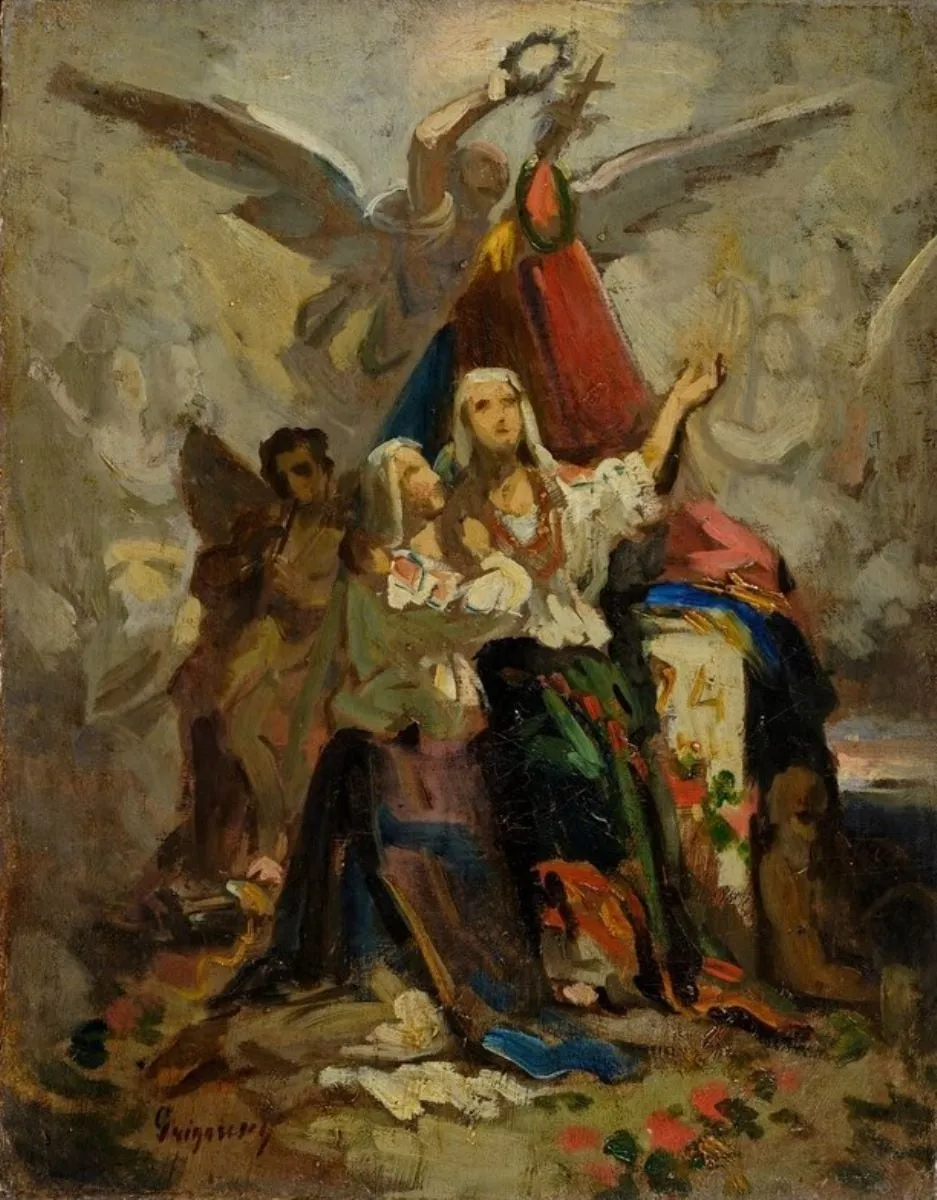
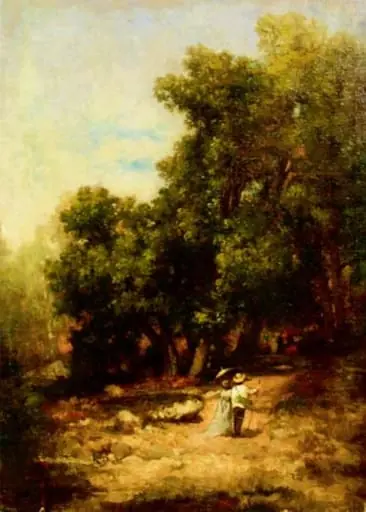
Unirea Principatelor is a print by Nicolae Grigorescu. It dates from 1867 and is held in the collection of the National Museum of Art of Romania.
About this work
Overview
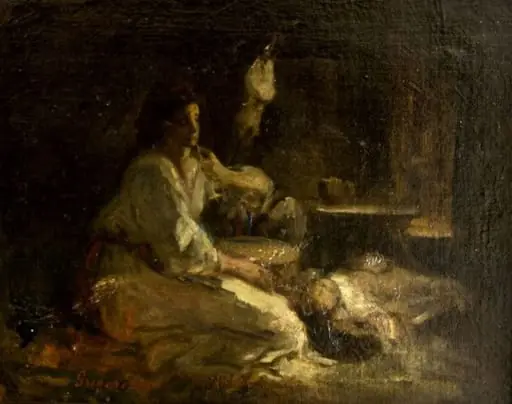
Painted around 1867 by Nicolae Grigorescu, this work depicts a symbolic moment in a muted, interior space. Three figures are arranged with emotional intensity: a kneeling woman, a hovering figure with ambiguous wings, and a standing man observing them. The composition avoids clear narrative detail, instead evoking a spiritual or allegorical atmosphere through loose brushwork and subdued tones.
Subject & Meaning
Above her, a robed form with smoky, indistinct wings suggests a celestial presence, though its identity remains open—angel, spirit, or personification of unity.
The central kneeling figure, clad in a white headscarf, appears in a gesture of reverence or awe. Above her, a robed form with smoky, indistinct wings suggests a celestial presence, though its identity remains open—angel, spirit, or personification of unity. The standing man, dressed plainly, serves as a witness. Together, the figures may allude to the unification of Romanian principalities, framed as a sacred or transcendent event.
Technique & Style
Grigorescu employs thick, textured brushstrokes, applying paint with visible impasto to create a tactile, atmospheric effect. The forms are not sharply defined; edges blur, especially around the hovering figure, enhancing the sense of otherworldliness. The palette is restrained—earthy browns, muted reds, and pale whites—reinforcing the somber, introspective mood of the scene.
History & Provenance
Created shortly after the 1859 union of Moldavia and Wallachia, the painting reflects the cultural climate of national consolidation. Though not commissioned for a specific political purpose, its timing aligns with a period of heightened symbolic expression in Romanian art. It remained in private hands until entering a public collection in the early 20th century.
Context
In the mid-19th century, Romanian artists increasingly turned to allegory to express national identity amid political change. Grigorescu, influenced by French Realism and Romanticism, avoided overt propaganda. Instead, he used intimate, emotionally charged scenes to suggest collective experience, making this work part of a broader movement toward spiritualized nationalism in visual culture.
Legacy
Though less known than Grigorescu’s rural scenes, this painting is recognized for its early experimentation with symbolic form in Romanian painting. Its ambiguous imagery and expressive technique influenced later generations seeking to convey national themes without literal representation. It remains a quiet but significant step in the evolution of modern Romanian art.
Artist & collection

Artist
Nicolae Grigorescu was one of the founders of modern Romanian painting. He is considered by Romanians the greatest Romanian painter, and one of the founders of modern Romanian art. He is most known for paintings…

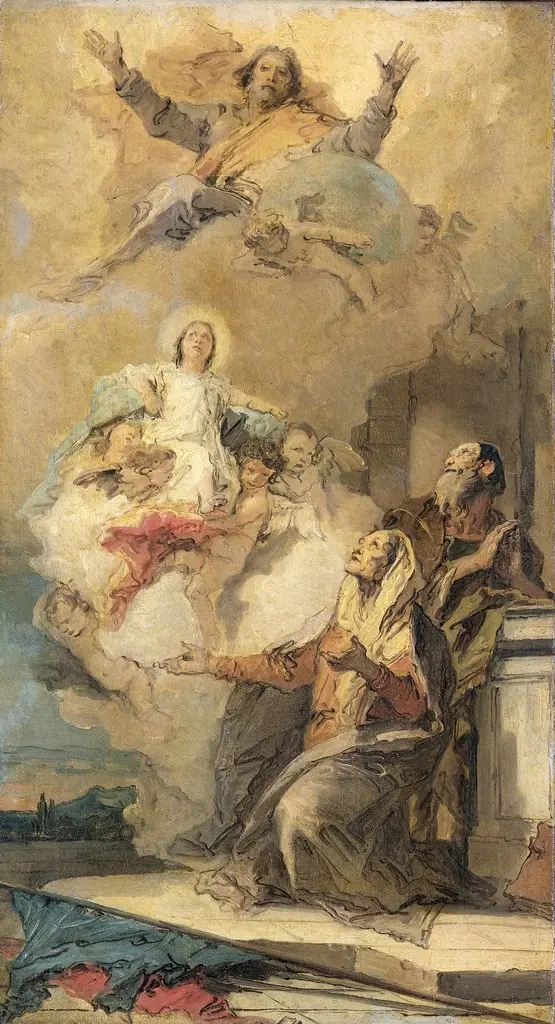 The Immaculate Conception (Joachim en Anna receiving the Virgin Mary from God the Father)
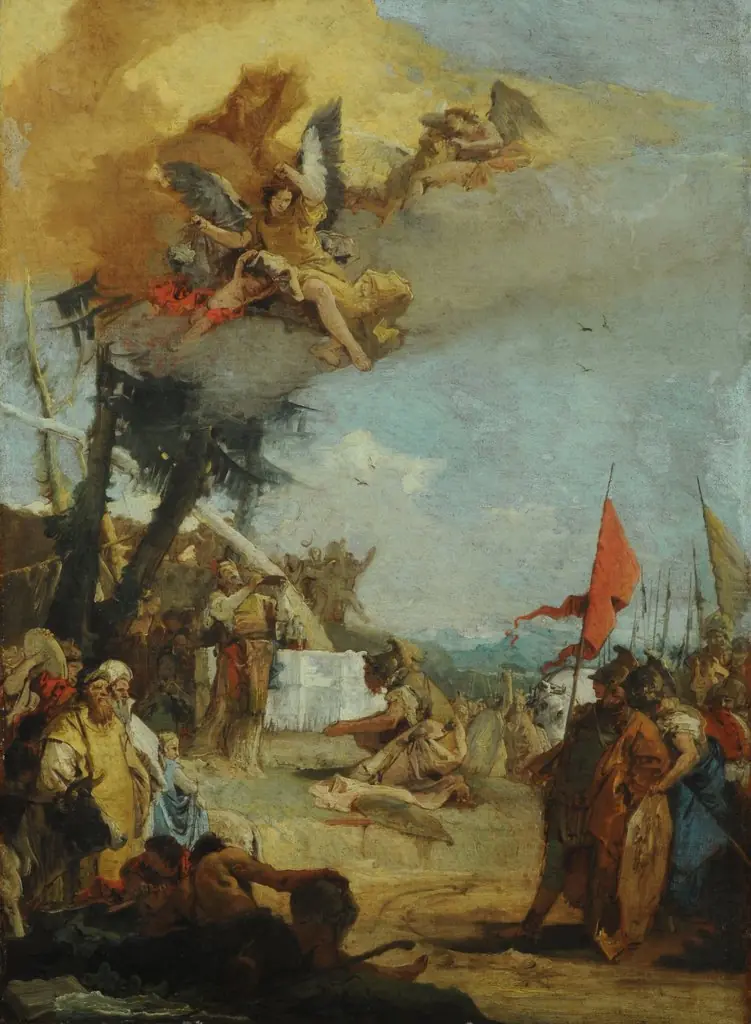 Sacrifice of Melchizedek
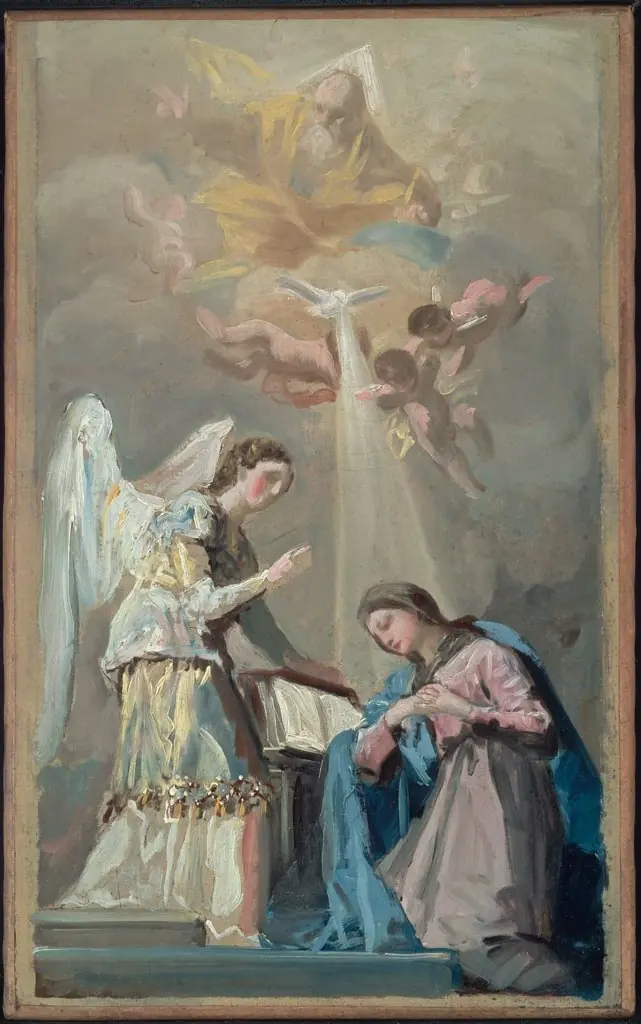 Annunciation
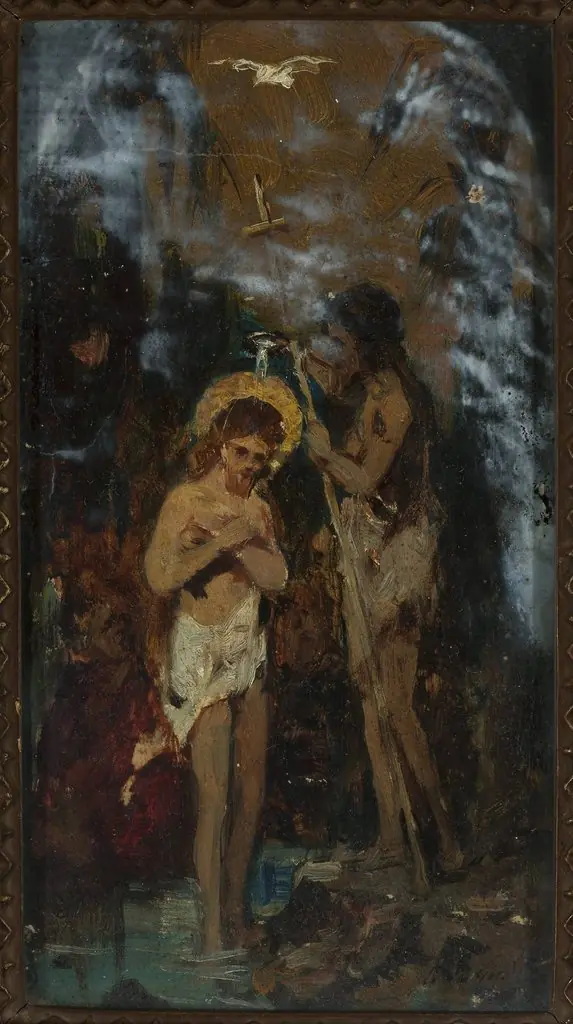 Baptism of Christ
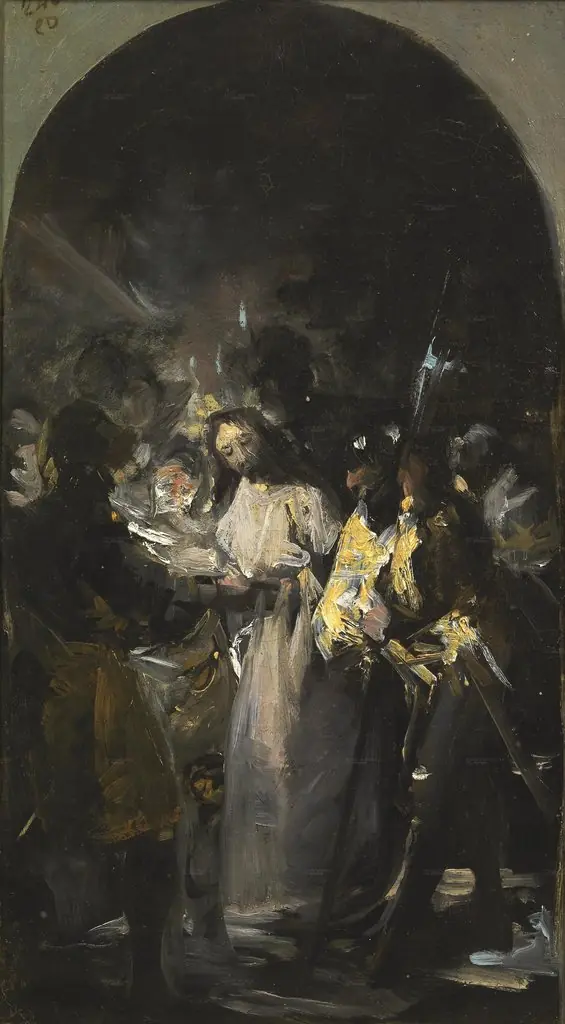 The arrest of Christ
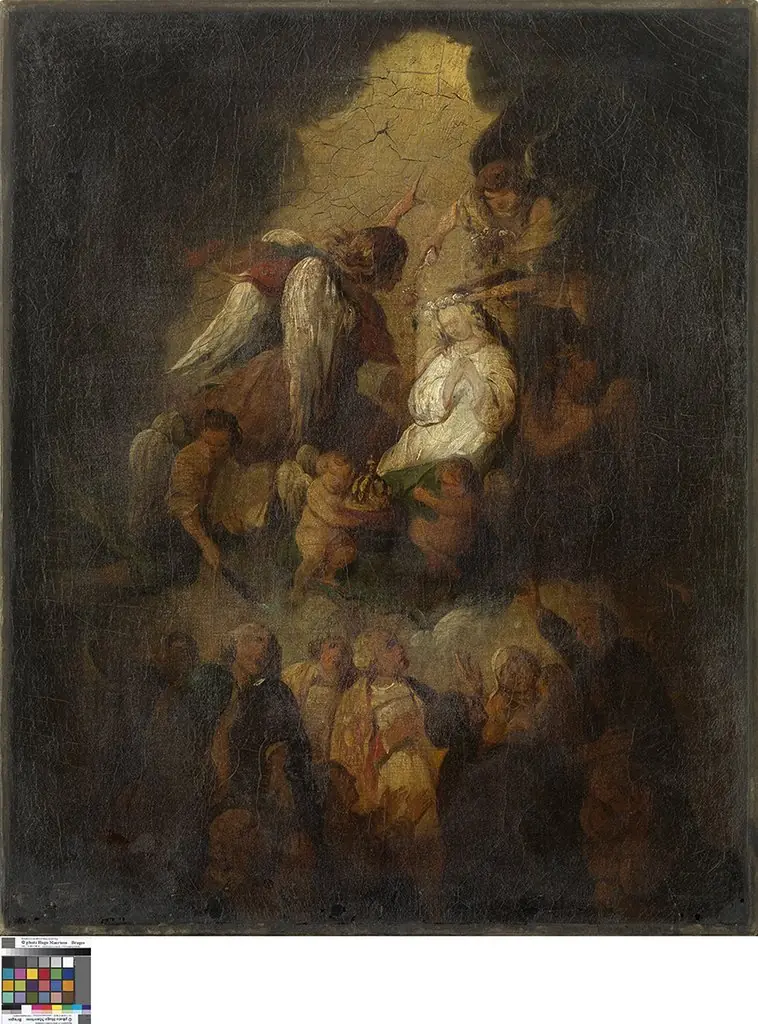 Verheerlijking van een vrouwelijke heilige
 The Descent from the Cross
 Sketch to the Painting "Three Marys Walking to Christ's Tomb"
 The Annunciation of the Virgin's Death
 Memling schildert het Ursulaschrijn
 Renașterea României
 Maternitate