Artwork
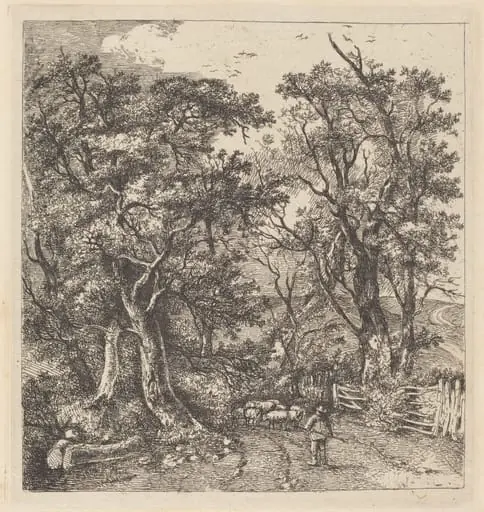
Shepherd and Flock under an Ancient Tree
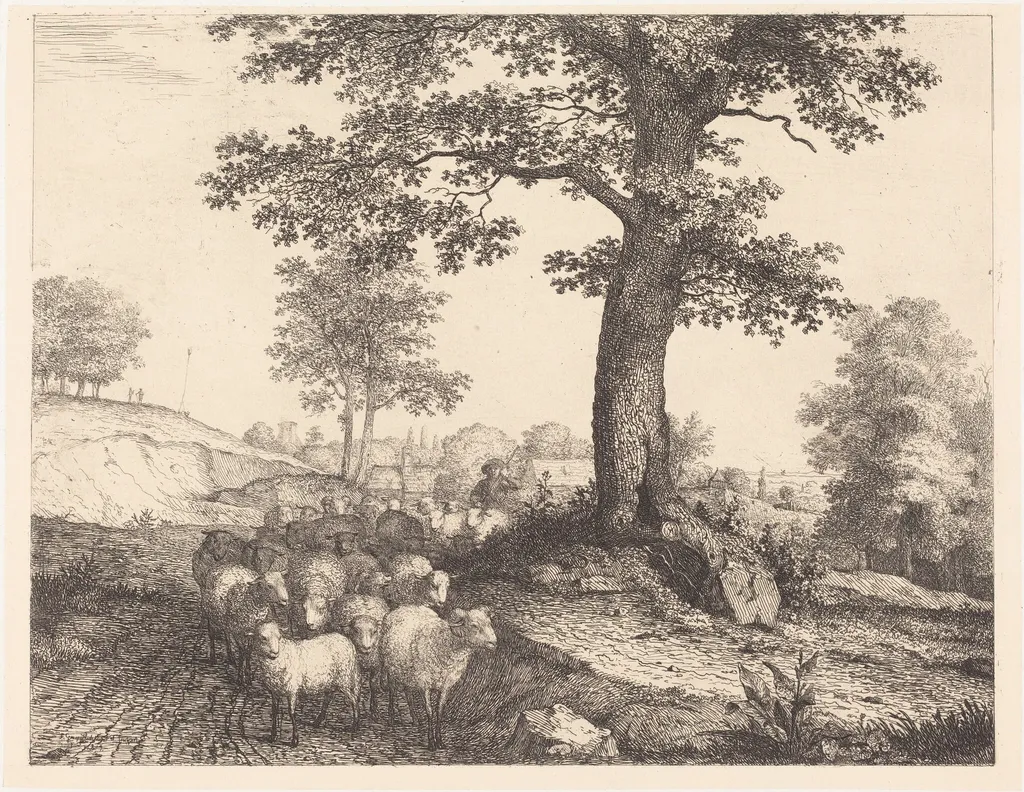
Shepherd and Flock under an Ancient Tree is an ink print by the Romanticist artist Florian Grospietsch. It dates from 1819 and is held in the collection of the National Gallery of Art.
About this work
Overview
The composition presents a solitary shepherd seated beneath a gnarled, sprawling tree, his flock dispersed across a grassy slope that descends toward a river.
Florian Grospietsch’s 1819 print, titled Shepherd and Flock under an Ancient Tree, is an etching executed on a buff chine collé support. The composition presents a solitary shepherd seated beneath a gnarled, sprawling tree, his flock dispersed across a grassy slope that descends toward a river. In the distance a modest dwelling and additional trees occupy a gentle incline, framing the tranquil rural scene.
Subject & Meaning
The work captures a moment of pastoral repose, emphasizing the harmonious relationship between the shepherd, his animals, and the natural environment. The ancient tree, with its twisted limbs, serves as a focal point that shelters both man and flock, suggesting themes of protection, continuity, and the timeless rhythm of agrarian life.
Technique & Style
Grospietsch employed traditional intaglio methods, incising fine lines into a metal plate to render the intricate texture of bark, foliage, and the undulating terrain. The use of chine collé—an adhesive paper layer affixed to the primary sheet—provides a warm, buff-toned ground that enhances the subtle tonal gradations and reinforces the delicate hand‑drawn quality of the image.
History & Provenance
Created in 1819, the etching reflects the early nineteenth‑century German interest in rural genre scenes. While specific ownership records are limited, the print has appeared in several catalogues of Grospietsch’s oeuvre and is held in a number of European print collections, attesting to its continued scholarly relevance.
Context
During the period of its production, German artists often turned to bucolic subjects as a response to industrialization and urban expansion. Grospietsch’s focus on a solitary shepherd aligns with contemporary Romantic ideals that valorized nature’s simplicity and the noble labor of the countryside.
Own this work as a print
Artist & collection


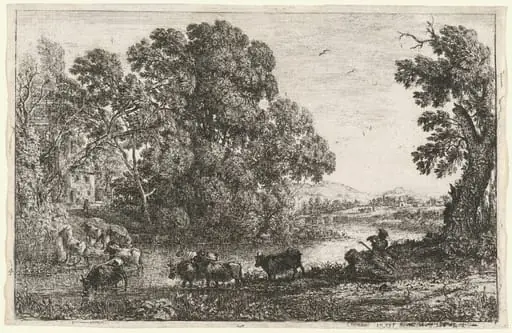 The Cowherd (Le bouvier)
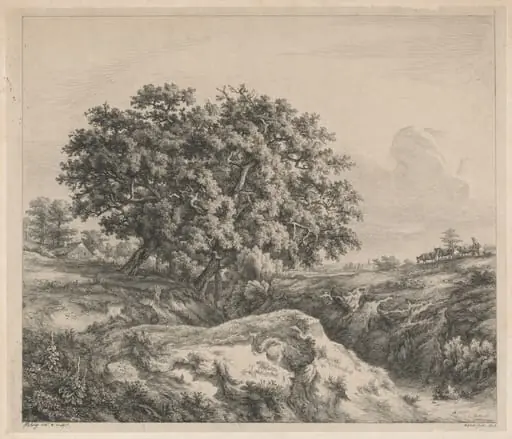 Le chêne au ravin (Oak Tree by a Ravine)
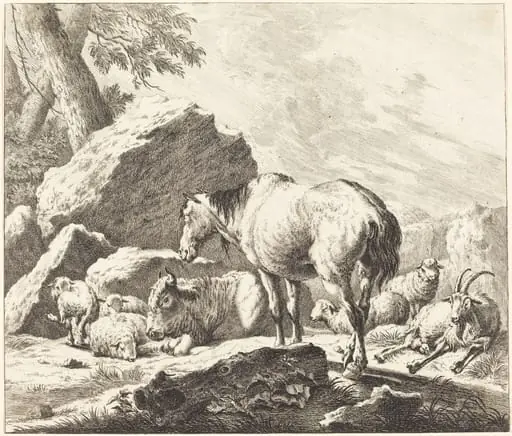 A Horse, Buffalo, Sheep, and Goat in an Italian Landscape
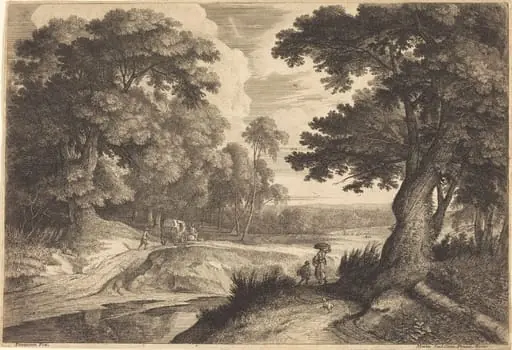 Edge of a Wood with Peasants Going to Market
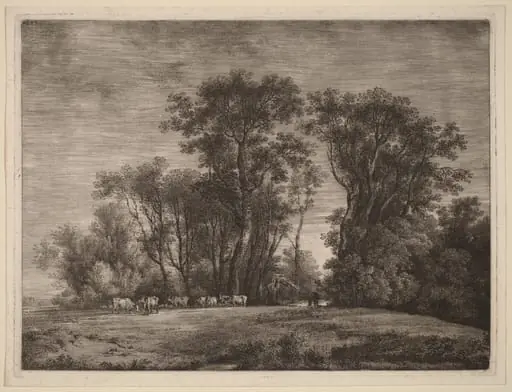 A Meadow with Cattle at the Edge of a Wood
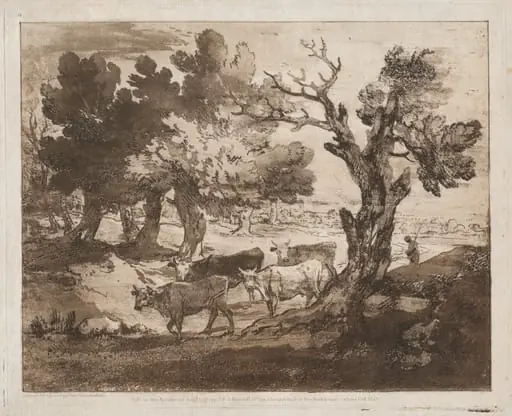 Wooded Landscape with Herdsman and Cows
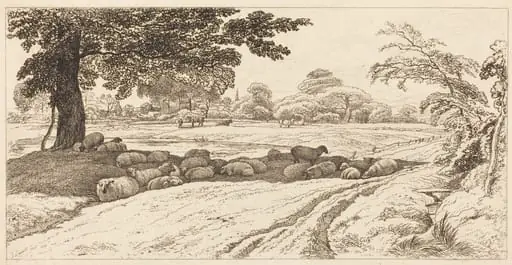 Sheep at Noon
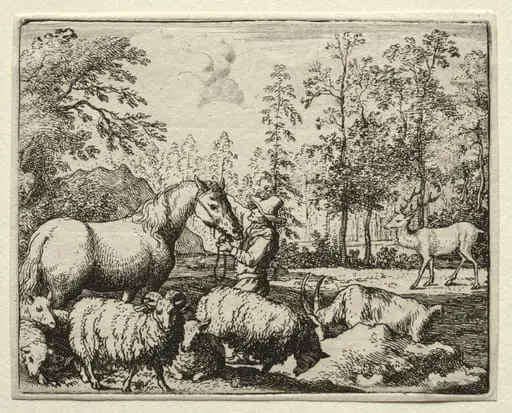 Reynard the Fox: The Jealous Horse
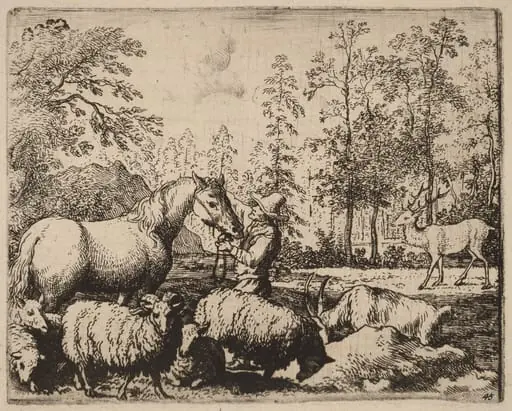 The Horse and the Stag
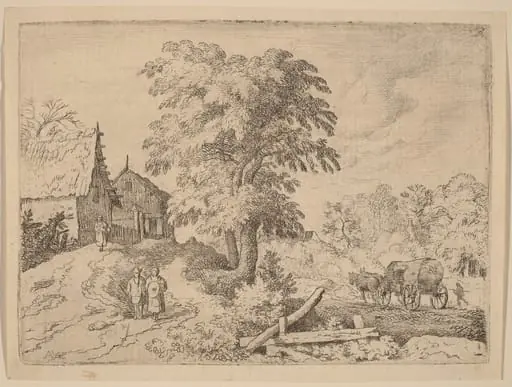 Cart with Two Draft Horses
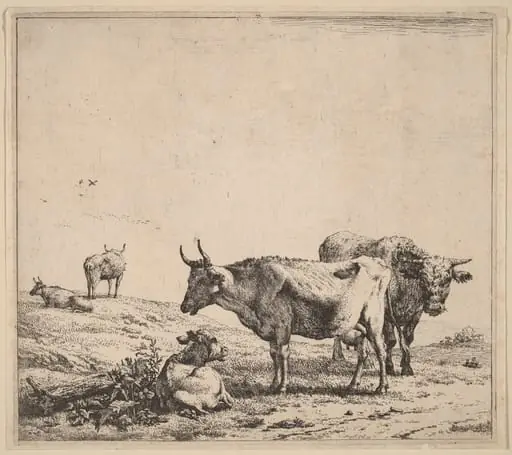 Cow, Bull and Calf
 Road Scene, Hethersett