Artwork
Reynard the Fox: The Jealous Horse
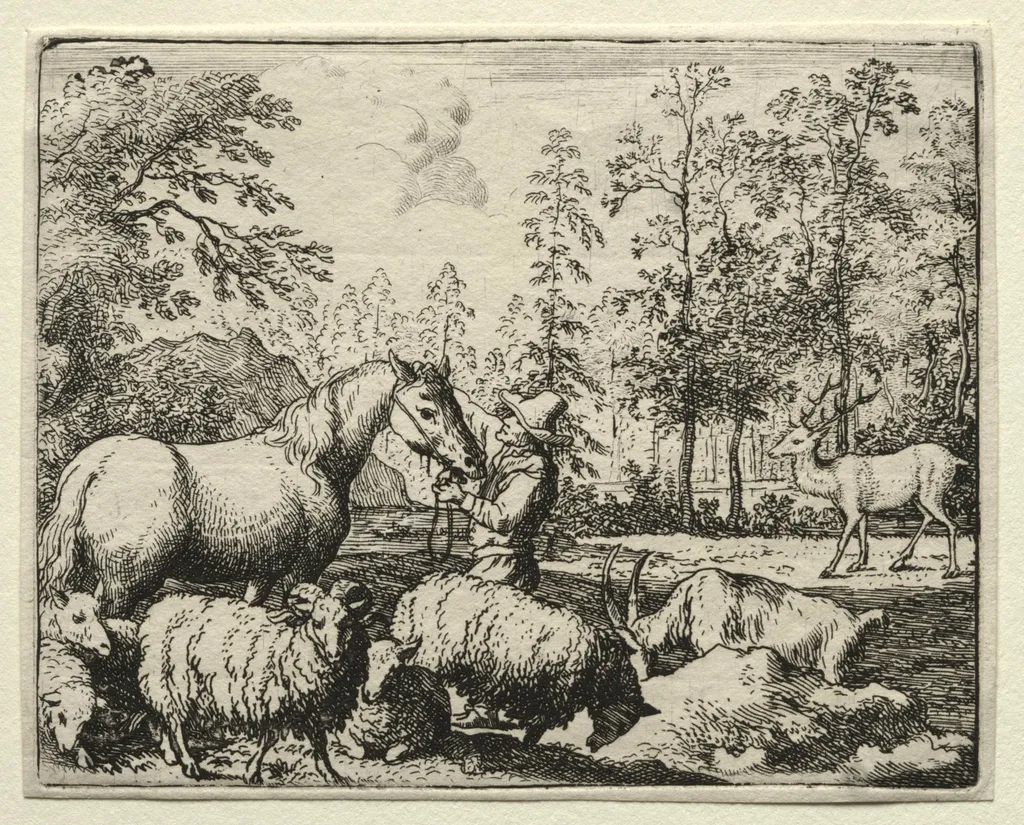
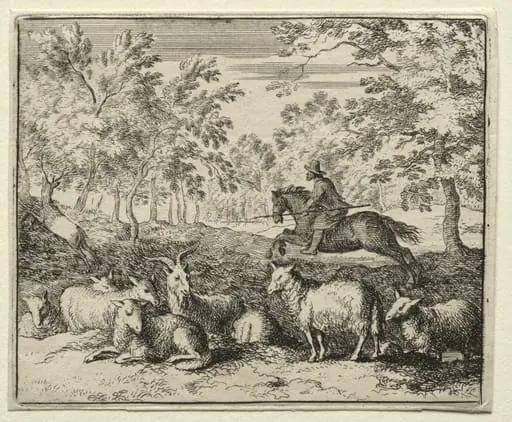
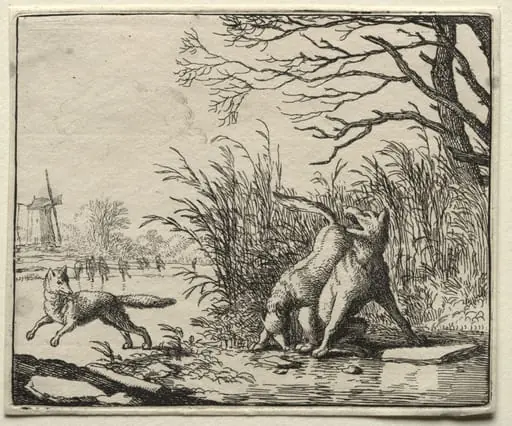
Reynard the Fox: The Jealous Horse is a print by the Baroque artist Allart van Everdingen. It dates from 1662 and is held in the collection of the Cleveland Museum of Art.
About this work
Overview
Created in 1662 by Dutch artist Allart van Everdingen, this print illustrates a scene from the medieval Reynard the Fox fable cycle.
Created in 1662 by Dutch artist Allart van Everdingen, this print illustrates a scene from the medieval Reynard the Fox fable cycle. Executed in etching and mezzotint, the work belongs to the Cleveland Museum of Art’s collection. Van Everdingen, known for his landscape and narrative prints, used the animal allegory to explore human traits through symbolic figures, blending folklore with naturalistic observation.
Subject & Meaning
The scene portrays a horse, depicted as the central figure, standing beside a man amid grazing sheep in a wooded setting. Though drawn from the Reynard tales, this moment focuses on the horse’s emotional state—its stillness and gaze suggest jealousy or contemplation. The quiet interaction between animal and human, framed by pastoral elements, transforms a folkloric trope into a meditation on envy and companionship.
Technique & Style
Van Everdingen employed mezzotint and etching to achieve subtle tonal gradations, enhancing the volume of the horse and figure against the muted forest backdrop. The chiaroscuro effect draws attention to the central forms while softening the surrounding trees and sky. His precise line work and atmospheric depth reflect Baroque sensibilities, though the composition remains restrained, favoring quiet narrative over dramatic intensity.
History & Provenance
The print was produced during Van Everdingen’s mature period, following his travels through Scandinavia and Germany, which influenced his landscape style. It entered the Cleveland Museum of Art’s collection in the 20th century as part of a broader acquisition of Dutch graphic works. No earlier ownership records are widely documented, but its inclusion in institutional holdings confirms its recognized place in 17th-century printmaking.
Context
In 17th-century Netherlands, animal fables like Reynard’s were popular in printed form, serving as moral or satirical commentary. Van Everdingen’s engagement with these stories aligned with a broader cultural interest in allegory and naturalism. His prints stood apart from overtly religious or mythological subjects, offering instead intimate, psychologically nuanced interpretations of folk narratives.
Legacy
Van Everdingen’s Reynard series contributed to the tradition of narrative printmaking in the Dutch Golden Age, influencing later artists who sought to blend folklore with natural observation. While not widely reproduced today, this work remains a key example of how animal allegory was adapted into visual art with emotional subtlety, preserving medieval storytelling in early modern graphic form.
Own this work as a print
Artist & collection
Artist
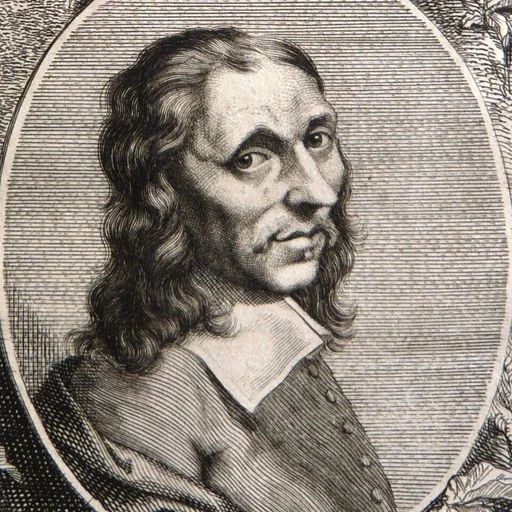
Allaert van Everdingen (Dutch pronunciation: ; bapt. 18 June 1621 – 8 November 1675 (buried)), was a Dutch Golden Age painter and printmaker in etching and mezzotint.

 Reynard the Fox: The Chase of the Stag
 Reynard the Fox: The Benediction Given to Reynard
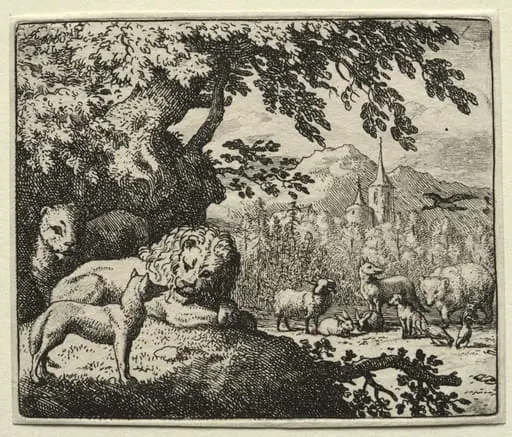 Reynard the Fox: Reynard Continues His Story
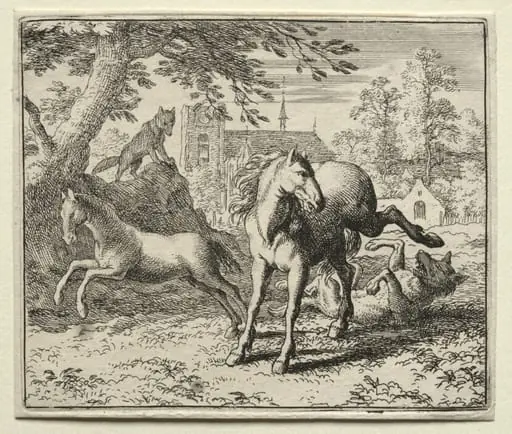 Reynard the Fox: Reynard Tricks the Wolf
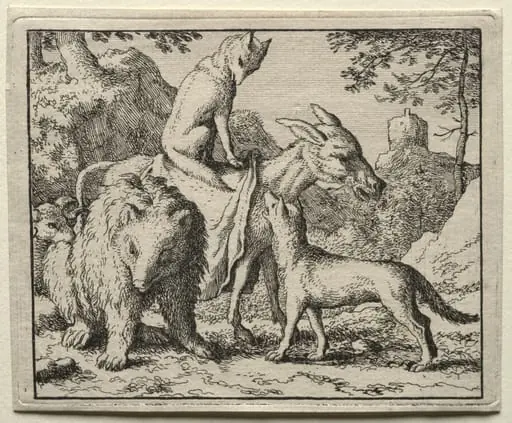 Reynard the Fox: Reynard and his Companions
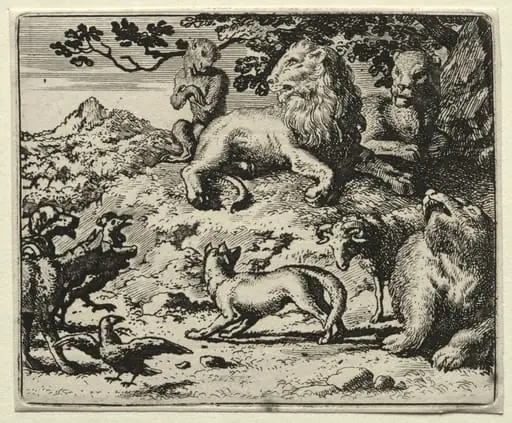 Reynard the Fox: The Animals Complain of Reynard's Pardon
 Reynard the Fox: A New Accusation by the Wolf