Artwork
Cupid with a Bow

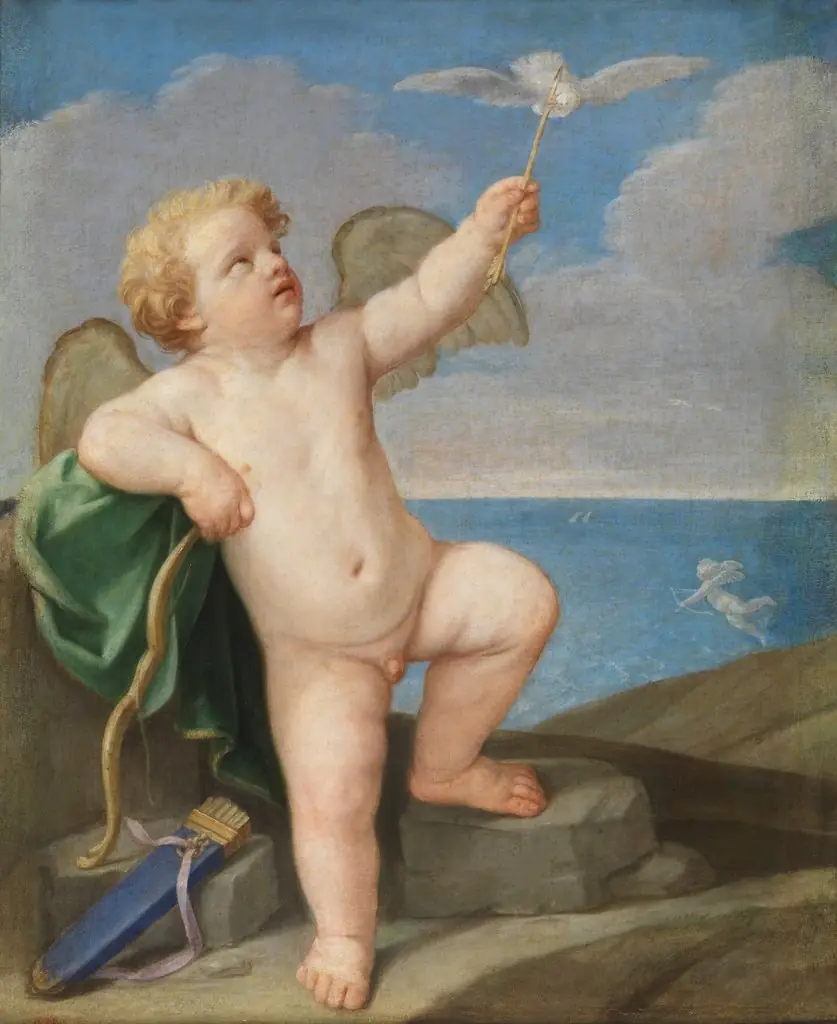
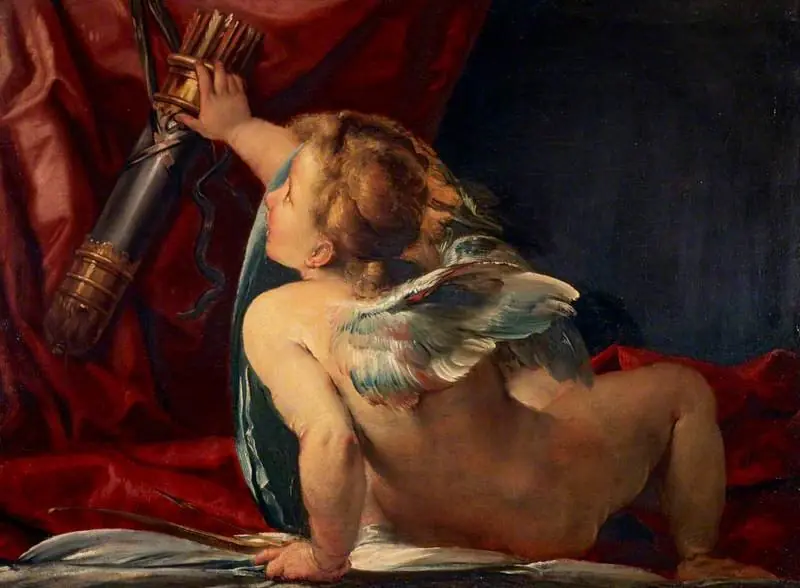
Cupid with a Bow is an oil painting by the High Baroque Italian artist Guido Reni. It is held in the collection of the Walters Art Museum.
About this work
Overview
The work is part of the Walters Art Museum’s collection, where it is displayed as an example of Baroque mythological painting from the Italian tradition.
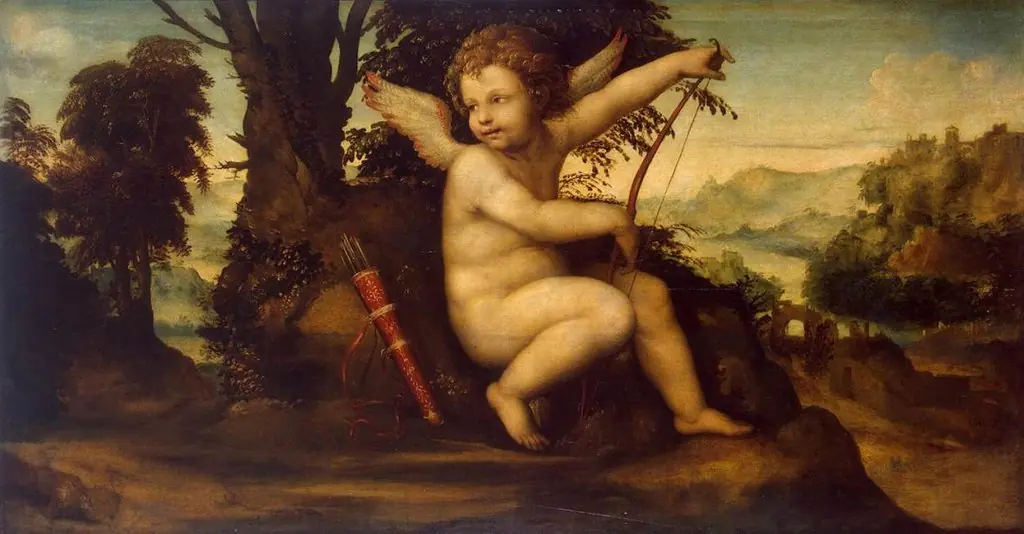
Cupid with a Bow is an oil painting attributed to Guido Reni, dated around 1650. It portrays the Roman god of love as a youthful, winged infant reclining sideways, cradling a bow. The composition centers entirely on the figure, set against a muted, shadowed landscape. The work is part of the Walters Art Museum’s collection, where it is displayed as an example of Baroque mythological painting from the Italian tradition.
Subject & Meaning
The figure represents Cupid, the god of desire, depicted not as a powerful force but as a vulnerable child. His neutral expression and relaxed posture soften his mythological role, suggesting innocence rather than agency. The bow and quiver imply potential action, yet the stillness of the scene invites contemplation over narrative drama. This portrayal reflects a shift in Baroque iconography toward psychological subtlety.
Technique & Style
Reni employs chiaroscuro to model the infant’s form, lending volume and a tactile realism to the skin and wings. Fine brushwork defines the texture of feathers and the grain of the bow, while the dark, indistinct background isolates the figure and enhances its three-dimensionality. The palette is restrained, dominated by warm flesh tones against cool shadows, emphasizing the figure’s physical presence without ornamental distraction.
History & Provenance
The painting entered the Walters Art Museum’s collection in the early 20th century, acquired as part of Henry Walters’ broader assembly of European art. Its attribution to Reni has been consistently supported by stylistic analysis, though its exact provenance prior to the 1900s remains undocumented. It has been exhibited regularly since its acquisition, serving as a representative work of mid-17th-century Bolognese painting.
Context
Created during the later phase of Reni’s career, the painting aligns with a trend in Counter-Reformation Italy toward emotionally restrained religious and mythological subjects. While many contemporaries emphasized theatricality, Reni favored clarity and calm. This depiction of Cupid reflects a broader cultural preference for idealized, serene figures that balanced classical themes with spiritual serenity.
Legacy
Cupid with a Bow exemplifies Reni’s influence on later Baroque aesthetics, particularly in his fusion of classical form with emotional restraint. Though less celebrated than his religious works, this painting illustrates his skill in rendering mythological subjects with quiet dignity. It remains a touchstone for studies of how myth was reimagined in 17th-century Italian art beyond overt drama.
Own this work as a print
Artist & collection
Artist
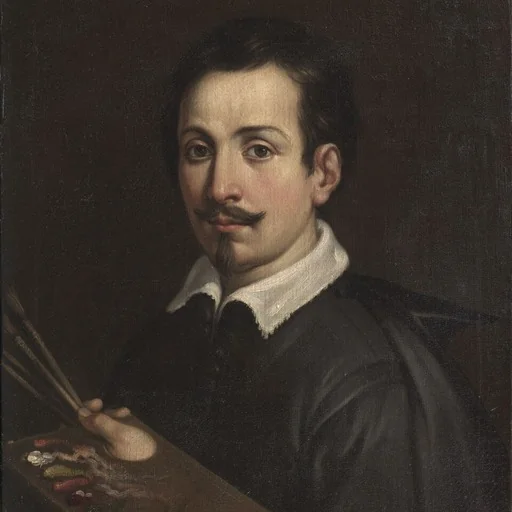
Guido Reni was an Italian Baroque painter, although his works showed a classical manner, similar to Simon Vouet, Nicolas Poussin, and Philippe de Champaigne.