Artwork
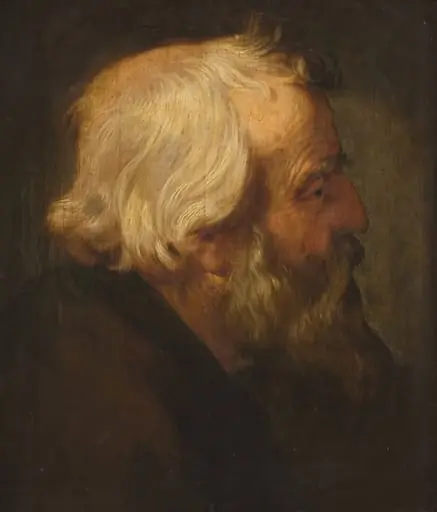
Head of an Apostle
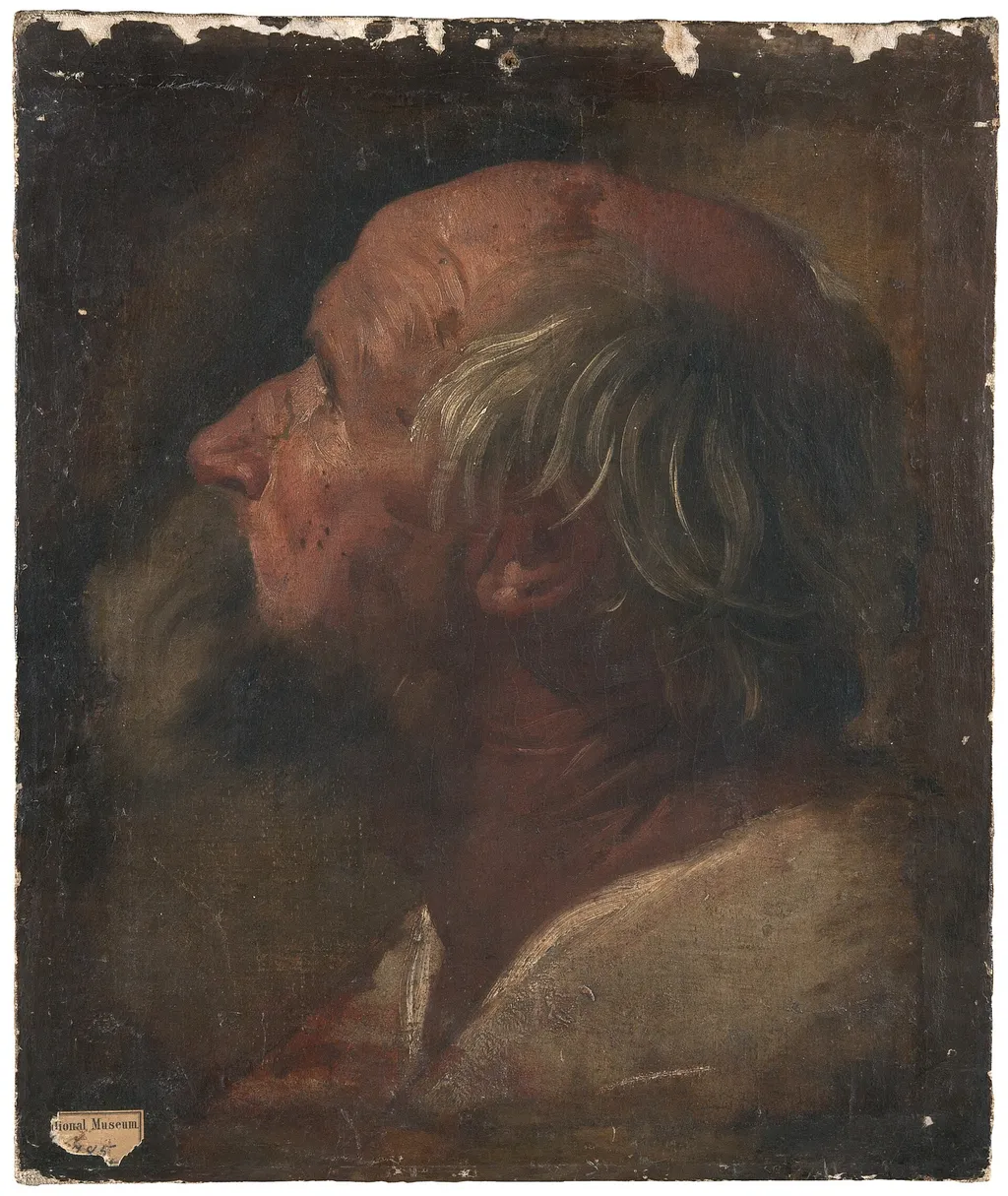
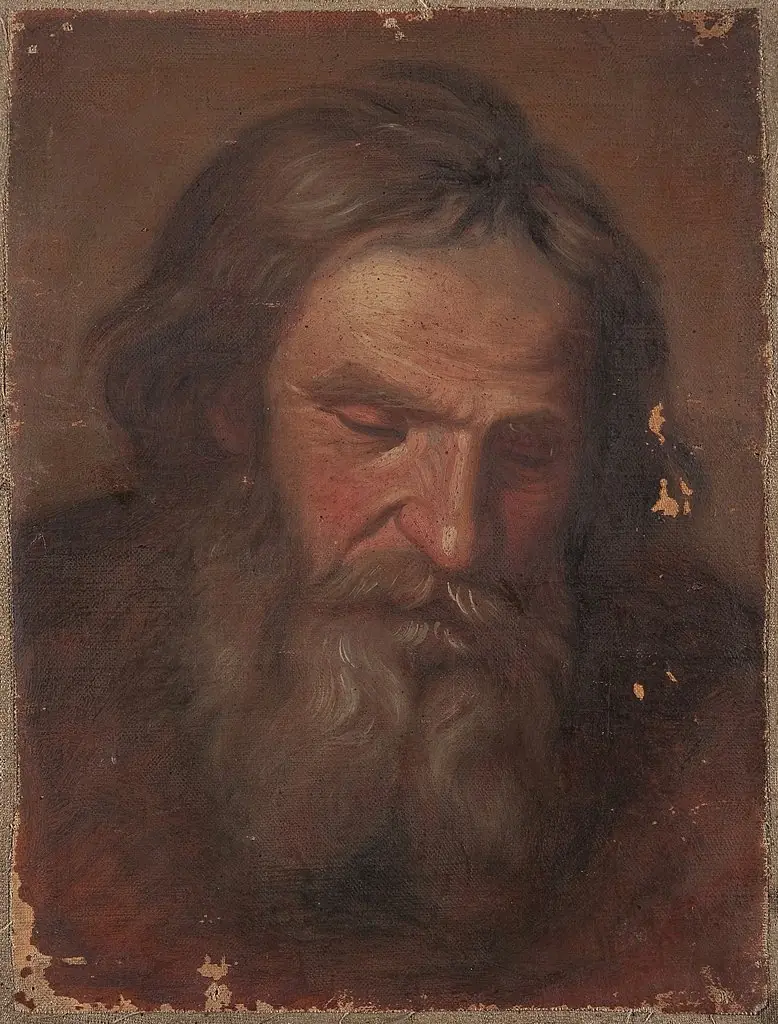
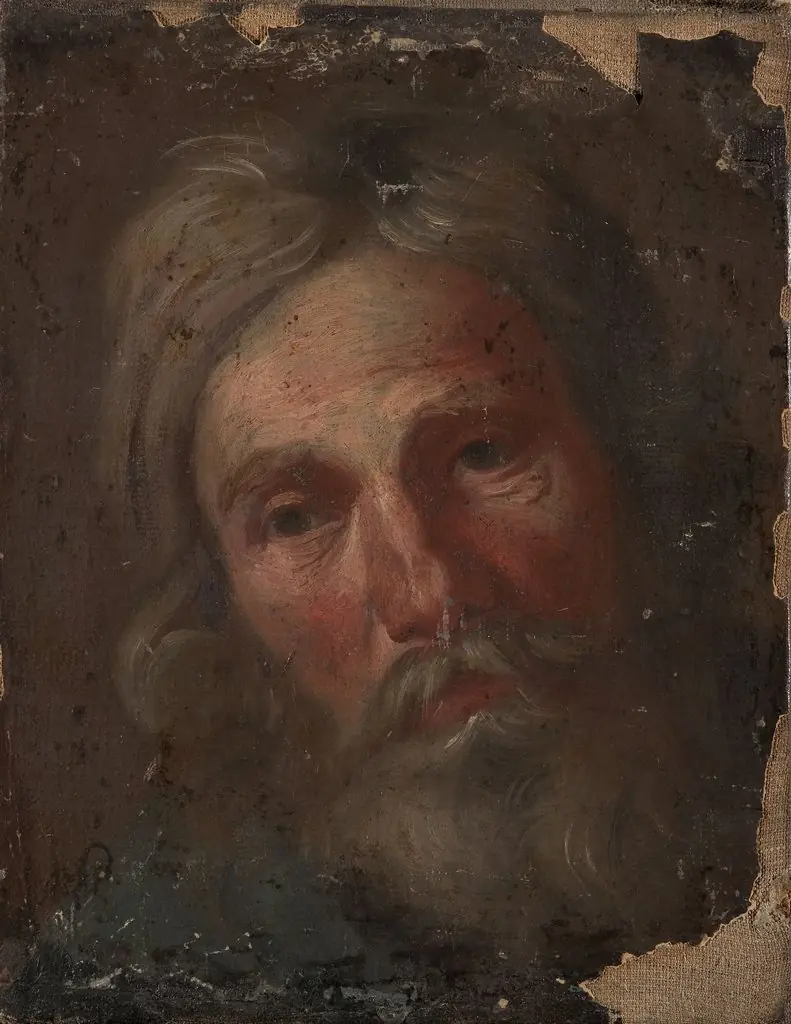
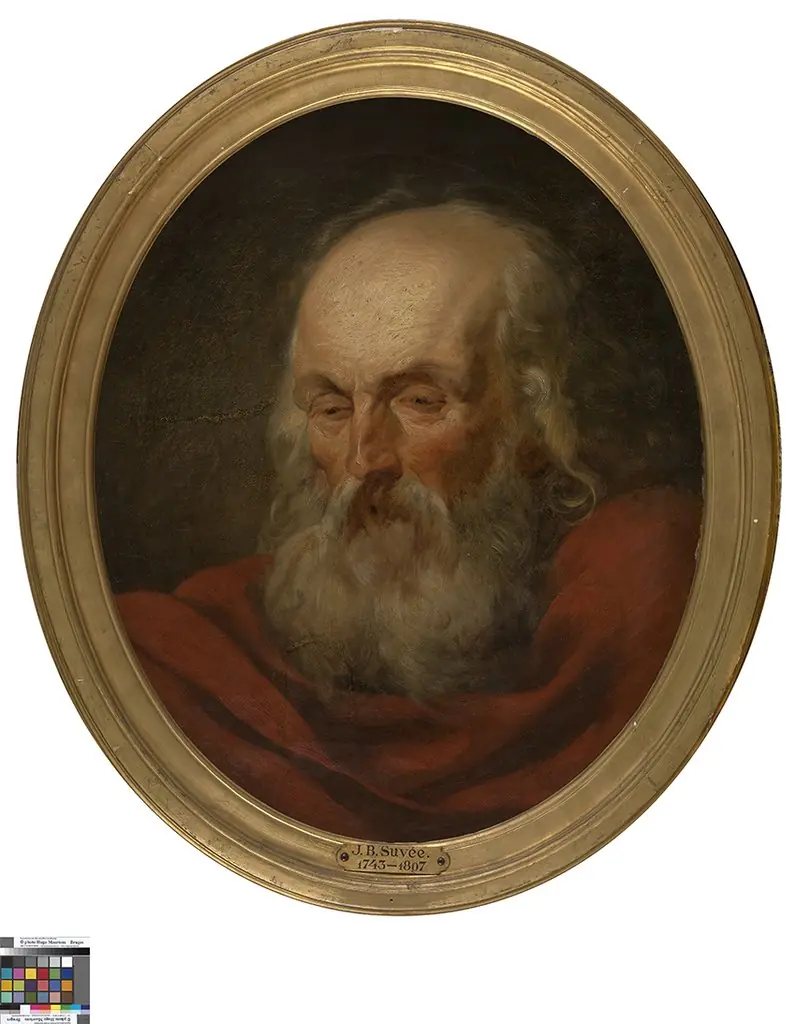
Head of an Apostle is an oil painting by the Early Baroque Italian artist Guido Reni. It dates from 1618 and is held in the collection of the Nationalmuseum.
About this work
Overview
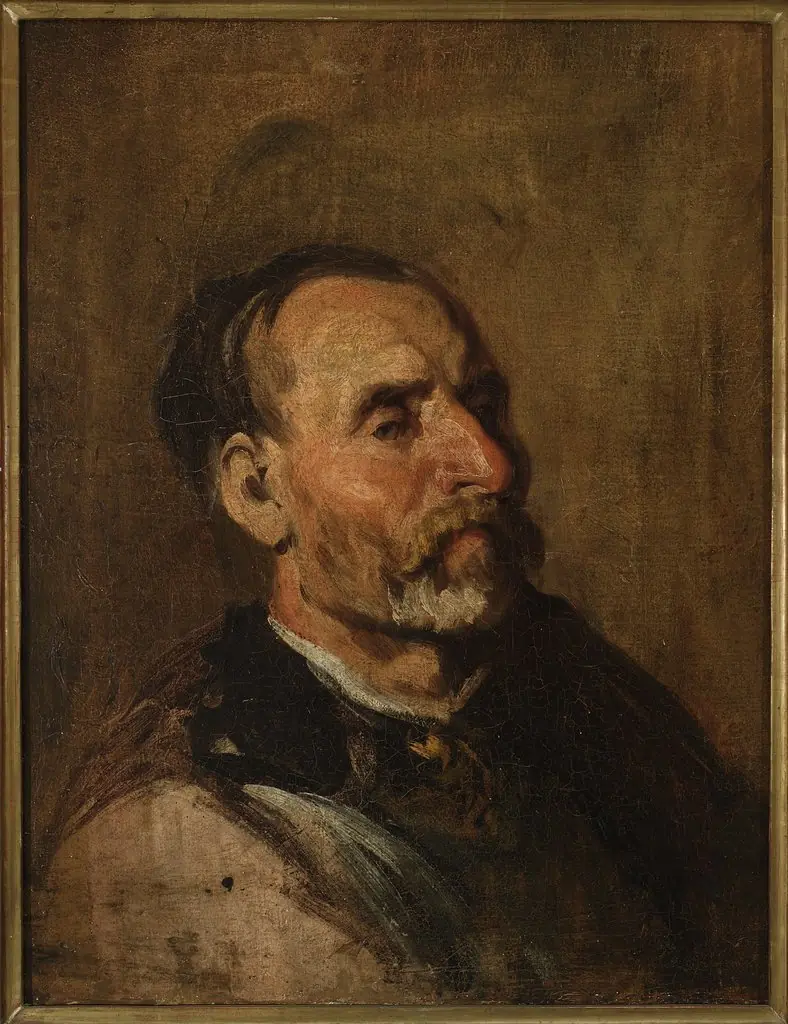
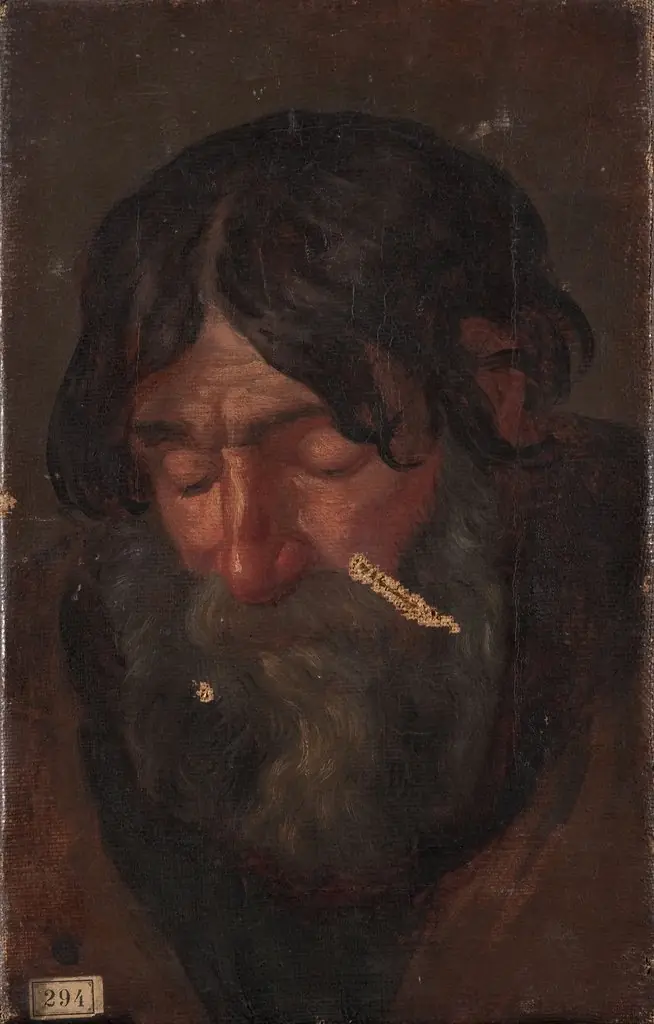
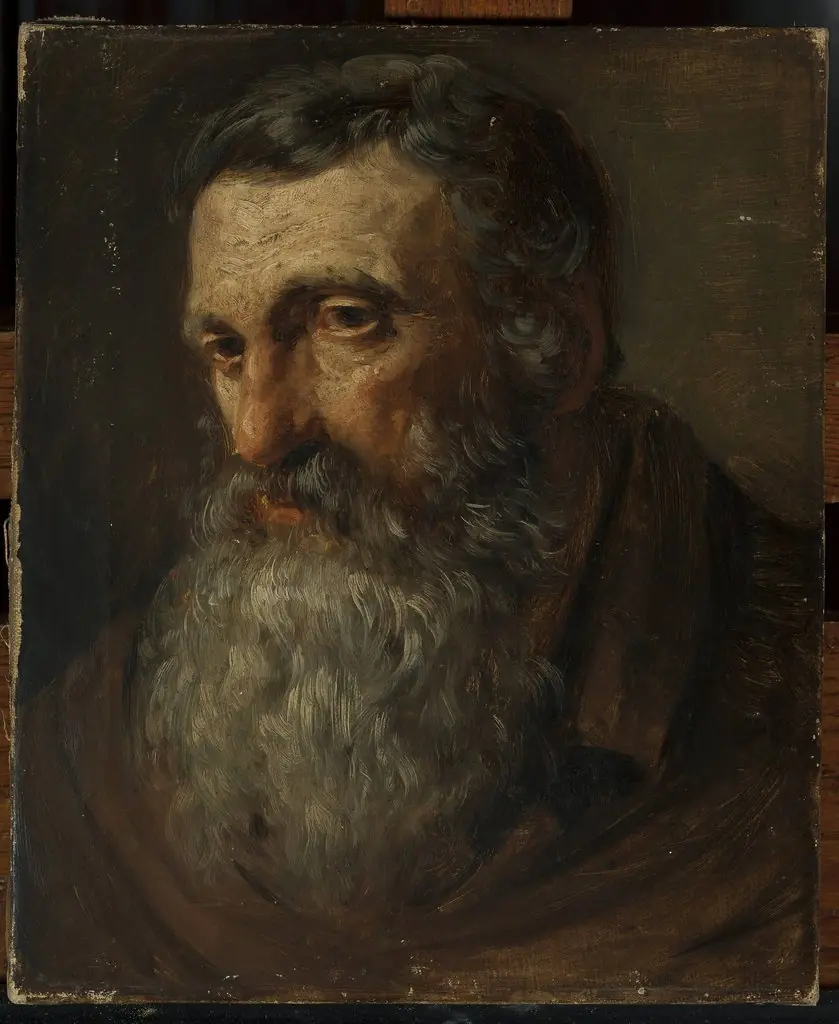
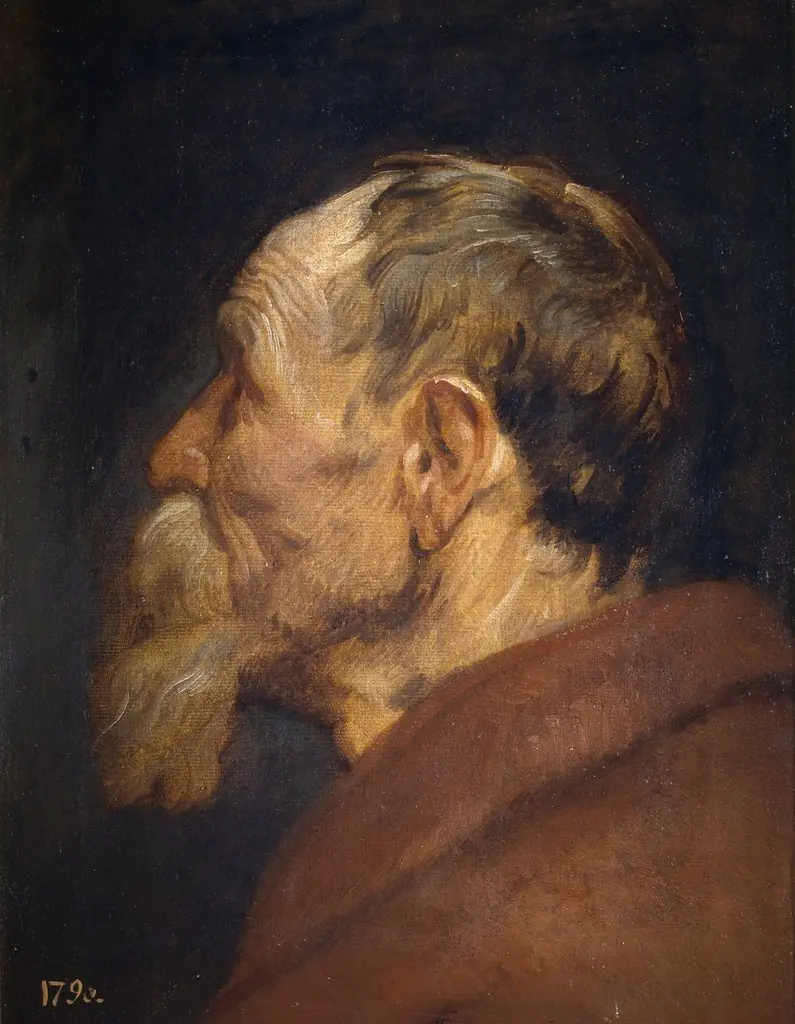
Guido Reni’s oil on canvas, dated around 1618, presents a solitary figure rendered in profile. The work is part of the collection of the Nationalmuseum in Stockholm and exemplifies the artist’s early Baroque religious portraiture. The composition focuses on a bearded man in a white robe, his head inclined slightly upward, creating a quiet, contemplative presence.
Subject & Meaning
The sitter is depicted as an apostle, identifiable by his long white beard and solemn expression. His gaze is directed downward, suggesting introspection or prayerful meditation. The simple attire and restrained pose emphasize spiritual devotion rather than narrative action, inviting viewers to consider the inner life of the holy figure.
Technique & Style
Reni employs chiaroscuro, contrasting luminous highlights with deep shadows to model the face and give it a three‑dimensional quality. Warm, earthy pigments dominate the palette, while the subtle gradations of tone render the texture of skin and fabric. The delicate handling of light enhances the sense of volume and emotional depth.
History & Provenance
Created circa 1618, the painting entered the Nationalmuseum’s holdings in the early twentieth century, though earlier ownership records are sparse. Its presence in a major Swedish institution reflects the broader European appreciation for Reni’s religious works and their circulation beyond Italy during the Baroque period.
Artist & collection
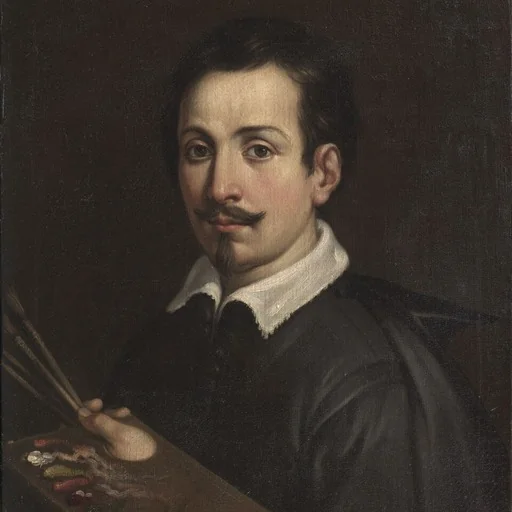
Artist
Guido Reni was an Italian Baroque painter, although his works showed a classical manner, similar to Simon Vouet, Nicolas Poussin, and Philippe de Champaigne.