Artwork
Martyrdom of Saint Andrew
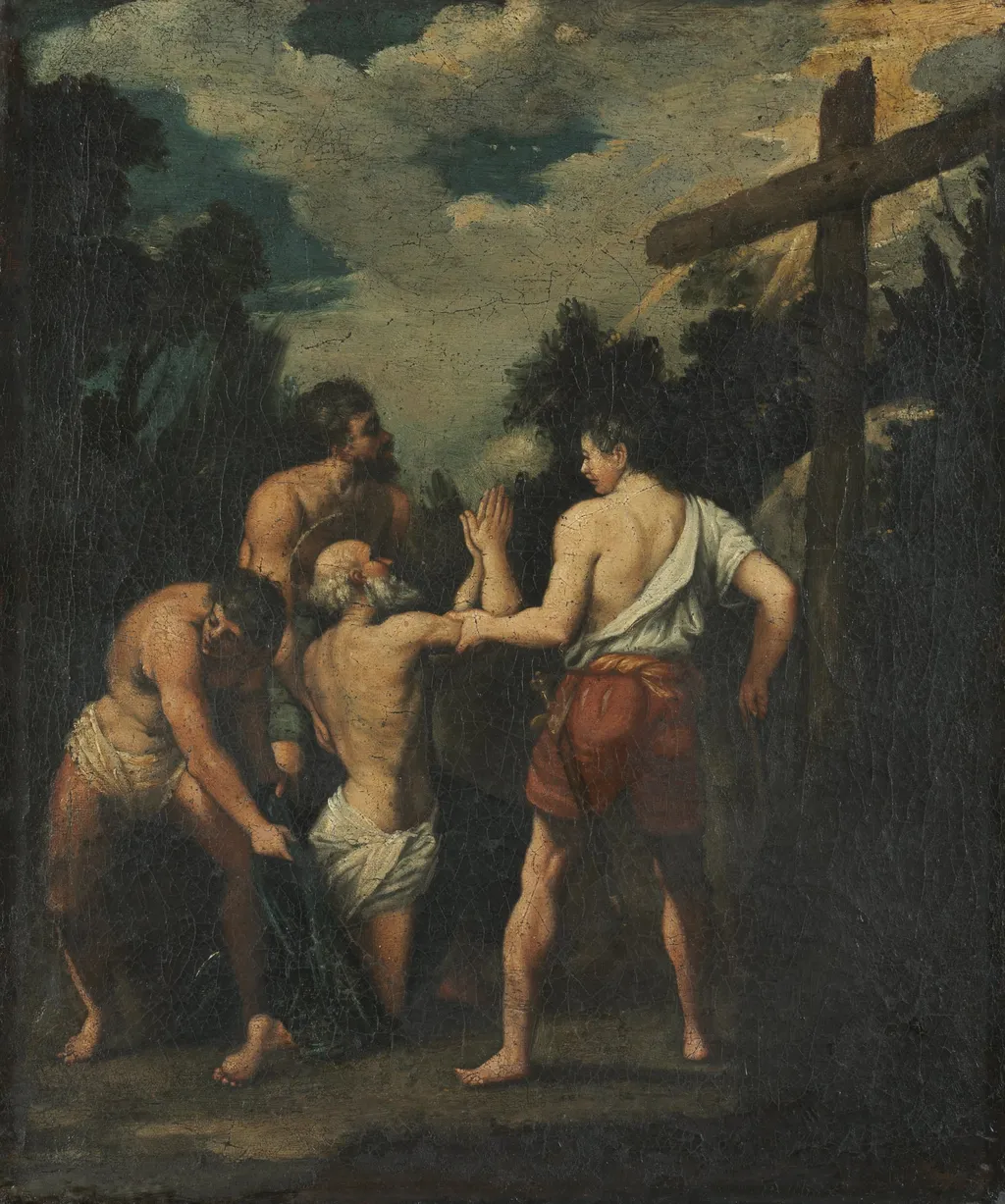
Martyrdom of Saint Andrew is an unspecified painting by the Baroque artist Guido Reni. It dates from 1604 and is held in the collection of the Cleveland Museum of Art.
About this work
Overview
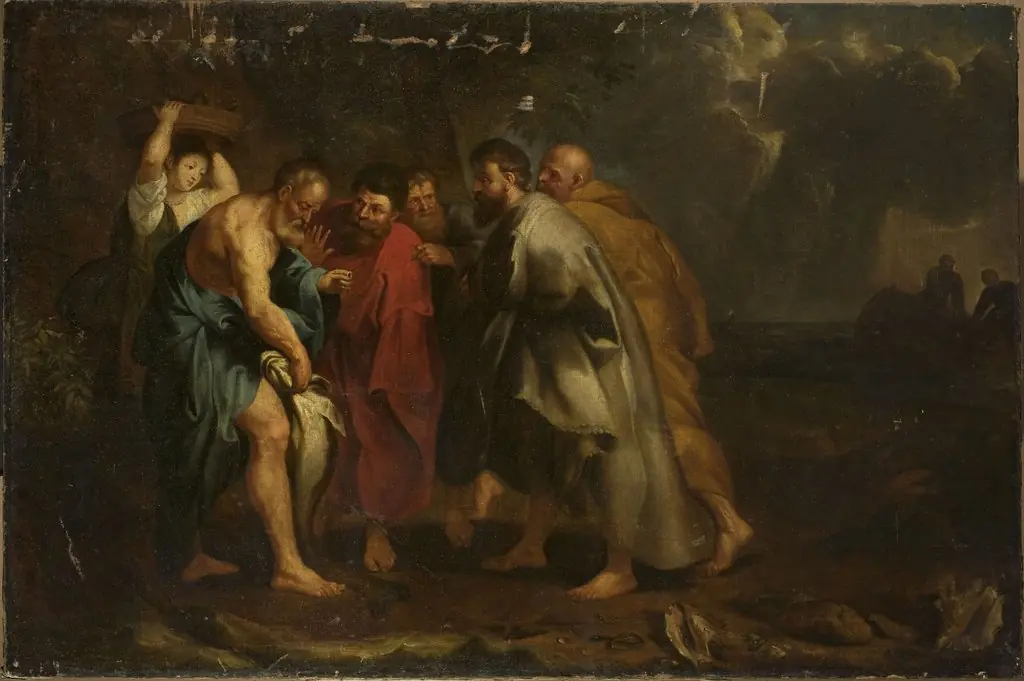
This modestly sized oil painting, attributed to an unidentified Venetian hand of the 1600s, depicts the moment Saint Andrew is led to his execution.
This modestly sized oil painting, attributed to an unidentified Venetian hand of the 1600s, depicts the moment Saint Andrew is led to his execution. The composition is directly derived from Guido Reni’s early‑17th‑century fresco of the same subject in Rome’s San Gregorio al Celio, yet the Venetian copy condenses the scene to focus on the central figures and brings the cross forward into the foreground.
Subject & Meaning
The work illustrates the apostle Andrew, who, according to tradition, chose an X‑shaped cross for his death, deeming the familiar Latin cross unsuitable for a martyr beside Christ. In this version the Latin cross replaces Reni’s diagonal form, a shift that underscores Andrew’s devotion while aligning the iconography with Northern European conventions that favored the familiar upright cross.
Technique & Style
Executed in a restrained palette, the painting employs the soft transitions characteristic of Venetian chiaroscuro, though it lacks the dynamic vigor of Reni’s original. The figures are rendered with a modest degree of modeling; the leftmost figure is posed awkwardly, indicating a copyist’s limited skill. The foreground placement of the cross creates a more intimate focus on Andrew’s acceptance of his fate.
History & Provenance
Created in the 17th century, the piece reflects the diffusion of Roman Baroque motifs into Venetian workshops. Its anonymous authorship suggests it was produced for private devotion rather than public display. The painting entered the Cleveland Museum of Art’s collection in the early 20th century, where it has been catalogued as a devotional copy of Reni’s fresco.
Context
The work exemplifies how Venetian artists of the period adapted celebrated Roman compositions for local tastes, substituting the X‑cross with a more familiar Latin form. By narrowing Reni’s bustling narrative to four central figures, the painting emphasizes personal piety over theatrical spectacle, illustrating the broader trend of intimate devotional images circulating throughout 17th‑century Italy.
Own this work as a print
Artist & collection
Artist
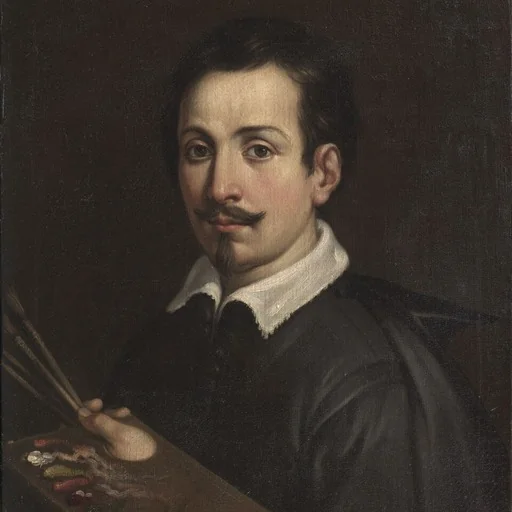
Guido Reni was an Italian Baroque painter, although his works showed a classical manner, similar to Simon Vouet, Nicolas Poussin, and Philippe de Champaigne.