Artwork
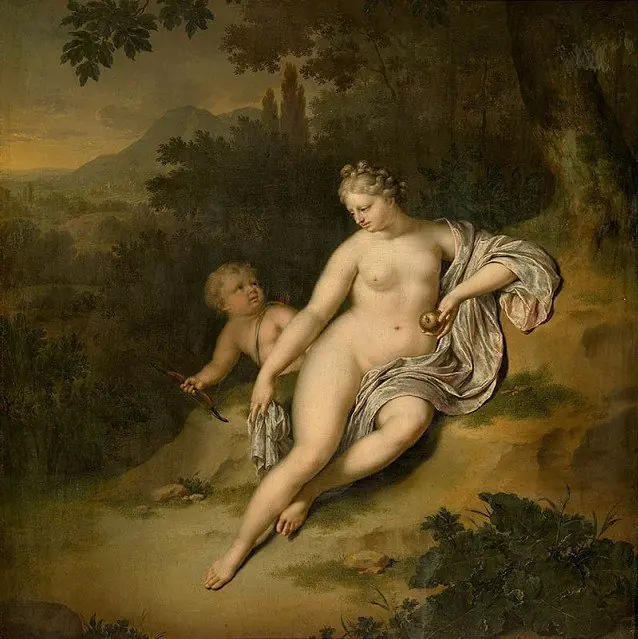
Reclining Venus with Cupid
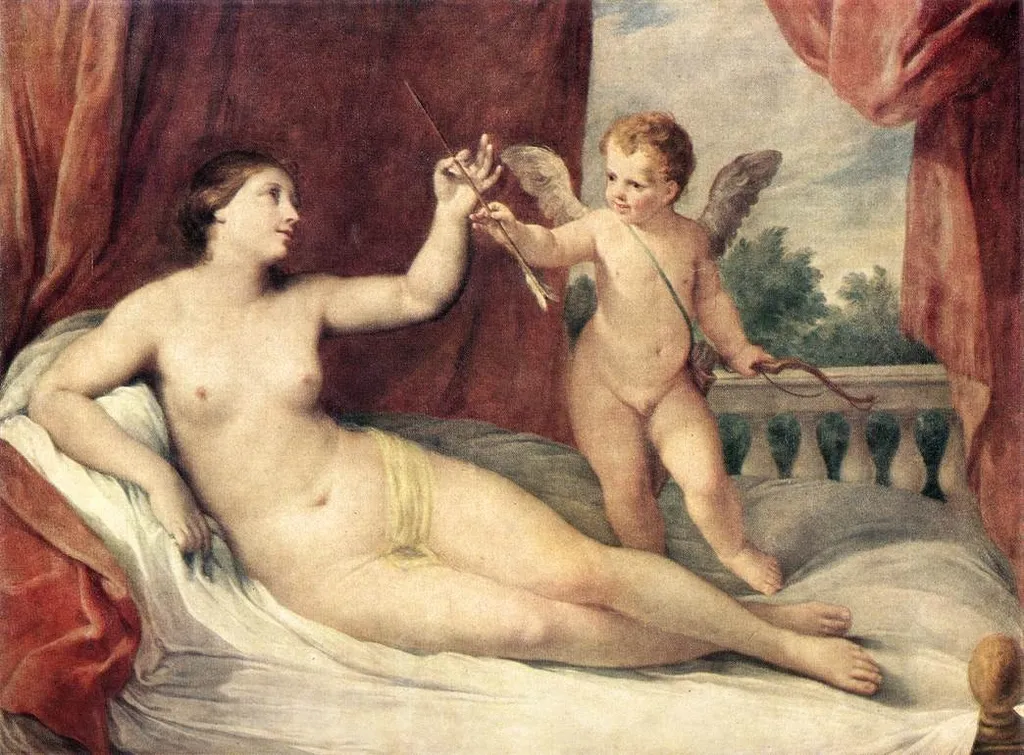
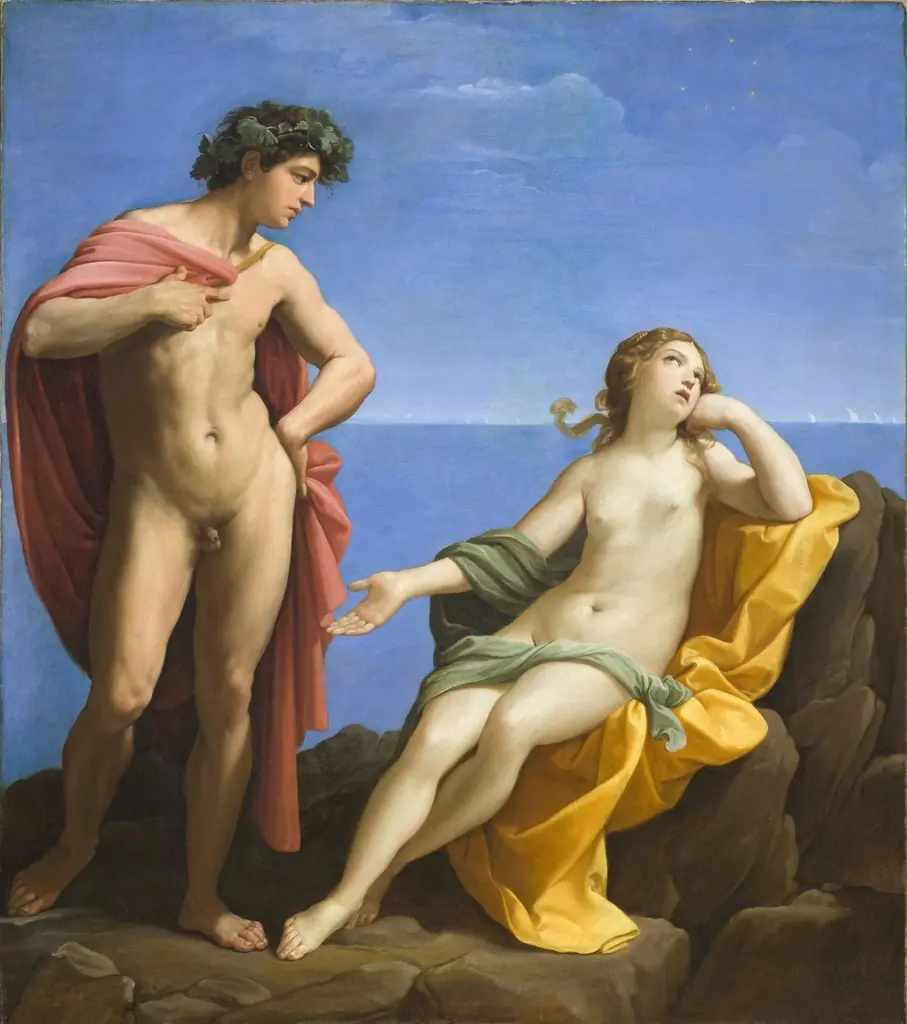
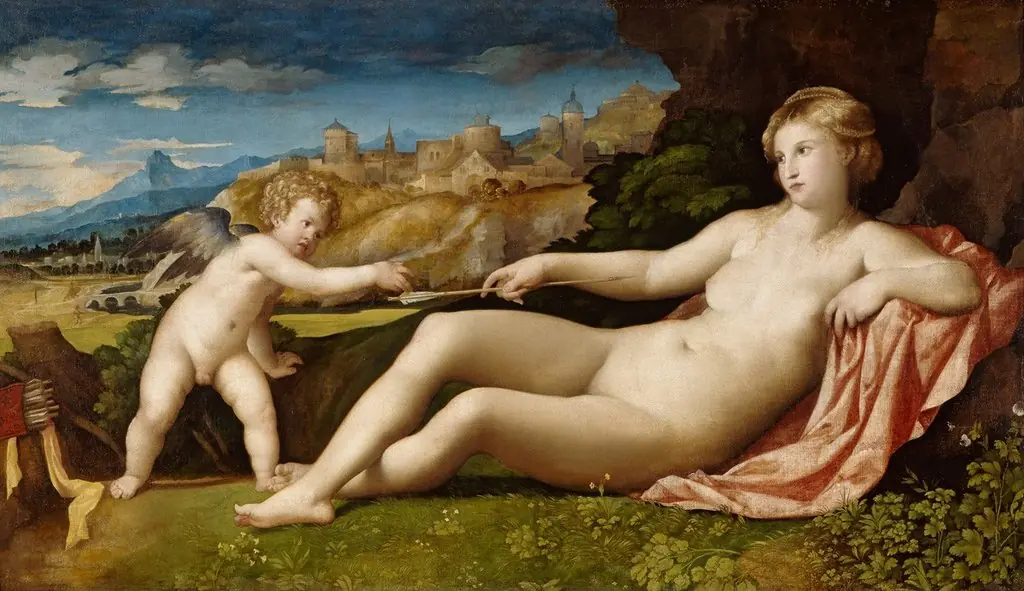
Reclining Venus with Cupid is an oil painting by the Early Baroque Italian artist Guido Reni. It dates from 1639 and is held in the collection of the Gemäldegalerie Alte Meister.
About this work
Overview
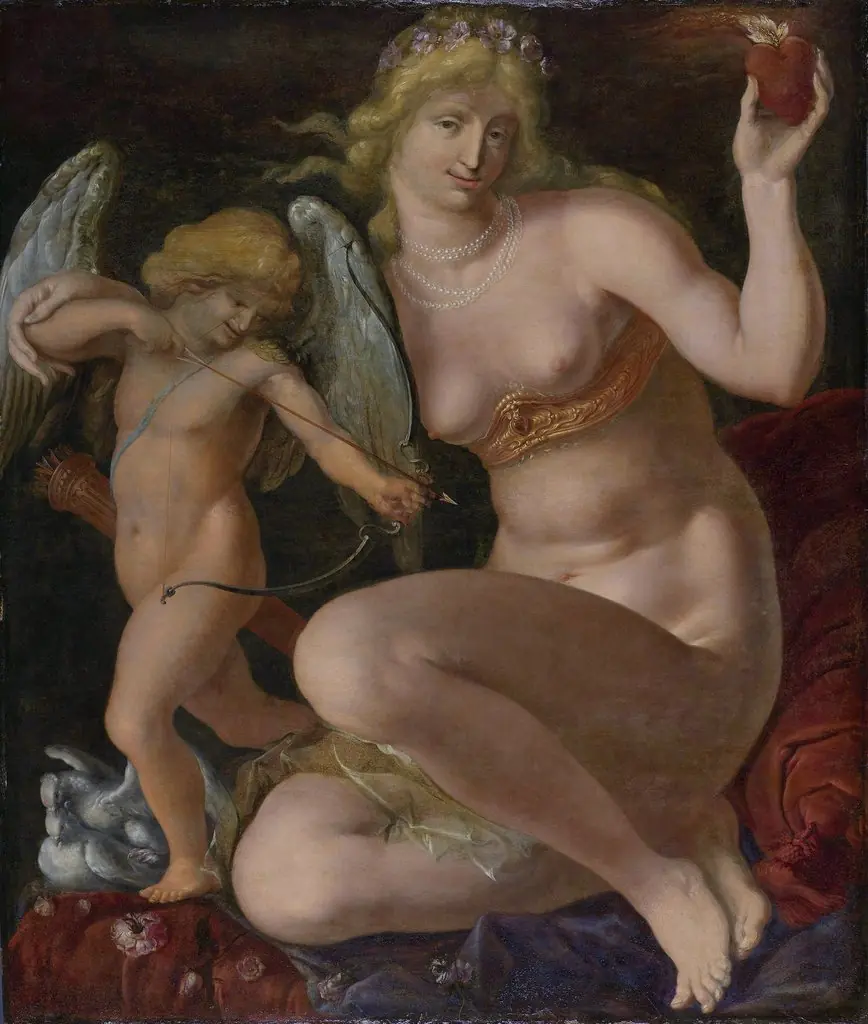
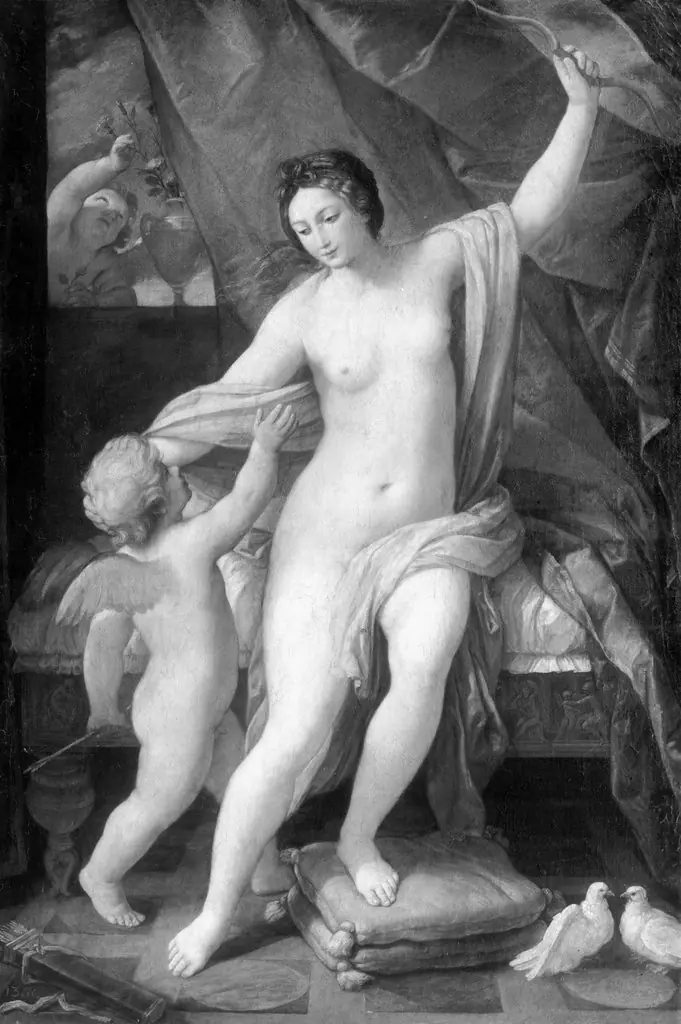
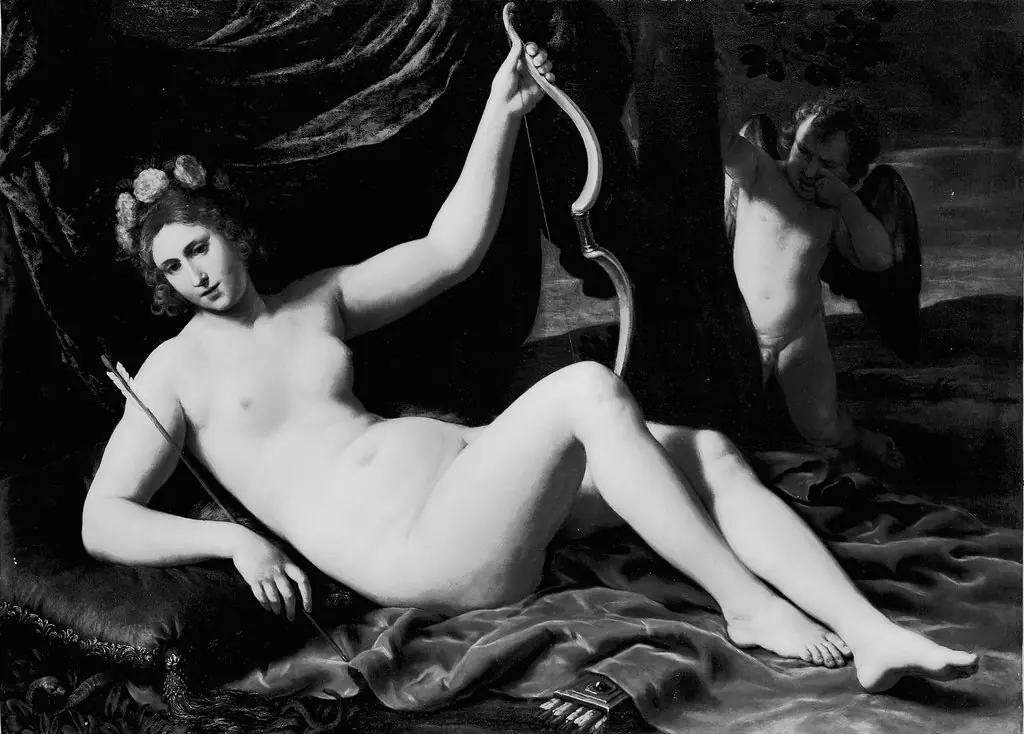
Cupid stands on the drapery beside her, holding a bow and arrow, his gaze directed toward the goddess.
Guido Reni's 'Reclining Venus with Cupid,' executed in 1639, is a late Baroque oil painting depicting the goddess Venus reclining on a draped couch alongside the infant Cupid. The composition centers on the nude figure of Venus, whose pose is characterized by a serene, idealized beauty typical of Reni's mature style; her right arm is raised to support her head while her left rests along the couch. Cupid stands on the drapery beside her, holding a bow and arrow, his gaze directed toward the goddess. Painted near the end of the artist's life, this work reflects Reni's continued adherence to classical ideals of harmony and restraint, even as the broader Baroque movement embraced greater dynamism and emotional intensity. The painting demonstrates the artist's mastery of soft modeling and luminous color, creating a tranquil mythological scene that emphasizes divine grace over narrative action. It stands as a significant example of Reni's late period, where his figures often possess a statuesque, almost ethereal quality, bridging the gap between High Renaissance classicism and the emerging trends of 17th-century Italian art.
Subject & Meaning
The work draws on classical themes, portraying Venus, the Roman goddess of love, in a moment of repose accompanied by her son Cupid, the embodiment of desire. The serene interaction between the two figures suggests an intimate, perhaps contemplative, reflection on love’s peaceful aspects, rather than overt sensuality, aligning with the Baroque era’s nuanced approach to mythic subjects.
Technique & Style
Reni employs a warm, earthy palette that recedes into a subtle tonal gradient, creating depth without distracting detail. The smooth handling of flesh tones and the delicate rendering of the cherub’s wings demonstrate the artist’s mastery of chiaroscuro, while the overall composition balances softness with the controlled linearity characteristic of his late Baroque style.
History & Provenance
Completed in 1639, the painting entered the collection of the Gemäldegalerie Alte Meister in Dresden, where it remains on display. Its acquisition reflects the museum’s focus on Italian Baroque works, and the piece has been documented in the gallery’s catalogues since the 18th century, confirming its long‑standing presence in the institution’s holdings.
Artist & collection
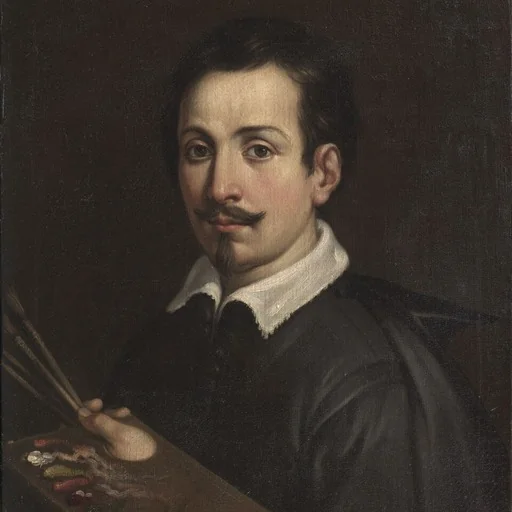
Artist
Guido Reni was an Italian Baroque painter, although his works showed a classical manner, similar to Simon Vouet, Nicolas Poussin, and Philippe de Champaigne.