Artwork
Venus and Cupid
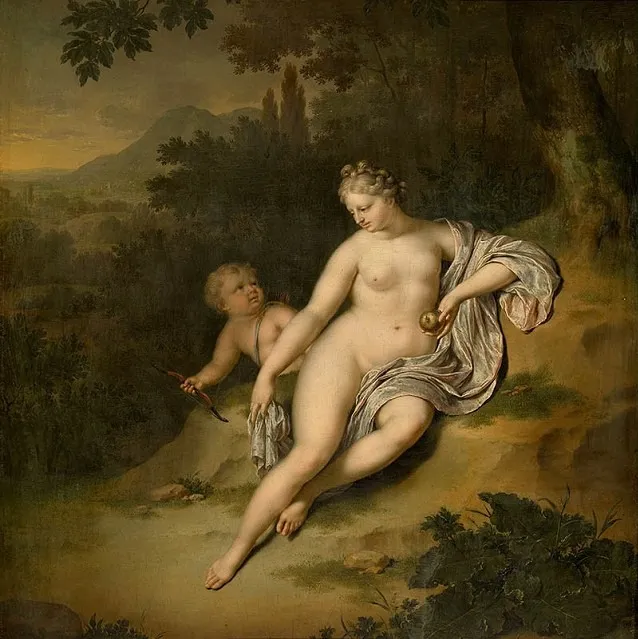
Venus and Cupid is an oil painting by the Rococo painting artist Willem van Mieris. It dates from 1723 and is held in the collection of the Royal Museum of Fine Arts Antwerp.
About this work
Overview
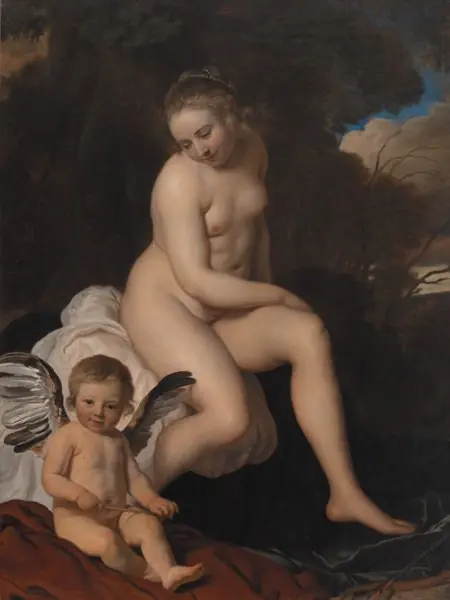
Willem van Mieris painted the oil work titled Venus and Cupid in 1723. The canvas, now part of the Royal Museum of Fine Arts Antwerp collection, presents a mythological scene that centers on the goddess Venus and her son, Cupid, rendered in a calm, intimate setting.
Subject & Meaning
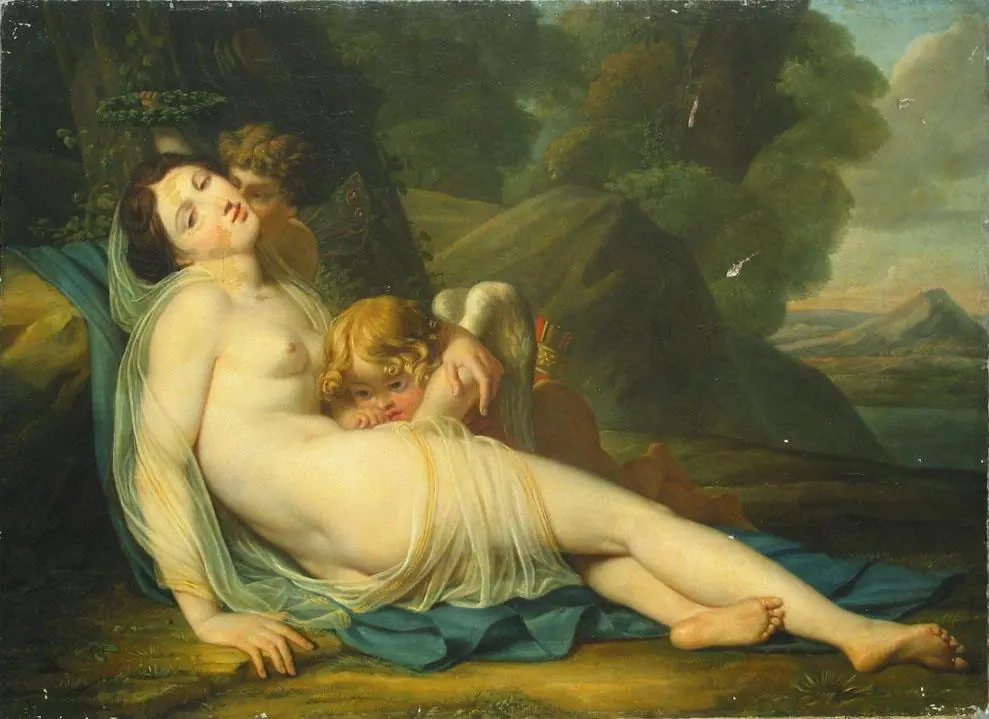
The composition shows a woman, identified as Venus, seated amid a natural landscape, her right leg and arm uncovered beneath a white drape. She cradles an apple in her left hand, a traditional symbol of love, while her right hand rests lightly on the arm of a young boy, Cupid, who holds a bow and arrow, emphasizing themes of affection and desire.
Technique & Style
Van Mieris employs a smooth, luminous oil technique characteristic of Dutch late‑Baroque painting. The figures are rendered with delicate modeling and a subtle play of light on the white fabrics, while the background features a softly rendered mountainous terrain, trees, and shrubbery that recede with atmospheric perspective.
History & Provenance
Created in the early eighteenth century, the work entered the holdings of the Royal Museum of Fine Arts Antwerp, where it remains on display. Its provenance prior to museum acquisition is not extensively documented, but the painting has been associated with van Mieris’s later period, reflecting his mature style.
Context
Venus and Cupid belongs to a broader tradition of mythological subjects popular among Dutch and Flemish artists of the era, who often combined classical themes with domestic intimacy. Van Mieris, a descendant of the Leiden school, frequently portrayed elegant figures in refined, idealized settings, aligning this work with his broader oeuvre.
Artist & collection