Artwork
The Virgin Sewing or the Virgin of the Annunciation
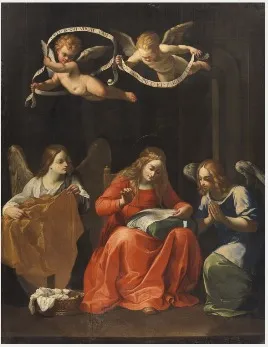
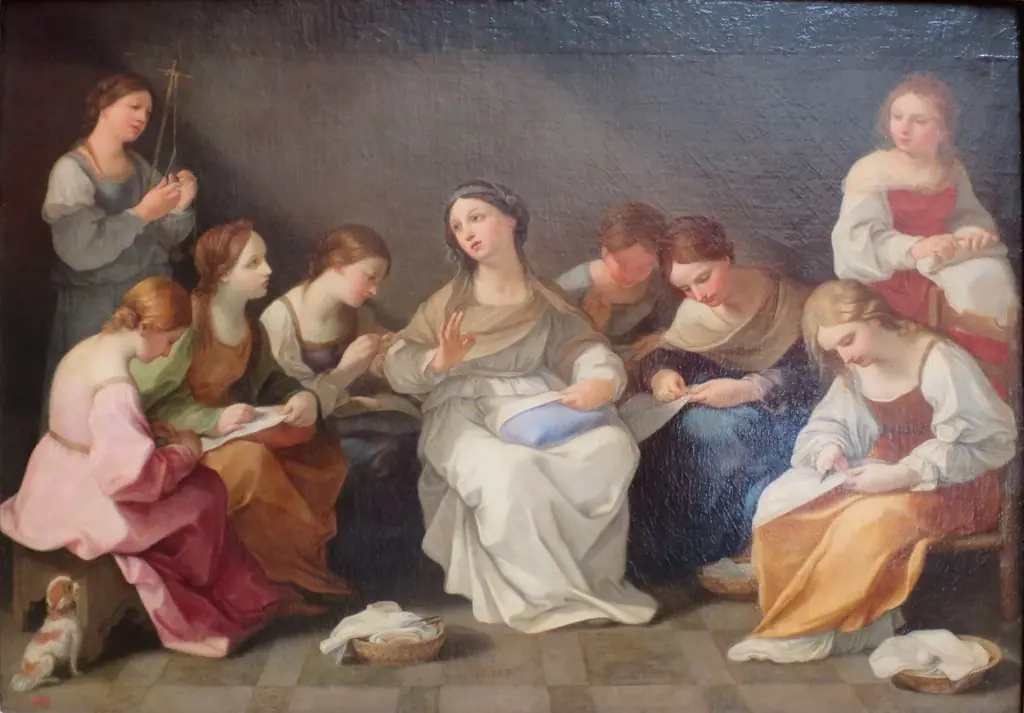
The Virgin Sewing or the Virgin of the Annunciation is an oil painting by the Early Baroque Italian artist Guido Reni. It dates from 1618 and is held in the collection of the National Gallery of Ireland.
About this work
Overview
The composition centers on the Virgin Mary, depicted in a moment of quiet domesticity rather than the dramatic intensity often associated with the Annunciation.
Guido Reni's The Virgin Sewing, executed in 1618, is a quintessential example of his mature Baroque style, characterized by idealized forms and a restrained, classical color palette. The composition centers on the Virgin Mary, depicted in a moment of quiet domesticity rather than the dramatic intensity often associated with the Annunciation. Seated in a dimly lit interior, she wears a vibrant red robe and is absorbed in the act of sewing, a traditional attribute symbolizing her humility and preparation for the Incarnation. She is flanked by two angels: one standing to her left holding a basket of fabric, and another kneeling to her right, gazing upward. Reni employs soft, diffused lighting to model the figures with a sculptural clarity, emphasizing their serene expressions and the delicate textures of the drapery. This work reflects Reni's shift away from the emotional turbulence of his early Bolognese period toward a more serene, idealized classicism that defined his Roman career. The painting serves as a meditative exploration of the Annunciation, focusing on the Virgin's contemplative state before the divine announcement, aligning with Counter-Reformation ideals of piety and devotion.
Artist & collection
Artist
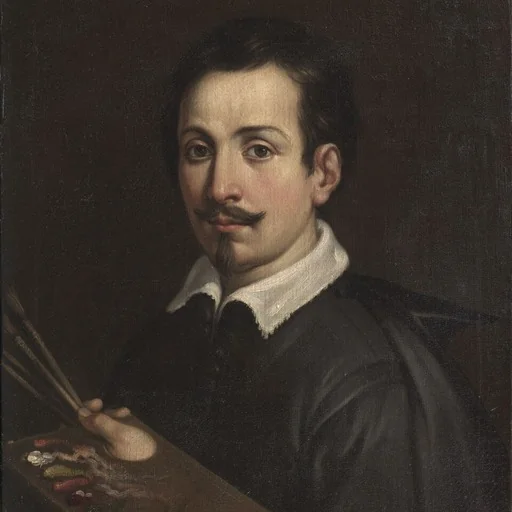
Guido Reni was an Italian Baroque painter, although his works showed a classical manner, similar to Simon Vouet, Nicolas Poussin, and Philippe de Champaigne.

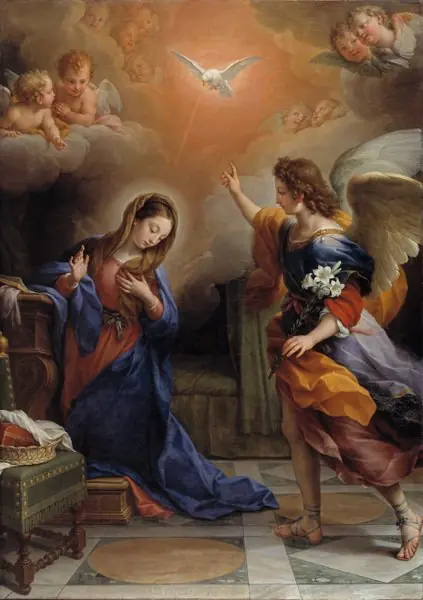 The Annunciation
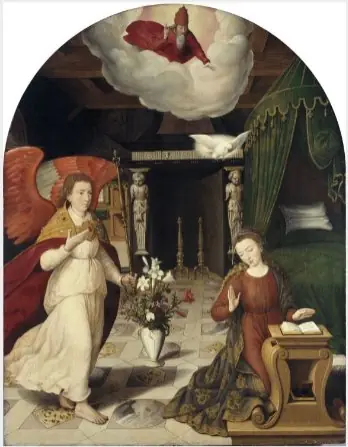 The Annunciation
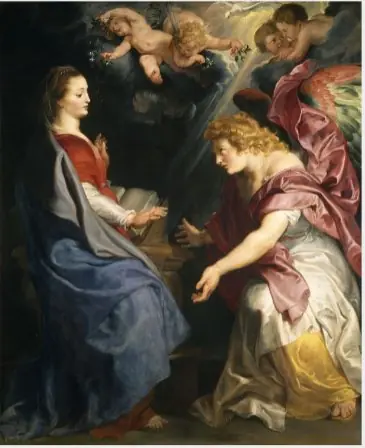 The Annunciation
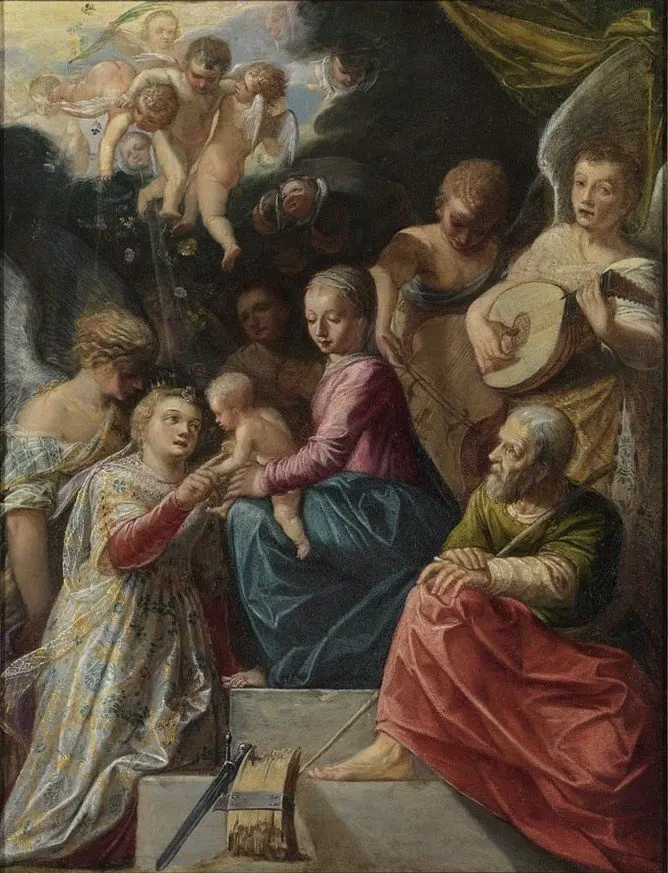 The Mystic Marriage of St. Catherine
 The Annunciation
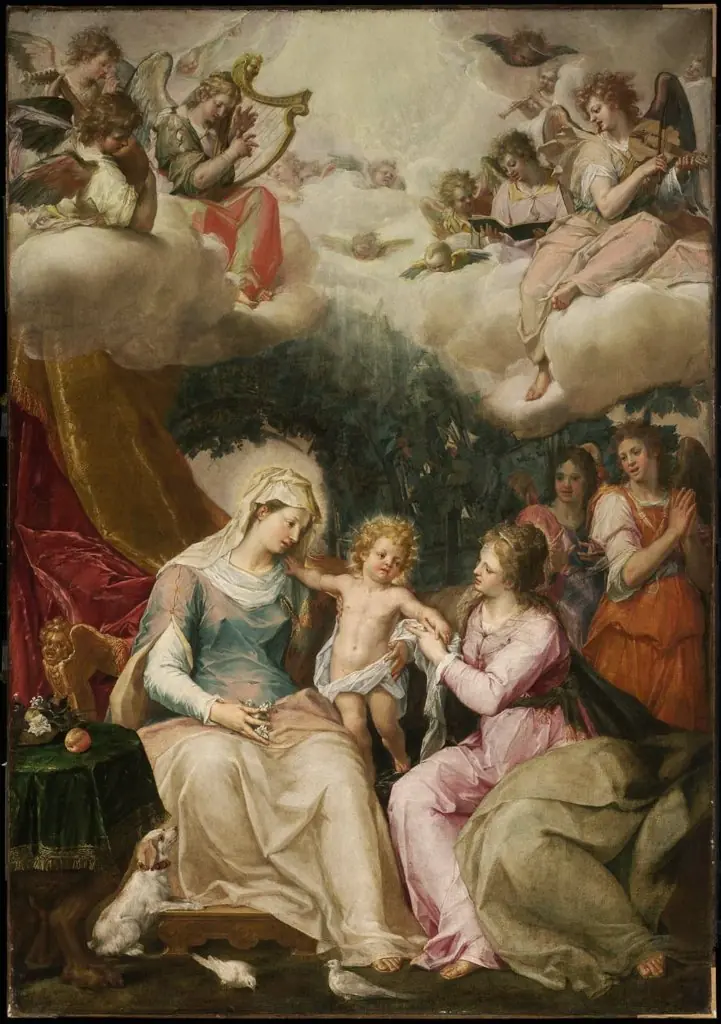 The Mystic Marriage of Saint Catherine
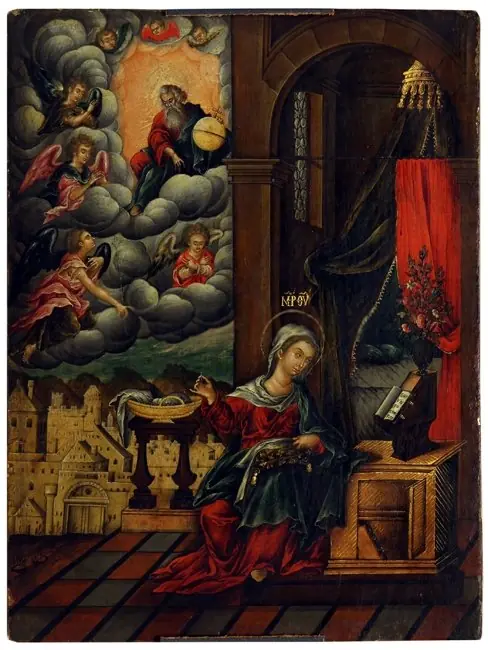 Annunciation (Poulakis)
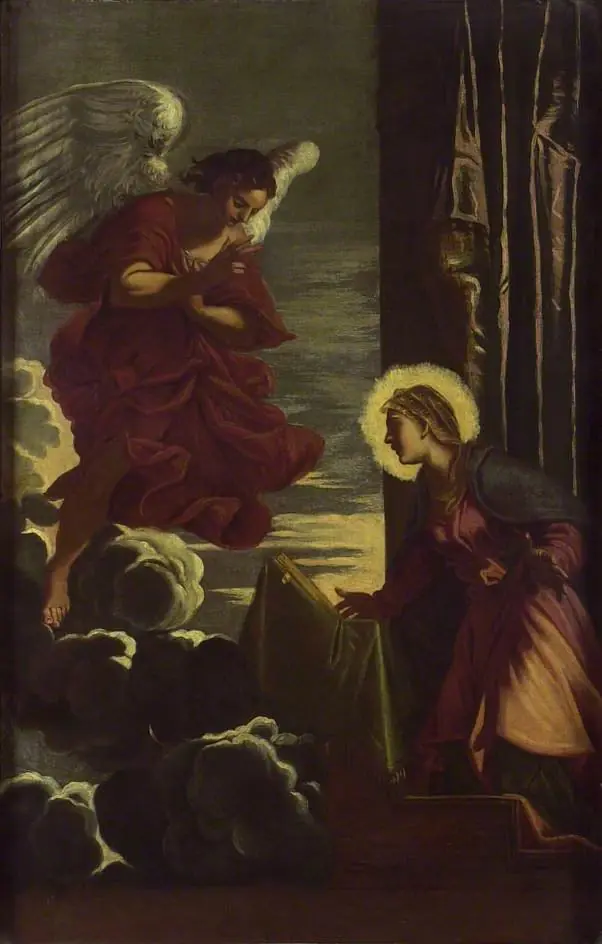 The Annunciation
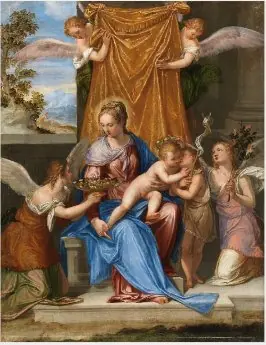 The Virgin and Child with Saint John the Baptist and Angels
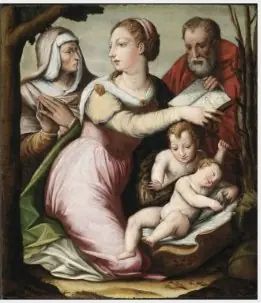 The Virgin and Child with Saints Elizabeth and John the Baptist
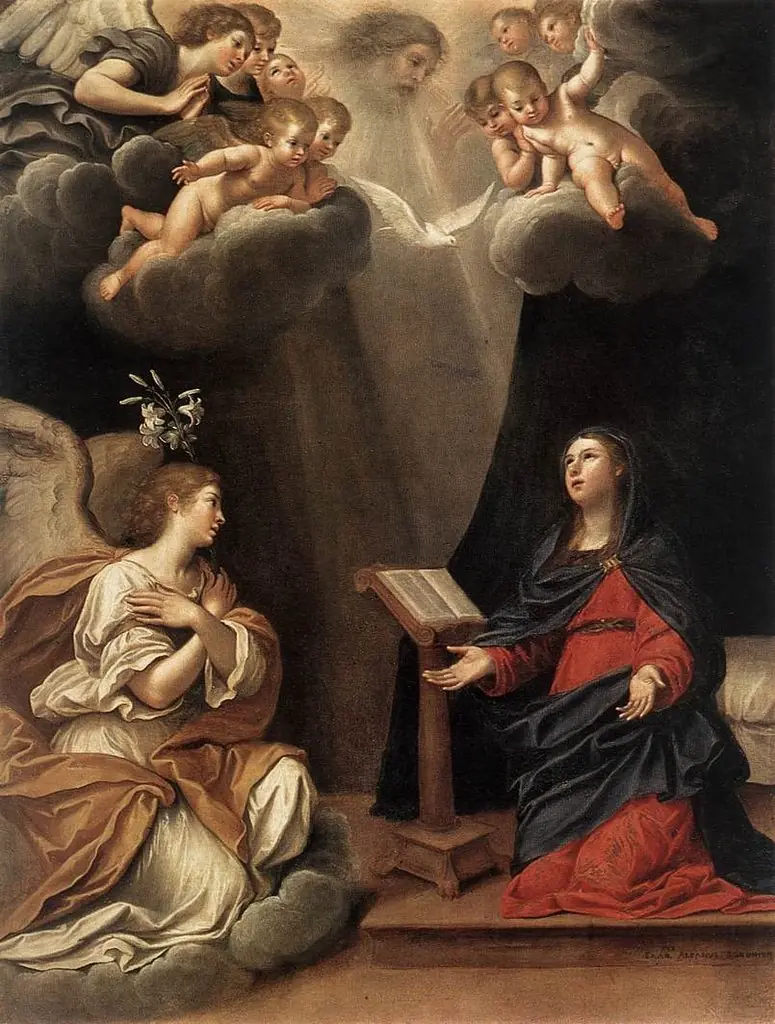 The Annunciation
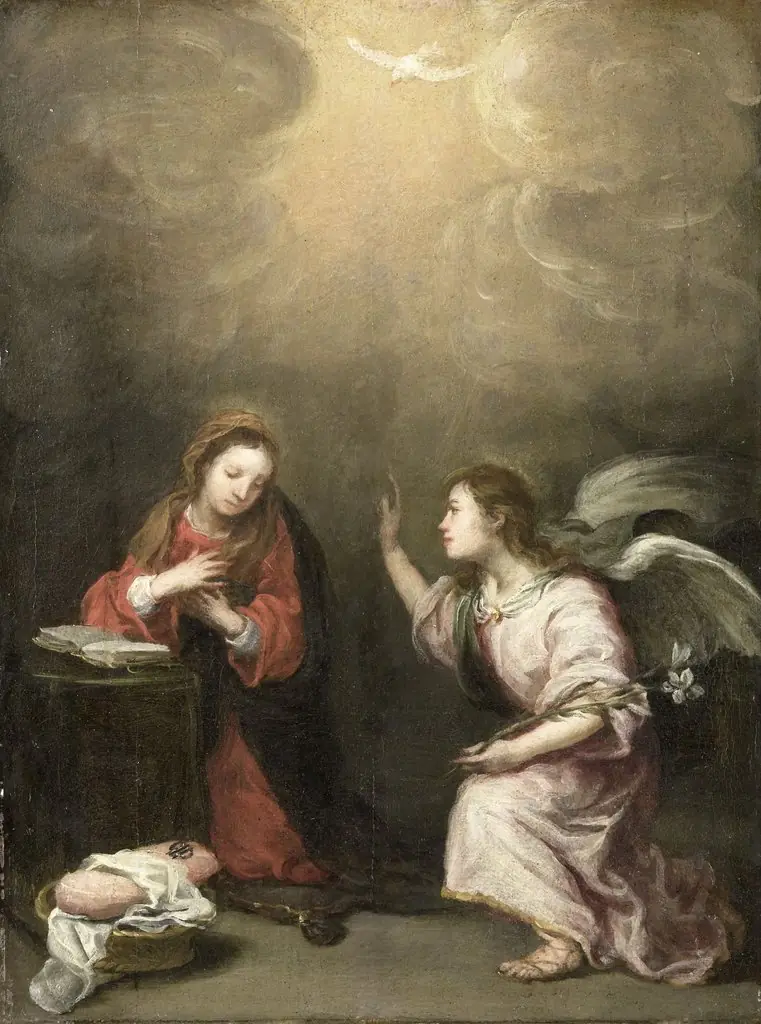 Annunciation to the Virgin