Artwork
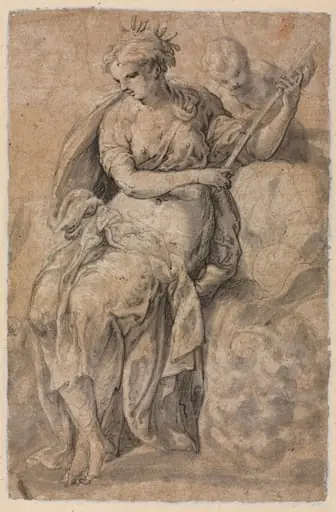
Seated Sibyl
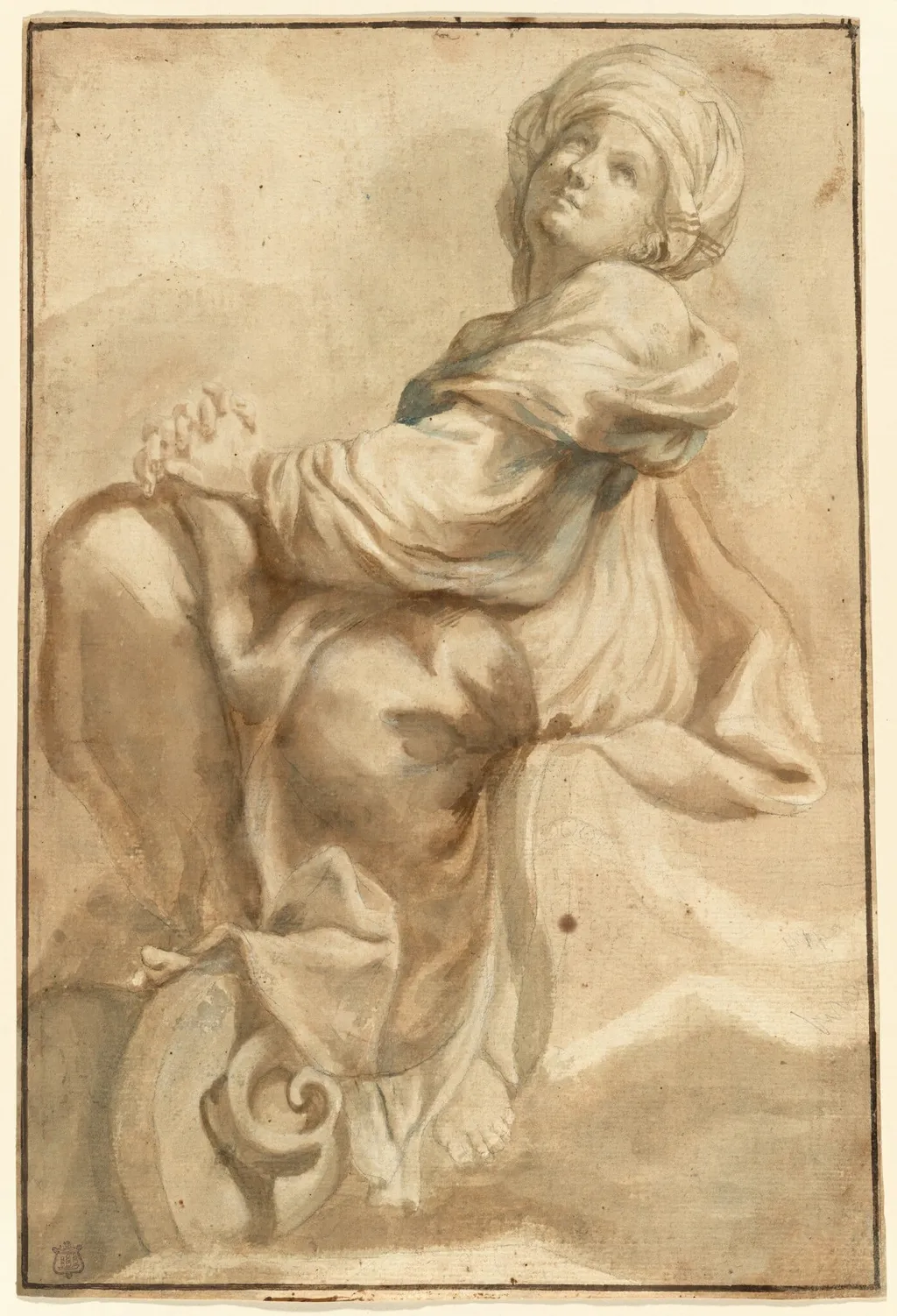
Seated Sibyl is a paint drawing by the Baroque artist Bartolomeo Guidobono. It dates from 1690 and is held in the collection of the National Gallery of Art.
About this work
Overview
Created around 1690, this drawing by Bartolomeo Guidobono depicts a seated female figure in a contemplative pose. Executed in ink over chalk and graphite, with selective white highlights, it exemplifies the refined draftsmanship of late 17th-century Italian draftsmen. The work is rendered on laid paper, a common support for preparatory studies of the period.
Subject & Meaning
The figure is identified as a sibyl, a prophetic woman from classical antiquity often associated with divine inspiration in Christian iconography.
The figure is identified as a sibyl, a prophetic woman from classical antiquity often associated with divine inspiration in Christian iconography. Her seated posture and introspective gaze suggest inner revelation rather than dramatic proclamation. The absence of overt narrative elements focuses attention on her psychological presence, aligning with a trend toward introspective portraiture in ecclesiastical art.
Technique & Style
Guidobono employed a layered approach: black chalk and graphite established the initial form, while brown, blue, and gray ink defined volume and shadow. White heightening accentuates light on the drapery and skin, enhancing three-dimensionality. The fluidity of the ink lines contrasts with the firmness of the underdrawing, revealing a deliberate balance between spontaneity and structure.
History & Provenance
The drawing’s early ownership is undocumented, but it entered a major European collection by the 19th century. Its preservation in good condition suggests careful handling over time. No records indicate it was part of a larger series, though its format and subject align with contemporary studies of prophetic figures used in altarpiece planning.
Context
In late 17th-century Italy, drawings of sibyls were frequently commissioned for church decorations, particularly in regions influenced by Baroque religious renewal. Guidobono, active in Piedmont and Liguria, often worked on ecclesiastical projects. This piece reflects the period’s interest in blending classical antiquity with Christian themes, a practice encouraged by Counter-Reformation aesthetics.
Legacy
Though not widely reproduced, the drawing remains a representative example of Guidobono’s draftsmanship and the broader tradition of Italian figure studies. It contributes to the understanding of how preparatory drawings functioned as both artistic exploration and devotional tools, bridging the gap between sketch and finished altarpiece.
Artist & collection


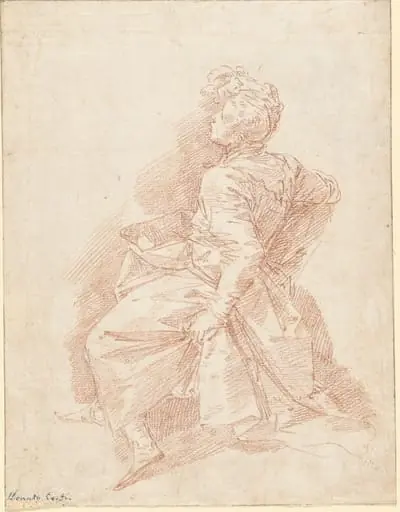 A Seated Man
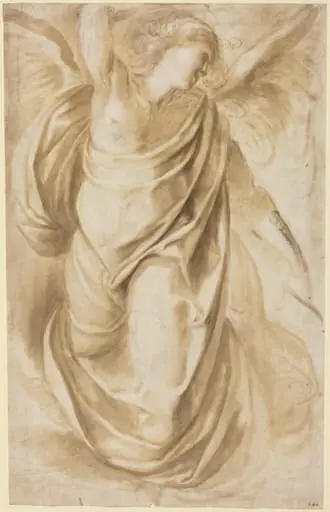 An Angel
![Studies of Legs and Drapery [recto], by Abraham Bloemaert](https://artifactworldgallery.com/img/abraham-bloemaert--studies-of-legs-and-drapery-recto--93eb35075fbdb28d-w320.webp) Studies of Legs and Drapery [recto]
Studies of Legs and Drapery [recto]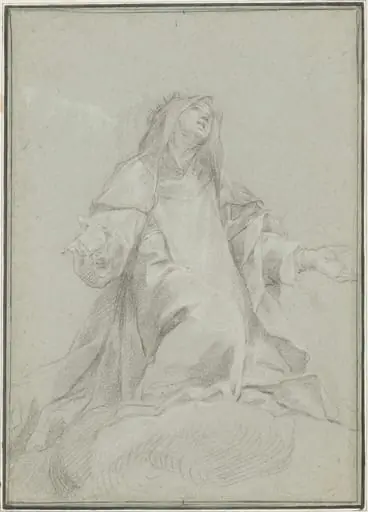 Saint Catherine of Siena on a Cloud
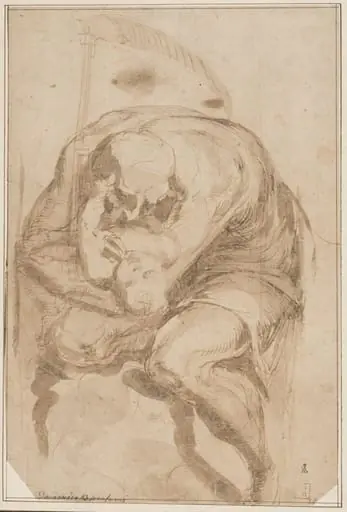 Saturn Devouring his Child
 Allegorical Figure (verso)
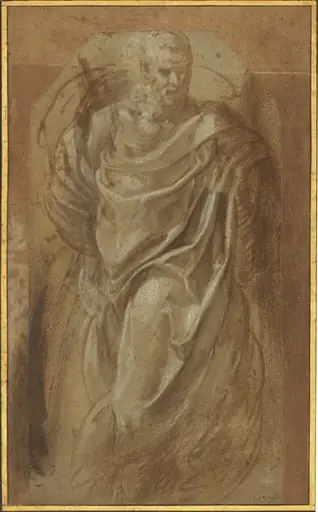 A Standing Man in Classical Drapery
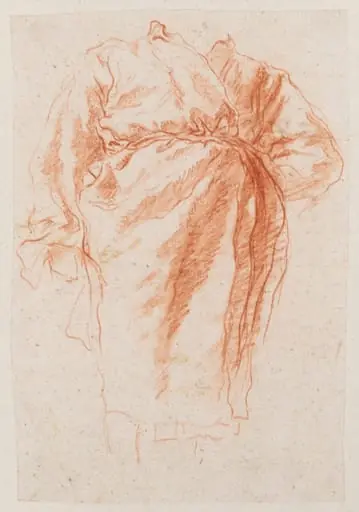 Study of a Draped Figure
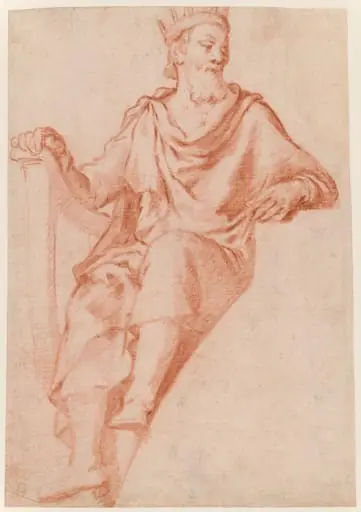 King David (Design for a Lunette)
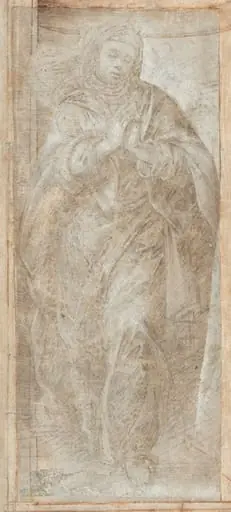 Standing Woman with Her Hands Clasped in Prayer
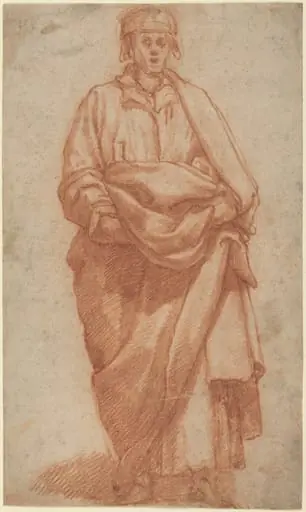 Standing Man
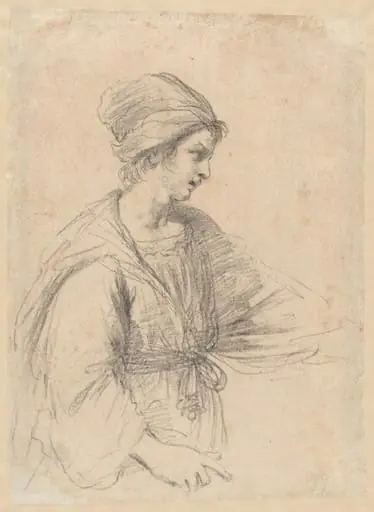 Young Man in a Soft Cap