Artwork
Saint Catherine of Siena on a Cloud
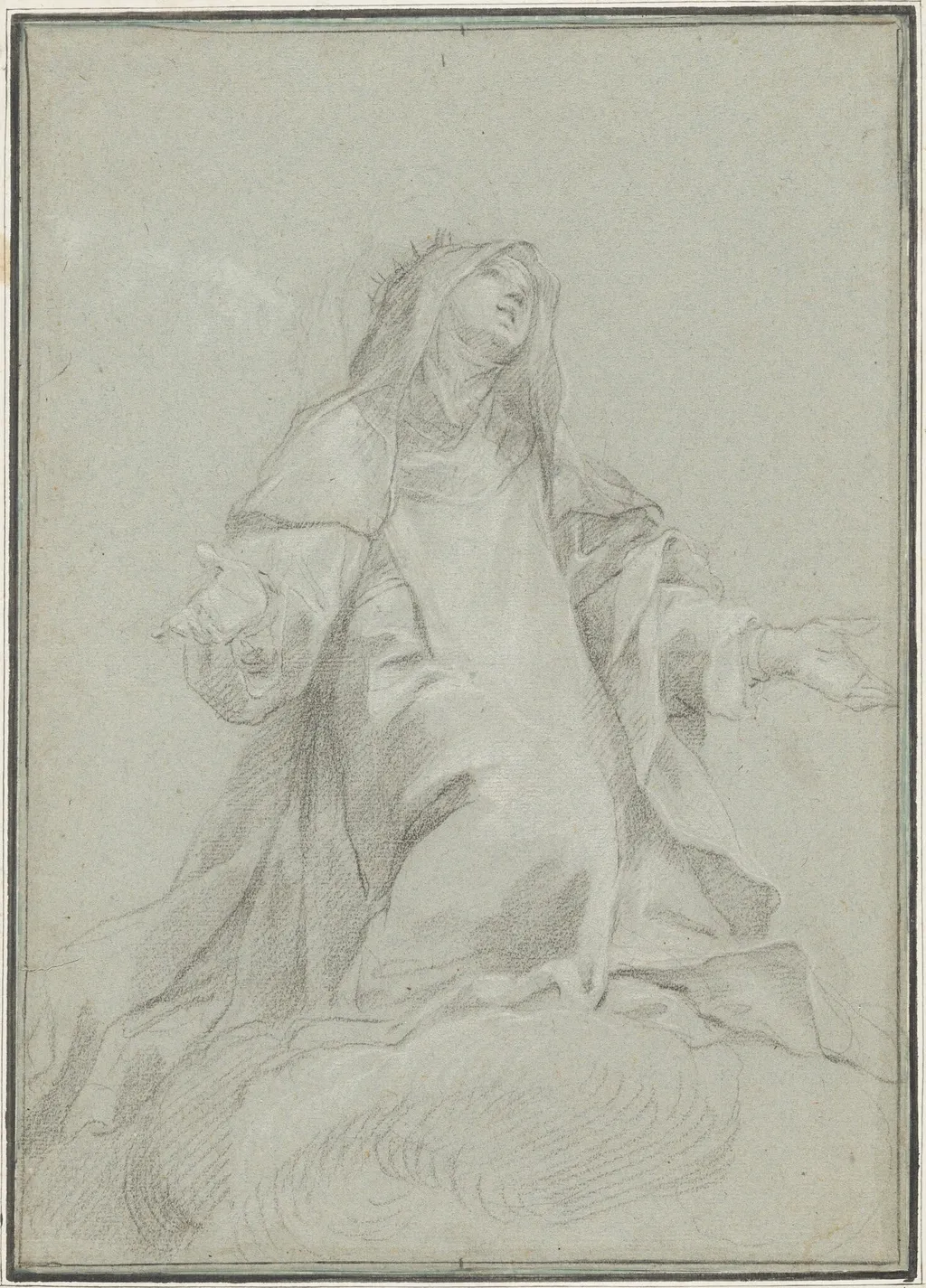
Saint Catherine of Siena on a Cloud is a chalk drawing by the Baroque artist Luigi Garzi. It dates from 1696 and is held in the collection of the National Gallery of Art.
About this work
Overview
This drawing, executed in 1696 by Luigi Garzi, portrays Saint Catherine of Siena ascending on a cloud.
This drawing, executed in 1696 by Luigi Garzi, portrays Saint Catherine of Siena ascending on a cloud. Rendered in black and white chalk on blue laid paper, it belongs to a tradition of devotional sketches made as preparatory studies or independent devotional images. The work is held in the National Gallery of Art in Washington, D.C., and exemplifies the refined draftsmanship favored in late 17th-century Roman religious art.
Subject & Meaning
The figure represents Saint Catherine of Siena, a Dominican mystic known for her visions and spiritual intensity. Depicted in a moment of divine rapture, her closed eyes, uplifted head, and clasped hands convey inner communion with the sacred. The cloud beneath her suggests celestial ascent, while her serene expression and gentle smile reflect the quiet ecstasy associated with her reported mystical experiences.
Technique & Style
Garzi employed black chalk to define the contours and folds of the saint’s robe, using precise, fluid lines. White chalk heightens the luminosity of her skin, drapery, and the cloud’s edges, creating contrast against the blue paper’s subtle tone. The blending of hair and cloud illustrates a deliberate softening of boundaries between earthly form and spiritual atmosphere, characteristic of Baroque draftsmanship focused on emotional resonance over rigid structure.
History & Provenance
Created in Rome during Garzi’s mature period, the drawing likely served as a devotional aid or study for a larger altarpiece. It entered the National Gallery of Art’s collection in the 20th century, having passed through private European collections since its creation. Its preservation in good condition reflects its status as a carefully kept work, valued for its craftsmanship rather than its scale.
Context
In late 17th-century Rome, religious imagery emphasized emotional immediacy and mystical experience, aligning with Counter-Reformation ideals. Drawings like this one were often made for private devotion or as models for painters. Garzi, trained in the Roman academic tradition, combined classical grace with Baroque expressiveness, making such works popular among clergy and devout patrons seeking tangible connections to the divine.
Legacy
Though not widely exhibited, this drawing remains a representative example of Roman Baroque chalk studies. It illustrates how artists used minimal media to evoke profound spiritual states, influencing later generations in the handling of light and gesture. Its presence in a major public collection ensures continued scholarly attention to the role of drawing in devotional practice during the period.
Artist & collection
Artist
Luigi Garzi (1638–1721) was an Italian painter of the Baroque period whose style was strongly influenced by the work of the Bolognese painter Guido Reni.

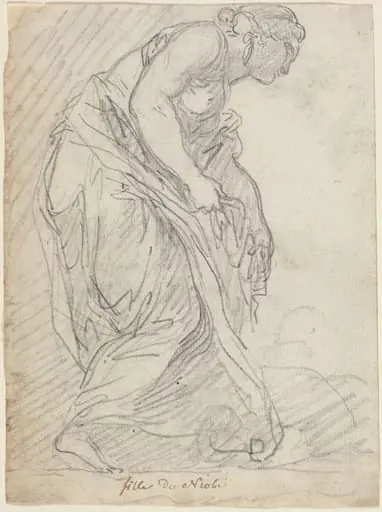 One of Niobe's Daughters
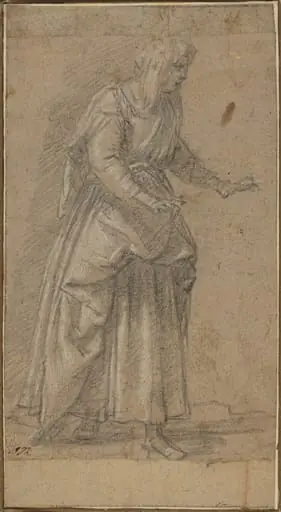 Woman Walking to the Right
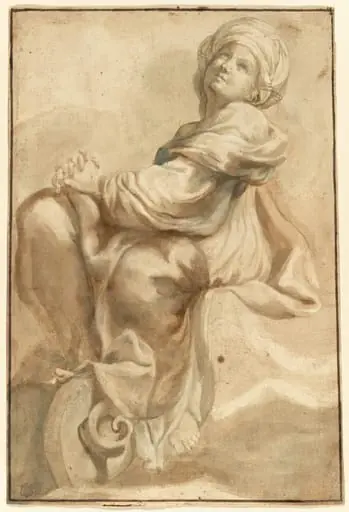 Seated Sibyl
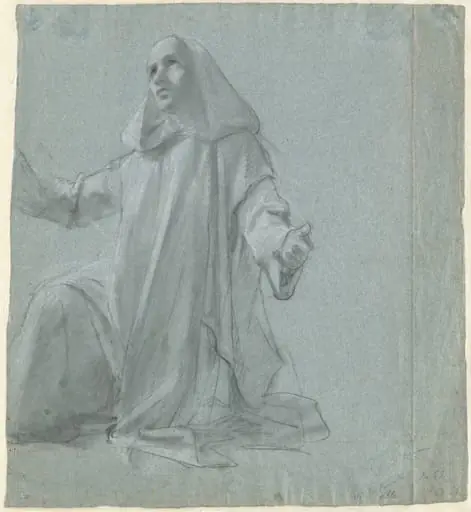 A Young Priest Kneeling
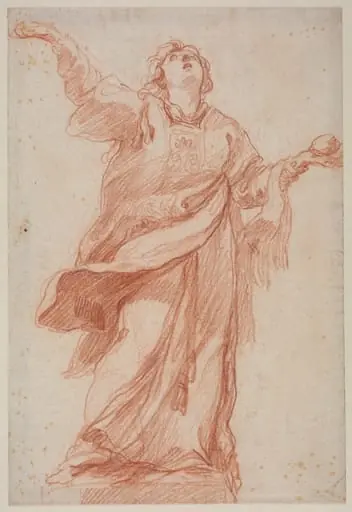 Saint Stephen in Ecstasy
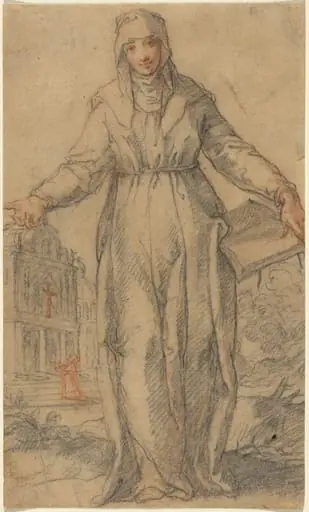 Female Saint (Saint Clare of Assisi or Saint Catherine of Siena?)
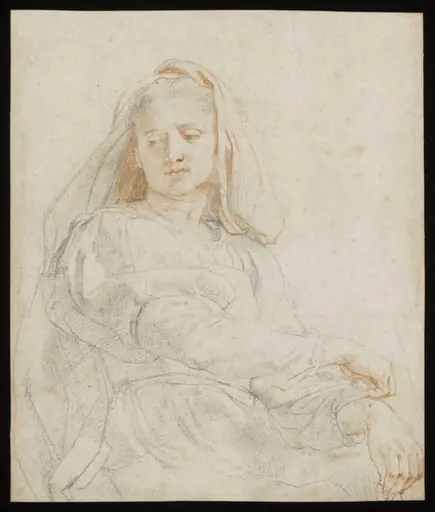 Study of a seated woman (The Virgin)
![Kneeling Figure in a Hooded Robe [verso], by Hubert Robert](https://artifactworldgallery.com/img/hubert-robert--kneeling-figure-in-a-hooded-robe-verso--596ef6edbdb6ce00-w320.webp) Kneeling Figure in a Hooded Robe [verso]
Kneeling Figure in a Hooded Robe [verso]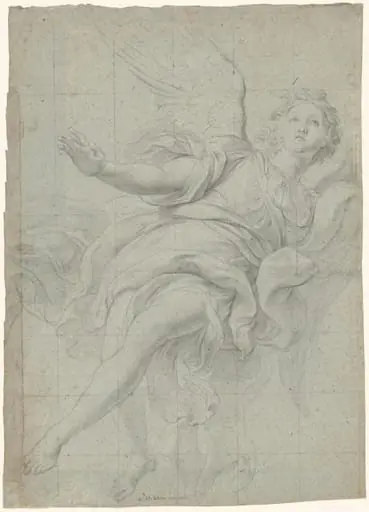 Study of an Angel in Flight
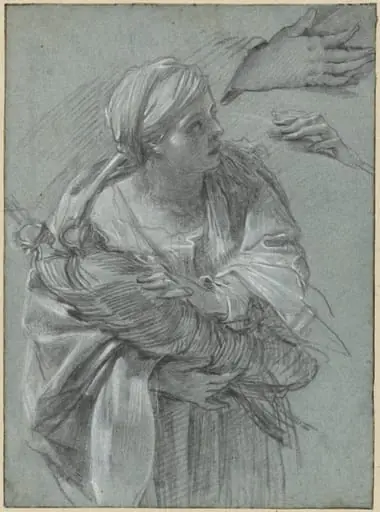 Creusa Carrying the Gods of Troy
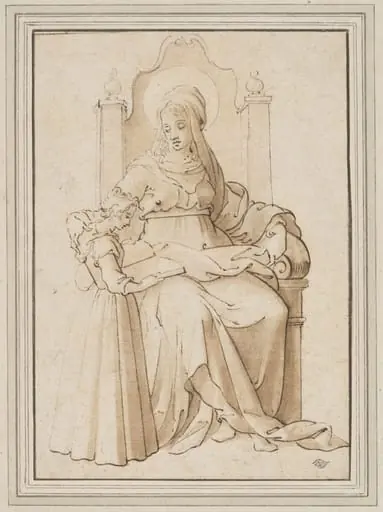 The Education of the Virgin
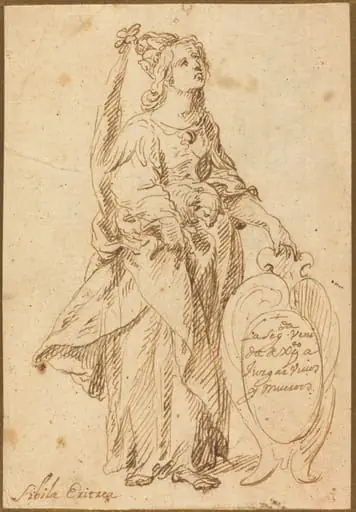 Eritrean Sibyl