Artwork
Die Einsiedler Paulus und Antonius mit dem Raben
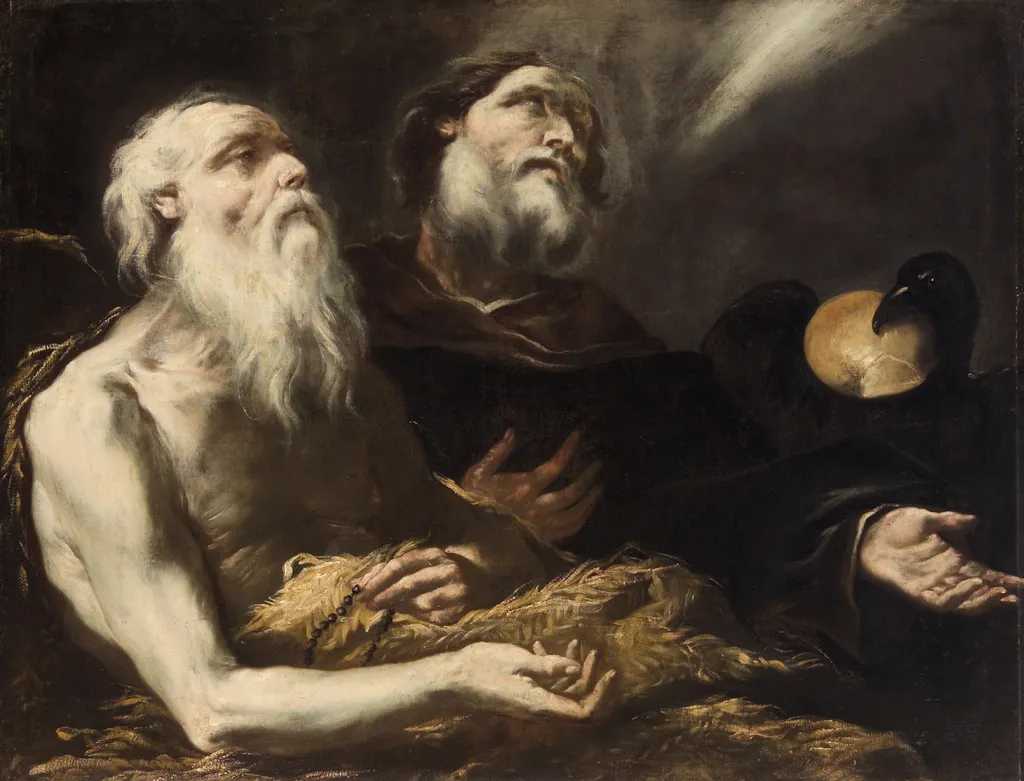
Die Einsiedler Paulus und Antonius mit dem Raben is an unspecified painting by Guillaume Courtois. It dates from 1663 and is held in the collection of the Kunsthistorisches Museum.
About this work
Overview
Painted around 1663 by Guillaume Courtois, this work portrays the hermit saints Paul of Thebes and Anthony the Great in a secluded, dimly lit environment. The painting is part of the Kunsthistorisches Museum’s collection in Vienna. It captures a quiet moment of spiritual contemplation, emphasizing solitude and devotion through minimal narrative elements and restrained composition.
Subject & Meaning
The raven, traditionally linked to Anthony’s miracles, appears attentive, reflecting the belief that birds served as messengers or providers in the desert.
The two figures represent early Christian hermits revered for their ascetic lives. Paul, on the left, bare-chested and holding a rosary, symbolizes the first hermit. Anthony, on the right, clad in a robe, is shown in a trance-like state, suggesting divine communion. The raven, traditionally linked to Anthony’s miracles, appears attentive, reflecting the belief that birds served as messengers or providers in the desert.
Technique & Style
Courtois employs chiaroscuro to define the figures against a deep, shadowy background, heightening the sense of intimacy and inner focus. The textures of fabric and skin are rendered with subtle gradations, avoiding dramatic contrast in favor of quiet realism. The bird’s white chest patch draws the eye, anchoring the composition while reinforcing its symbolic role without overt theatricality.
History & Provenance
The painting was likely commissioned during Courtois’s time in Rome, where he worked alongside other Northern European artists in Catholic circles. It entered the Habsburg collection in the late 17th century and has remained in Vienna since, preserved within the imperial art holdings. Its survival reflects its resonance with Counter-Reformation ideals of monastic devotion.
Context
In mid-17th century Europe, depictions of desert saints were favored in religious art as models of piety and resistance to worldly corruption. Courtois’s restrained approach aligns with a broader trend among Italianate painters who favored psychological depth over spectacle. The absence of landscape or architectural detail intensifies the focus on spiritual interiority.
Legacy
Though not widely reproduced, the painting exemplifies a quiet, introspective strand of Baroque religious art that prioritized contemplation over drama. Its preservation in a major European museum underscores its value as a document of devotional aesthetics during a period when monastic life was both idealized and increasingly distant from everyday experience.
Artist & collection

Artist
Guillaume Courtois or italianized as Guglielmo Cortese, called Il Borgognone or Le Bourguignon, was a Free Burgundian-Italian painter, draughtsman and etcher.

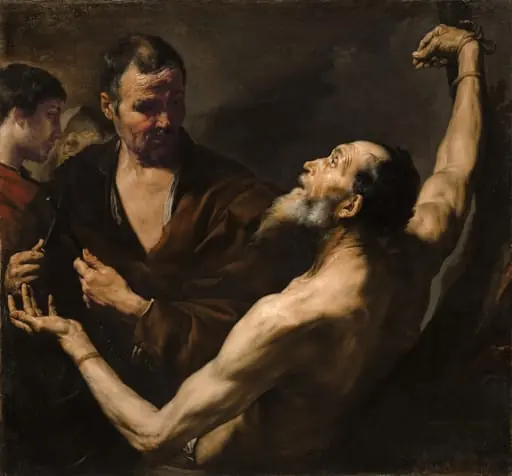 The Martyrdom of Saint Bartholomew
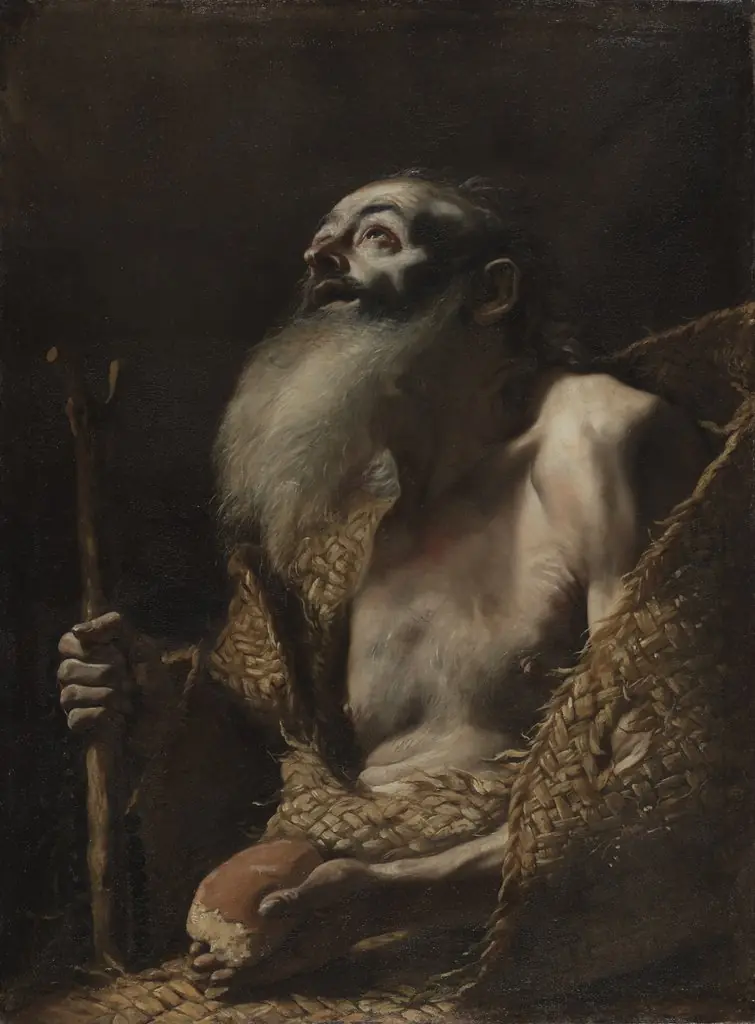 Saint Paul the Hermit
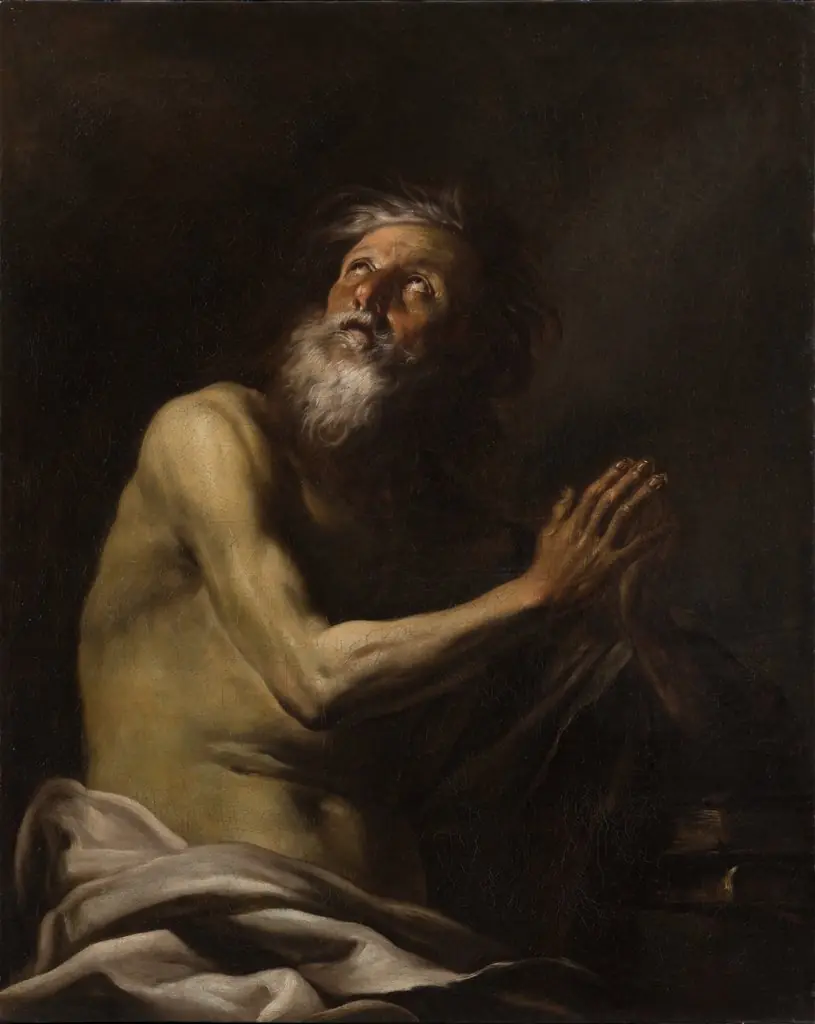 Hermit Saint (Paul the Hermit?)
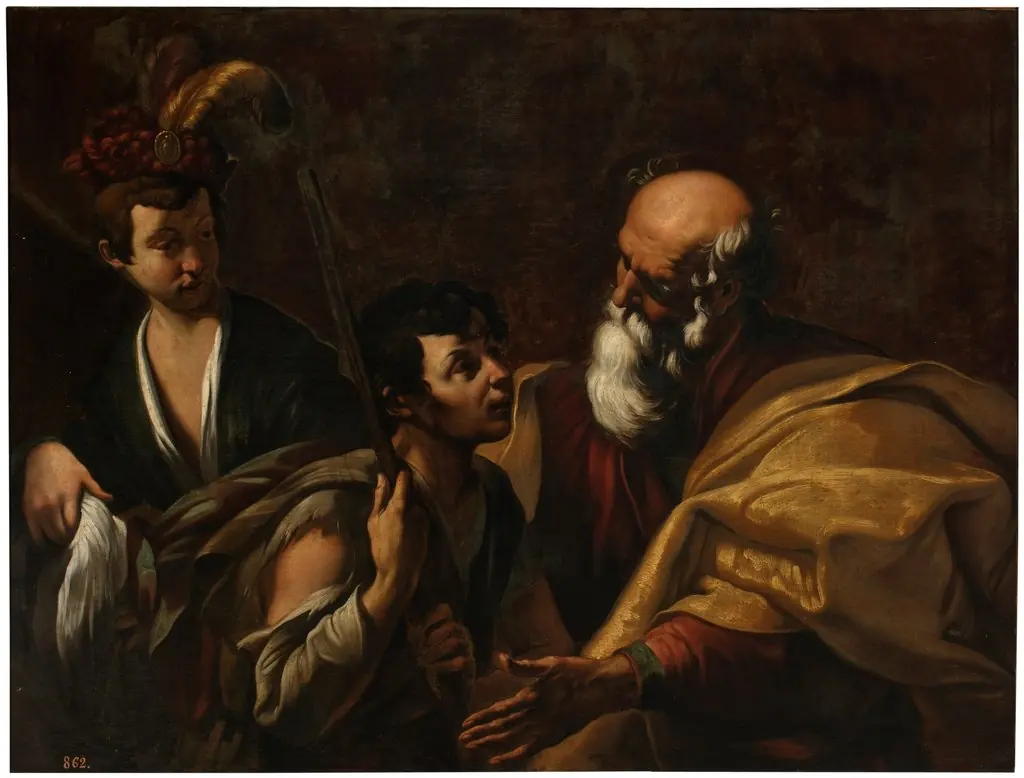 El hijo pródigo
 Saint Peter Finding the Tribute Money
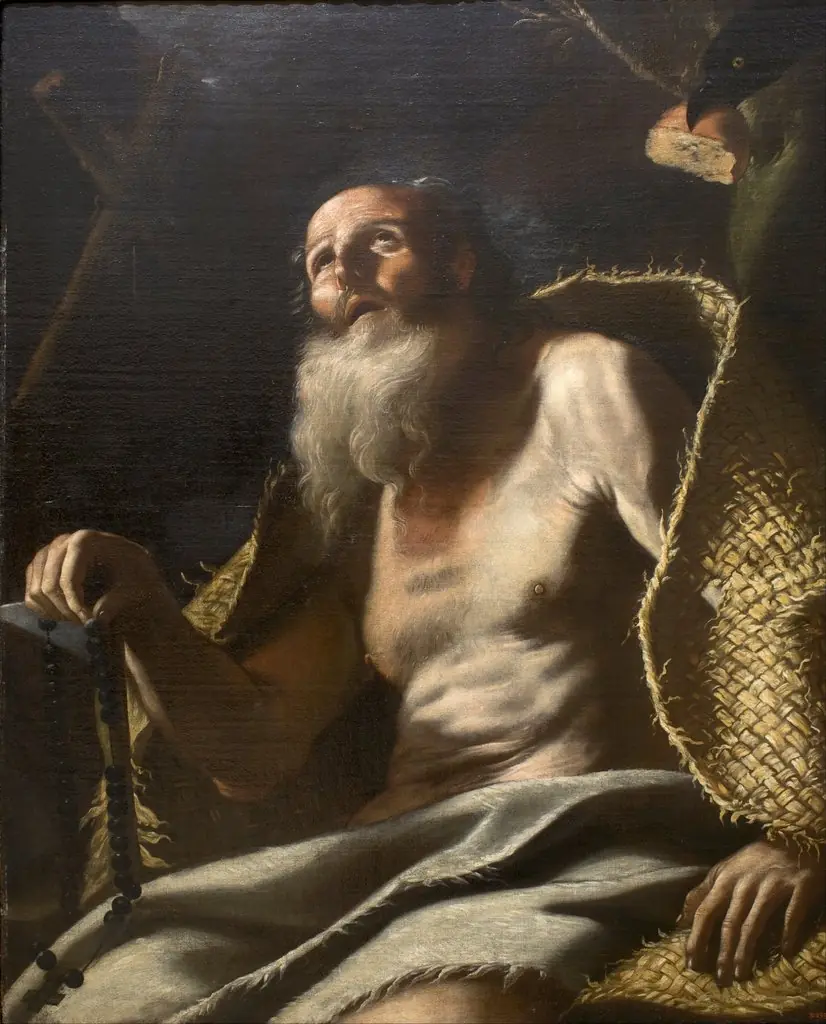 Saint Paul the Hermit
 St James the Less, Sts Peter, Paul, John, Thomas, Philip, Judas and Thaddeus the Apostles
 Moses and the Messengers from Canaan
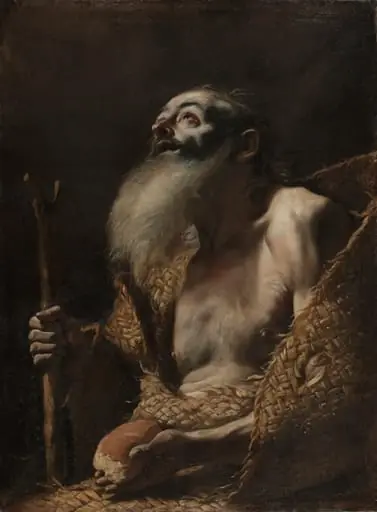 Saint Paul the Hermit
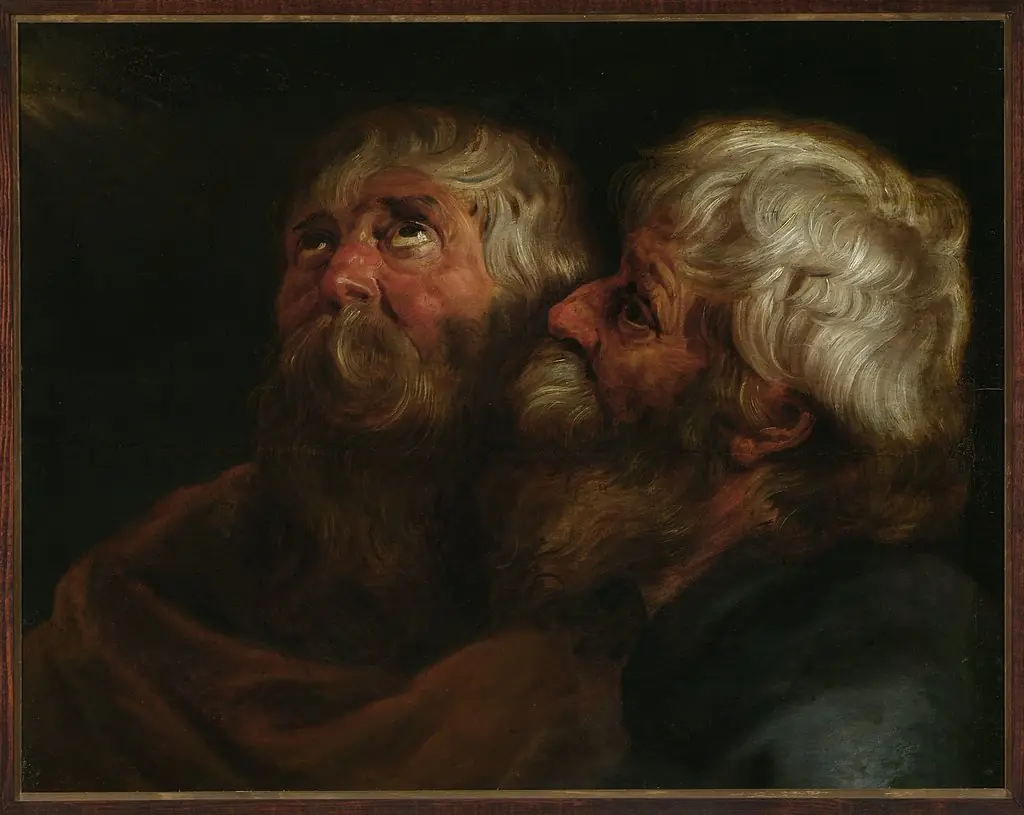 Two heads of apostles
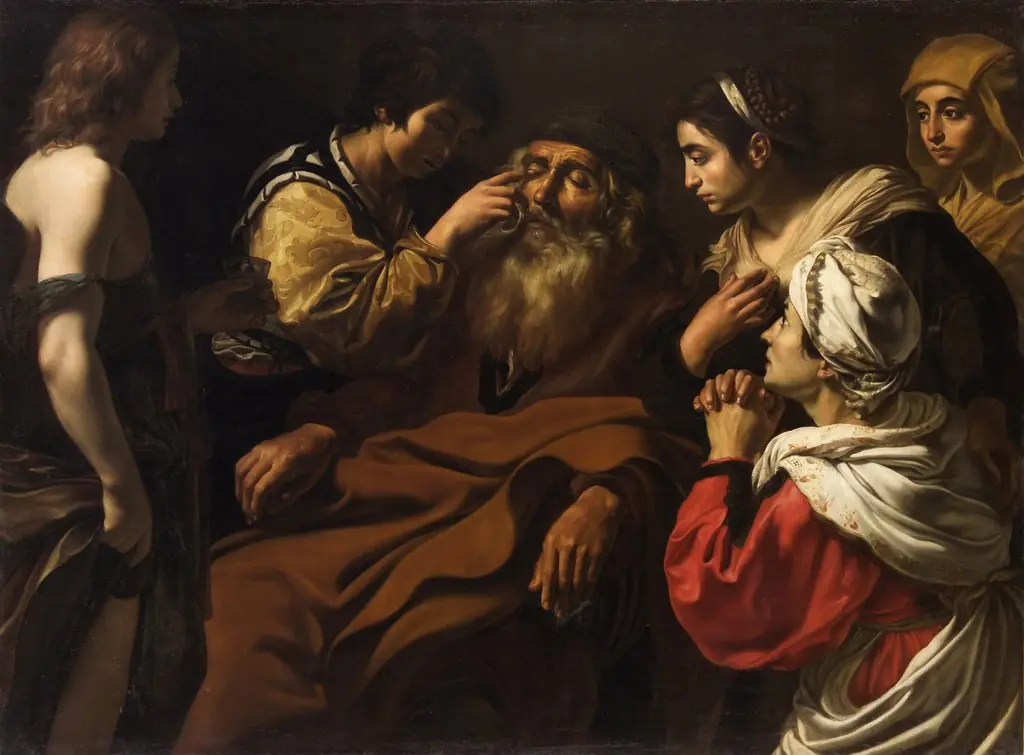 Tobias Heals his Blind Father
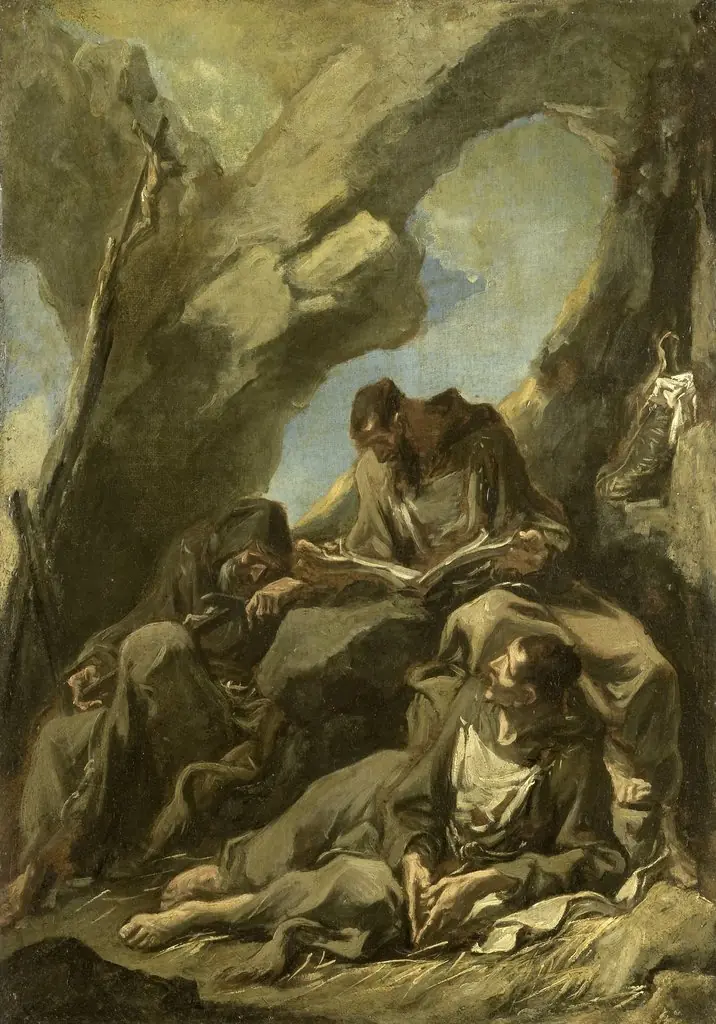 Three Camaldolese Monks in Meditative Prayer