Artwork
Two heads of apostles
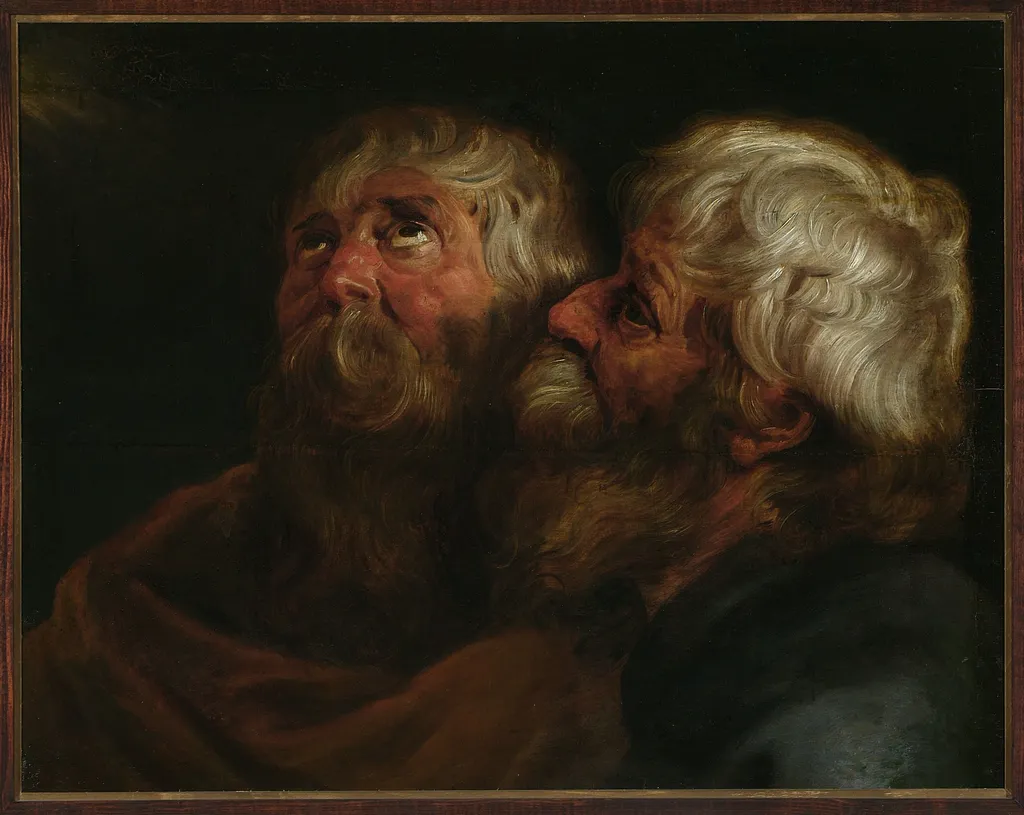
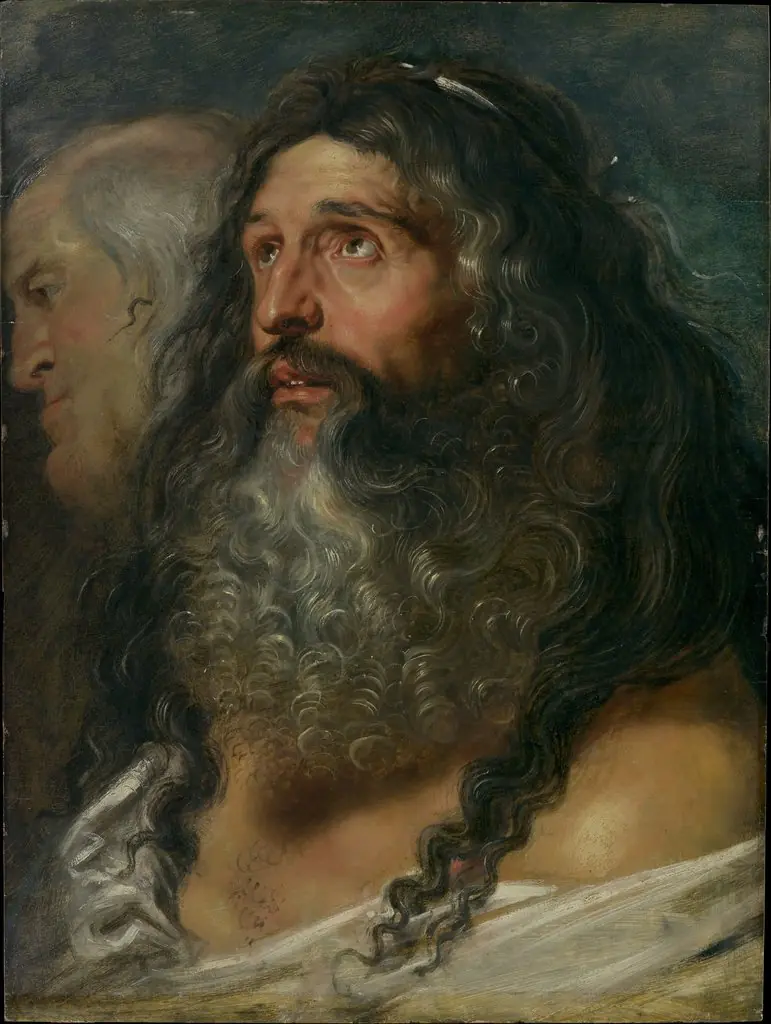
Two heads of apostles is an oil painting by Unknown. It is held in the collection of the National Museum in Warsaw. This oil painting depicts two male figures, their heads rendered in close profile and turned upward to the left.
About this work
Overview
The composition focuses solely on their faces, eliminating any contextual details to heighten emotional intensity.
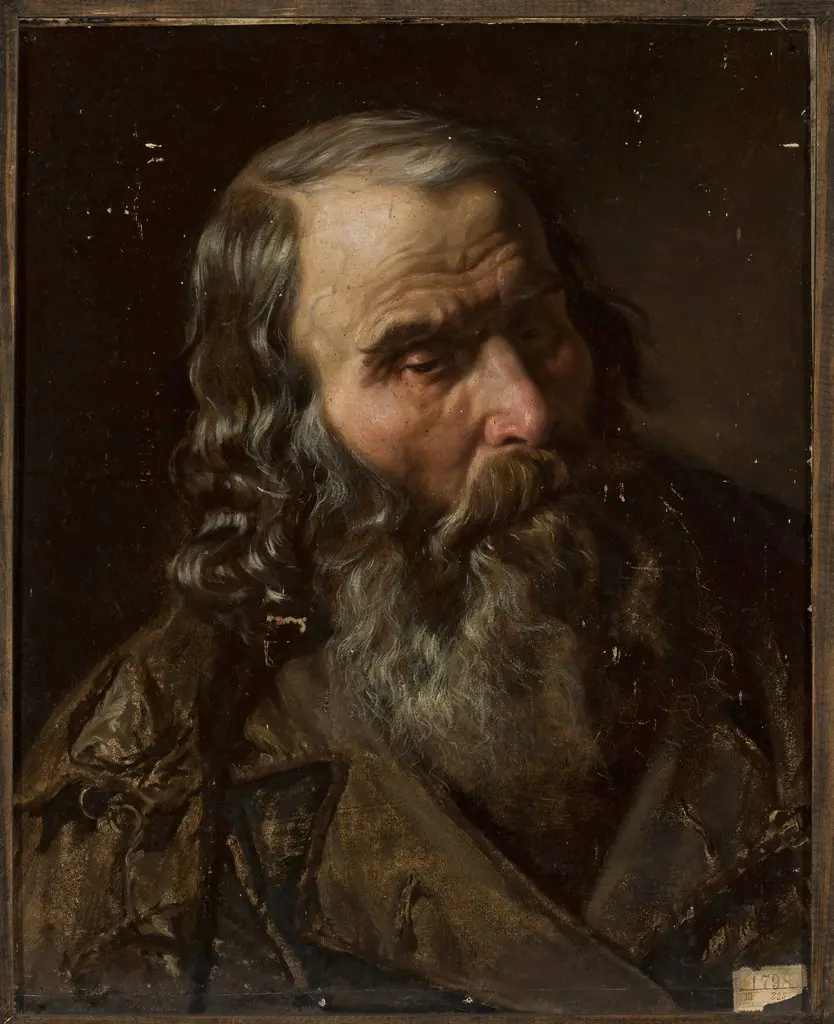
This oil painting depicts two male figures, their heads rendered in close profile and turned upward to the left. Set against a flat black background, the figures emerge through sharp contrasts of light and shadow. Their long, white curly hair and beards suggest age and spiritual authority. The composition focuses solely on their faces, eliminating any contextual details to heighten emotional intensity.
Subject & Meaning
The figures are likely apostles, identified by their aged appearance and solemn gaze, common in religious iconography. Their upward gaze may signify divine contemplation or revelation. The absence of narrative elements or symbols invites interpretation centered on inner devotion rather than external action. The uniformity of their features emphasizes their shared spiritual role over individual identity.
Technique & Style
Rubens employed chiaroscuro to model the faces with dramatic lighting, enhancing volume and texture. The transition from light to shadow is smooth yet forceful, giving the skin a lifelike solidity. The dark robes and background absorb light, making the illuminated faces appear to glow. Brushwork is controlled but visible, particularly in the rendering of hair, which flows with rhythmic detail.
History & Provenance
The painting is attributed to Peter Paul Rubens, though its exact date and original commission remain uncertain. It likely stems from his later period, when he produced numerous studies of heads for religious compositions. Its isolated format suggests it may have been a preparatory study, later valued as a standalone work. Its provenance traces through European collections in the 19th century.
Context
In early 17th-century Flanders, artists often created head studies to explore expression and lighting before executing larger altarpieces. Rubens, influenced by Italian Renaissance masters, used such studies to refine his portrayal of emotion and anatomy. This work reflects a broader practice among Baroque painters to isolate human features for heightened psychological impact.
Legacy
Though not widely exhibited, this painting exemplifies Rubens’s mastery of portraiture within religious contexts. Its focused composition influenced later artists studying the human face under dramatic light. It remains a quiet testament to the artist’s ability to convey spiritual gravity through minimal means, preserving the dignity of his subjects without embellishment.
Artist & collection

 Domestic Scene
 Giacomo and Cardinal Marco, investing Andrea, Abbot of San Zeno, with his Benefice
 The Nymph of Fontainebleau
 Portrait of a Woman
 Madonna and Child with Saints in the Enclosed Garden
 Venus and Minerva
 Family Group of Four on Sofa
 Wall painting from Room H of the Villa of P. Fannius Synistor at Boscoreale