Artwork
Head of a young woman
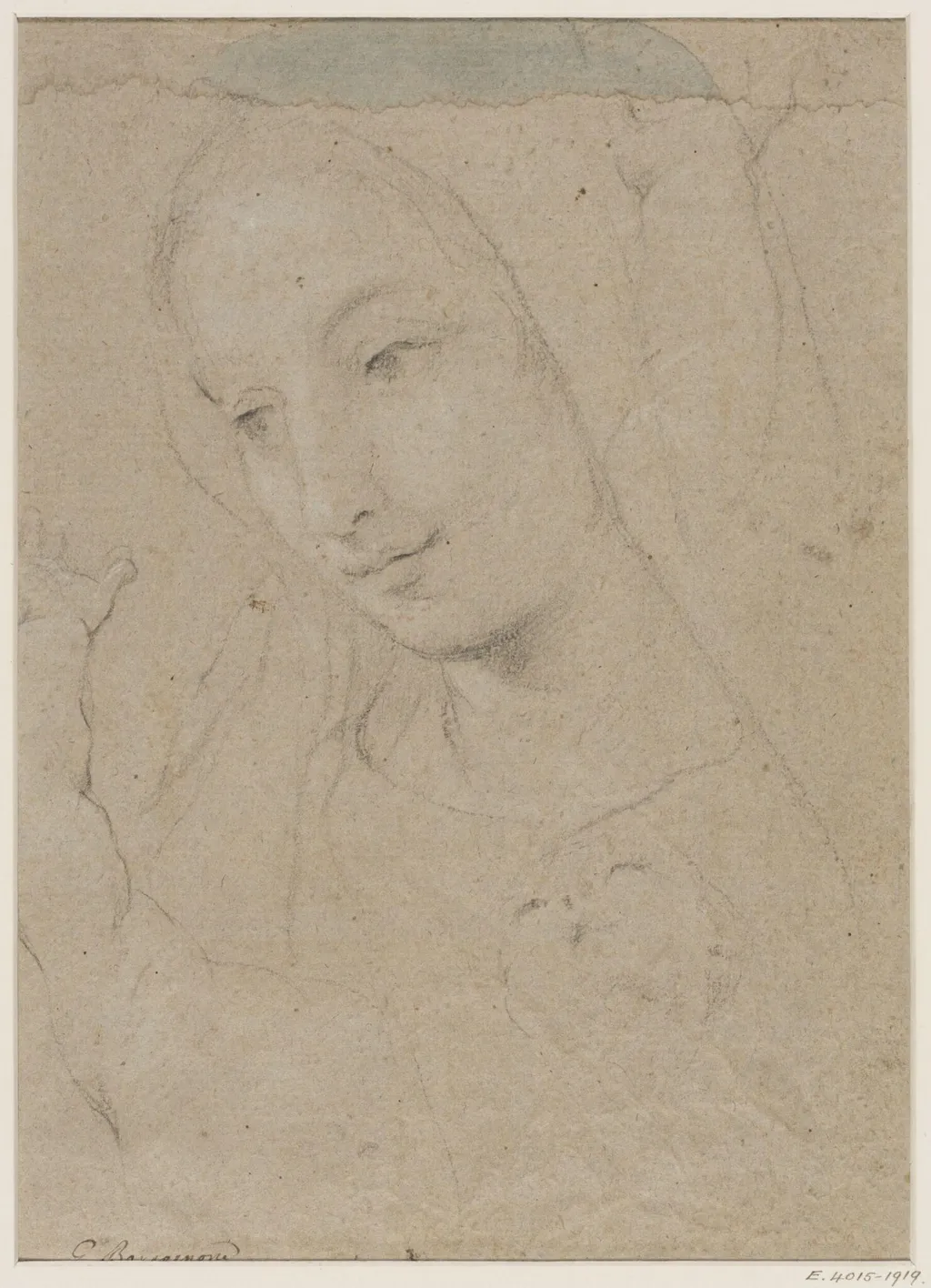
Head of a young woman is a drawing by the Baroque artist Guillaume Courtois. It dates from 1650 and is held in the collection of the Victoria and Albert Museum.
About this work
Overview
This 17th-century drawing by Guillaume Courtois, dated around 1650, is a study in black chalk depicting the upper portion of a young woman’s head.
This 17th-century drawing by Guillaume Courtois, dated around 1650, is a study in black chalk depicting the upper portion of a young woman’s head. Executed with minimal strokes, it captures only the face, hair, neck, and upper shoulder. The paper shows signs of age—cracks, smudges, and wear—suggesting frequent handling or long-term storage. Its unfinished quality implies it was not a finished work but a preparatory observation.
Subject & Meaning
The figure is likely intended as the Virgin Mary, given the modest, contemplative pose and the period’s devotional conventions. However, no definitive attributes—such as a halo or specific garments—are present. The lack of symbolic detail leaves the identification tentative, suggesting the artist was exploring a type rather than illustrating a specific biblical scene.
Technique & Style
Courtois employed light, fluid lines in black chalk, favoring speed over refinement. The strokes are loose and suggestive, emphasizing volume through subtle shading rather than outline. The drawing’s immediacy reflects a working method focused on capturing form and light quickly, typical of preparatory studies. The surface shows evidence of erasure and reworking, indicating iterative refinement.
History & Provenance
The drawing survives on its original sheet, with a secondary sketch on the reverse: a seated figure, one arm raised, accompanied by a child. This reuse of paper was common among artists conserving materials. The sheet’s condition and the presence of two studies suggest it was part of a private sketchbook, possibly used for personal practice or compositional planning.
Context
In mid-17th-century Rome, where Courtois worked, artists frequently produced quick figure studies to refine their understanding of anatomy and expression. Such drawings were rarely intended for public display but served as essential tools in training and composition. This piece aligns with the broader practice of observational drawing among Baroque draftsmen.
Legacy
The drawing exemplifies the quiet, unadorned discipline of Baroque studio practice. Though unsigned and undated in its original context, its survival offers insight into how artists engaged with form through direct observation. It remains a quiet testament to the value of the sketch as a site of inquiry, not merely preparation.
Artist & collection

Artist
Guillaume Courtois or italianized as Guglielmo Cortese, called Il Borgognone or Le Bourguignon, was a Free Burgundian-Italian painter, draughtsman and etcher.

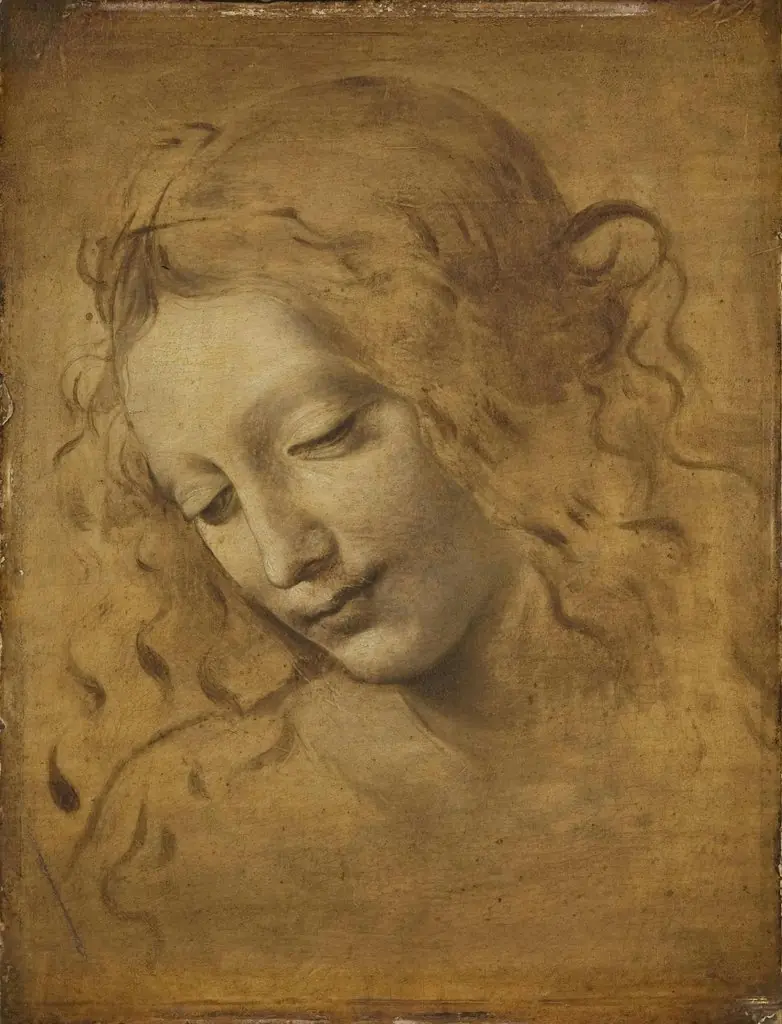 Head of a Woman
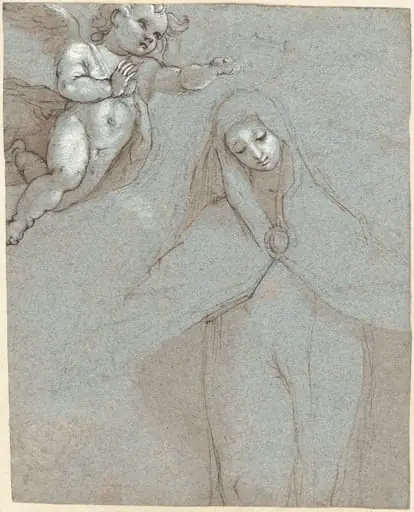 The Virgin Crowned by an Angel
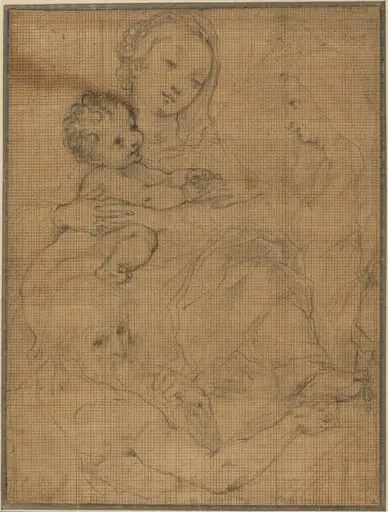 Mystic Marriage of Saint Catherine with Saint Jerome
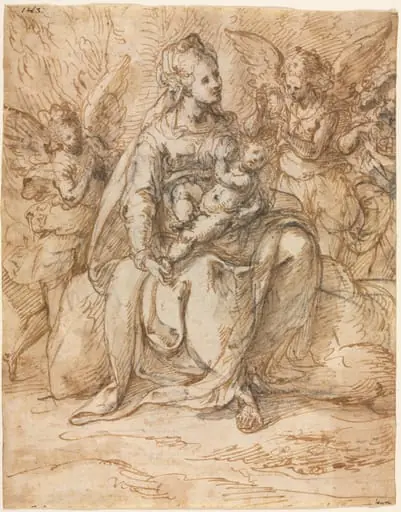 Madonna and Child with Angels
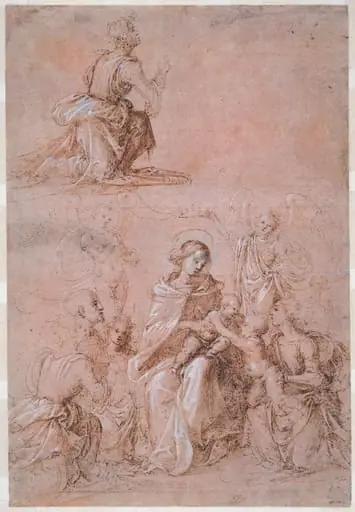 The Virgin and Child Surrounded by Saints and Angels
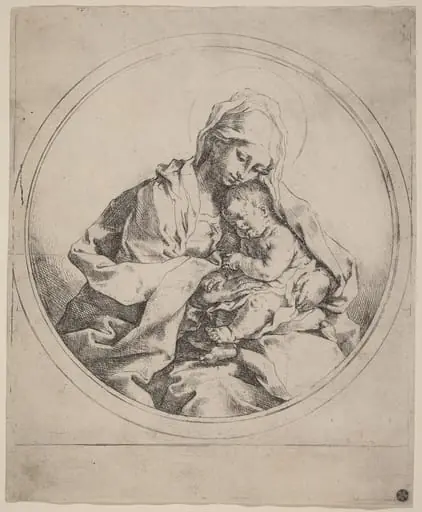 Virgin and Child
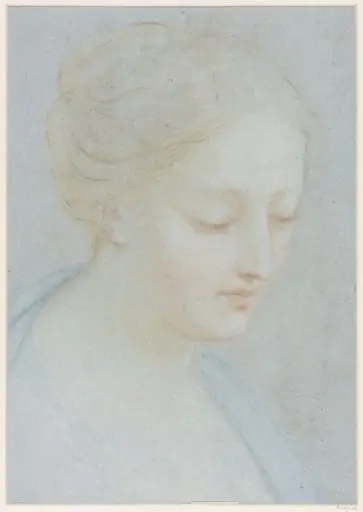 Head of a Woman
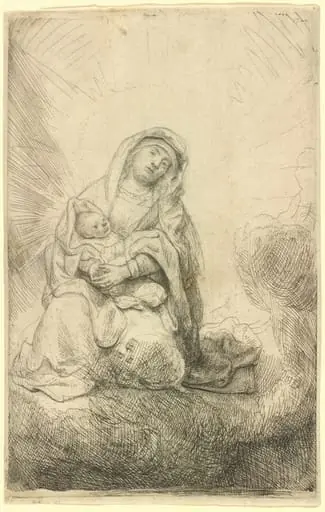 Virgin and Child in the Clouds
![Prudence [recto], by Cherubino Alberti](https://artifactworldgallery.com/img/cherubino-alberti--prudence-recto--3f44e6d72db5eb8c-w320.webp) Prudence [recto]
Prudence [recto]![Half-Length of Mary Magdalene [verso], by Federico Barocci](https://artifactworldgallery.com/img/federico-barocci--half-length-of-mary-magdalene-verso--6214516eb7a1b850-w320.webp) Half-Length of Mary Magdalene [verso]
Half-Length of Mary Magdalene [verso]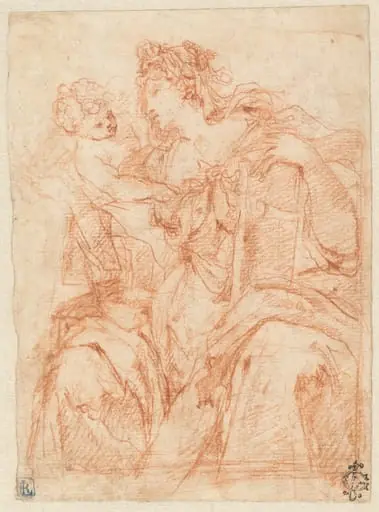 Study for the Sibyl of the Casa Budrioli
 A female saint surrounded by cherubs