Artwork
Still-life of fruit, with the Supper at Emmaus
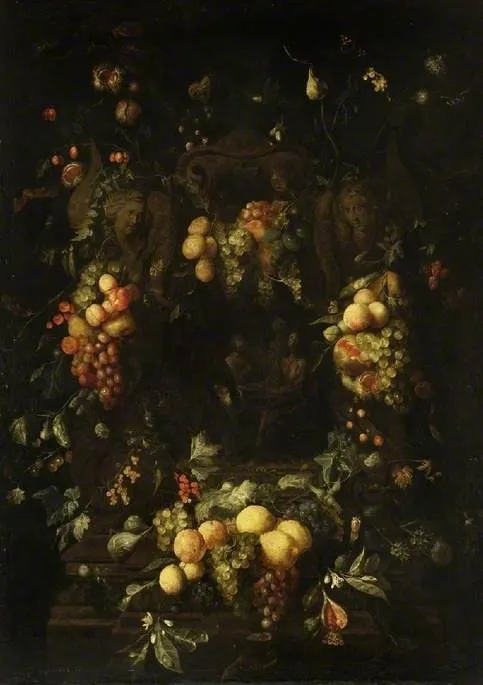
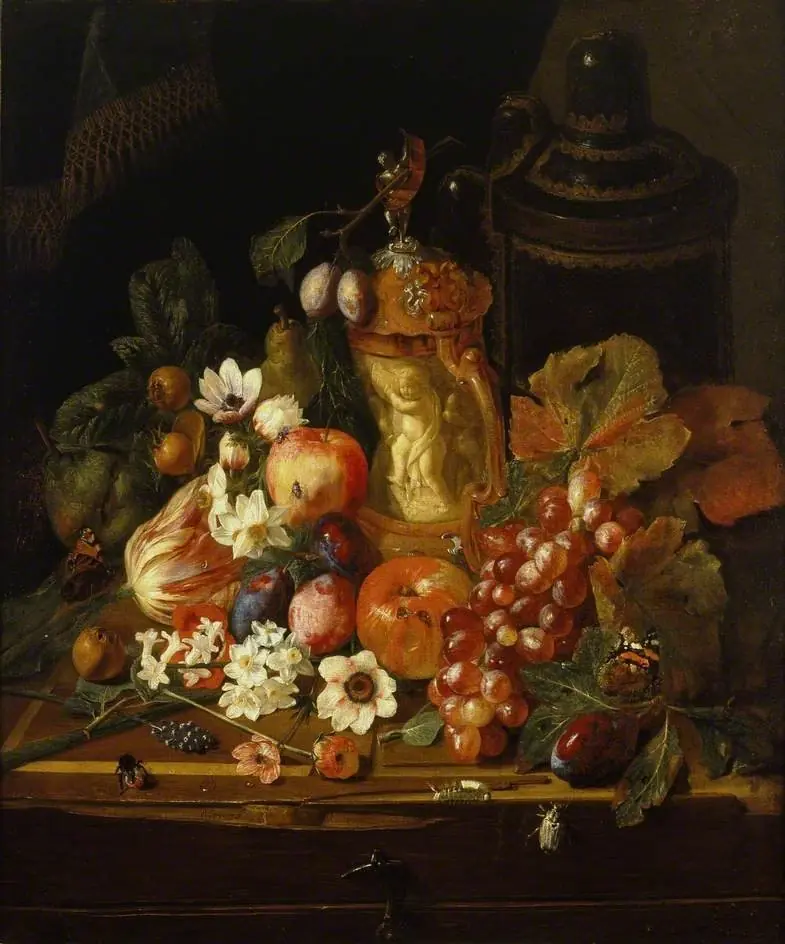
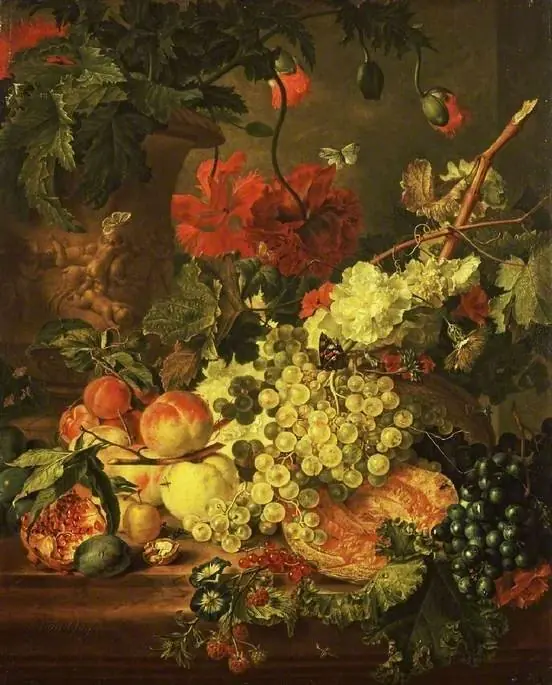
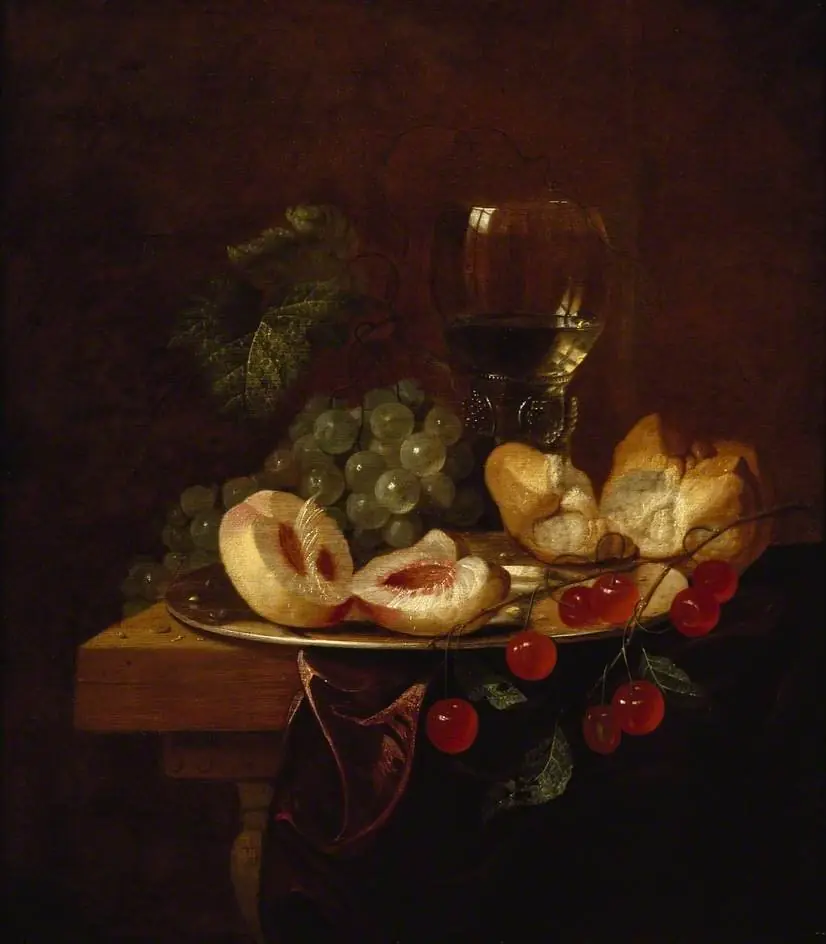
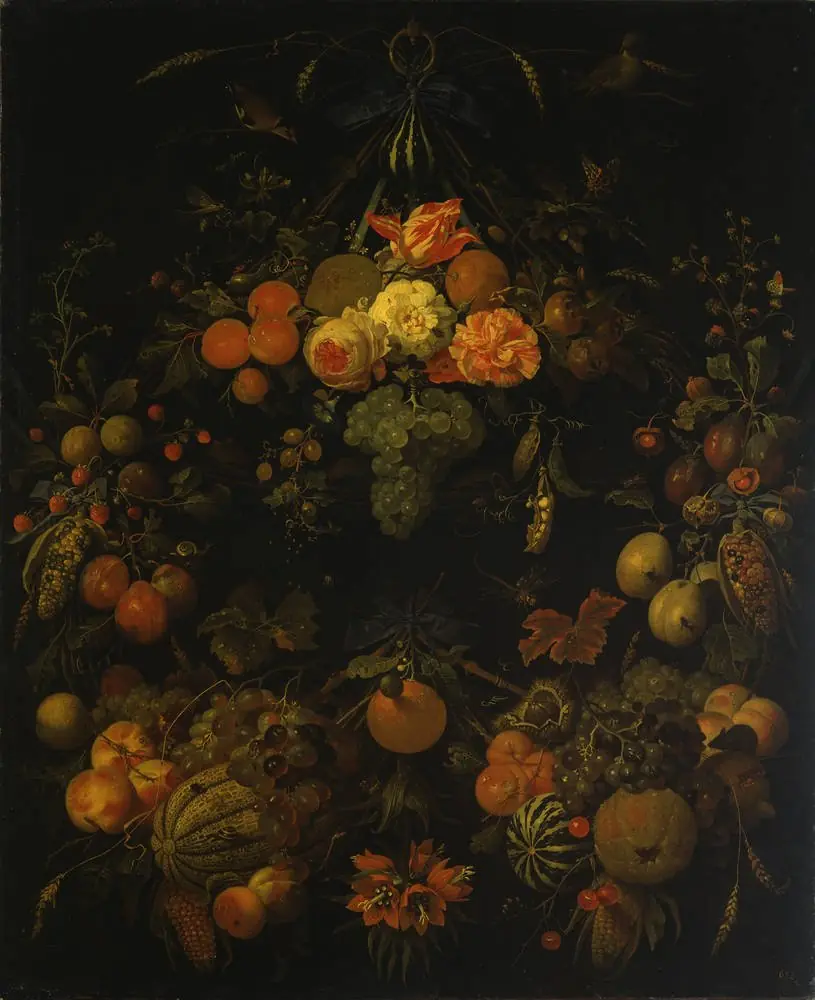
Still-life of fruit, with the Supper at Emmaus is an oil painting by Guilliam de Vries. It is held in the collection of the Fitzwilliam Museum.
About this work
Overview
Guilliam de Vries’ oil painting titled *Still‑life of fruit, with the Supper at Emmaus* combines a conventional fruit still‑life with a faint narrative scene in the distance. The work is part of the collection of the Fitzwilliam Museum, where it is displayed as an example of early‑modern Dutch genre painting that merges everyday abundance with a biblical reference.
Subject & Meaning
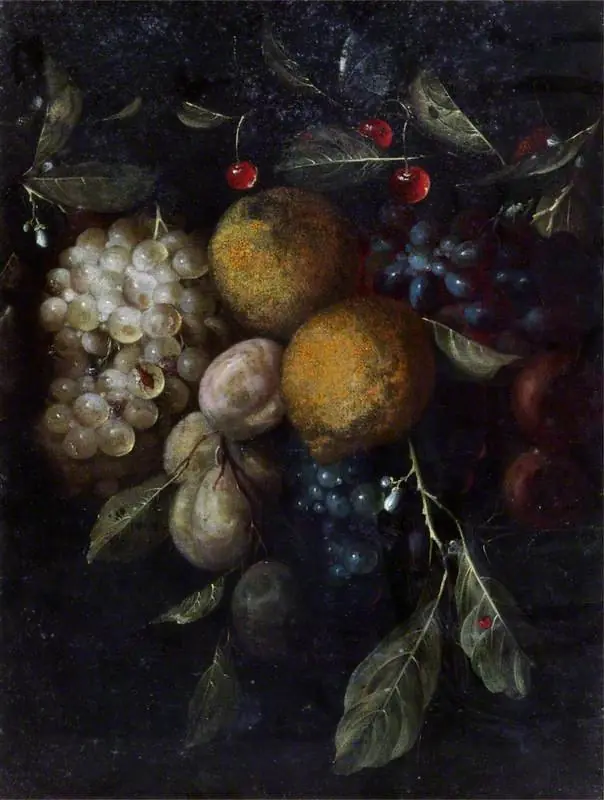
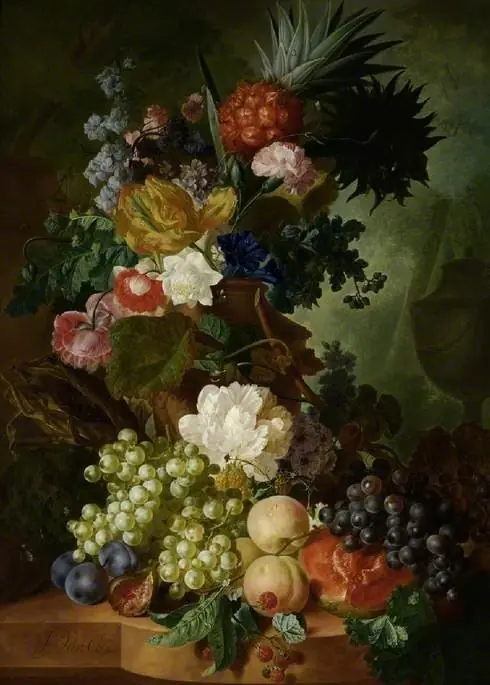
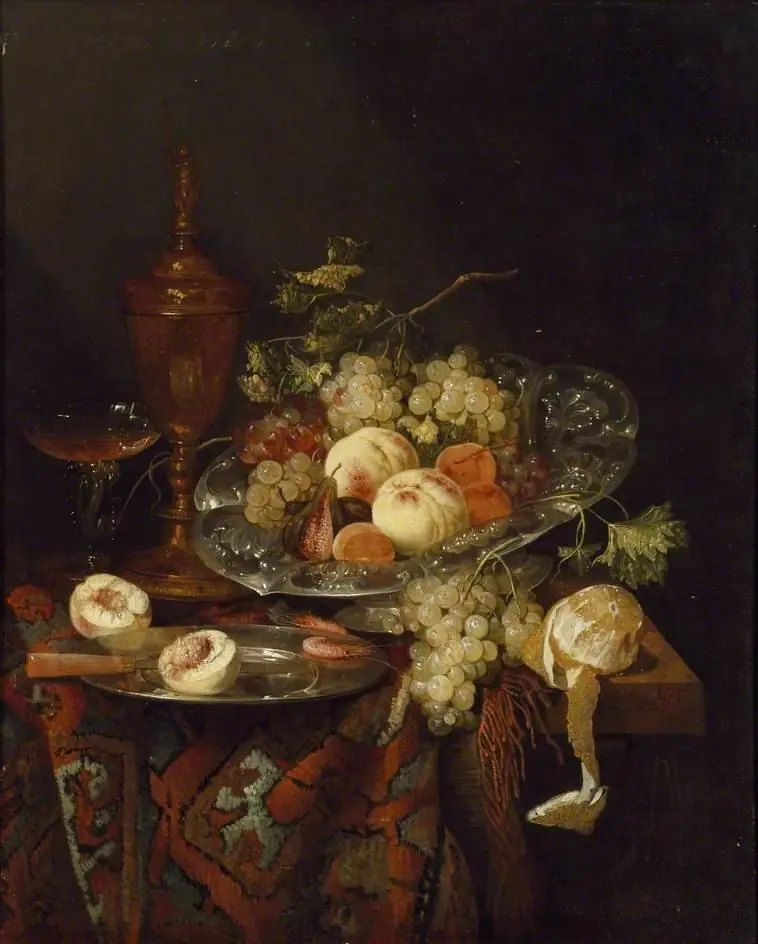
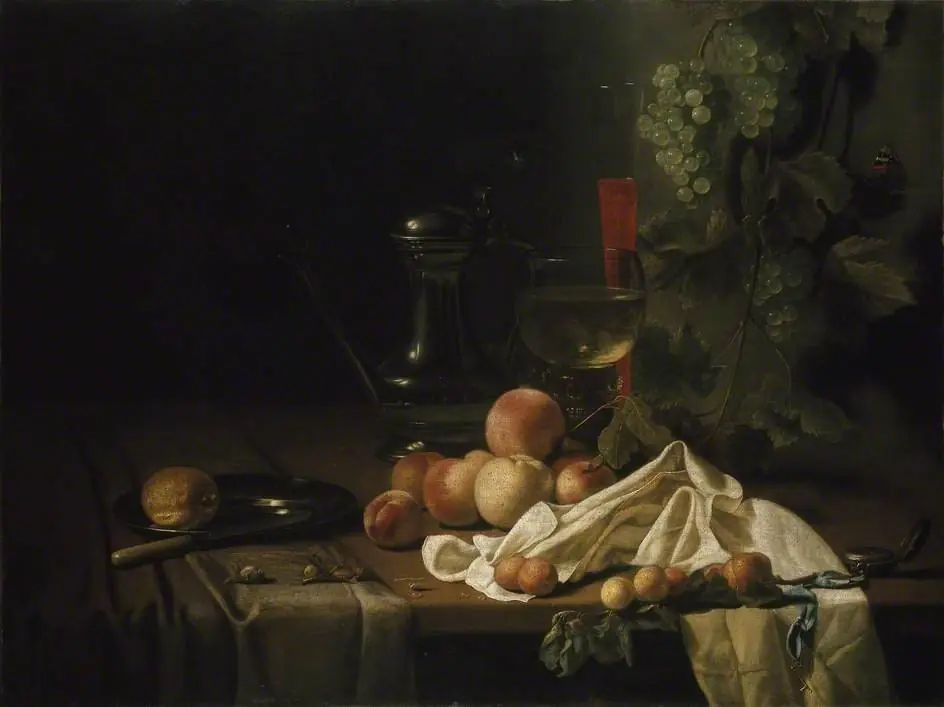
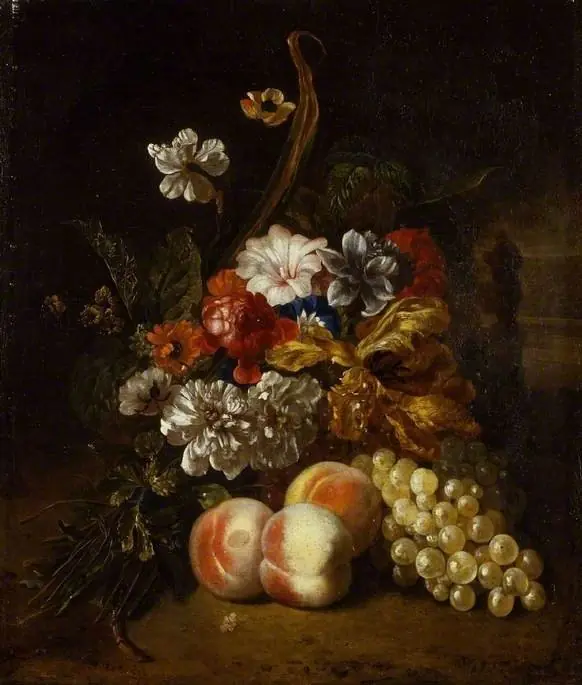
The foreground presents a carefully arranged assortment of fruit—grapes, peaches and other seasonal produce—clustered in baskets and hanging from leafy branches. Behind this bounty, a muted depiction of the biblical Supper at Emmaus can be discerned, suggesting a symbolic link between material plenty and spiritual nourishment.
Technique & Style
De Vries employs a restrained palette of greens, browns and yellows, allowing the forms to emerge through subtle tonal shifts. The composition relies on chiaroscuro, with strong light‑dark contrasts that model the fruit and give the background scene a hazy, atmospheric quality. The overall effect is one of depth without overt dramatization.
History & Provenance
The painting entered the Fitzwilliam Museum’s holdings through acquisition in the early twentieth century, though its earlier ownership record is limited. It remains attributed to Guilliam de Vries, a Dutch painter active in the mid‑1600s, whose oeuvre includes both still‑life and narrative works.
Artist & collection
Artist
This painter mixed everyday fruit baskets with sacred scenes in one picture. Their lone surviving work mixes a still-life of grapes, peaches, and nuts with the biblical Supper at Emmaus inside the same frame. Look…