Artwork
King George II
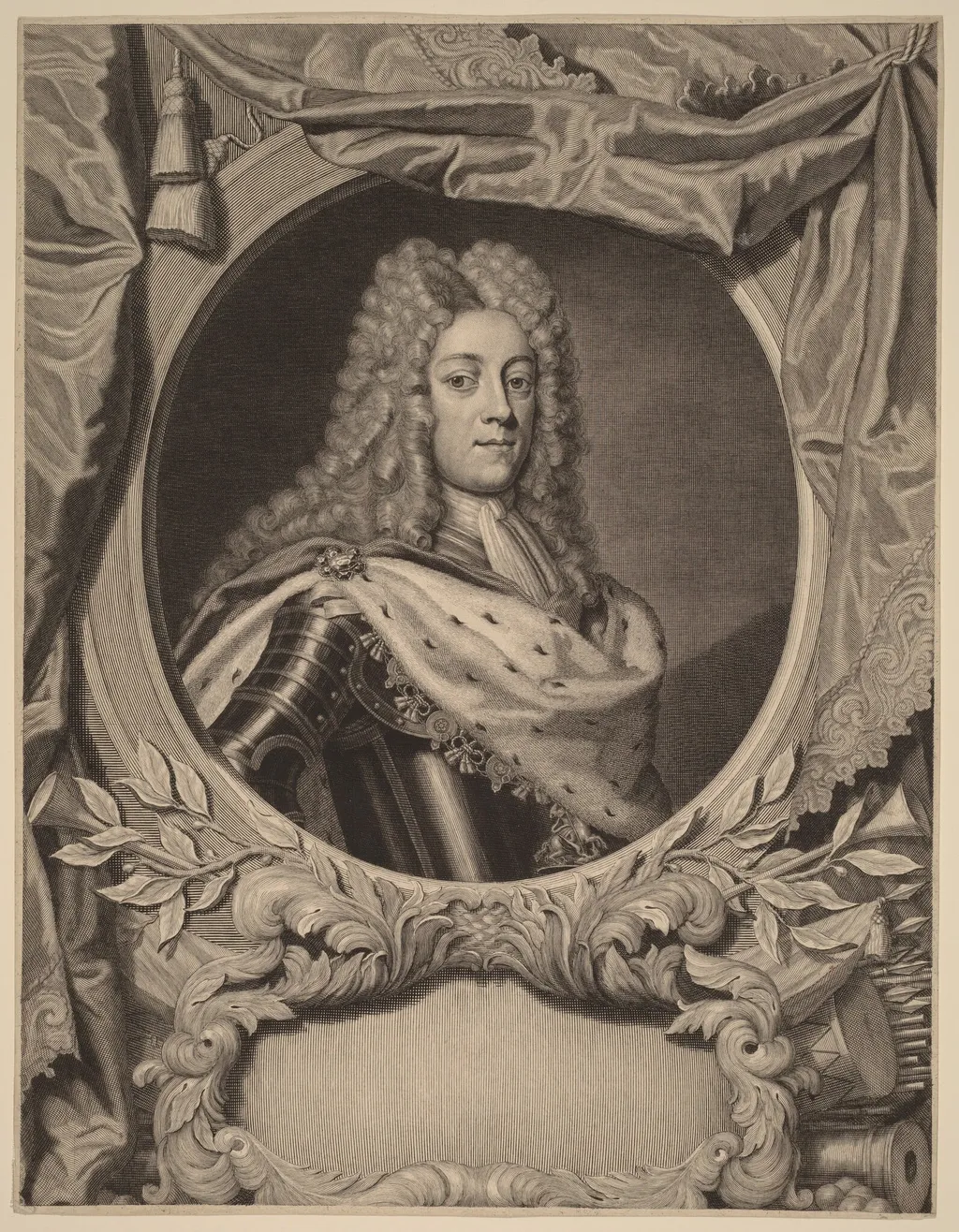
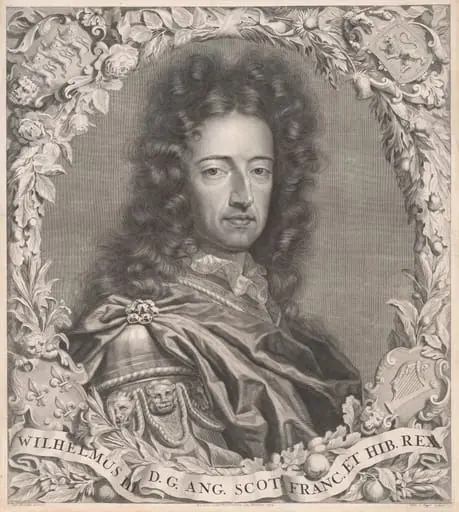
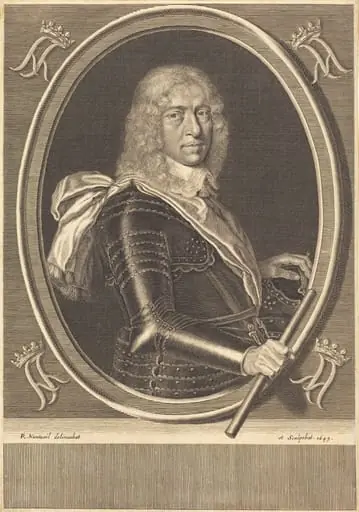
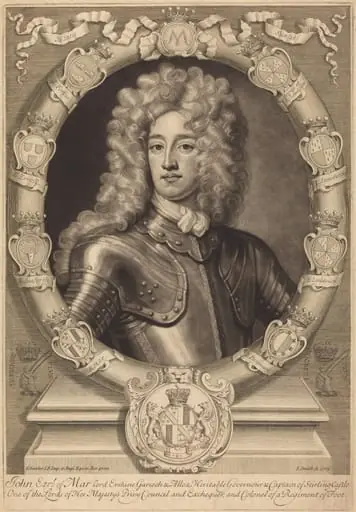
King George II is an ink print by the Baroque artist Pieter Stevens van Gunst. It dates from 1692 and is held in the collection of the National Gallery of Art.
About this work
Overview
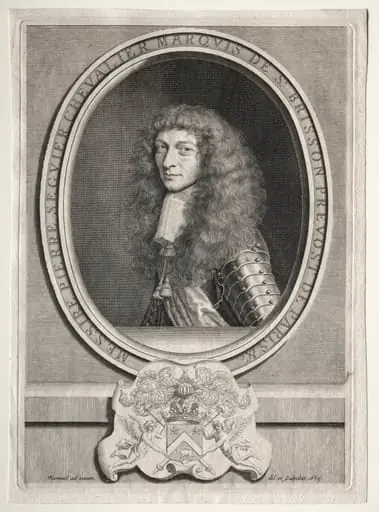
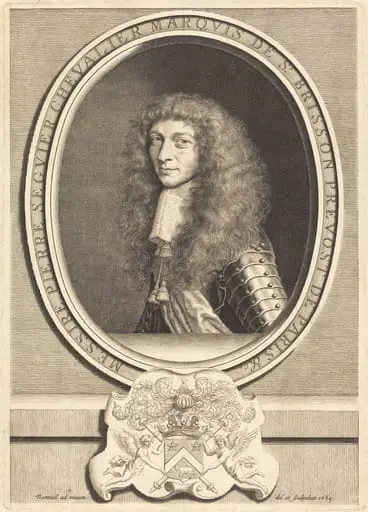
Pieter Stevens van Gunst’s 1692 engraving presents a portrait of the British monarch, King George II, rendered in the elaborate visual language of the late Baroque. The image captures the king in profile, his gaze turned to the right, set against a darkened backdrop that accentuates the richness of his attire and the surrounding ornamental frame.
Subject & Meaning
The work portrays the sovereign in full regalia, emphasizing his status through a voluminous wig and an opulently decorated coat. The surrounding foliage and scrollwork function as a symbolic halo, reinforcing royal authority and the grandeur associated with the Hanoverian dynasty during the early eighteenth century.
Technique & Style
Executed as a copperplate engraving, the piece demonstrates van Gunst’s skill in line work and hatching to convey texture, from the sheen of silk to the intricate detailing of lace and embroidery. The high contrast between the dark background and the finely rendered figure exemplifies the Baroque penchant for dramatic chiaroscuro and ornamental excess.
History & Provenance
Created in 1692, the print was likely produced for distribution among court circles and loyal subjects, serving both as a commemorative image and a political statement. Copies of the engraving have appeared in various collections of European prints, tracing a provenance that reflects its role as a visual record of George II’s early reign.
Artist & collection