Artwork
The Wrestlers
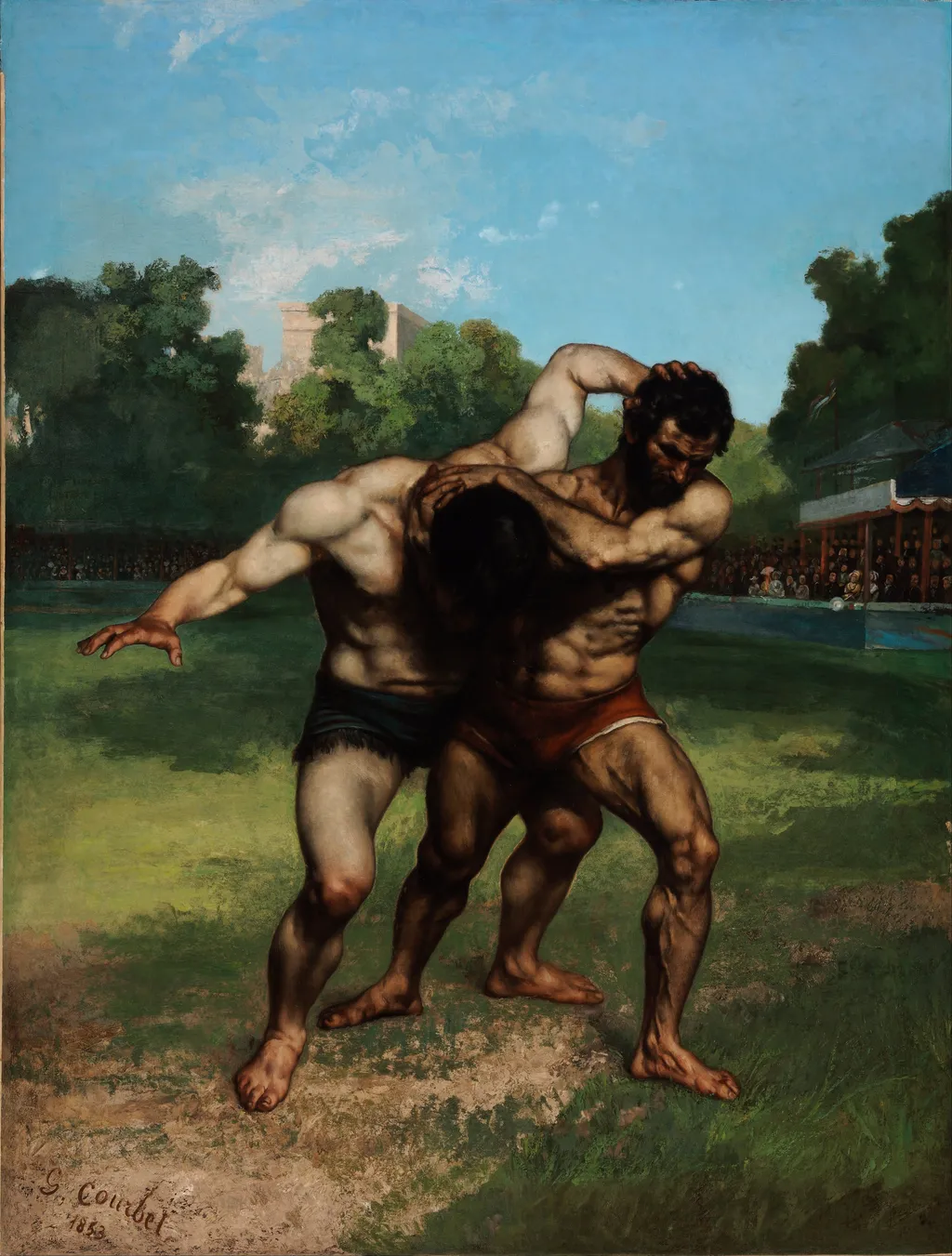
The Wrestlers is an oil painting by the Realist artist Gustave Courbet. It dates from 1853 and is held in the collection of the Hungarian National Gallery.
About this work
Courbet’s choice of a huge canvas later inspired Alexandre Falguière’s 1875 painting of the same name.
The Wrestlers is a large oil painting made in 1853 by French artist Gustave Courbet. It is a genre scene that depicts a wrestling match.
The work shows two men locked in French wrestling, a style based on Greco‑Roman techniques. Documents say the bout takes place in the old hippodrome on the Champs‑Élysées in Paris. Courbet’s choice of a huge canvas later inspired Alexandre Falguière’s 1875 painting of the same name.
You can see it today in the Hungarian National Gallery.
Overview
Painted in 1853, The Wrestlers is a large-scale oil work by Gustave Courbet, depicting a physical contest between two men. It belongs to the genre of everyday life scenes, yet its monumental size elevates the subject beyond mere anecdote. The painting is currently held in the Hungarian National Gallery in Budapest, where it has been since the late 19th century.
Subject & Meaning
The painting captures a match of French wrestling, a style rooted in Greco-Roman traditions, performed in the former hippodrome on the Champs-Élysées. Courbet presents the athletes without idealization, focusing on their strained postures and physical exertion. The scene reflects a public spectacle of working-class leisure, treated with unembellished realism rather than mythological grandeur.
Technique & Style
Courbet employed thick, tactile brushwork to convey the weight and texture of skin, fabric, and earth. The composition is tightly framed, emphasizing the wrestlers' entwined forms against a sparse background. Light falls evenly across the scene, avoiding dramatic contrast, reinforcing the painting’s documentary tone and commitment to observed reality.
History & Provenance
The painting was completed in 1853 and remained in French collections until acquired by the Hungarian National Gallery in the late 1800s. Historical records confirm the location of the depicted match as the Champs-Élysées hippodrome, a venue for public athletic contests. Its scale and subject matter drew attention among contemporaries and later artists.
Context
In mid-19th-century France, Courbet challenged academic norms by portraying ordinary labor and recreation as worthy of large-format painting. The Wrestlers emerged during a period when public wrestling matches were popular urban entertainments. By rendering such scenes with the gravity reserved for history painting, Courbet questioned artistic hierarchies.
Legacy
Courbet’s decision to render a wrestling match on a grand scale influenced later artists, including Alexandre Falguière, who created a similarly titled work in 1875. The painting contributed to a broader shift in French art toward depicting contemporary life with unvarnished detail, helping to pave the way for Realism’s lasting impact on modern visual culture.
Artist & collection
Artist
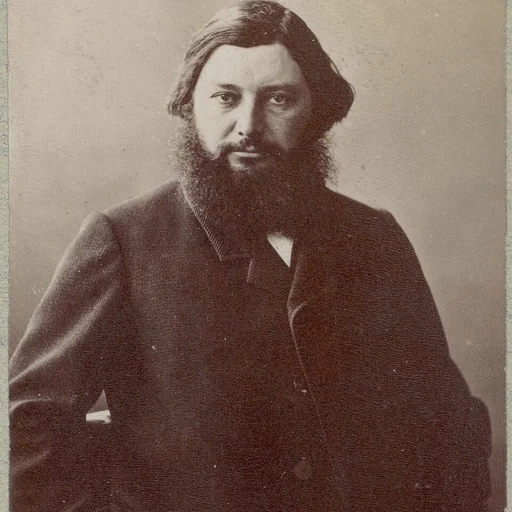
Jean Désiré Gustave Courbet (UK: KOOR-bay; US: koor-BAY; French: ; 10 June 1819 – 31 December 1877) was a French painter who led the Realism movement in 19th-century French painting.