Artwork
The Bridge of Palalda (near Amelieles-Bains)
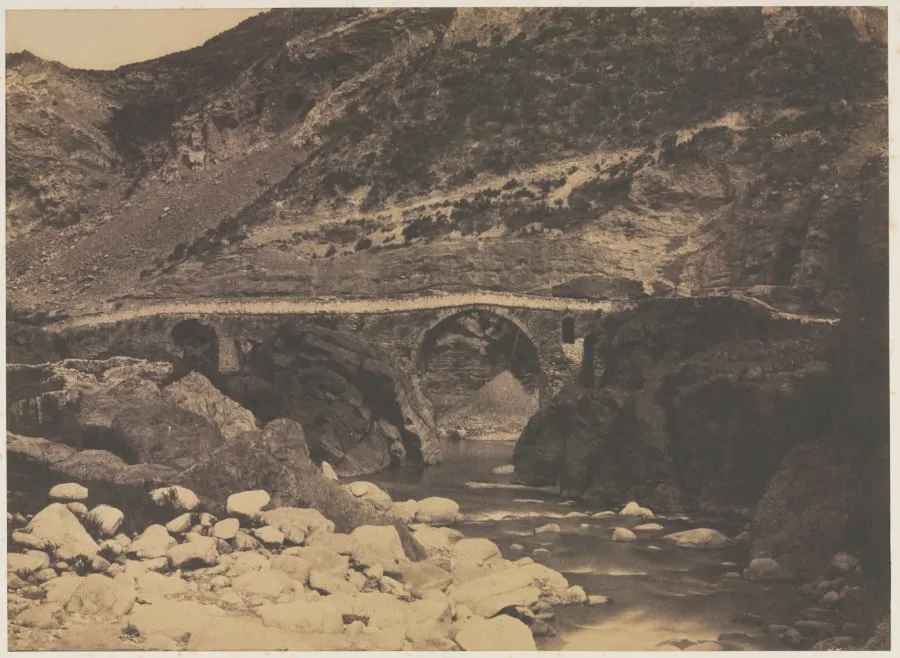
The Bridge of Palalda (near Amelieles-Bains) is a photography by the Impressionist artist Gustave Le Gray. It dates from 1852 and is held in the collection of the Cleveland Museum of Art.
About this work
He made three prints of scenes outside the official project, and this one stands out for its quiet mood.
A black-and-white photo shows a stone bridge curving over a river with two people walking on it. The scene looks calm and old-fashioned, with soft light on the arches. The river below has a gentle curve, and trees frame the far bank.
Le Gray took this in 1851 while traveling France for a historic buildings survey. He made three prints of scenes outside the official project, and this one stands out for its quiet mood.
Look up Gustave Le Gray (French, 1820–1884) to see more of his work.
Overview
Taken in 1851 during a survey for France’s Historic Monuments Commission, this photograph by Gustave Le Gray captures a stone bridge near Palalda, now part of Amélie-les-Bains. Though commissioned to document architectural heritage, Le Gray produced only three known images outside the official scope—this being one. Its quiet composition and atmospheric tone distinguish it from the more documentary intent of the project, revealing a personal artistic vision.
Subject & Meaning
The image centers on a modest stone bridge arching over the Tech River, with two figures crossing it. Rather than emphasizing the bridge’s historical details, Le Gray frames it within a broader landscape—rugged cliffs, winding water, and distant trees. The scene evokes stillness and solitude, suggesting a meditation on time and place rather than a record of preservation. The human presence is minimal, reinforcing the landscape’s quiet endurance.
Technique & Style
Le Gray employed the wet collodion process, achieving rich tonal gradations in this positive print. He prioritized mood over precision, using light and shadow to soften edges and unify the cliff, bridge, and river into a cohesive whole. The foreshortened rock face merges with the bridge’s curve, creating subtle spatial ambiguity. This deliberate blurring of form reflects his interest in photographic expression beyond mere documentation.
History & Provenance
Le Gray and his companion O. Mestral traveled southwest France between July and September 1851, photographing monuments for the Historic Monuments Commission. This image, along with two others, was made independently of the commission’s requirements. Only three known positive prints of this subject exist, all rare examples of Le Gray’s personal work during a period otherwise dominated by official assignments.
Context
In the early 1850s, photography was increasingly used to record France’s architectural heritage as part of a national effort to preserve medieval sites. Le Gray’s role was technical and administrative, yet his personal aesthetic emerged in moments like this. The image reflects a broader tension between documentary duty and artistic impulse, a theme present in early photographic practice across Europe.
Legacy
Though not widely exhibited in his lifetime, this photograph exemplifies Le Gray’s influence on the artistic potential of photography. His ability to infuse topographical images with emotional resonance helped shift the medium’s perception from record to art. Later photographers and critics recognized such works as foundational to landscape photography as a contemplative genre.
Artist & collection

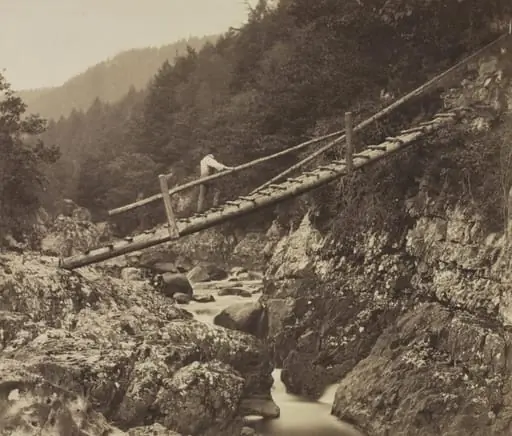 The Miners' Bridge, on the Llugwy, North Wales
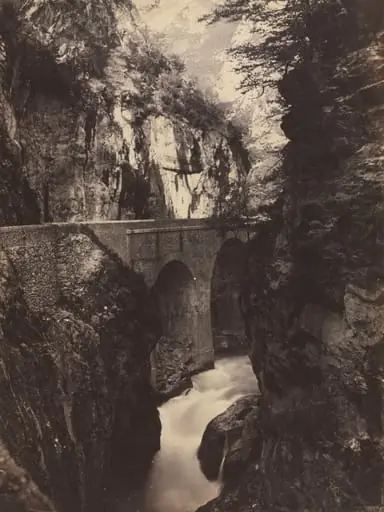 Road to Eaux-Chaudes, Pyrenees (recto)
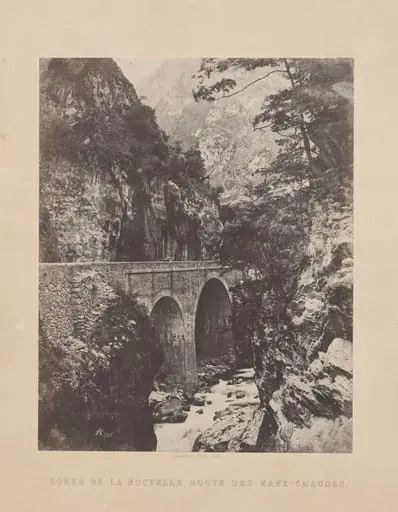 Gorge de la Nouvelle Route des Eaux-Chaudes
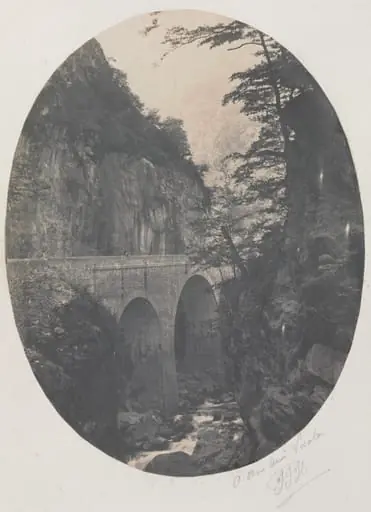 Gorge at Eaux Chaudes, Pyrenees
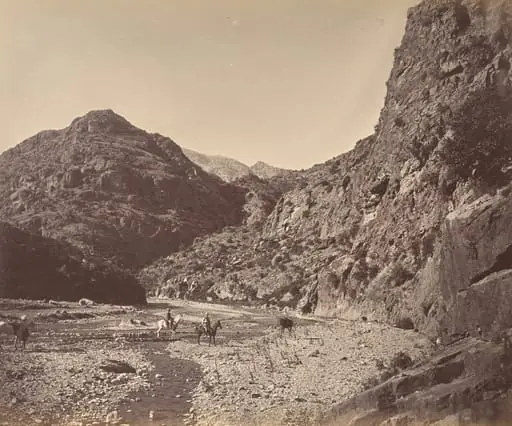 Pass Near Ali Musjid, Showing Tortang
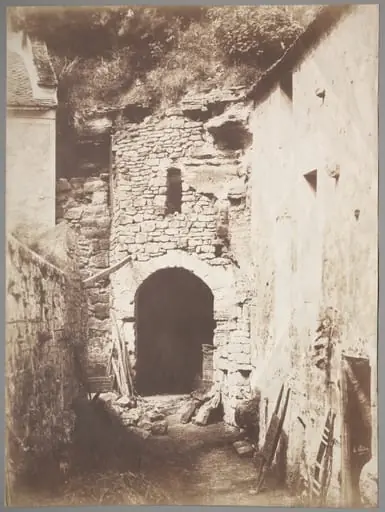 Behind the Troglodyte Farm
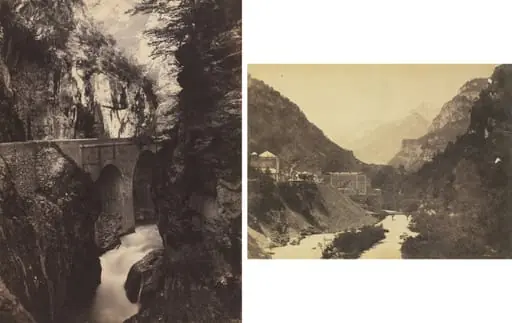 Road to Eaux-Chaudes, Pyrenees (recto); Eaux-Chaudes, Pyrenees (verso)
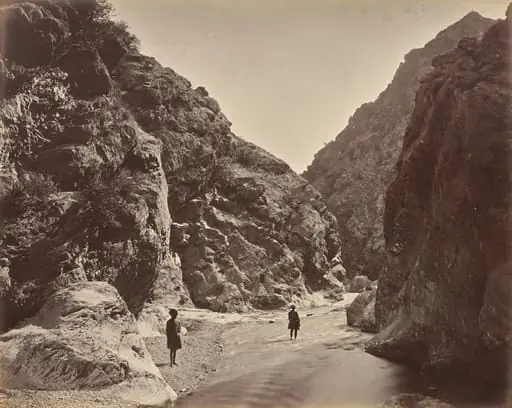 End of the Defile, Looking Back at Ali Musjid
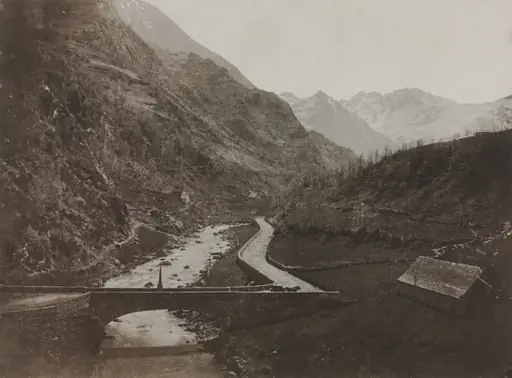 View Along the Route to Luz, Portugal
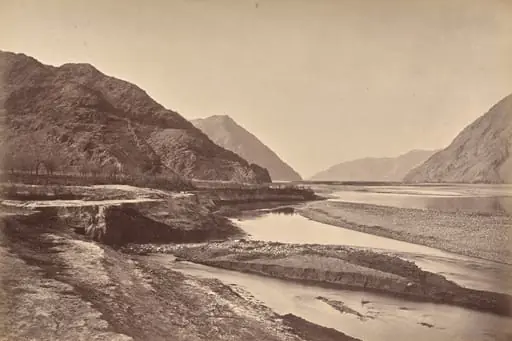 The River Gorge