Artwork
Le Chemin de ronde
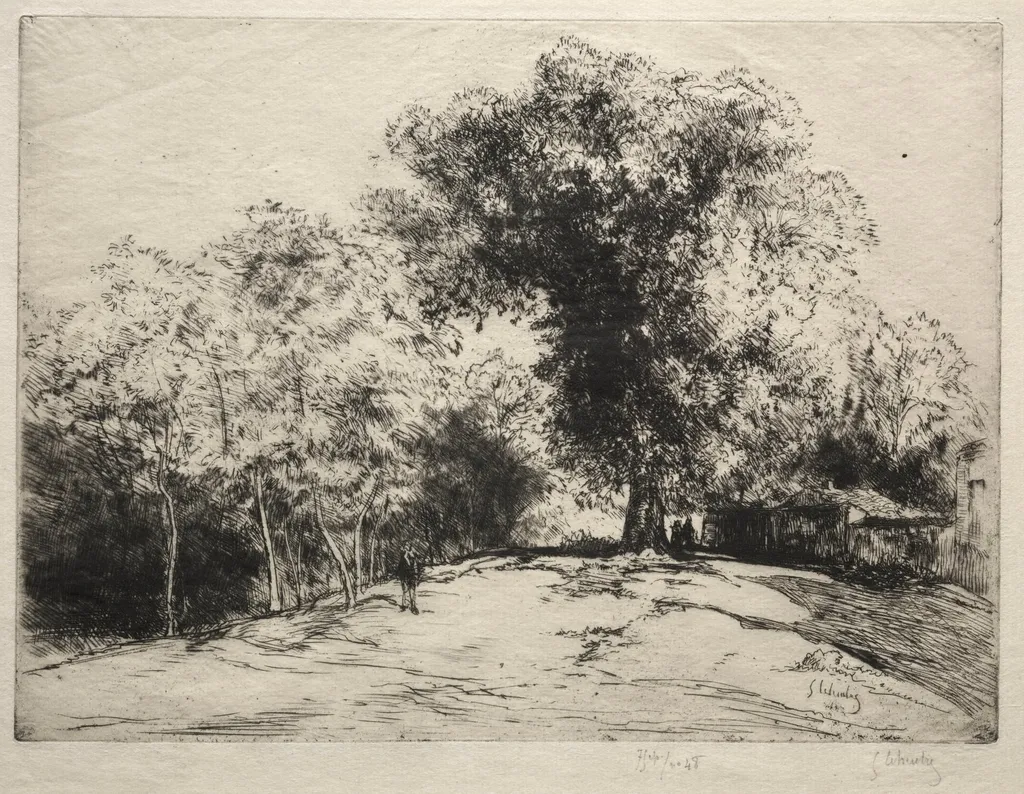
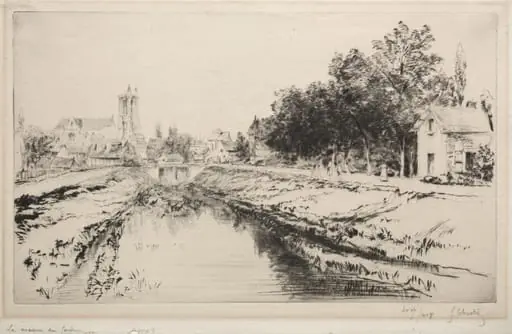
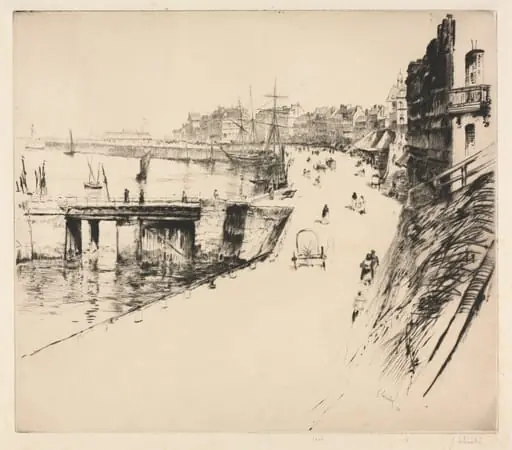
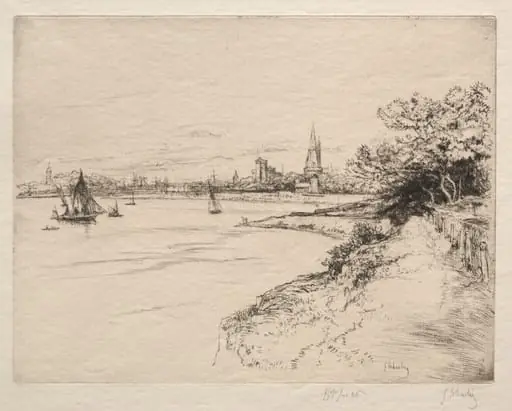
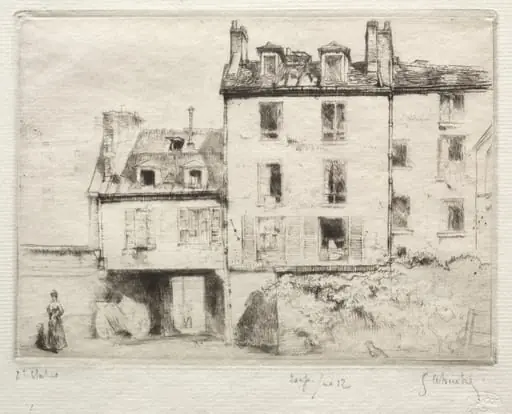
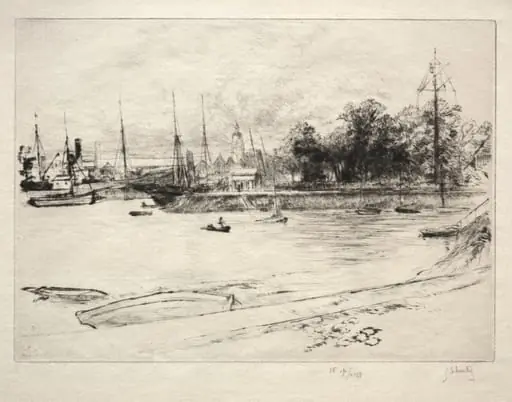
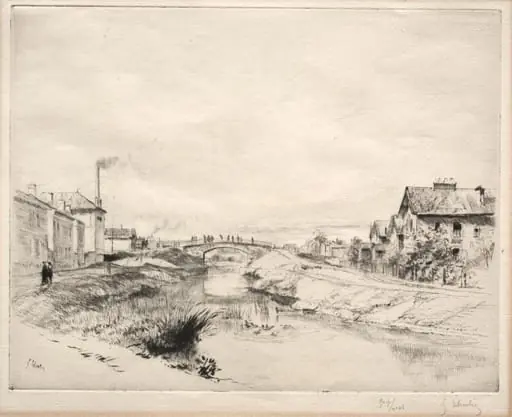
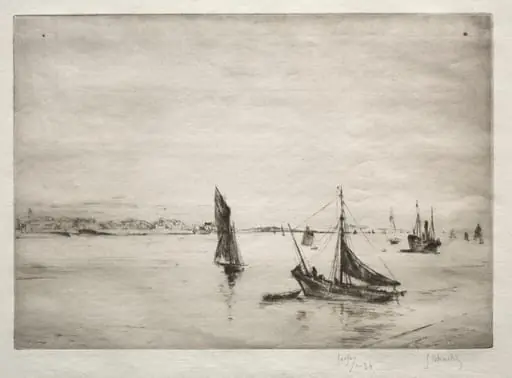
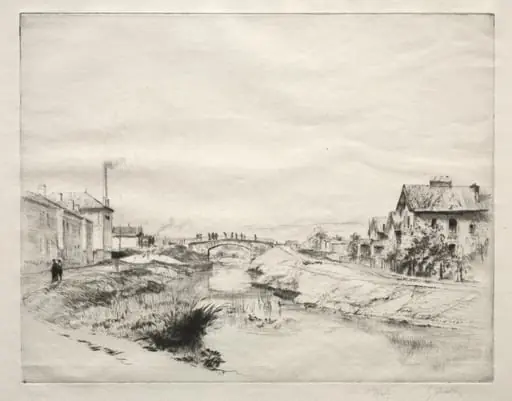
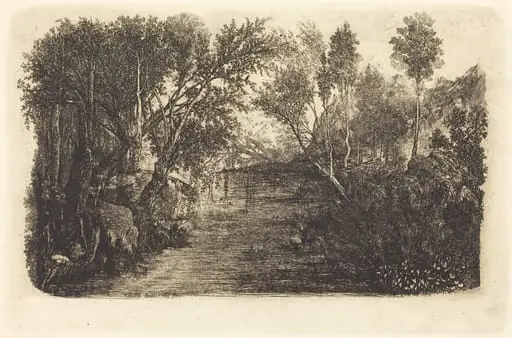
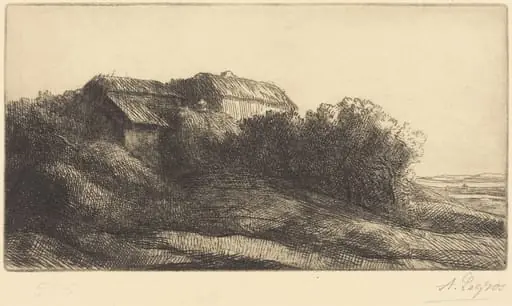
Le Chemin de ronde is a print by Gustave Leheutre. It dates from 1922 and is held in the collection of the Cleveland Museum of Art.
About this work
Overview
The work is part of the collection at The Cleveland Museum of Art, where it is preserved as an example of early 20th-century observational drawing.
Le Chemin de ronde is a black-and-white drawing by French artist Gustave Leheutre, completed in 1922. Executed in ink or graphite, it depicts a rural path winding through a wooded area. The composition emphasizes quiet solitude, with no overt narrative or human activity dominating the scene. The work is part of the collection at The Cleveland Museum of Art, where it is preserved as an example of early 20th-century observational drawing.
Subject & Meaning
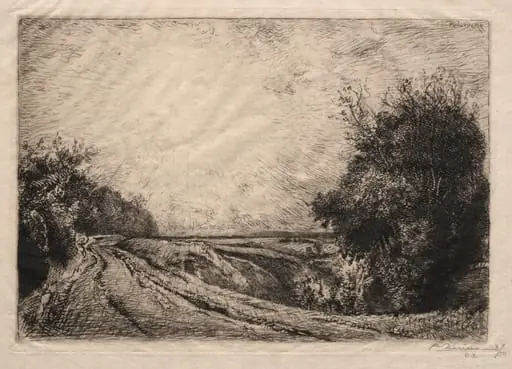
The drawing portrays a narrow dirt track flanked by dense, arching trees whose branches form a natural canopy. Faint outlines in the distance suggest a boundary—perhaps a fence or low wall—and tiny, indistinct figures hint at quiet passage. The absence of color and dramatic action invites contemplation of ordinary landscapes, reflecting a sensitivity to the subtle rhythms of rural life rather than grand spectacle.
Technique & Style
Leheutre employed rapid, fluid linework to suggest the texture of foliage and the play of light across uneven ground. Shadows are rendered with loose, overlapping strokes, creating depth without heavy shading. The sketch-like quality conveys immediacy, as if the scene was observed and recorded in a single moment. The monochromatic palette enhances the sense of stillness and temporal suspension.
History & Provenance
Created in 1922, the drawing entered the collection of The Cleveland Museum of Art at an unknown date, likely through acquisition or donation. While Leheutre is less widely known than some of his contemporaries, his works are recognized for their quiet realism and attention to everyday environments. This piece remains a representative example of his graphic output during the interwar period.
Context
In the early 1920s, many European artists turned away from grand historical or emotional themes toward intimate, observational subjects. Leheutre’s drawing aligns with this trend, echoing the quietude found in the work of French draftsmen who valued direct engagement with nature. It reflects a broader cultural interest in the pastoral as a refuge from modernity’s pace and disruption.
Legacy
Le Chemin de ronde endures as a quiet testament to Leheutre’s skill in capturing atmosphere through minimal means. Though not widely reproduced, it contributes to the understanding of lesser-known artists who sustained the tradition of observational drawing in modern France. Its presence in a major American museum underscores its value as a document of early 20th-century visual sensitivity.
Own this work as a print
Artist & collection