Artwork
La Falaise d'Orbigny
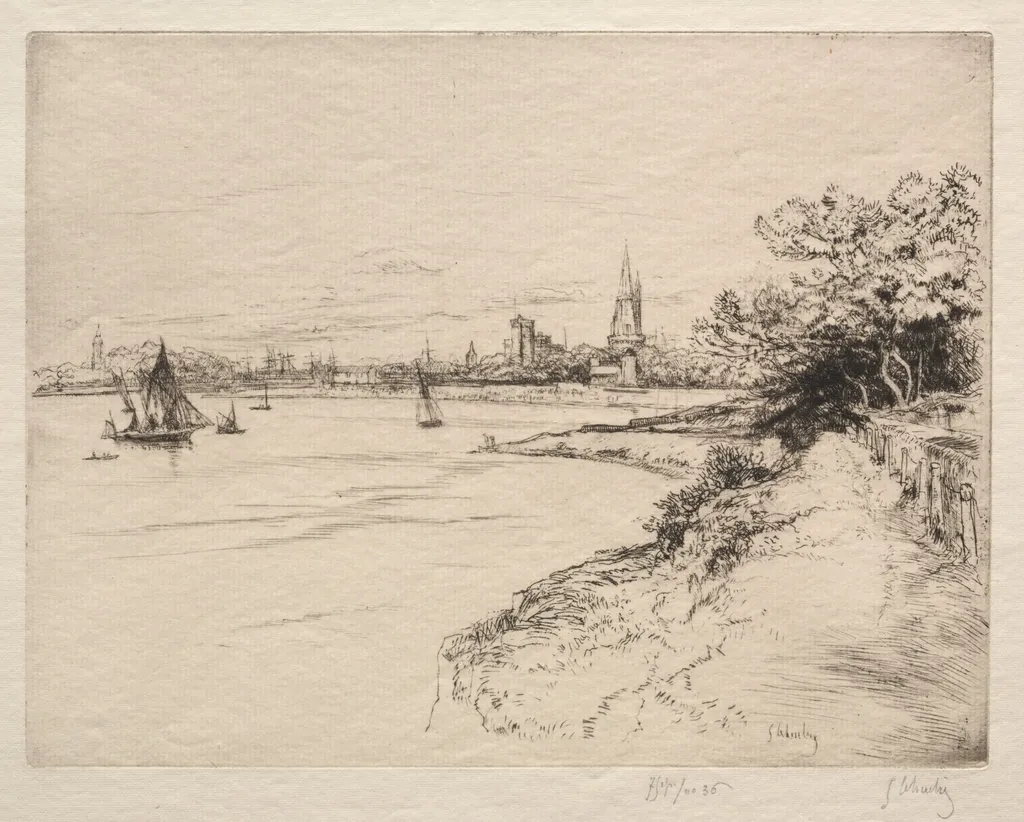
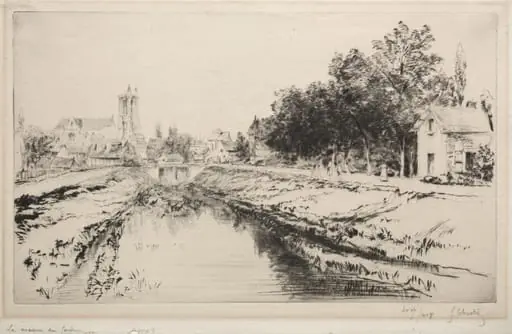
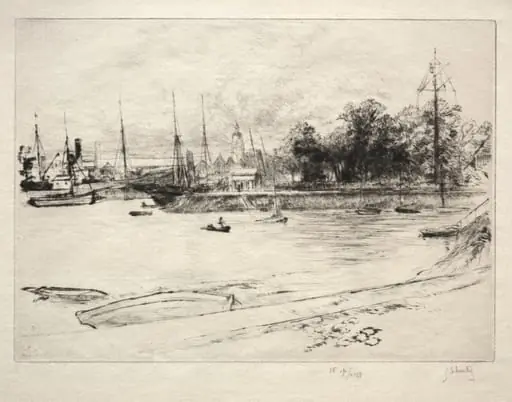
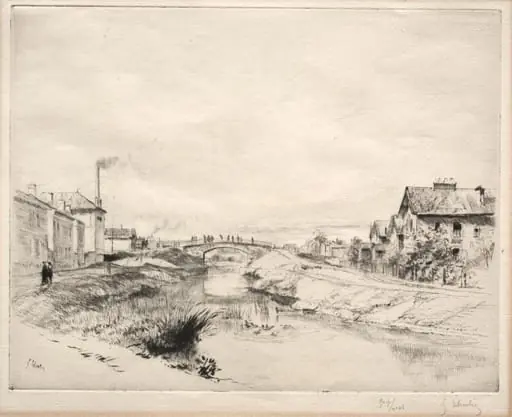
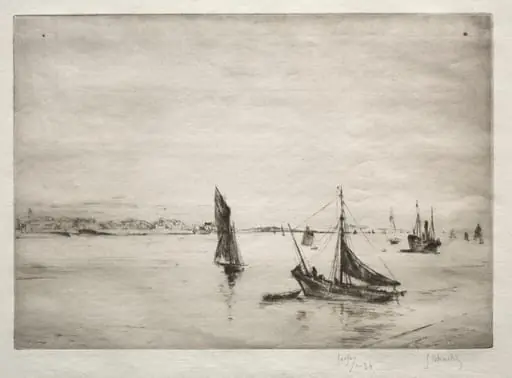
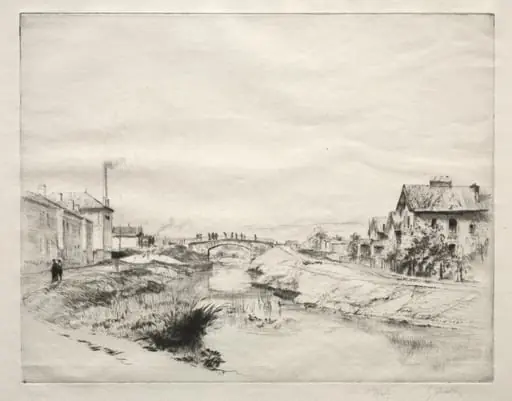
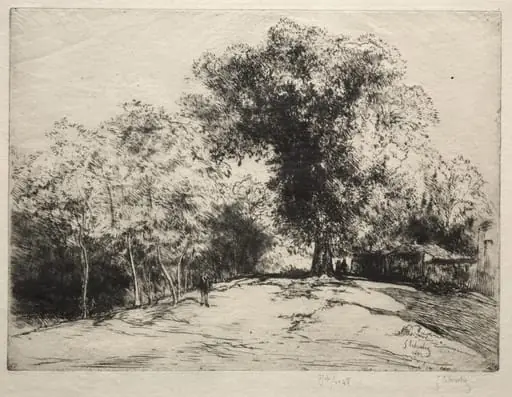
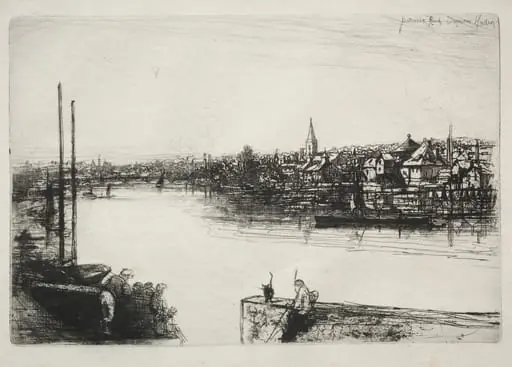
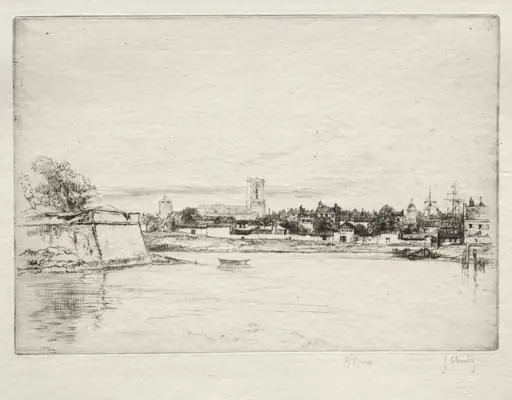
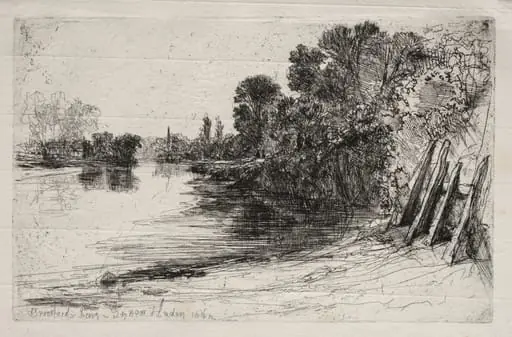
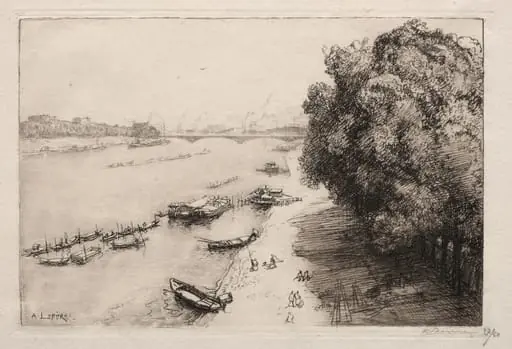
La Falaise d'Orbigny is a print by Gustave Leheutre. It dates from 1922 and is held in the collection of the Cleveland Museum of Art.
About this work
Overview
La Falaise d'Orbigny is a pencil sketch by Gustave Leheutre, dated around 1922. It captures a tranquil riverside landscape in Normandy, focusing on the interplay of natural forms and quiet human presence. The work is part of the collection at The Cleveland Museum of Art, where it is preserved as an example of early 20th-century French draftsmanship.
Subject & Meaning
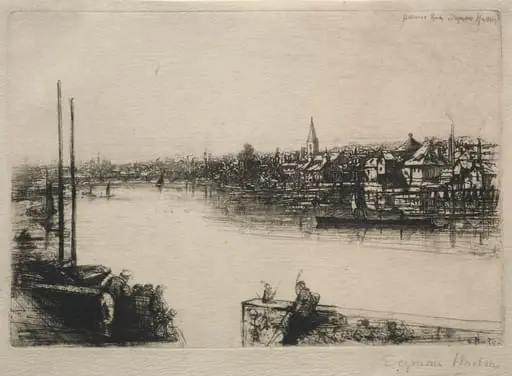
The scene depicts the Orbigny cliff overlooking a calm river, with small boats drifting near the shore and a distant town marked by church spires. The composition suggests a moment of stillness, emphasizing the relationship between land, water, and settlement. There is no overt narrative, but the quietude of the image conveys a contemplative observation of rural French life.
Technique & Style
Light and shadow are carefully modulated to suggest volume and spatial depth, particularly in the soft shadow cast by the cliff’s edge onto the river.
Leheutre employed loose, expressive lines for the foliage and a more controlled touch for the water and cliff face. Light and shadow are carefully modulated to suggest volume and spatial depth, particularly in the soft shadow cast by the cliff’s edge onto the river. The technique reflects an interest in tonal gradation over detailed rendering, aligning with observational drawing traditions of the period.
History & Provenance
The drawing was created in the early 1920s, during a period when Leheutre was actively sketching landscapes in Normandy. It entered the Cleveland Museum of Art’s collection through documented acquisition, though its earlier ownership history prior to museum acquisition remains unrecorded in publicly available sources.
Context
Leheutre worked during a time when many French artists turned to direct observation of nature, moving away from academic formalism. His sketches like this one reflect a broader trend among illustrators and painters who valued immediacy and atmospheric effect. The location, Orbigny, was a known subject for regional artists drawn to its distinctive limestone cliffs and river views.
Legacy
Though not widely exhibited, La Falaise d'Orbigny exemplifies Leheutre’s commitment to quiet, unembellished landscape study. It contributes to the understanding of lesser-known draftsmen who documented the French countryside with sensitivity, preserving regional topography through careful, untheatrical observation.
Own this work as a print
Artist & collection