Artwork
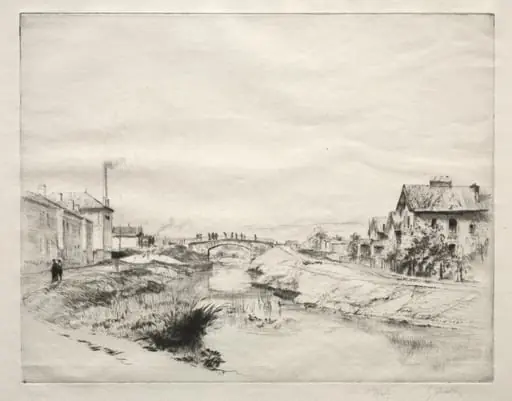
La rue Lacépède: le cour de l'Aciereur Cottens
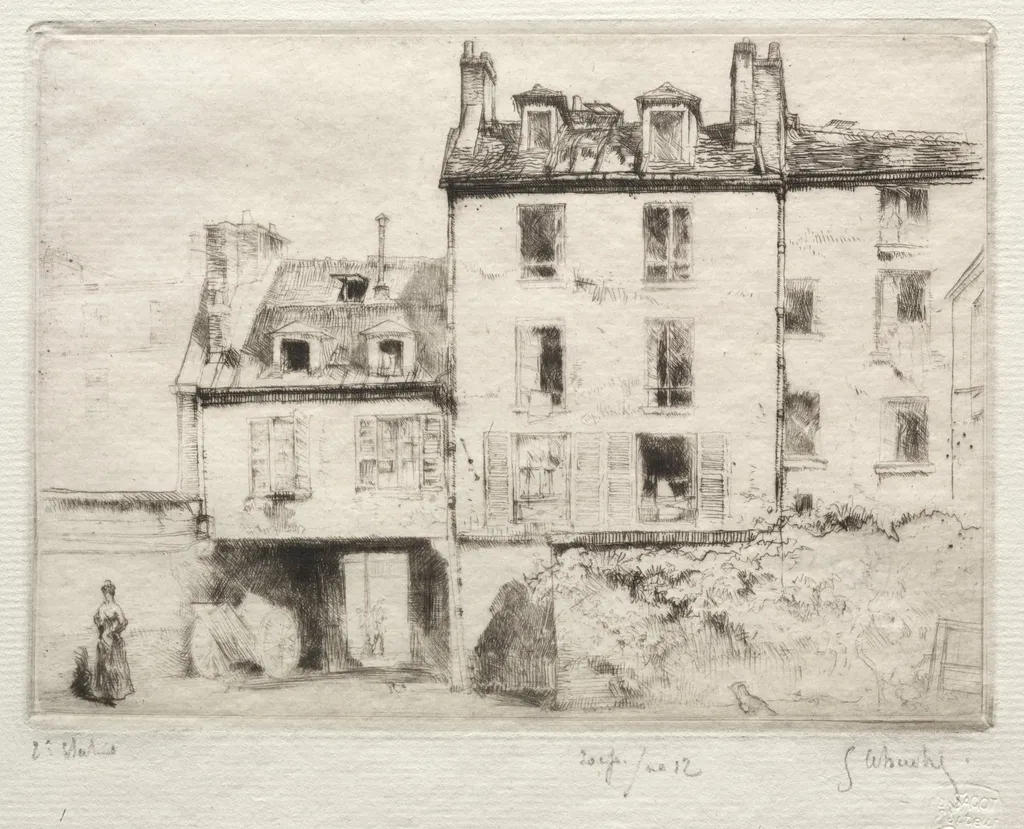
La rue Lacépède: le cour de l'Aciereur Cottens is a print by the Impressionist artist Gustave Leheutre. It dates from 1910 and is held in the collection of the Cleveland Museum of Art.
About this work
Overview
The composition emphasizes texture and atmosphere over detail, reflecting the artist’s interest in unidealized urban life.
Created around 1910 by Gustave Leheutre, this ink sketch depicts a narrow Parisian alleyway known as Rue Lacépède. Rendered in quick, expressive lines, the work captures a quiet moment in a working-class neighborhood. The composition emphasizes texture and atmosphere over detail, reflecting the artist’s interest in unidealized urban life. The piece is part of the collection at The Cleveland Museum of Art.
Subject & Meaning
The scene portrays two figures near a doorway—one standing, the other crouching—set against the backdrop of aging brick buildings. A small animal rests in the dirt nearby, adding to the sense of daily routine. There is no narrative drama; instead, the focus lies in the quiet persistence of ordinary existence. The work avoids sentimentality, presenting its subjects with observational neutrality.
Technique & Style
Leheutre employed rapid, fluid ink strokes to suggest form and depth, relying on contrast between light and shadow rather than precise outlines. The rough texture of walls and uneven cobblestones is implied through broken lines and washes. This approach aligns with sketch-based traditions in French drawing, where immediacy and spontaneity took precedence over polished finish.
History & Provenance
The work was likely made during Leheutre’s time in Paris, where he frequently documented the city’s lesser-known streets. It entered The Cleveland Museum of Art’s collection in the 20th century, though its earlier ownership history remains undocumented. As a study or independent sketch, it was not intended for public exhibition at the time of creation.
Context
Produced in the early 20th century, the piece reflects延续 of 19th-century Realist concerns with everyday life, particularly in urban settings. While academic art favored grand themes, artists like Leheutre turned to modest scenes, influenced by earlier figures such as Daumier. This work belongs to a broader movement that valued authenticity over idealization.
Legacy
Leheutre’s sketch contributes to a body of work that preserved the visual character of Parisian working-class neighborhoods before widespread modernization. Though not widely known today, such drawings offer insight into how artists recorded the overlooked corners of city life. Their influence persists in documentary approaches to urban observation in later photography and illustration.
Own this work as a print
Artist & collection

 Quay Montebello
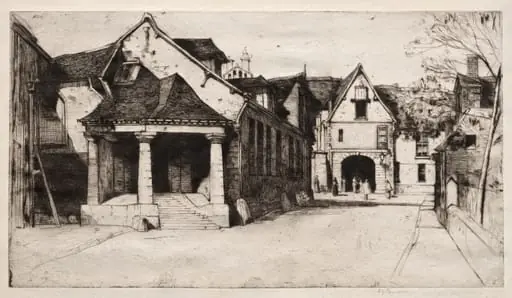 Old Museum, Beauvais
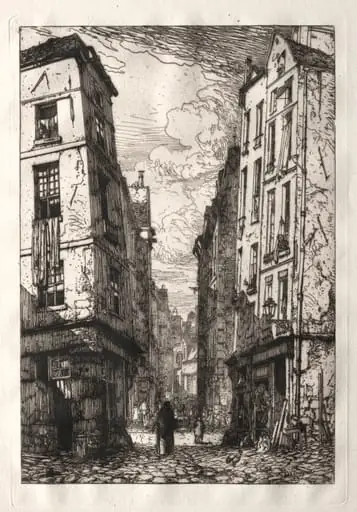 Rue des Marmousets (Old Paris)
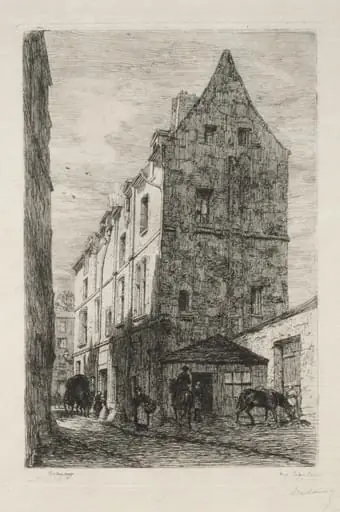 Maison dite de la Reine Blanche, Rue de Marmousets
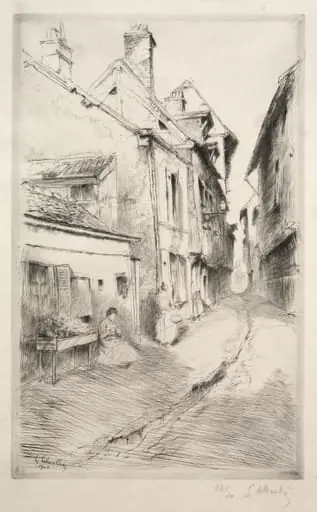 La rue de l'Ecole à Troyes
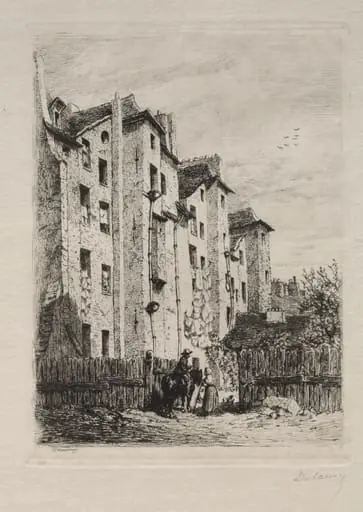 Maisons, Rue de Lyonnais
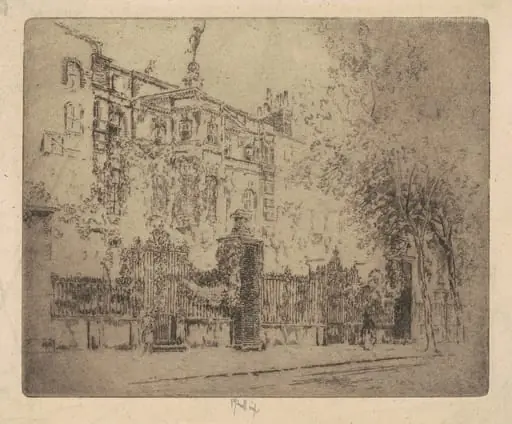 Rossetti's House
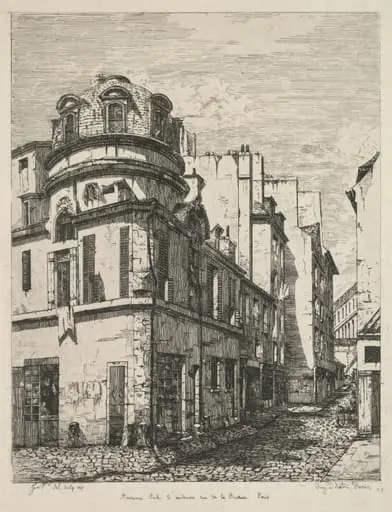 Eaux-Fortes sur le Vieux Paris: Ancienne école de médecine rue de la Bûcherie (Etchings of Old Paris: Former Medical School, rue de la Bucherie)
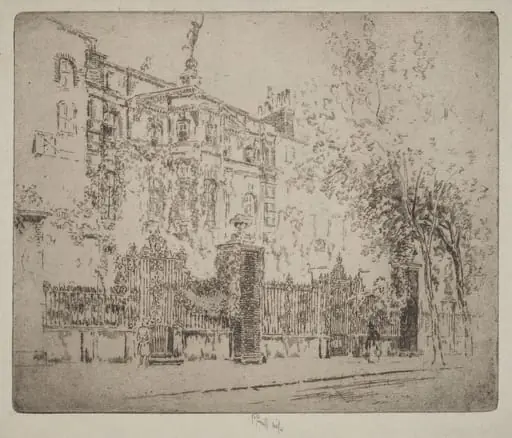 Rossetti's House
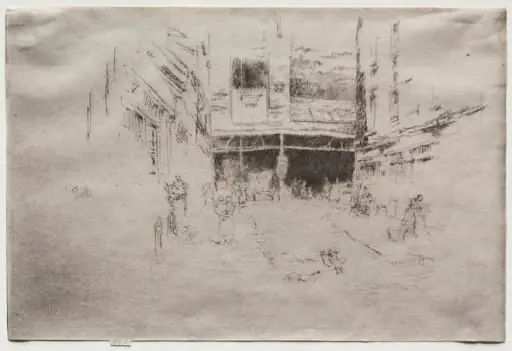 Clothes Exchange, No. 1
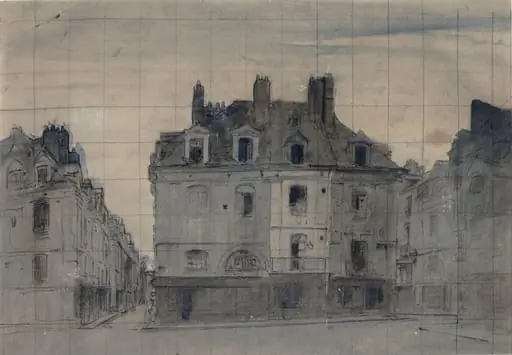 The Haunted House, Dieppe
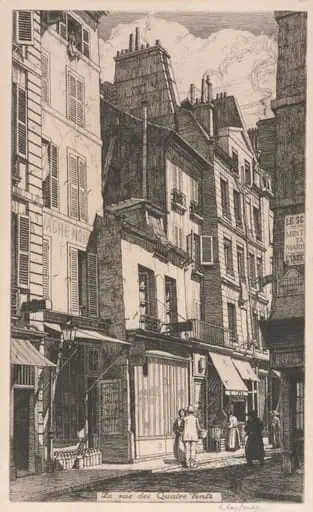 La rue des Quatre Vents