Artwork
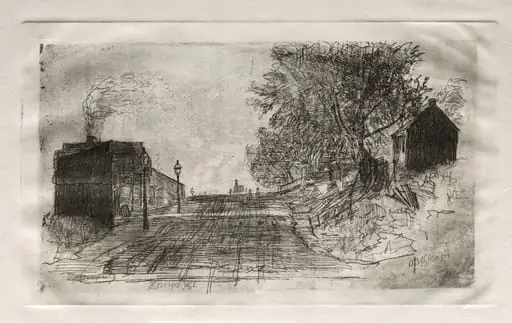
Workmen's House at Troyes, France
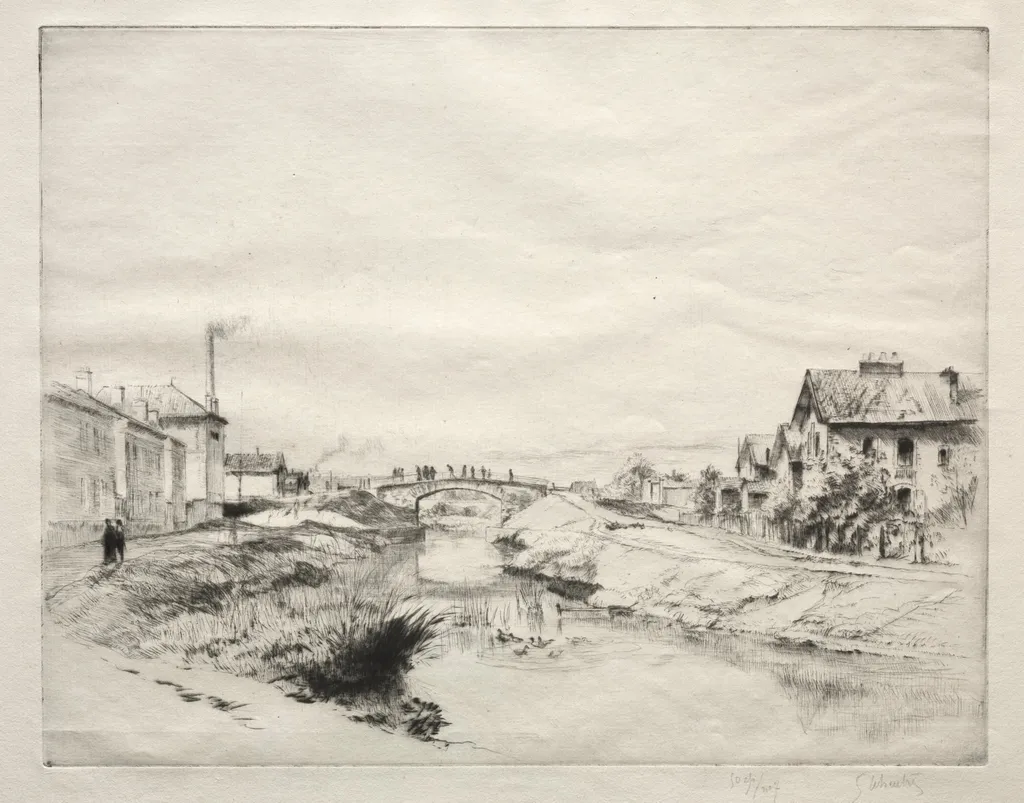
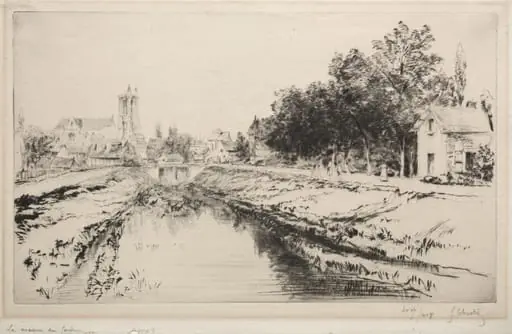
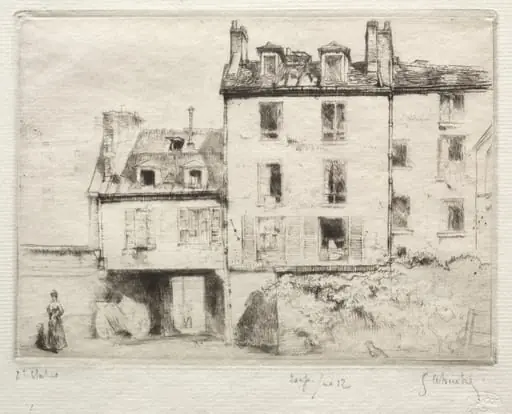
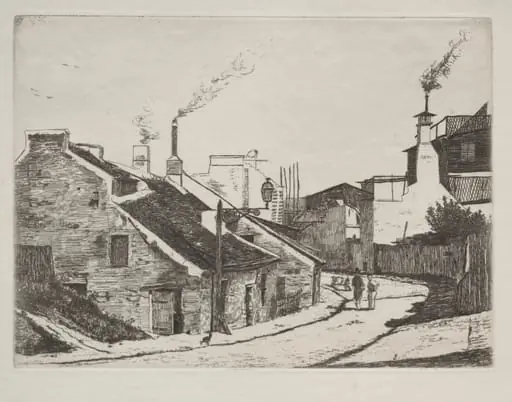
Workmen's House at Troyes, France is a print by the Impressionist artist Gustave Leheutre. It dates from 1910 and is held in the collection of the Cleveland Museum of Art.
About this work
Overview
Gustave Leheutre’s print Workmen’s House at Troyes, France, dates from around 1910 and is part of the Cleveland Museum of Art’s collection.
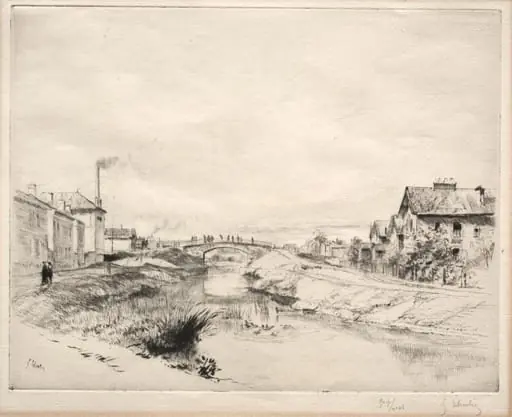
Gustave Leheutre’s print Workmen’s House at Troyes, France, dates from around 1910 and is part of the Cleveland Museum of Art’s collection. The image presents a modest urban setting in Troyes, with low‑rise structures, a narrow bridge spanning a shallow watercourse, and a few figures moving along unpaved paths. A solitary chimney releases a thin column of smoke, hinting at domestic activity beyond the viewer’s sight.
Subject & Meaning
The composition captures a moment of ordinary daily life, emphasizing the quiet rhythm of a working‑class neighborhood rather than any dramatic narrative. By foregrounding simple architecture and the unhurried movement of pedestrians, the work suggests a respect for the routine environments that shape communal identity, inviting viewers to observe the understated vitality of a small French town.
Technique & Style
Executed in a loose, sketch‑like manner, the print relies on soft, fluid lines and delicate shading to render textures such as grass, water, and tiled roofs. The economy of detail and rapid gestural marks convey immediacy, as if the artist worked en plein air, recording the scene with a sense of spontaneity rather than meticulous finish.
History & Provenance
Created circa 1910, the print entered the Cleveland Museum of Art’s holdings through acquisition (specific donor or purchase details are not recorded in the available sources). Its presence in an American institution reflects early 20th‑century interest in European realist prints and the museum’s broader effort to represent diverse artistic approaches.
Context
Leheutre’s work aligns with the realist tradition that sought to depict everyday subjects without idealization. At the turn of the century, many artists turned their attention to the lives of laborers and the architecture of small towns, using printmaking to disseminate images of contemporary social reality to a wider audience.
Own this work as a print
Artist & collection