Artwork
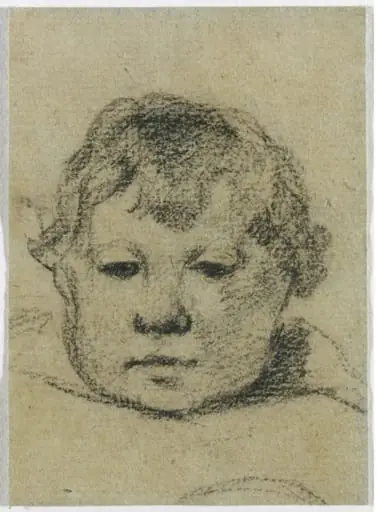
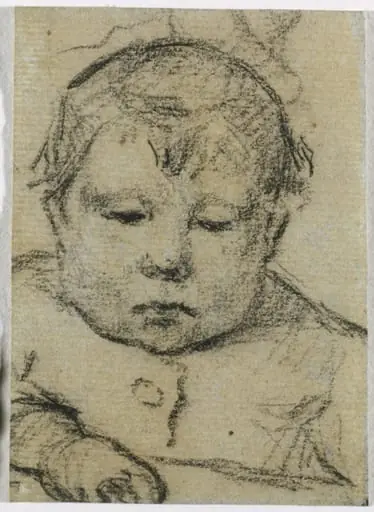
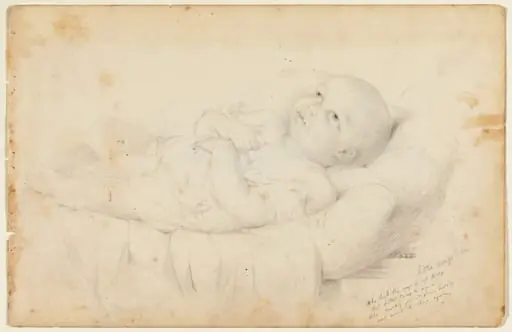
Eduard, the Artist's Infant Son
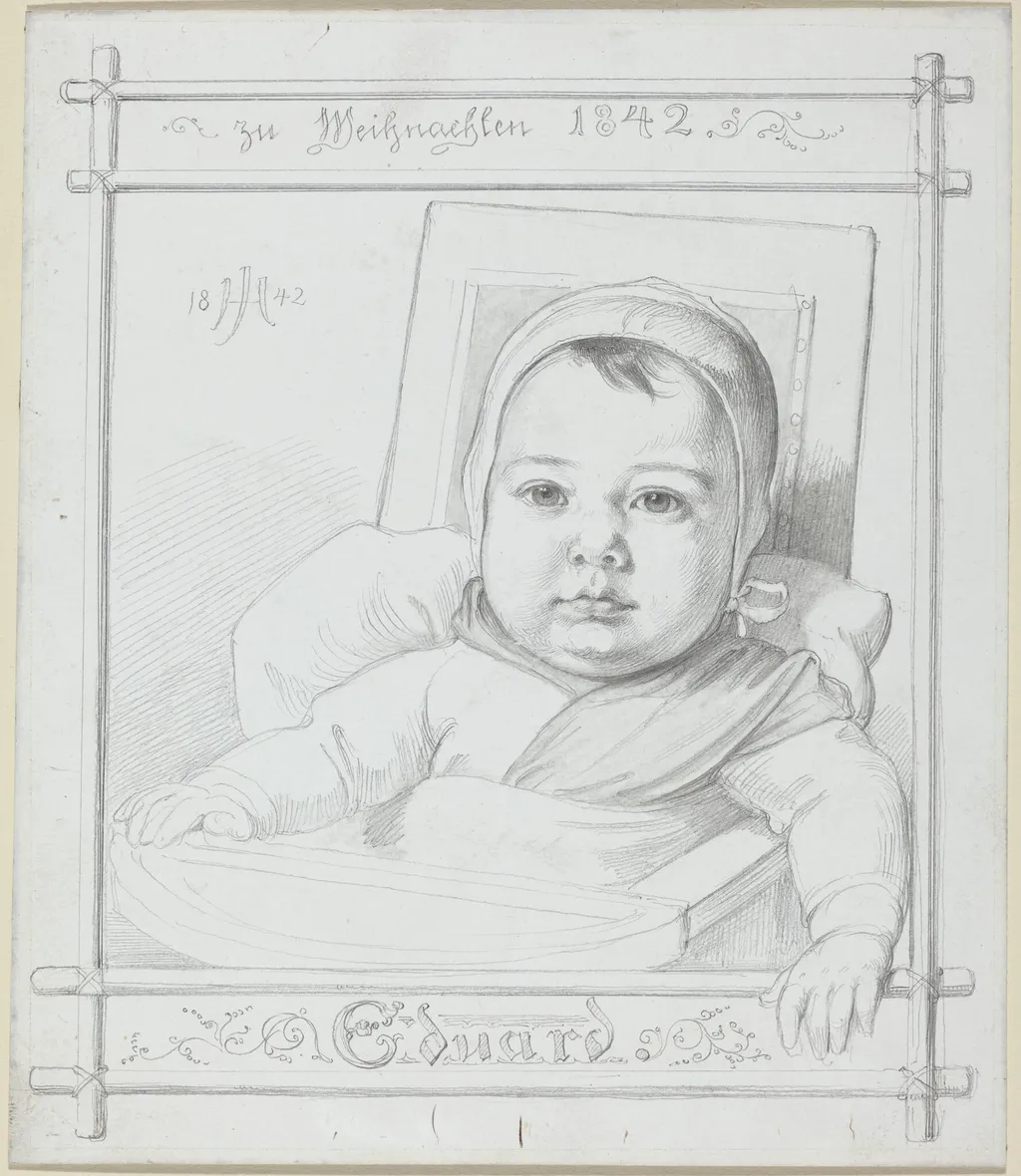
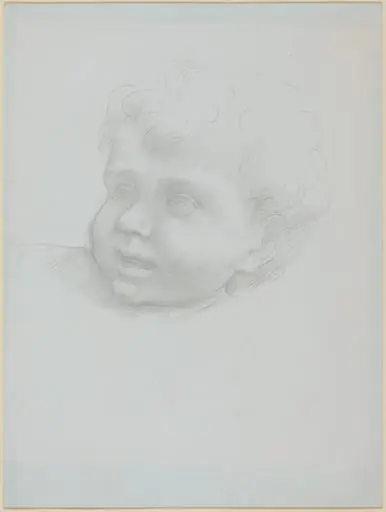
Eduard, the Artist's Infant Son is a graphite drawing by the Romanticist artist Julius Hübner. It dates from 1842 and is held in the collection of the National Gallery of Art.
About this work
Overview
The composition centers on the infant’s face, employing modest line work and subtle shading to suggest volume and a quiet intimacy.
Julius Hübner’s 1842 drawing, titled Eduard, the Artist’s Infant Son, presents a tender portrait of a young child rendered in graphite on a prepared cardboard support. The composition centers on the infant’s face, employing modest line work and subtle shading to suggest volume and a quiet intimacy. The work exemplifies the personal subject matter that Hübner occasionally pursued alongside his more public commissions.
Subject & Meaning
The figure depicted is identified as Eduard, Hübner’s own son, offering a private glimpse into the artist’s domestic life. By focusing on the child’s visage, the drawing emphasizes themes of familial affection and the fleeting nature of early childhood, resonating with Romantic ideals of emotion and individual experience.
Technique & Style
Executed in graphite, the drawing relies on delicate hatching and cross‑hatching to model the infant’s features and convey a sense of three‑dimensionality. The prepared cardboard provides a smooth, receptive ground that enhances the precision of the lines. The restrained palette and emphasis on tonal variation align the work with the Romantic period’s interest in expressive drawing over elaborate coloration.
History & Provenance
Created in 1842, the drawing emerged during a prolific phase of Hübner’s career when he was establishing his reputation as a history painter. The piece remained within the artist’s family for several decades before entering public collections, though specific acquisition details are limited in the surviving records.
Context
Hübner, a German painter associated with the Romantic movement, often explored historical and literary themes. This intimate portrait diverges from his larger narrative canvases, reflecting a broader Romantic fascination with personal sentiment and the portrayal of everyday subjects alongside grand historical scenes.
Artist & collection