Artwork
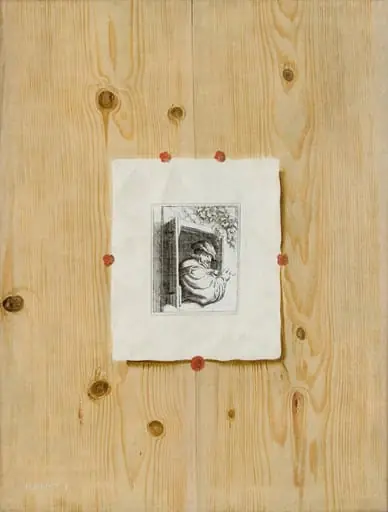
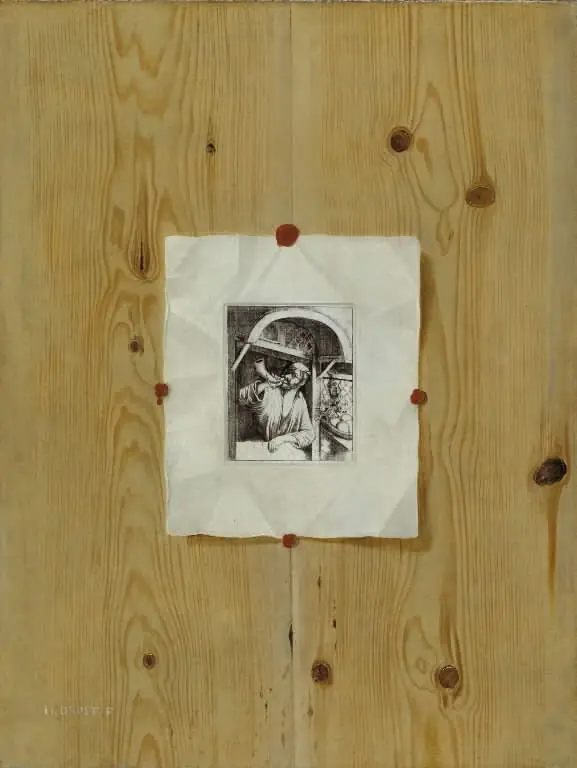
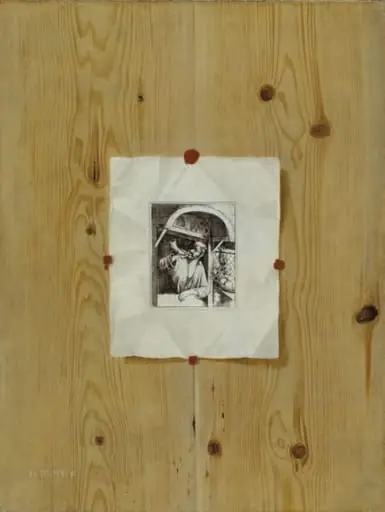
Trompe l'Oeil. Board with an Etching of a Man with a Pipe
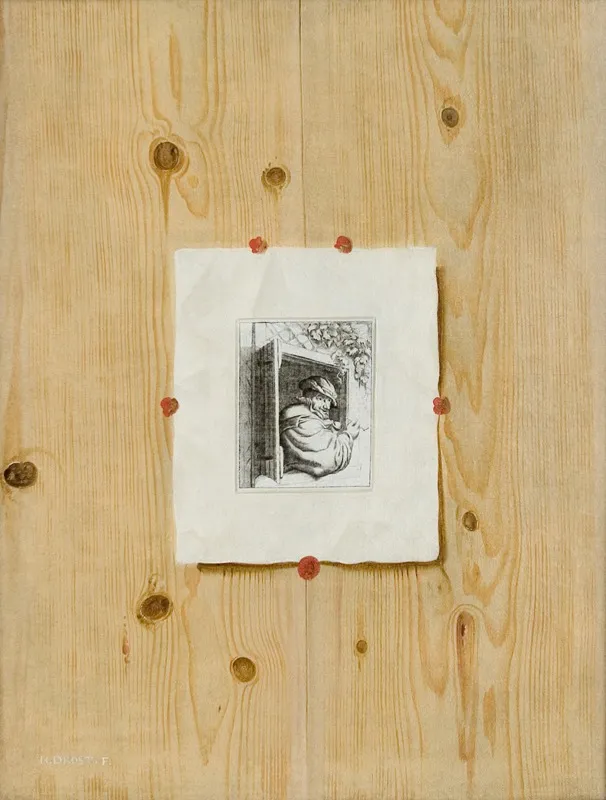
Trompe l'Oeil. Board with an Etching of a Man with a Pipe is an oil painting by the Dutch Golden Age artist H. Drost. It dates from 1675 and is held in the collection of the Statens Museum for Kunst. Painted in 1675 by H.
About this work
Overview
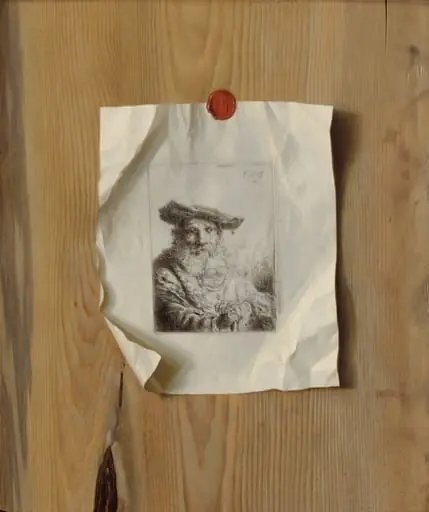
Painted in 1675 by H. Drost, this work is an oil-on-panel composition that mimics a pinned sheet of paper bearing an etched portrait. The illusion of a flat surface affixed to wood challenges perceptions of material and representation, positioning the painting as a study in visual deception rather than a conventional portrait.
Subject & Meaning
The depicted figure is a man in a wide-brimmed hat and cloak, gazing outward while holding a pipe. His image, rendered as an etching within the painting, suggests a printed image suspended in time. The quiet solitude of the figure, framed by the illusion of physical attachment, evokes themes of representation, memory, and the boundary between art and reality.
Technique & Style
Drost employed precise oil painting to replicate the tonal contrasts and linear detail of an etched print. The man is modeled with side lighting to simulate engraving shadows, while the wooden board and pinned paper are rendered with textured realism. The dark background of the etching enhances the illusion of depth, reinforcing the trompe l'oeil effect without overt theatricality.
History & Provenance
The painting has been held since at least the early 20th century by the Statens Museum for Kunst in Copenhagen. Its attribution to H. Drost, a lesser-known Dutch painter active in the late 17th century, is based on stylistic analysis and archival records. No earlier provenance is documented, suggesting it may have remained in private Dutch or Danish collections before institutional acquisition.
Context
Created during the Dutch Golden Age, the work aligns with a tradition of illusionistic painting that celebrated technical skill and perceptual play. While larger-scale genre scenes dominated the period, smaller works like this reflected an interest in the materiality of images and the status of prints as reproducible art forms within domestic interiors.
Legacy
Though not widely reproduced, the painting contributes to the understanding of how 17th-century artists engaged with print culture and optical illusion. It stands as a quiet example of how trompe l'oeil was used not for spectacle but for contemplation, inviting viewers to consider the nature of images and their physical presence.
Artist & collection

 Untitled
 Untitled
 Etude de nu (Study of a Nude)
 Essai de bois gravé
 Quelques croquis
 Untitled
 Untitled
 Compoziție complexă, (13 scene), centrată pe scena Învierii redată în varianta coborârii lui Iisus la Iad, episod biblic cunoscut și sub denumirea de Anastasis sau Învierea.Mântuitorul încadrat de o mandorlă îl scoate pe Adam și pe alți drepți(sfinți, prooroci) din gura gheenei. Deasupra este pictată scena ridicării din mormânt a Mântuitorului, lângă piatra mormântului, îngerul. În celelalte casete sunt reprezentate scene din viața lui Iisus Hristos și a Maicii Domnului, cu un număr redus de personaje (3 – 4, maxim 5): „Sfânta Treime”(ospitalitatea lui Avraam), Nașterea Fecioarei Maria”, „Intrarea Maicii Domnului în biserică(Ovidenia), „Buna Vestire”, „Nașterea lui Iisus Hristos”, Întâmpinarea Domnului(Stretenia), „Botezul lui Hristos” „Schimbarea la față” „Intrarea Domnului în Ierusalim”, , „Înălțarea Domnului, Adormirea Maicii Domnului, „Înălțarea Sfintei Cruci”. Toate personajele au nimburi trasate cu alb.Desen schematic, trasat cu finețe, ușor dezordonat, ca și inscripțiile. Cromatica specifică, tonuri calde, brun, galben, roșu în contrast cu verde, albastru, negru, valorate de foița de aur. Chenarul lat, roșu(tipul de icoană krasnushka)