Artwork
Flowering Plant with Grass
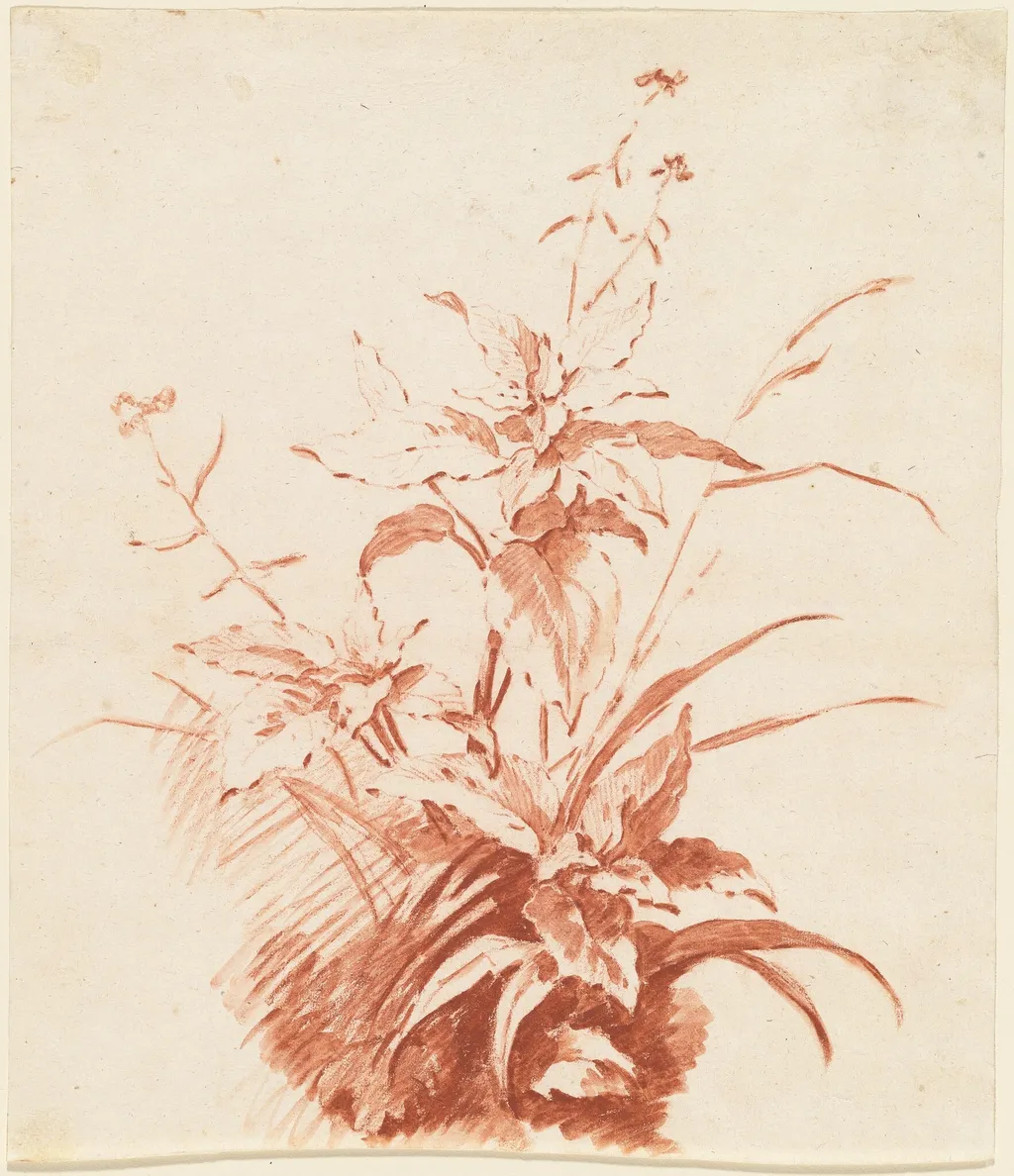
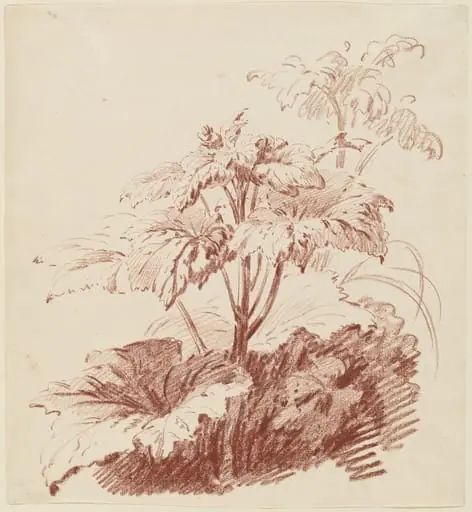
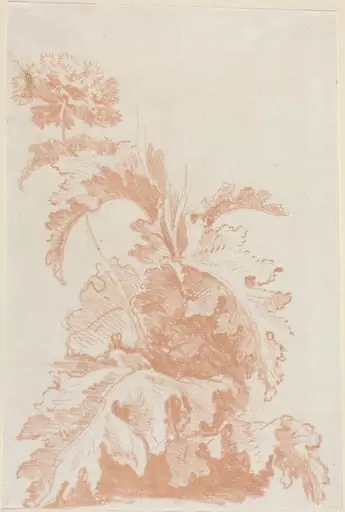
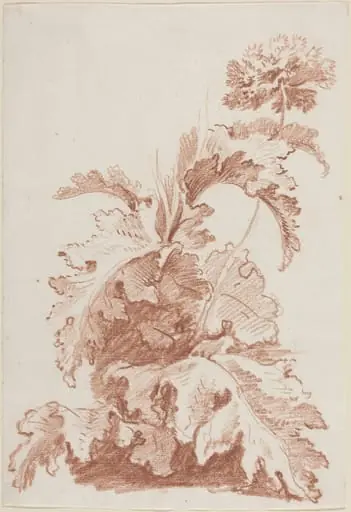
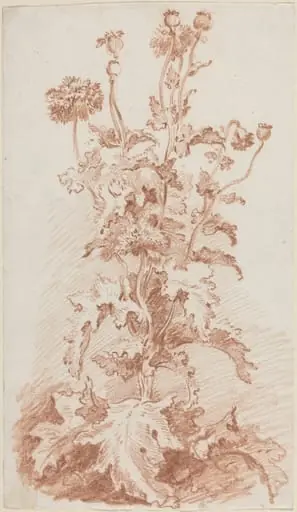
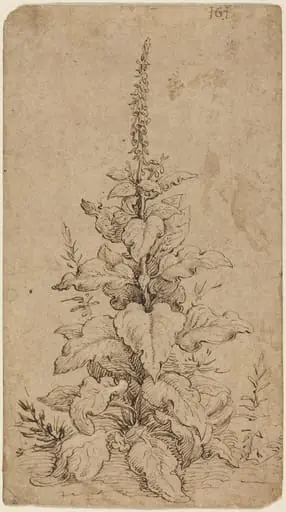
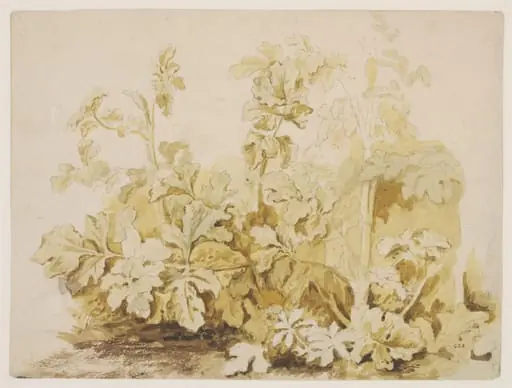
Flowering Plant with Grass is a chalk drawing by the Romanticist artist Jean-Baptiste Hüet. It dates from 1764 and is held in the collection of the National Gallery of Art.
About this work
Overview
Created around 1764, this drawing by Jean-Baptiste Hüet depicts a modest flowering plant alongside grass, rendered in red chalk and diluted wash on laid paper.
Created around 1764, this drawing by Jean-Baptiste Hüet depicts a modest flowering plant alongside grass, rendered in red chalk and diluted wash on laid paper. The work is a direct, unembellished observation of botanical form, emphasizing immediacy over finish. The paper’s subtle texture enhances the tactile quality of the marks, reinforcing its function as a study rather than a polished composition.
Subject & Meaning
The subject is a common wild plant, rendered without idealization or symbolic intent. Hüet focuses on the natural arrangement of stems, leaves, and blossoms, capturing their organic irregularity. This unadorned approach reflects an empirical interest in plant morphology, aligning with Enlightenment-era scientific observation rather than romanticized nature.
Technique & Style
Hüet employed loose, fluid lines in red chalk, suggesting form with minimal strokes rather than precise outlines. A soft, translucent wash was applied to define shadowed areas and suggest volume, while preserving the paper’s light tone. The technique prioritizes speed and responsiveness, characteristic of preparatory sketches made in the field or studio for later reference.
History & Provenance
The drawing originates from Hüet’s personal studies during the mid-18th century, likely created as part of his broader documentation of flora. It remained within his circle until entering institutional collections, where it is now preserved as an example of French academic drawing practices. No significant alterations or later additions are recorded.
Context
In the decades before Romanticism, naturalists and artists increasingly turned to direct observation of plants for scientific and artistic purposes. Hüet’s work fits within this trend, influenced by botanical illustration and the growing interest in empirical study. Unlike later Romantic depictions, this piece avoids emotional or dramatic interpretation, favoring clarity and accuracy.
Legacy
This drawing exemplifies the quiet rigor of 18th-century French draftsmanship, where observation preceded embellishment. Though not widely exhibited, it contributes to understanding how artists trained in academic traditions engaged with nature. Its modest scale and unpretentious execution continue to inform studies of scientific drawing practices in pre-Romantic Europe.
Artist & collection