Artwork
Market Scene with a Fantastic Sculpture
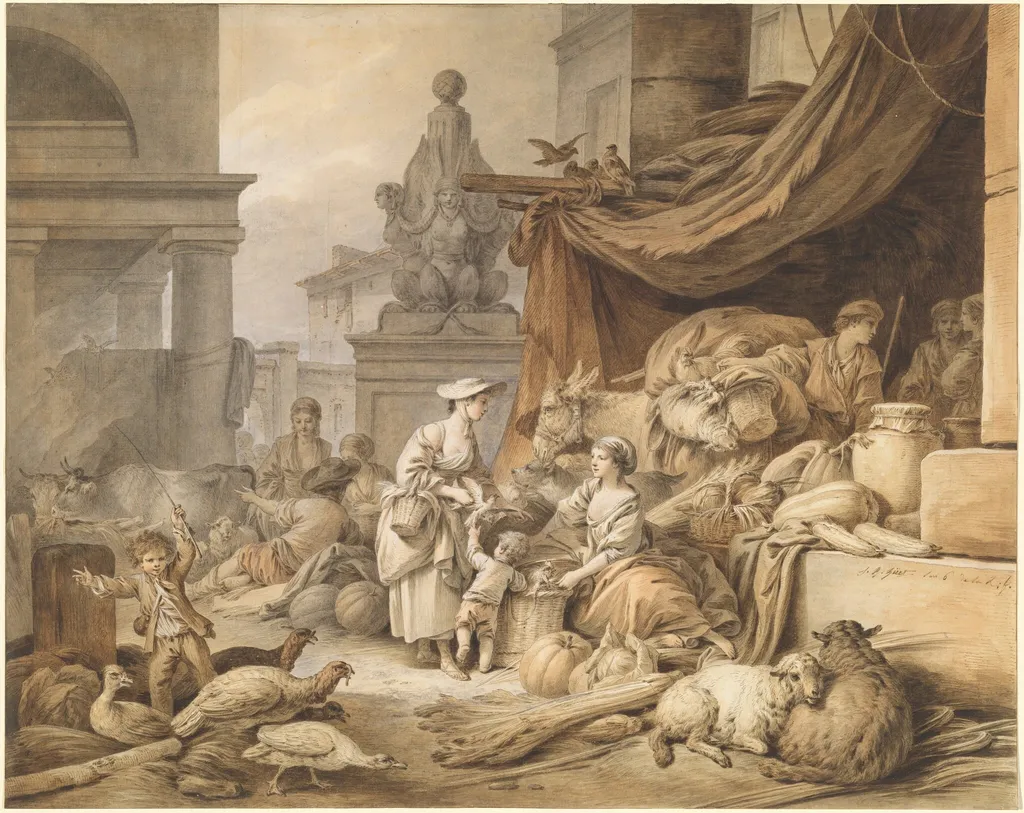
Market Scene with a Fantastic Sculpture is an ink drawing by the Romanticist artist Jean-Baptiste Hüet. It dates from 1798 and is held in the collection of the National Gallery of Art.
About this work
Overview
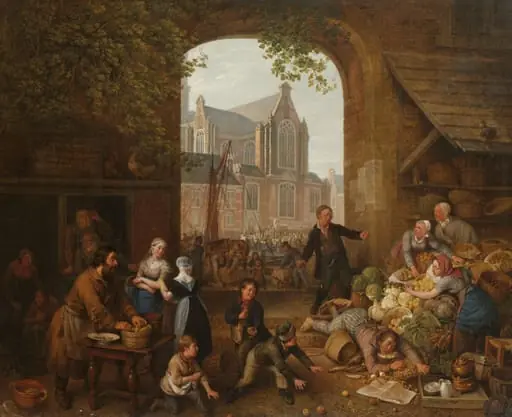
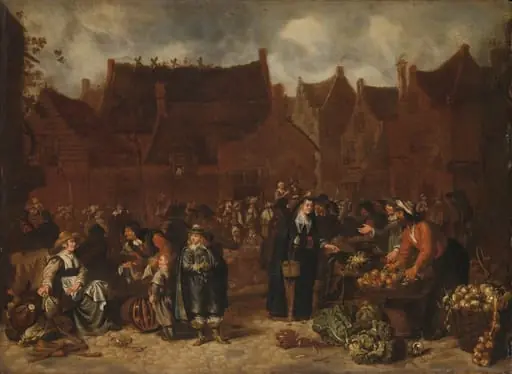
Jean‑Baptiste Hüet’s 1798 drawing, titled Market Scene with a Fantastic Sculpture, depicts a lively market square rendered on laid paper.
Jean‑Baptiste Hüet’s 1798 drawing, titled Market Scene with a Fantastic Sculpture, depicts a lively market square rendered on laid paper. The composition is populated by stalls laden with fruit, cloth, and pottery, while townspeople negotiate beneath an overcast sky. Central to the image is an unusual sculptural figure, a grotesque form clutching a basket of eggs, which draws the viewer’s attention amid the surrounding activity.
Subject & Meaning
The work juxtaposes ordinary commercial life with an enigmatic, almost mythic element. The central sculpture, rendered as a misshapen creature, may suggest a commentary on the absurdities of daily commerce or serve as a whimsical focal point that disrupts the market’s routine. The exaggerated hat of a figure on the right adds a note of humor, emphasizing the scene’s playful undercurrents.
Technique & Style
Hüet employed pen work in black and brown ink, enhanced with gray and brown washes, and layered watercolor to achieve a soft yet precise palette. White gouache highlights certain details, while faint graphite and chalk underdrawings remain visible, revealing the artist’s preparatory stages. The combination of line, wash, and gouache creates a delicate balance between texture and atmospheric depth.
History & Provenance
Created in 1798, the drawing is part of a series of market studies produced by Hüet during his active period in late‑eighteenth‑century France. The piece later entered the collection of the National Gallery of Art in Washington, where it is displayed alongside other works illustrating everyday life in the pre‑industrial era.
Context
Hüet’s market scenes reflect the growing interest of the late 1700s in documenting everyday urban environments. By integrating a fantastical sculpture within a realistic setting, the artist aligns with contemporary trends that blended genre painting with imaginative elements, offering viewers both a record of contemporary commerce and a touch of the surreal.
Artist & collection