Artwork
Small Town (Town Gate at Gorkum?)
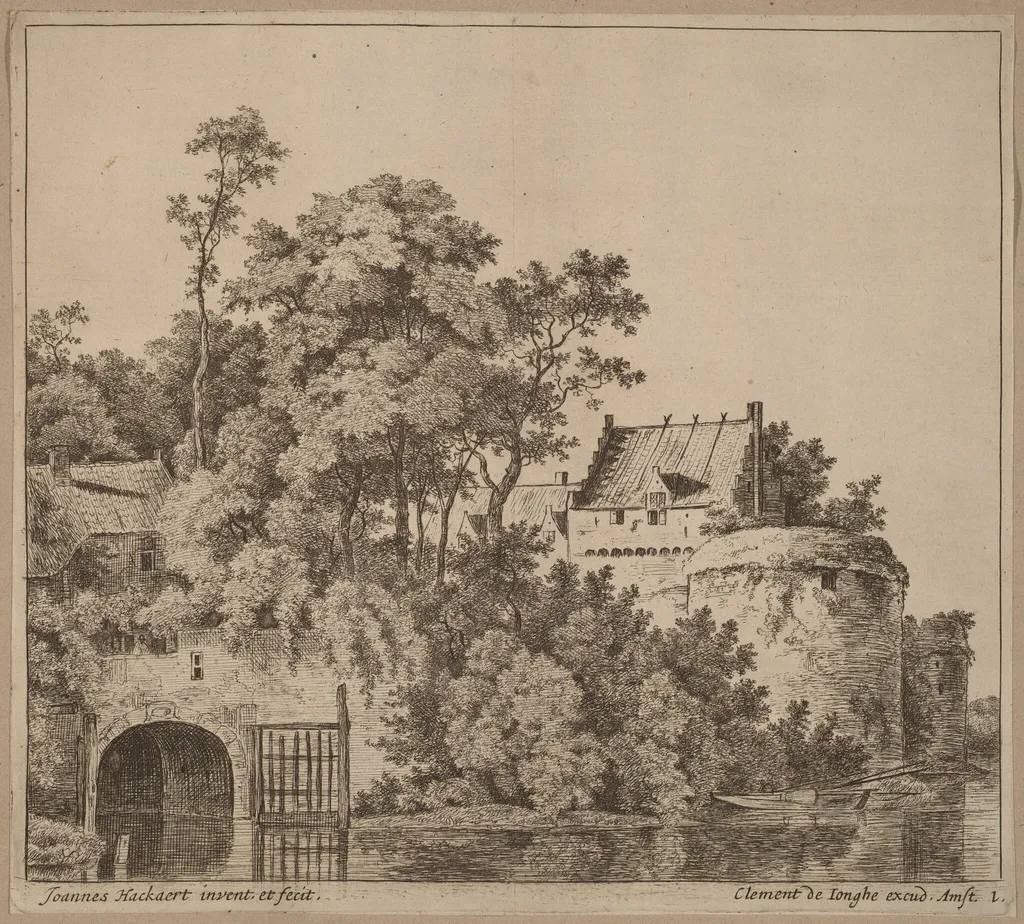
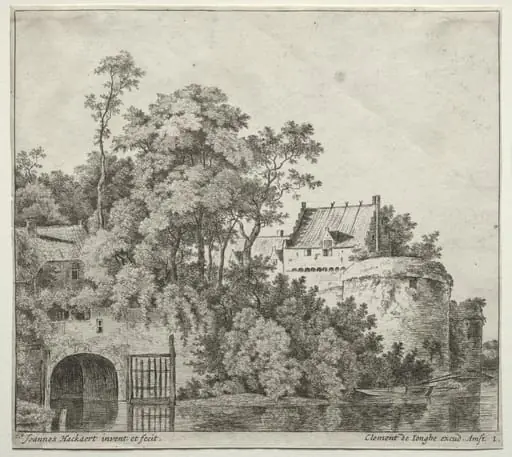
Small Town (Town Gate at Gorkum?) is an ink print by the Baroque artist Jan Hackaert. It dates from 1664 and is held in the collection of the National Gallery of Art.
About this work
Overview
Jan Hackaert’s 1664 etching titled Small Town (Town Gate at Gorkum?) presents a tranquil urban landscape. Rendered in black-and-white, the work depicts a modest settlement framed by a central gate, flanked by trees and a tiled-roofed building. The composition conveys a sense of quiet everyday life, inviting the viewer to pause within its calm atmosphere.
Subject & Meaning
The scene focuses on a small town’s entrance, suggesting both physical and symbolic thresholds. The inclusion of natural elements such as trees alongside the built environment highlights a harmonious coexistence between humanity and nature. The peaceful mood may reflect the artist’s interest in the ordinary, rather than grand historical narratives.
Technique & Style
Hackaert employed the etching process, incising lines into a metal plate before printing. This method permits fine, delicate lines that render textures—such as the tiled roof and foliage—with subtle gradations. The work’s precise detailing and balanced chiaroscuro align with Baroque sensibilities, emphasizing depth and realism within a relatively modest subject.
Context
Created during the Dutch Golden Age, the etching belongs to a period when printmaking flourished as a means of disseminating images of everyday life. Hackaert, known for landscape and topographical subjects, often captured Dutch towns and countryside, contributing to a visual record of 17th‑century urban environments.
Legacy
While not among Hackaert’s most widely reproduced pieces, Small Town (Town Gate at Gorkum?) exemplifies his skill in translating atmospheric scenes into print. It continues to serve as a reference for scholars studying Dutch Baroque printmaking and the visual representation of provincial towns in the 1600s.
Artist & collection

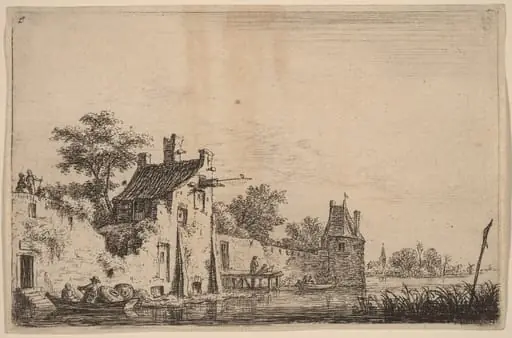 Departure of Two Fishermen
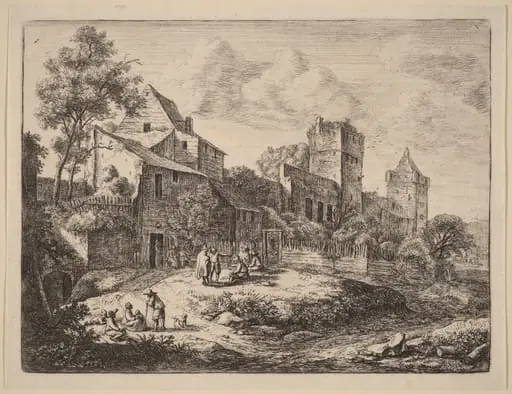 Square in Front of an Inn
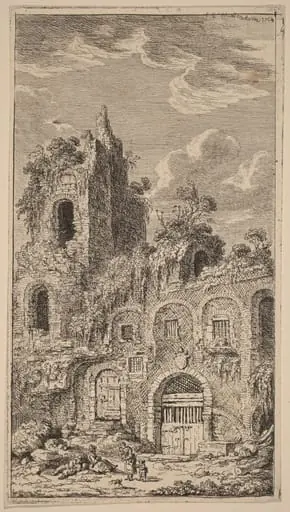 Fragment of the Old City Wall at San Giovanni Laterano
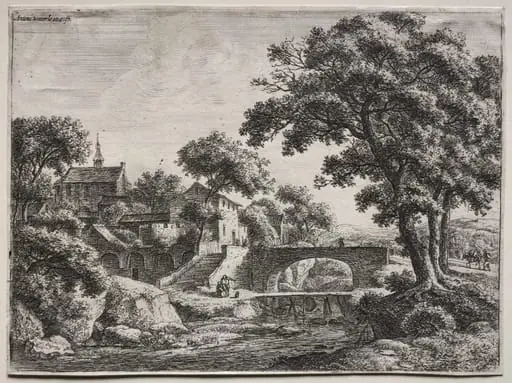 Twelve landscapes (H.95-106): The Two Bridges
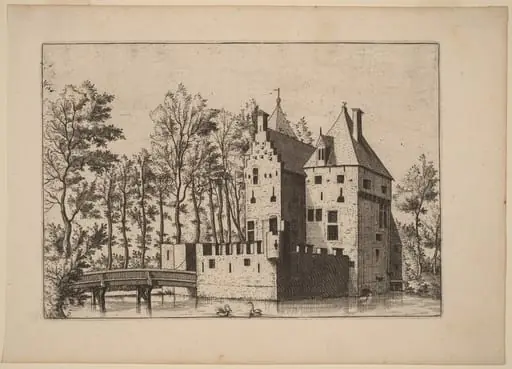 Castle with Lift-Bridge
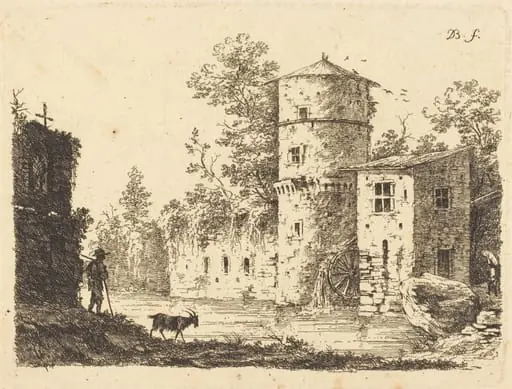 Ancient Tower with a Water Mill
 The Castle with Two Towers
 Village Landscape
 Ancient Tower at a Water Mill
 Traveler Passing Two Large Trees
 Bourges: The Gate to the City of Gorcum
 Village Steeple at the Seaside