Artwork
Ferdinando II, Grand Duke of Tuscany
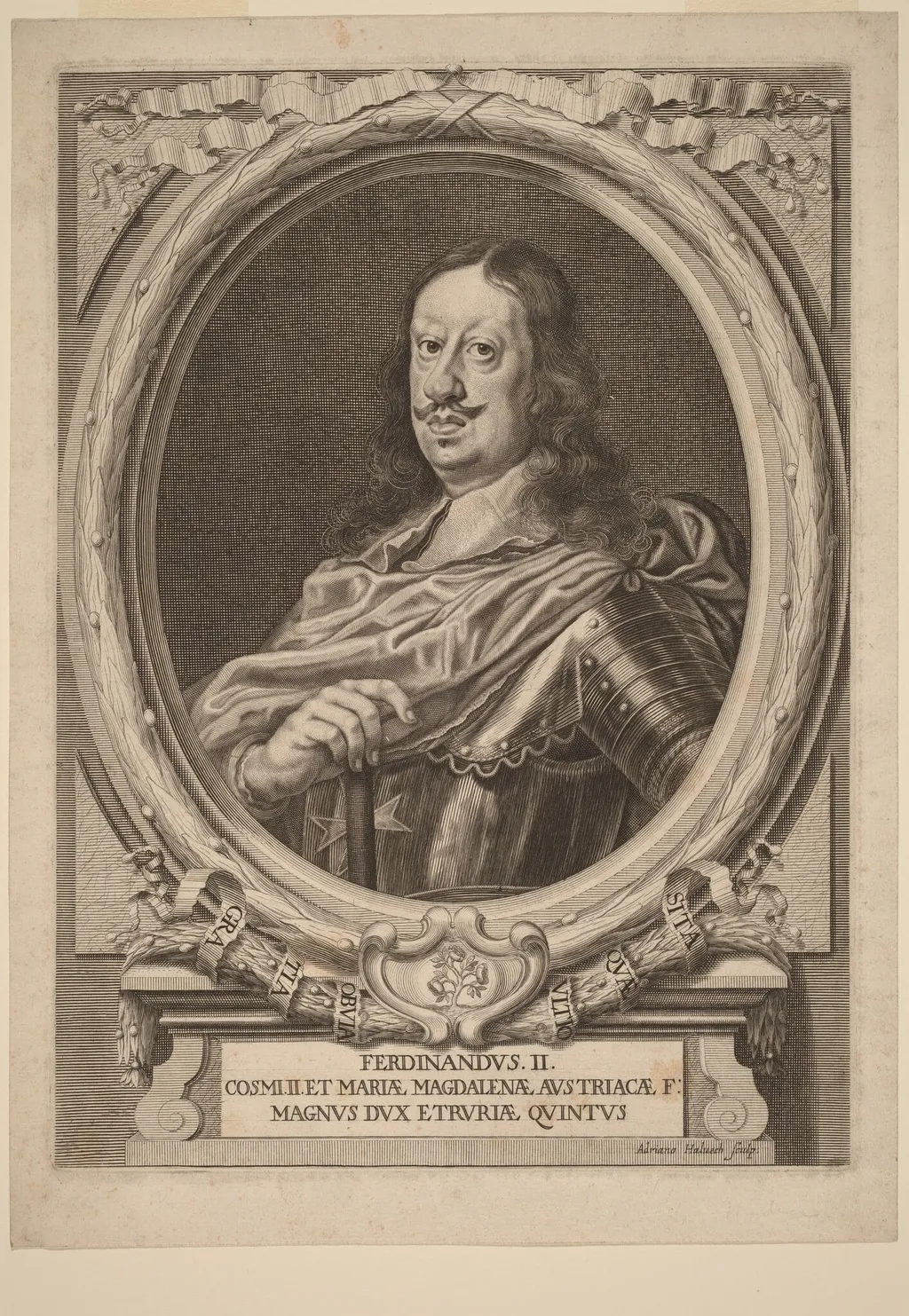
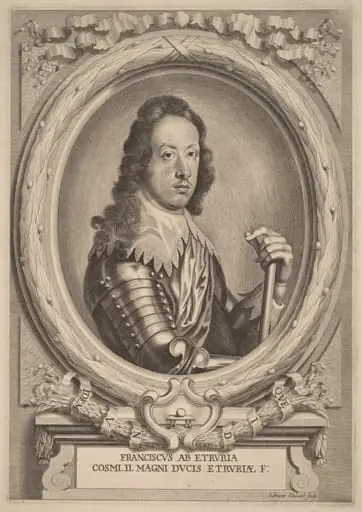
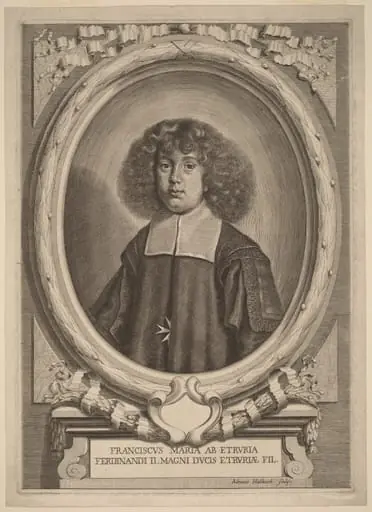
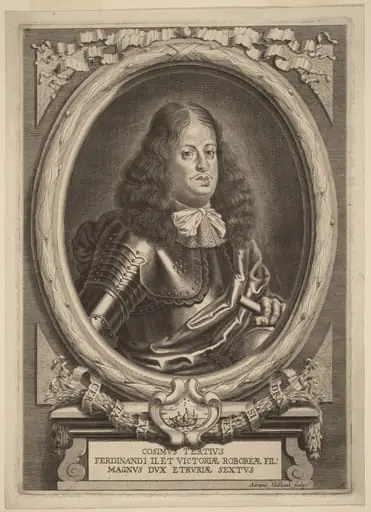
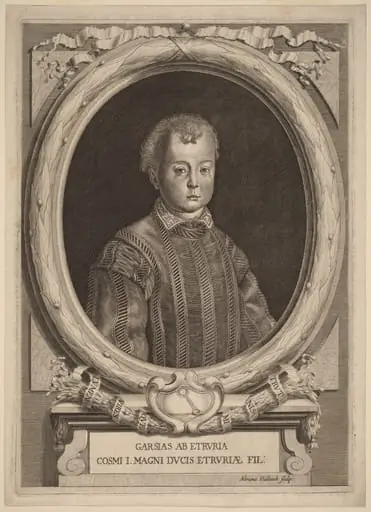
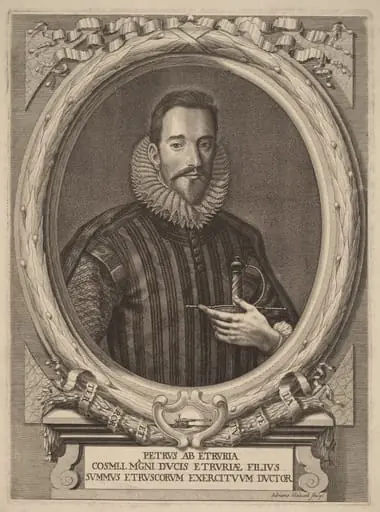
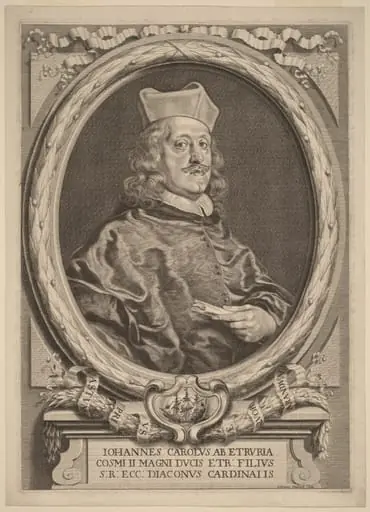
Ferdinando II, Grand Duke of Tuscany is an ink print by the Baroque artist Adriaen Haelwegh. It dates from 1691 and is held in the collection of the National Gallery of Art.
About this work
Overview
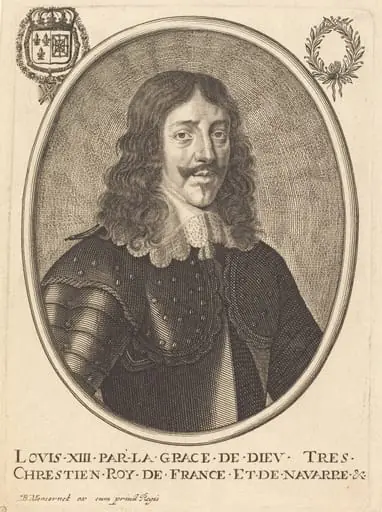
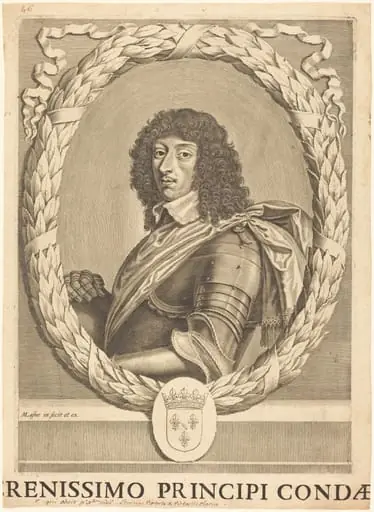
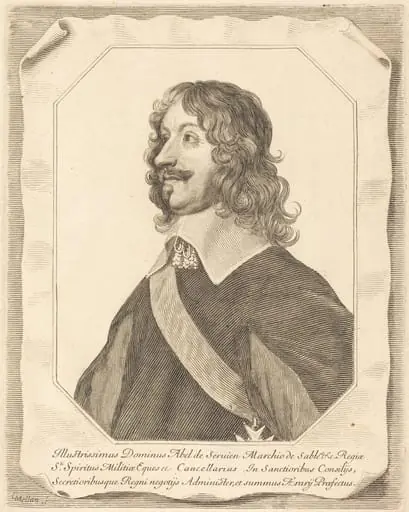
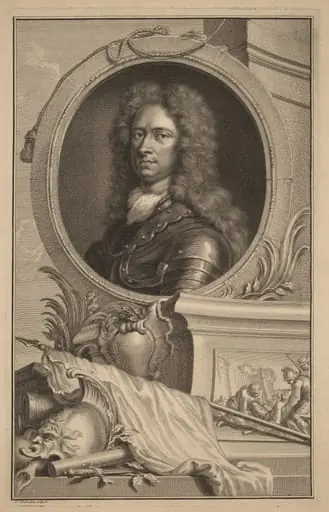
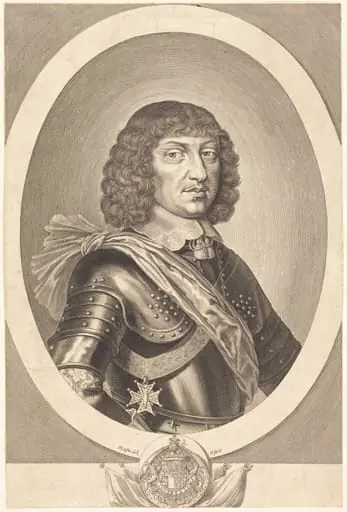
This 1691 engraving by Adriaen Haelwegh depicts Ferdinando II, Grand Duke of Tuscany, in formal attire. Rendered in monochrome on laid paper, the portrait follows the conventions of early modern European noble portraiture. The composition centers the subject against an ornate oval frame, emphasizing his status through controlled detail and restrained elegance rather than overt grandeur.
Subject & Meaning
Ferdinando II is portrayed with a solemn expression and slight forward lean, suggesting authority and attentiveness. His ruffled collar and draped cloak signify aristocratic rank, while the absence of regalia shifts focus to his personal bearing. The Latin inscription beneath confirms his identity, reinforcing the image’s function as a formal record rather than a celebratory tribute.
Technique & Style
Haelwegh employed fine, precise lines to model form and texture, particularly in the fabric of the shirt and cloak. Cross-hatching and delicate stippling create subtle gradations of light and shadow, lending depth without color. The engraved frame, adorned with scrollwork and foliage, frames the figure with decorative precision, reflecting the engraver’s skill in replicating ornamental detail.
History & Provenance
Created in 1691, the print likely served as a diplomatic or familial keepsake, circulating among European courts. While its early ownership is undocumented, its survival suggests it was valued for its accuracy and craftsmanship. As a reproductive print, it may have been used to disseminate the duke’s likeness beyond Florence, where original paintings were inaccessible to most.
Context
In late 17th-century Europe, engraved portraits were common tools for projecting political presence. Though Tuscany was no longer a dominant power, the Medici dynasty still maintained cultural prestige. Haelwegh, a Dutch engraver active in Italy, exemplifies the transnational exchange of artistic techniques and patronage networks during this period.
Legacy
This engraving stands as a modest but well-executed example of portraiture from a transitional era in European printmaking. It reflects the enduring role of engraving in preserving the likenesses of minor nobility when painting was less accessible. Its technical clarity ensures its continued study as a representative work of late Baroque reproductive art.
Artist & collection