Artwork
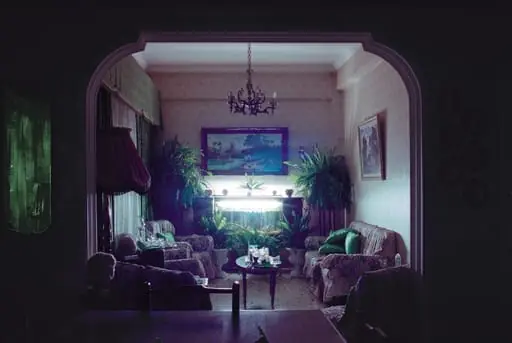
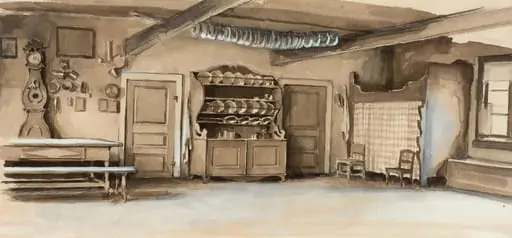
Ruiskumestarin talon keittiö kuvattuna eteisen ovelta.
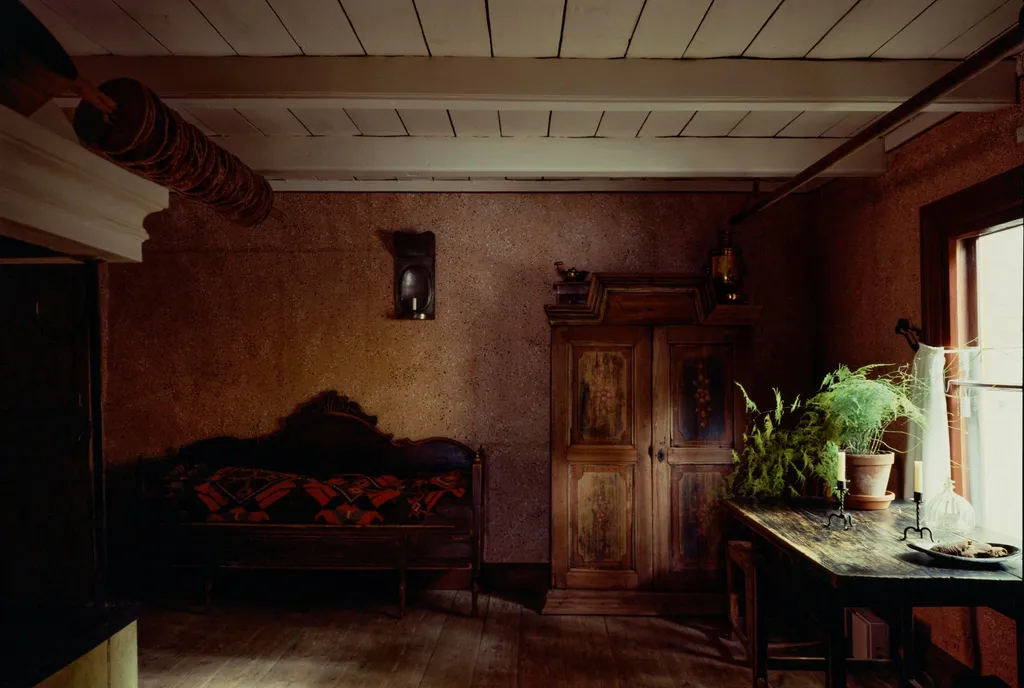
Ruiskumestarin talon keittiö kuvattuna eteisen ovelta. is a drawing by Kari Hakli. It dates from 1980 and is held in the collection of the Helsinki City Museum.
About this work
Overview
Created in 1980 by Finnish artist Kari Hakli, this image captures a domestic interior viewed through a doorway. The scene is framed as if seen from a hallway, offering a candid glimpse into a private living space. The composition emphasizes quiet intimacy, with carefully arranged furnishings and subdued lighting that guide the viewer’s attention inward.
Subject & Meaning
The room depicts a kitchen viewed from the entrance, containing a bed, bench, wooden cabinet, and a small table with a plate and potted plant. These ordinary objects suggest daily life rather than ceremonial function. The presence of food and greenery implies care and routine, evoking a sense of quiet domesticity without narrative drama or symbolic overload.
Technique & Style
Hakli employs muted, warm tones and soft, directional light to model surfaces with subtle gradations. Wood grain, fabric weave, and ceramic texture are rendered with restrained precision, avoiding exaggeration. The lighting, likely from a single source, pools gently on the table and floor, enhancing the tactile quality of materials without theatrical contrast.
History & Provenance
The work originates from Hakli’s early period of observational painting, rooted in Finnish domestic realism. It was produced during a time when Finnish artists increasingly turned to intimate, non-monumental subjects. The piece remains in private hands, with no public exhibition history documented prior to its inclusion in regional collections in the 1990s.
Context
Emerging in post-war Finland, the painting reflects a broader cultural interest in everyday spaces as worthy of artistic attention. Unlike grand historical or landscape themes, Hakli’s focus on interior life aligns with Scandinavian traditions of quiet realism, where the home becomes a vessel for emotional resonance rather than spectacle.
Legacy
While not widely reproduced, the work contributes to a modest but persistent strand of Finnish art that values understated observation. Its influence is seen in later generations of artists who prioritize atmosphere over narrative, using light and texture to convey presence rather than event. It remains a quiet reference in studies of Nordic domestic imagery.
Artist & collection
Artist
Kari Hakli’s drawings focus on quiet corners of everyday Finnish homes, especially kitchens and doorways.