Artwork
The Willow Whistle
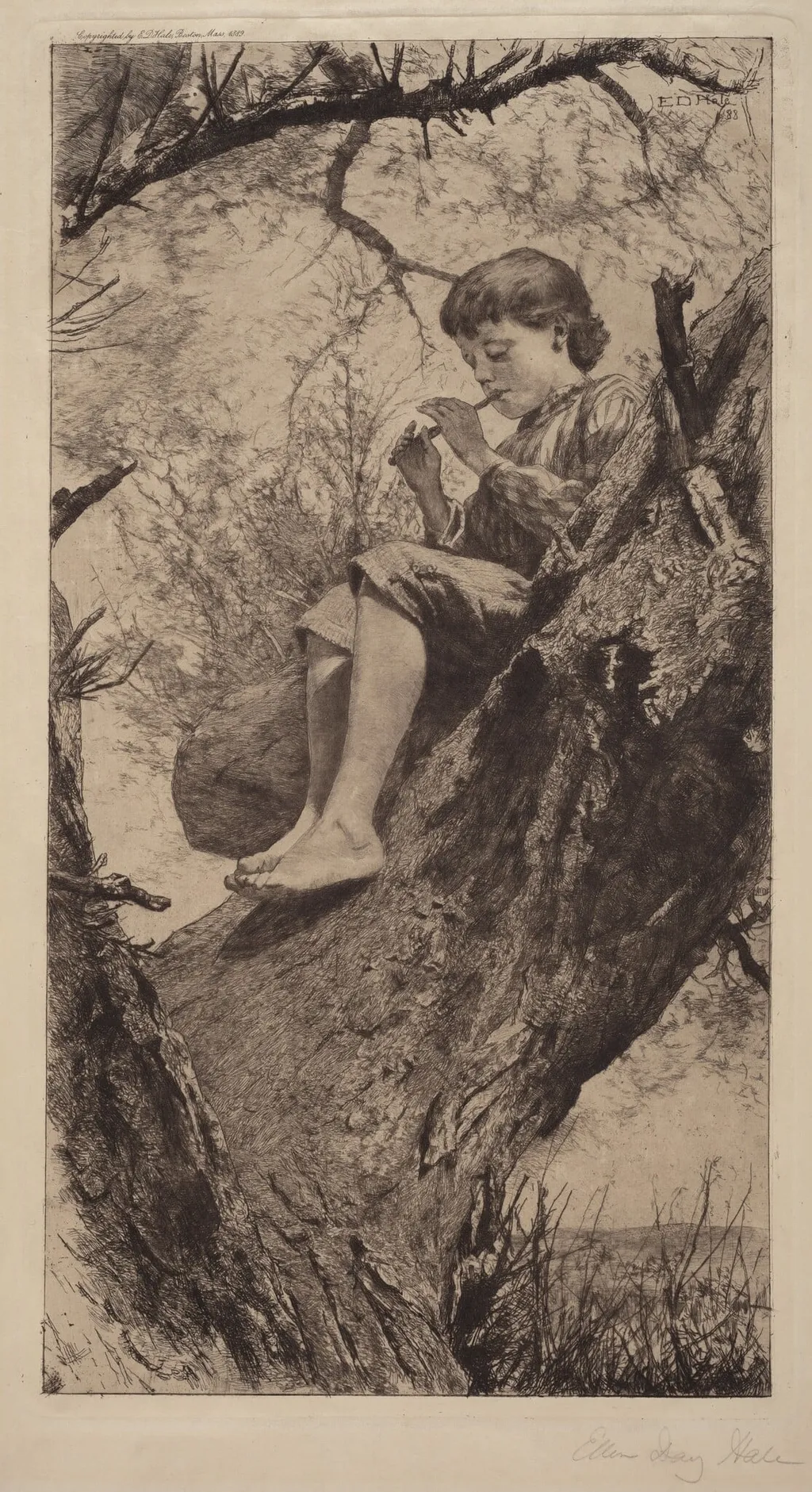
The Willow Whistle is an ink print by the Impressionist artist Ellen Day Hale. It dates from 1888 and is held in the collection of the National Gallery of Art.
About this work
Overview
This work exemplifies her shift from painting to print, reflecting a broader interest in intimate, everyday scenes rendered with subtle tonal variation.
Ellen Day Hale produced *The Willow Whistle* in 1888 as an etching and drypoint print, demonstrating her technical engagement with printmaking. An American artist trained in Paris, Hale was active in transatlantic art circles, exhibiting in both Europe and the United States. This work exemplifies her shift from painting to print, reflecting a broader interest in intimate, everyday scenes rendered with subtle tonal variation.
Subject & Meaning
The image captures a young boy seated on a tree branch, crafting a whistle from a willow twig. His bare feet swing freely, and his focused expression suggests quiet absorption in a moment of simple creation. The scene avoids narrative drama, instead emphasizing solitude and the quiet pleasure of childhood invention, aligning with Impressionist interests in fleeting, unposed moments of daily life.
Technique & Style
Hale employed etching and drypoint to achieve soft gradations of tone and delicate linework. The background is rendered in muted earth tones, suggesting foliage without detailed definition, while the boy’s form is outlined with precise, expressive strokes. The interplay of light and shadow, along with the textured surface of drypoint, enhances the tactile quality of the scene, grounding it in sensory observation rather than idealization.
History & Provenance
Created during Hale’s time in Boston after her years abroad, *The Willow Whistle* emerged from a period of active printmaking experimentation. Though not widely exhibited at the time, it reflects her commitment to print as a legitimate artistic medium. The work remained in private hands for much of the 20th century, with later recognition tied to renewed scholarly interest in women artists of the American Impressionist circle.
Context
Hale worked alongside other American artists influenced by French Impressionism, though she focused more on intimate subjects than urban or landscape scenes. Her choice of a child engaged in a quiet, solitary act resonates with contemporaneous European prints that valued domestic tranquility. In New England, she also fostered a community of female artists, advocating for their visibility in a male-dominated field.
Legacy
Though not widely reproduced in her lifetime, *The Willow Whistle* has come to represent Hale’s contribution to American printmaking and her quiet redefinition of feminine subject matter. It stands as a testament to her technical skill and her preference for understated, personal narratives—offering a counterpoint to the grander themes often favored by her male peers in the Impressionist movement.
Artist & collection
Artist
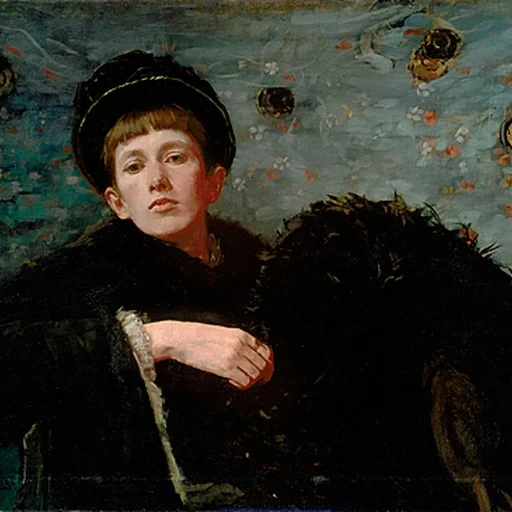
Ellen Day Hale (February 11, 1855 – February 11, 1940) was an American Impressionist painter and printmaker from Boston.

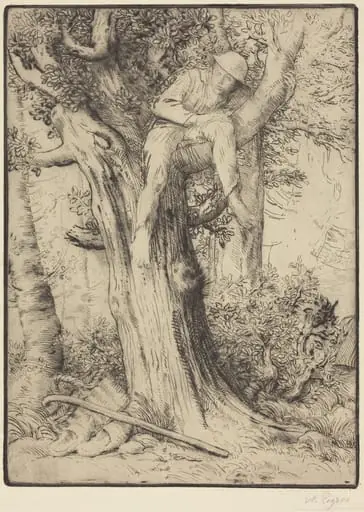 Landscape with a Boy in a Tree (Paysage avec un garcon grimpe sur un arbre, dite "Le denicheur d'oiseaux")
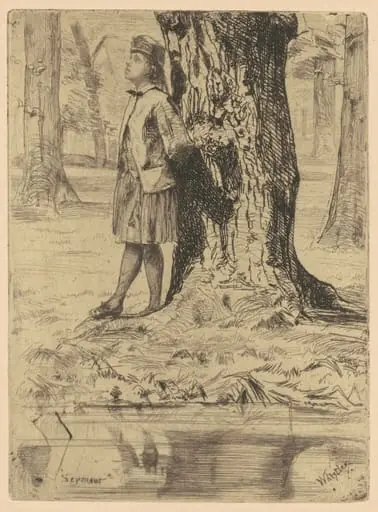 Seymour Standing Under a Tree
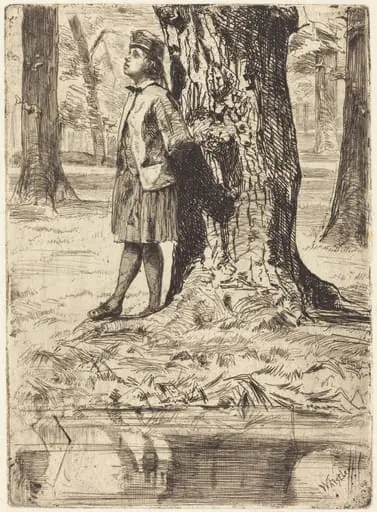 Seymour Standing under a Tree
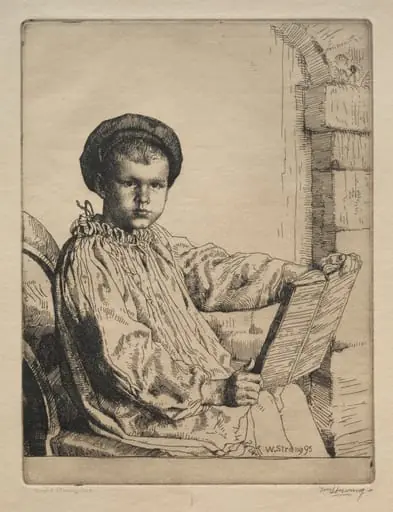 David Strang, No. 1
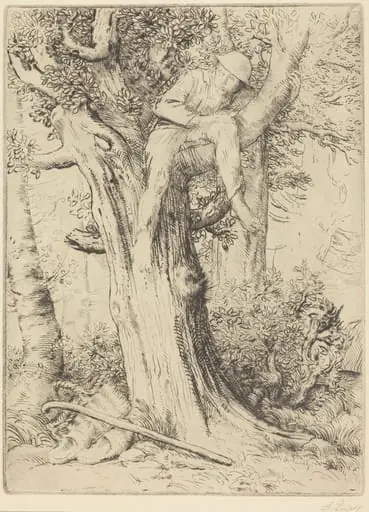 Landscape with a Boy in a Tree (Paysage avec un garcon gimpe sur un arbre dite "Le denicher d'oiseaux)
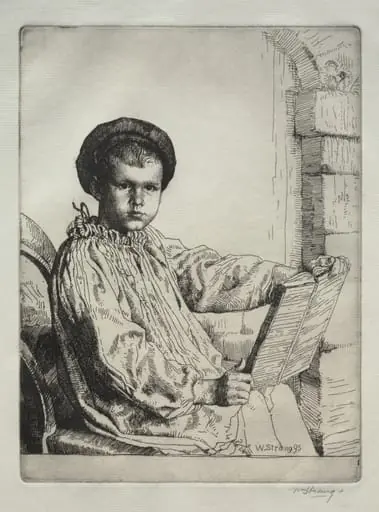 David R. Strang
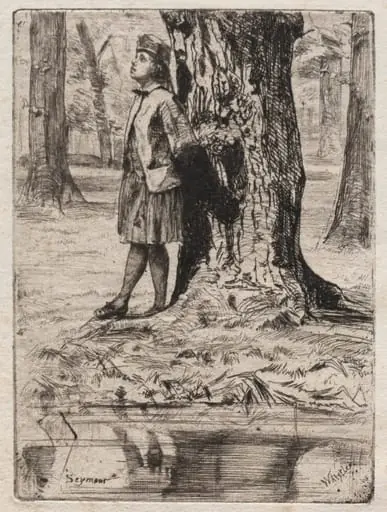 Seymour
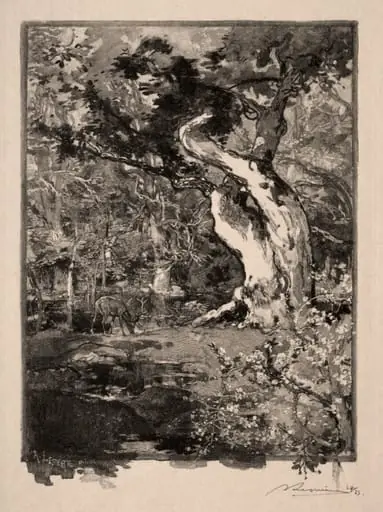 Le Clovis, Plateau de Bellecroix
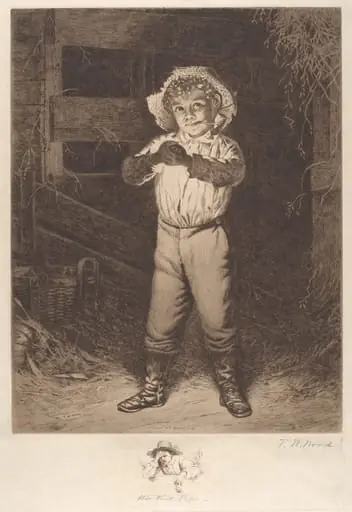 His First Pipe
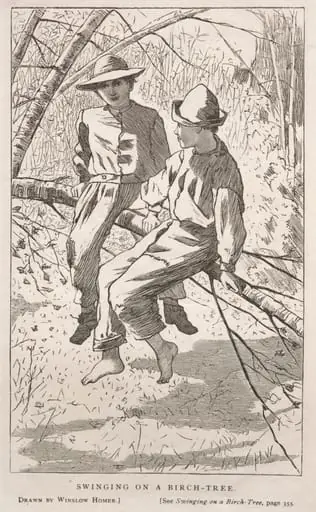 Swinging in a Birch Tree
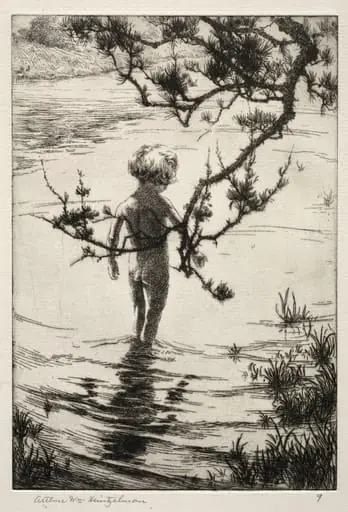 Sultry Afternoon
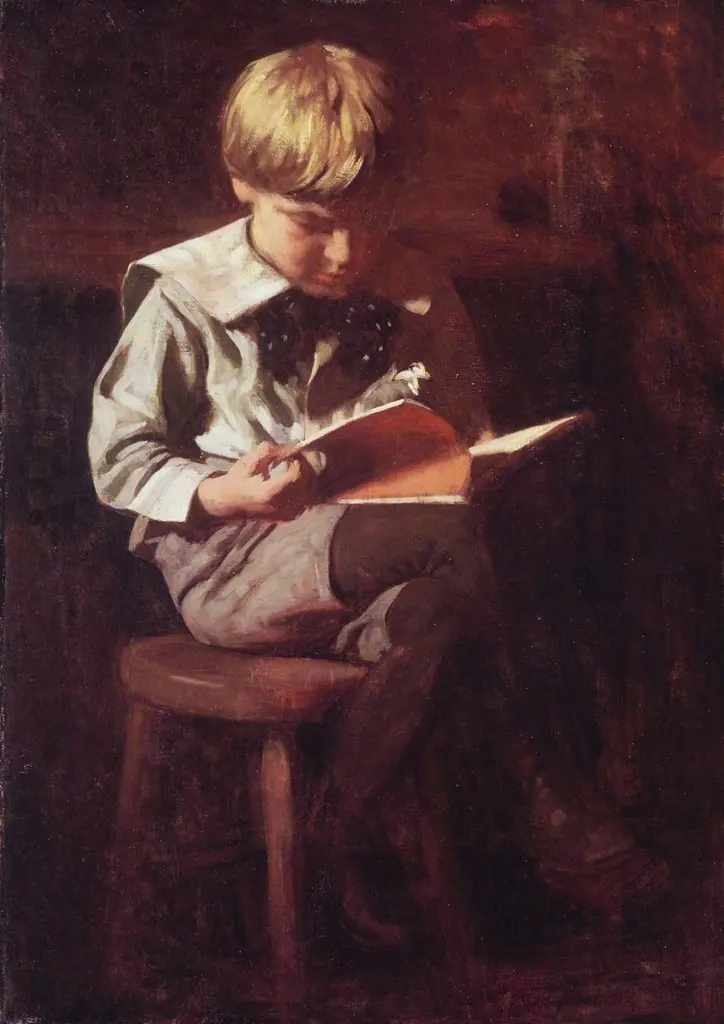 Boy Reading: Ned Anshutz