Artwork
David R. Strang
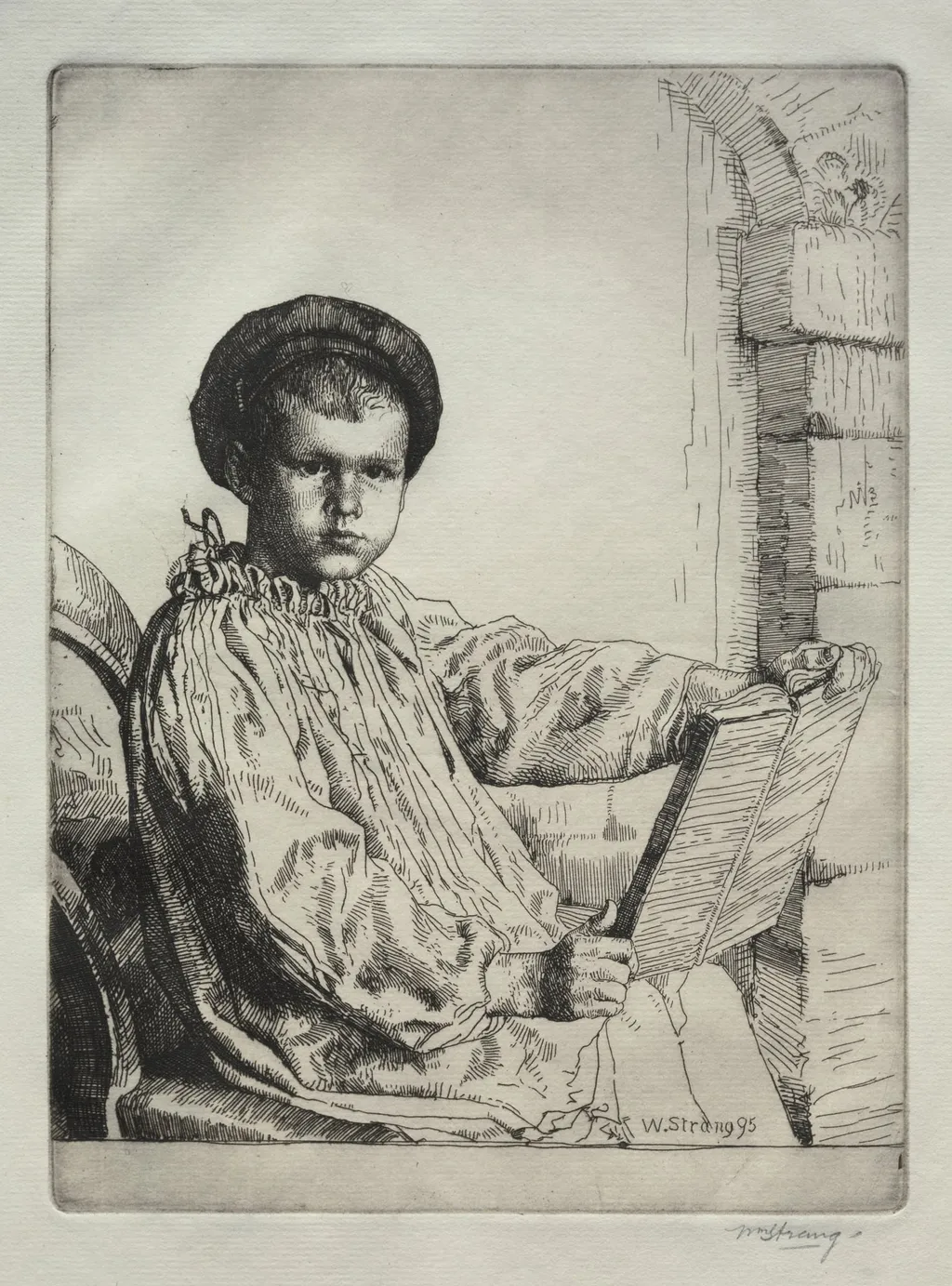
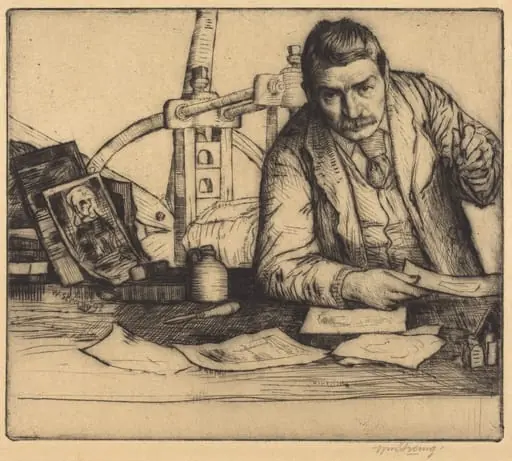
David R. Strang is a print by the Impressionist artist William Strang. It dates from 1895 and is held in the collection of the Cleveland Museum of Art.
About this work
Overview
The medium emphasizes fine linear detail and tonal contrast, characteristic of Strang’s printmaking approach.
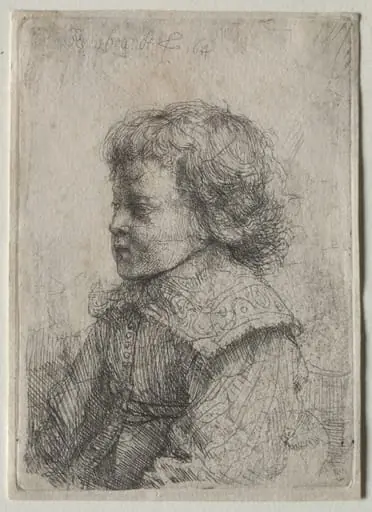
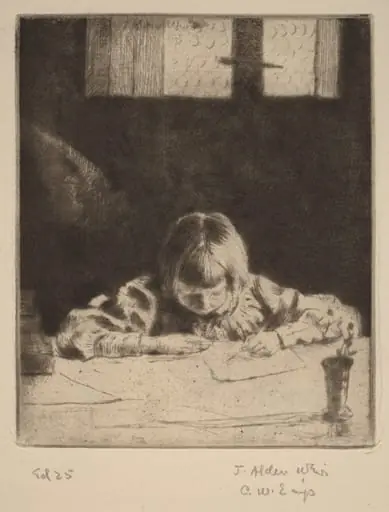
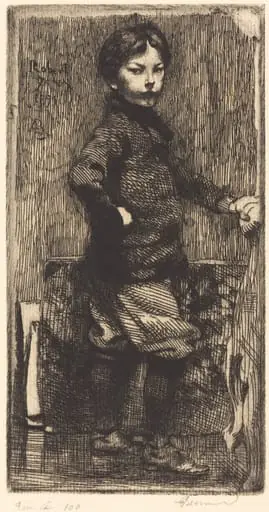
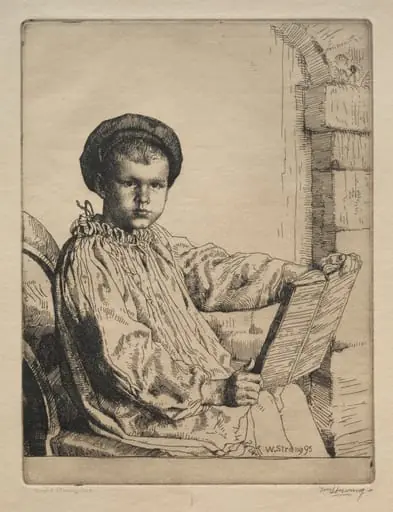
This 1895 print by William Strang depicts a young boy, identified as David R. Strang, seated in a simple wooden chair. Rendered in drypoint and etching, the work captures the subject in a quiet, introspective pose. The composition is tightly framed, focusing on the boy’s posture and attire against a muted background. The medium emphasizes fine linear detail and tonal contrast, characteristic of Strang’s printmaking approach.
Subject & Meaning
The subject, a boy in a high-collared shirt and hat, holds a sheet of paper in his left hand while his right rests on the chair arm. His gaze is directed slightly away, suggesting contemplation or quiet readiness. The absence of narrative context invites interpretation of the moment as ordinary yet deliberate—perhaps a pause between tasks. The portrait conveys stillness rather than drama, emphasizing the dignity of everyday youth.
Technique & Style
William Strang employed drypoint and etching to achieve sharp, expressive lines and rich tonal gradations. The boy’s face and hands are rendered with delicate hatching, catching light against a darkened background. Textures of fabric and wood are suggested through precise incisions, while the window frame on the right adds spatial depth without distraction. Chiaroscuro enhances the three-dimensionality of the figure, grounding the portrait in realism without sentimentality.
History & Provenance
Created in 1895, the print entered The Cleveland Museum of Art’s collection through documented acquisition. It is one of several portraits William Strang made of family members during this period, reflecting his interest in intimate domestic subjects. The work has remained in public hands since its inclusion in the museum’s holdings, with no evidence of private ownership between its creation and acquisition.
Context
In the late 19th century, British printmakers like Strang revived interest in etching as a fine art form, moving away from reproductive printing. This portrait aligns with a broader trend of psychological realism in portraiture, influenced by French and Dutch precedents. Strang’s focus on quiet, unposed moments distinguished his work from formal academic portraits of the era.
Legacy
David R. Strang exemplifies William Strang’s contribution to the British etching revival. While not widely reproduced, the print is recognized in scholarly circles for its technical precision and restrained emotional tone. It remains a key example of how printmaking could convey psychological depth without overt narrative, influencing later generations of printmakers interested in intimate portraiture.
Artist & collection

Artist
William Strang (13 February 1859 – 12 April 1921) was a Scottish painter and printmaker, notable for illustrating the works of Bunyan, Cervantes, Coleridge, Kipling, and others.