Artwork
Persimmon Village
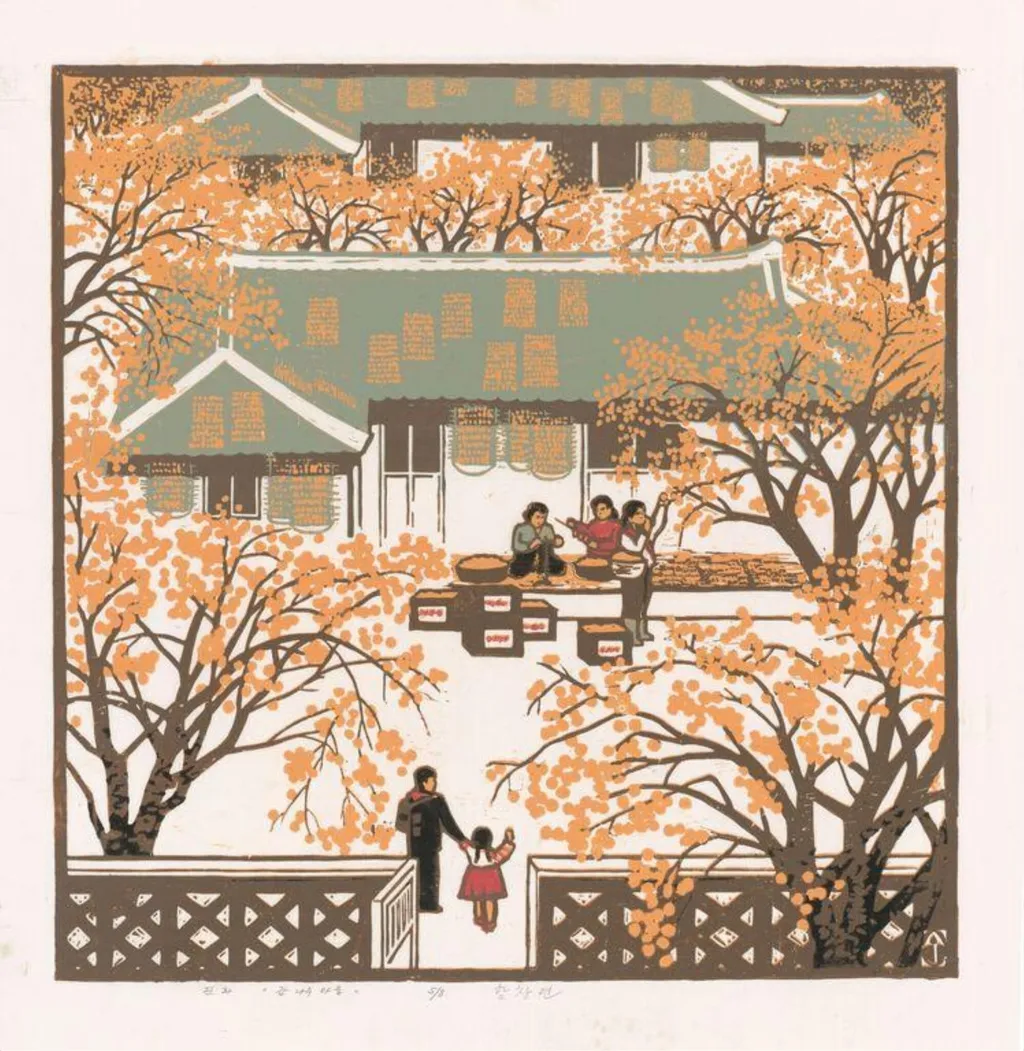
Persimmon Village is a print by Ch'ang-yon Ham. It dates from 1950 and is held in the collection of the Victoria and Albert Museum.
About this work
Overview
Persimmon Village is a colour woodblock print created in 1950 by Korean artist Ham Ch'ang‑yŏn. Executed as a flat, graphic composition, the work portrays a rural settlement framed by bright orange fruit trees and modest architecture, rendered in bold outlines against a light ground.
Subject & Meaning
The scene captures a moment of seasonal harvest, with women gathered under a roof to sort fruit into baskets and bowls, while a man and child approach along a low wall. The presence of persimmon trees, a fruit linked to Korean festive customs, underscores themes of communal labor and seasonal renewal.
Technique & Style
Ham employs traditional colour woodblock methods, using a limited palette of vivid hues and stark black lines to define forms. The print’s surface is flat and decorative, emphasizing clear shapes and a simplified perspective that foregrounds pattern over depth.
History & Provenance
Produced in the early post‑war period, the print reflects Ham’s engagement with Korean folk subjects during a time of cultural reconstruction. It remains part of private collections and has been exhibited in surveys of mid‑20th‑century Korean printmaking.
Context
The work aligns with a broader movement among Korean artists of the 1950s who revisited rural motifs and traditional techniques to assert national identity. Ham’s focus on everyday village life parallels contemporaneous efforts to document and celebrate Korean cultural heritage.
Artist & collection
Artist
Ham drew village life on scraps of old paper, sketching by oil lamps after farm work.

 Bushu Yokohama Gankirō|諸国名所百景 武州横浜岩亀楼|Entrance to the Gankirō Tea House in the Miyozaki District, Yokohama, Bushu
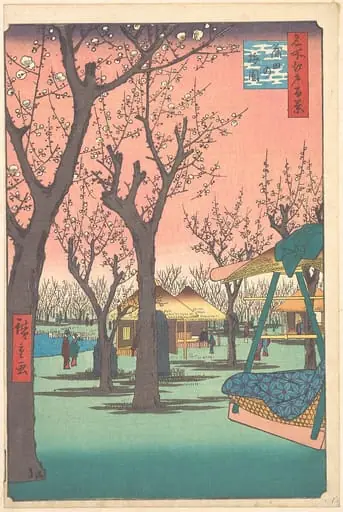 Kamata no Baien|名所江戸百景 蒲田の梅園|Plum Garden at Kamata
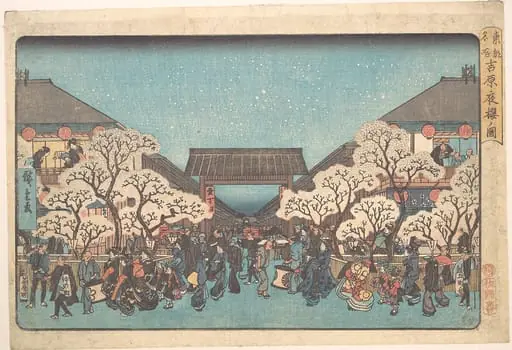 東都名所 吉原夜桜の図|Yoshiwara Yo Zakura no Zu
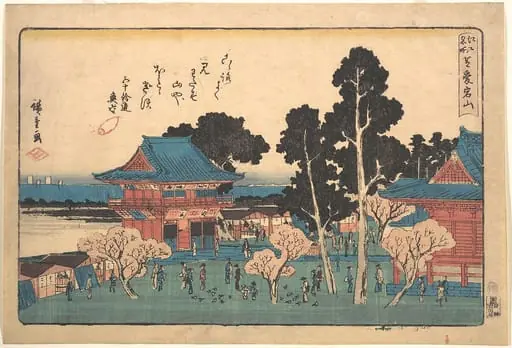 江戸名所 芝愛宕山|Shiba Atogayama
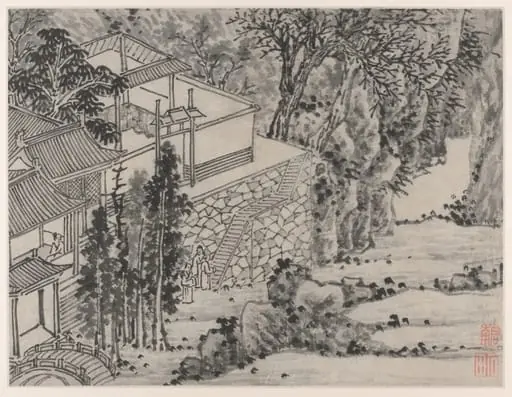 The Enlightened Stone Retreat, from Twelve Views of Tiger Hill, Suzhou
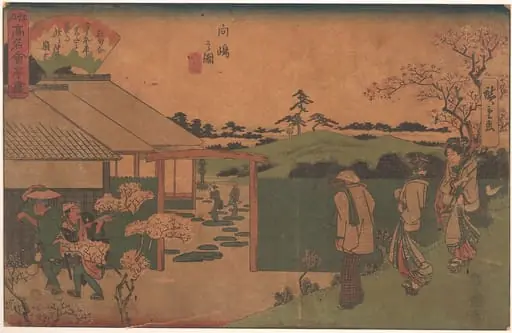 江戸高名会亭尽 向島の図 平岩|Mukojima no Zu (Hira-Iwa)
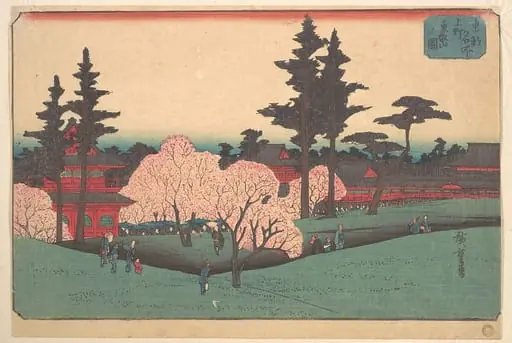 東都名所 上野東叡山ノ圖|Ueno Toezan no Zu
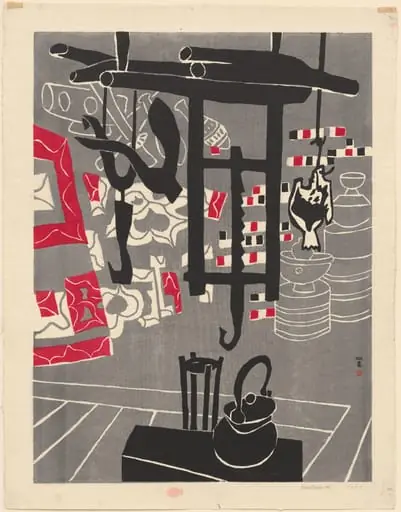 Untitled
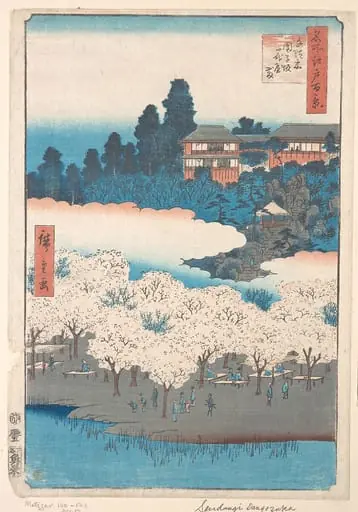 名所江戸百景 千駄木団子坂花屋敷|Sendagi Dangozaka
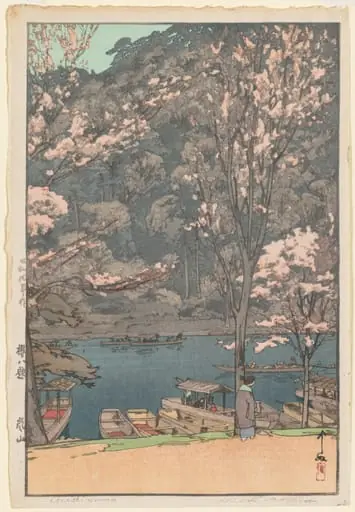 Eight Scenes of Cherry Blossom: Arashiyama
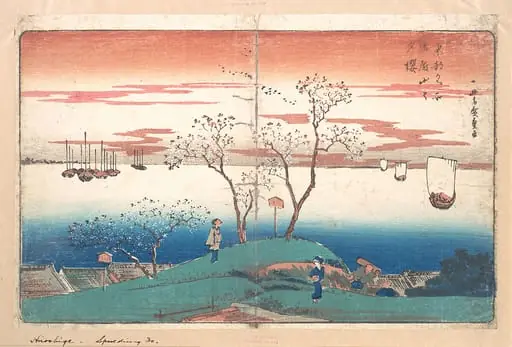 東都名所 御殿山之夕桜|Evening Cherries on Gotem Yama
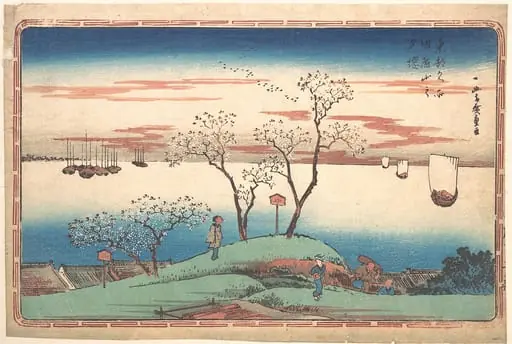 Gotenyama no yu-zakura|東都名所 御殿山之夕桜|Evening Cherry Blossoms at Gotenyama