Artwork
Kamata no Baien|名所江戸百景 蒲田の梅園|Plum Garden at Kamata
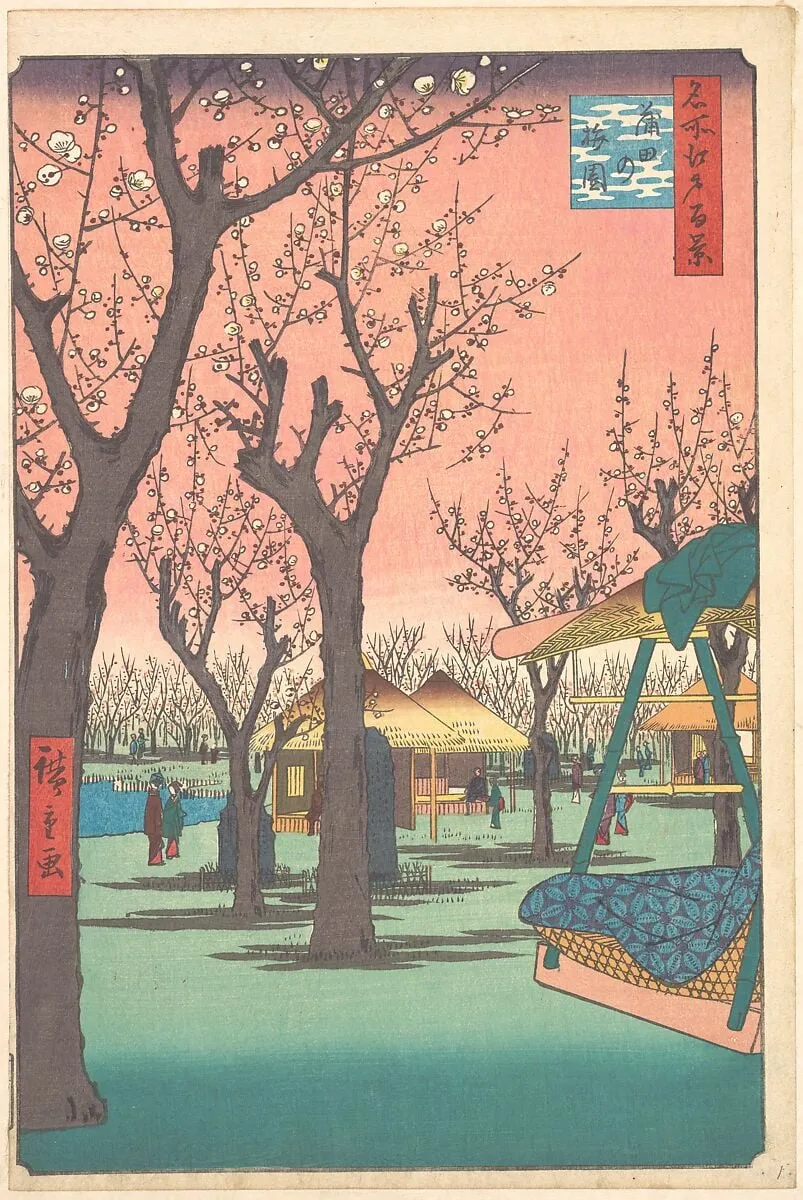
Kamata no Baien|名所江戸百景 蒲田の梅園|Plum Garden at Kamata is an ink print by the Impressionist artist Utagawa Hiroshige. It dates from 1857 and is held in the collection of the Metropolitan Museum of Art.
About this work
Overview
Created in 1857, this woodblock print by Utagawa Hiroshige forms part of his series One Hundred Famous Views of Edo. Executed with ink and color on paper, it portrays a plum garden in the Kamata district, then a rural area on the outskirts of Edo (now Tokyo). The Metropolitan Museum of Art currently holds the work in its collection.
Subject & Meaning
The scene captures a springtime garden where plum trees burst into white blossoms, their branches extending toward a pale pink sky. A modest wooden pavilion overlooks a pond, while figures walk along a path and small boats drift on the water, suggesting a tranquil leisure setting typical of seasonal Japanese landscapes.
Technique & Style
Hiroshige employs the characteristic ukiyo-e method of bold, clean outlines combined with flat areas of color, producing a calm, simplified visual effect. The composition balances delicate natural forms—trees, water, and sky—with the geometric clarity of the pavilion and pathway, emphasizing harmony between human activity and nature.
History & Provenance
The print was issued as the Kamata plum garden plate within the One Hundred Famous Views of Edo series, a project that documented notable locales around the capital. After its original circulation in the mid‑nineteenth century, the piece entered the collection of the Metropolitan Museum of Art, where it remains on display.
Artist & collection
Artist
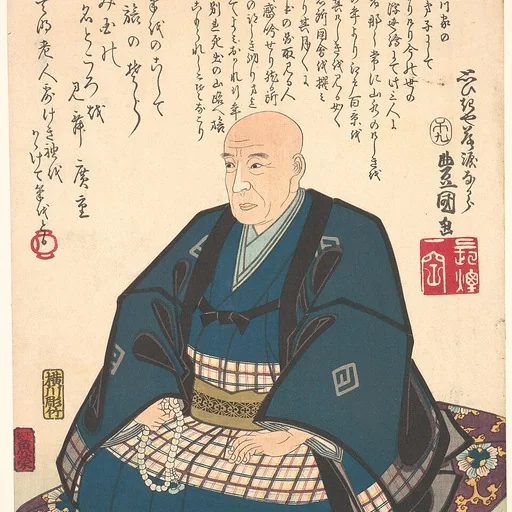
Utagawa Hiroshige (歌川 広重) or Andō Hiroshige (安藤 広重), born Andō Tokutarō (安藤 徳太郎; 1797 – 12 October 1858), was a Japanese ukiyo-e artist, considered the last great master of that tradition.

 Bushu Yokohama Gankirō|諸国名所百景 武州横浜岩亀楼|Entrance to the Gankirō Tea House in the Miyozaki District, Yokohama, Bushu
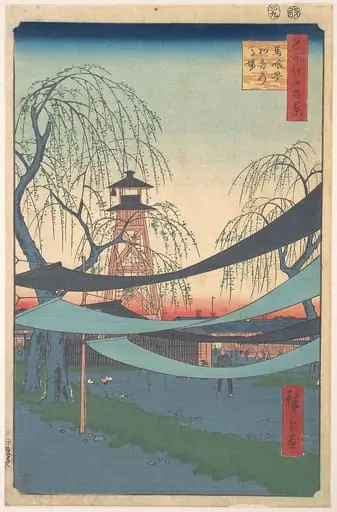 名所江戸百景 馬喰町初音の馬場|The First Race Course, Horse-Dealer's Street
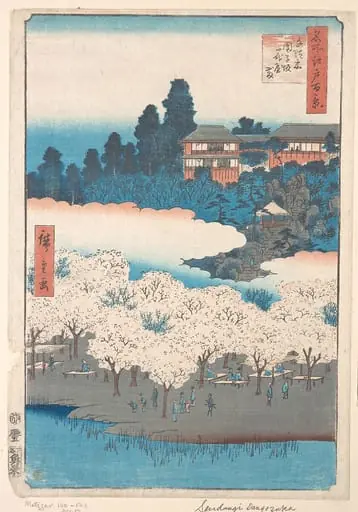 名所江戸百景 千駄木団子坂花屋敷|Sendagi Dangozaka
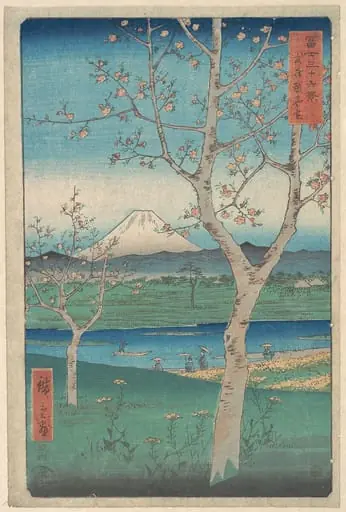 富士三十六景 武蔵越かや在|View of Mount Fuji from Koshigaya, Province of Musashi (Musashi, Koshigaya Zai), from the series Thirty-six Views of Mount Fuji (Fugaku sanjūrokkei)
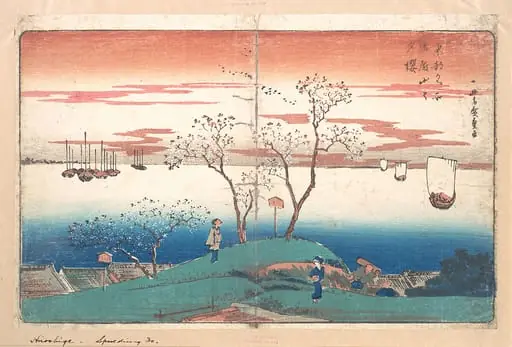 東都名所 御殿山之夕桜|Evening Cherries on Gotem Yama
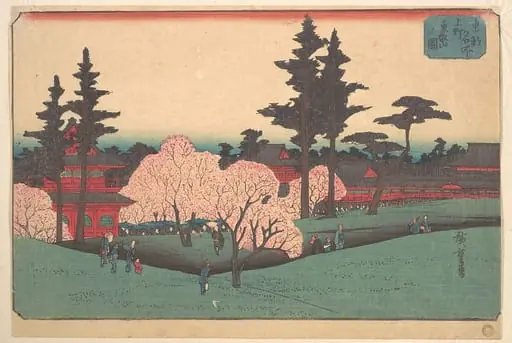 東都名所 上野東叡山ノ圖|Ueno Toezan no Zu
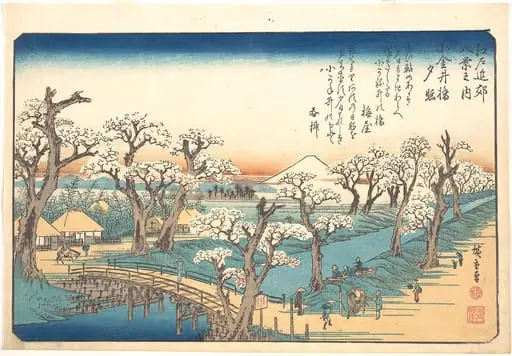 江戸近郊八景之内 小金井橋夕照|Evening Glow at Koganei Border
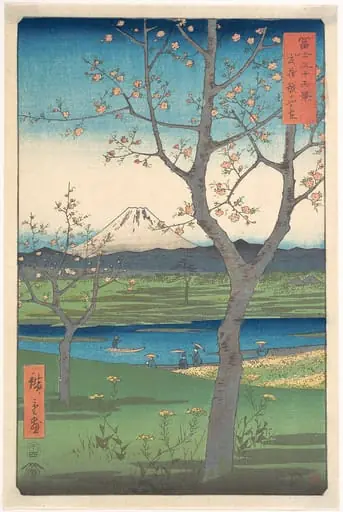 富士三十六景 武蔵越かや在|Musashi, Koshigaya Zai