Artwork
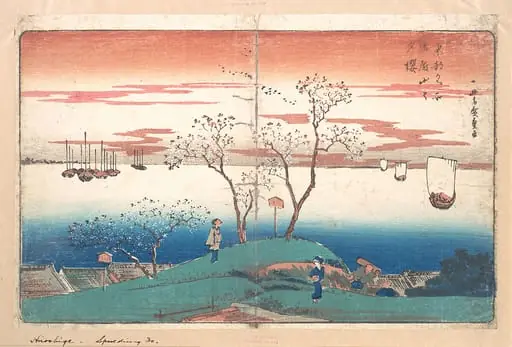
Gotenyama no yu-zakura|東都名所 御殿山之夕桜|Evening Cherry Blossoms at Gotenyama
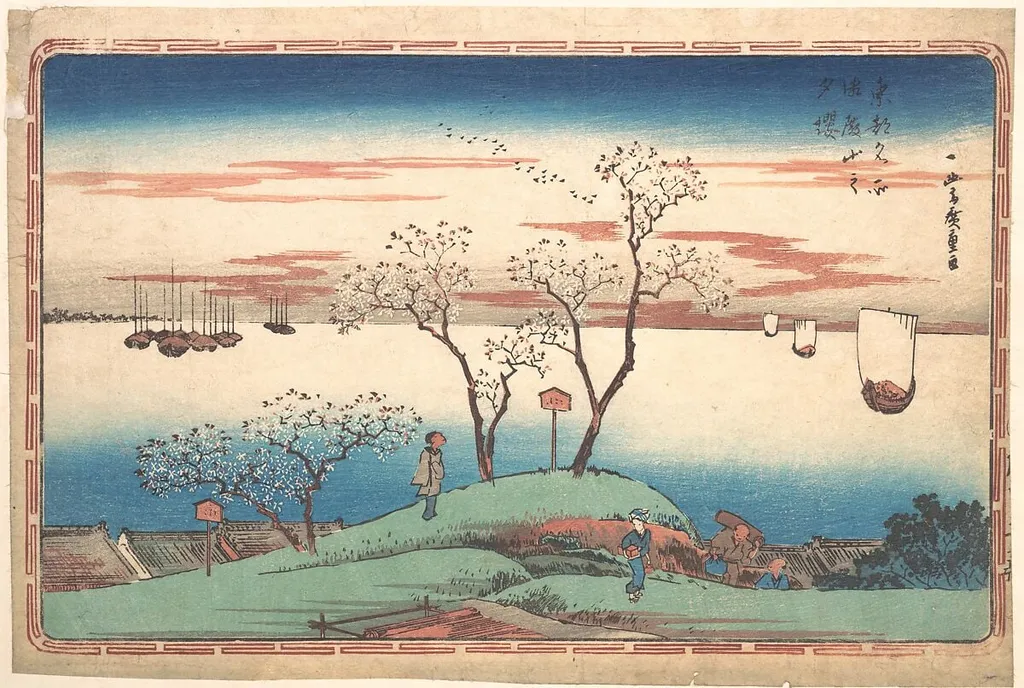
Gotenyama no yu-zakura|東都名所 御殿山之夕桜|Evening Cherry Blossoms at Gotenyama is an ink print by the Romanticist artist Utagawa Hiroshige. It dates from 1831 and is held in the collection of the Metropolitan Museum of Art.
About this work
Overview
Created in 1831 by Utagawa Hiroshige, this woodblock print is part of a series depicting celebrated locations in Edo. Rendered in ink and color on paper, it captures a quiet evening scene at Gotenyama, a hill known for its cherry trees. Unlike many ukiyo-e works centered on urban entertainers, Hiroshige turned his focus to natural landscapes, helping redefine the genre’s thematic boundaries.
Subject & Meaning
The scene portrays cherry blossoms in late daylight, their petals softly illuminated against a fading sky. Three trees dominate the foreground, while distant boats glide across water, and small figures pause along the slope. The composition suggests contemplation rather than activity, evoking the transient beauty of spring and the quiet rhythm of daily life in Edo’s outskirts.
Technique & Style
Hiroshige employed subtle gradations of pink and blue to suggest twilight, using layered washes to soften the transition between sky and horizon.
Hiroshige employed subtle gradations of pink and blue to suggest twilight, using layered washes to soften the transition between sky and horizon. The trees are rendered with delicate, controlled lines, and human figures are minimized to emphasize scale and serenity. The print’s muted palette and balanced composition reflect a restrained aesthetic, characteristic of Hiroshige’s mature landscape style.
History & Provenance
The print was produced during Hiroshige’s early period of landscape series, before his more famous travel albums. It circulated as a single-sheet print among Edo’s literate middle class. The Metropolitan Museum of Art acquired it as part of its broader collection of Japanese prints, preserving its role as an example of early 19th-century urban landscape representation.
Context
In the 1830s, Edo’s growing population sought cultural connection to nature through art, even as the city expanded. Prints like this one offered idealized glimpses of nearby natural sites, serving as both travel inspiration and quiet escape. Gotenyama, though modest, was a recognized spot for hanami, making it a fitting subject for a series celebrating local landmarks.
Legacy
This work contributed to the elevation of landscape as a legitimate subject in ukiyo-e, influencing later artists and Western impressionists. Its quiet composition and atmospheric color use became hallmarks of Hiroshige’s approach, distinguishing his output from the more theatrical styles of his contemporaries and securing his place in the evolution of Japanese printmaking.
Artist & collection
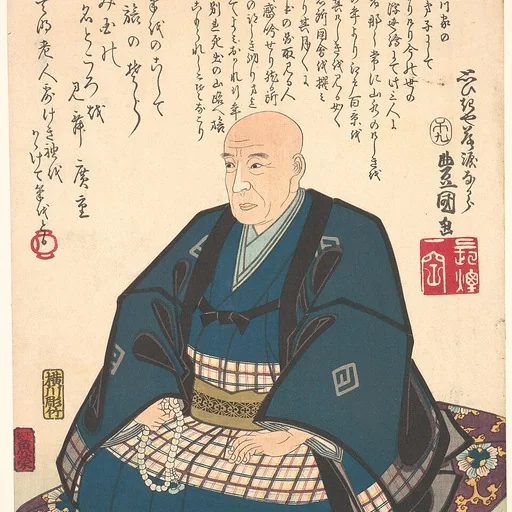
Artist
Utagawa Hiroshige (歌川 広重) or Andō Hiroshige (安藤 広重), born Andō Tokutarō (安藤 徳太郎; 1797 – 12 October 1858), was a Japanese ukiyo-e artist, considered the last great master of that tradition.

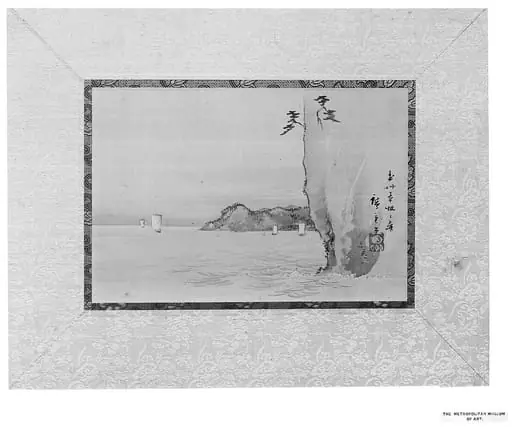
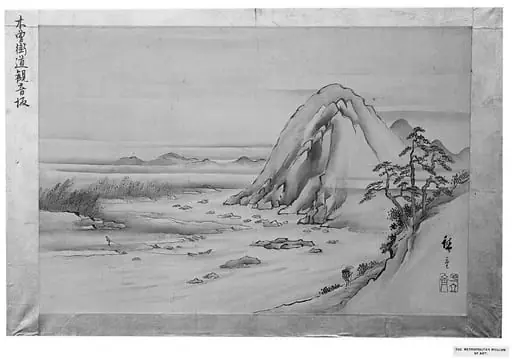
 東都名所 御殿山之夕桜|Evening Cherries on Gotem Yama
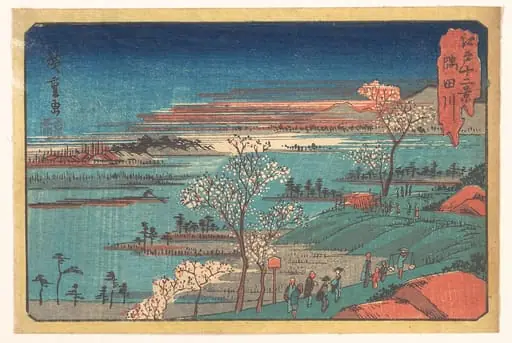 江戸十二景 隅田川|Gotenyama-no Hana
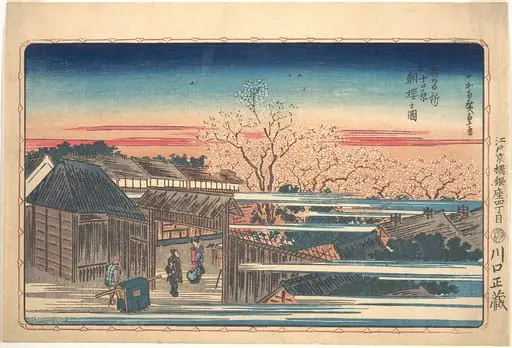 Shin-Yoshiwara, asazukura no zu|東都名所 新吉原朝桜之図|Morning Cherry Blossoms at Shin-Yoshiwara
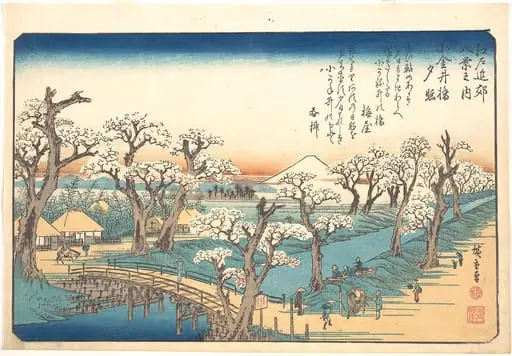 江戸近郊八景之内 小金井橋夕照|Evening Glow at Koganei Border
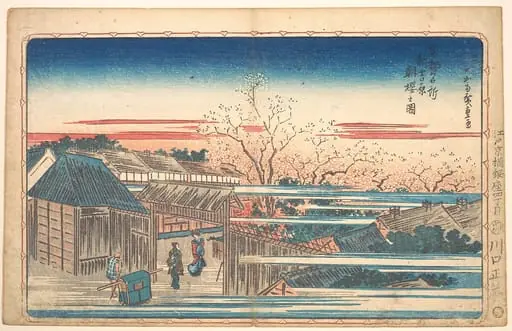 東都名所 新吉原朝桜之図|Morning Cherries at Yoshiwara
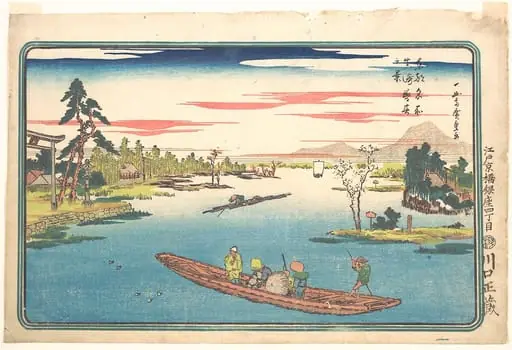 Masaki, boshun no kei|東都名所 真崎暮春之景|A View of Late Spring at Masaki
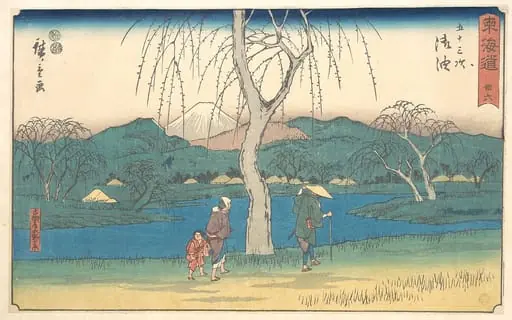 東海道五十三次 御油 古街道本野ヶ原|Goyu
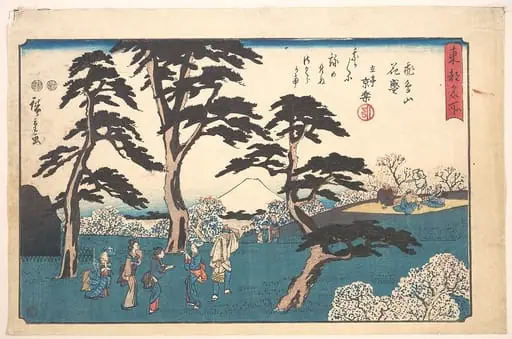 東都名所 飛鳥山花盛|Asukayama Hana Zakari