Artwork
江戸高名会亭尽 向島の図 平岩|Mukojima no Zu (Hira-Iwa)
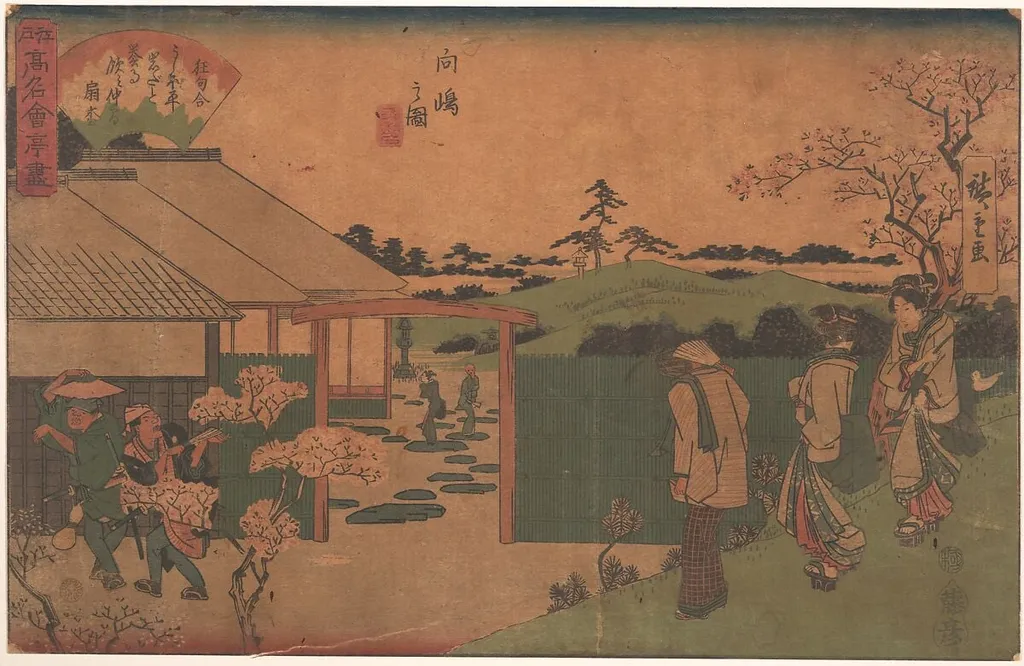
江戸高名会亭尽 向島の図 平岩|Mukojima no Zu (Hira-Iwa) is an ink print by the Romanticist artist Utagawa Hiroshige. It dates from 1840 and is held in the collection of the Metropolitan Museum of Art.
About this work
Overview
Mukojima no Zu (Hira-Iwa) is a woodblock print created by Utagawa Hiroshige around 1840. It is a landscape print featuring a scenic view, characteristic of Hiroshige's work.
Subject & Meaning
The print depicts a serene garden scene at Mukōjima, with people strolling and interacting. The composition includes a pond, fence, and bridge, set against a backdrop of trees and hills. A red sign with Japanese text is prominently displayed on the left.
Technique & Style
The work is executed in ink and color on paper, utilizing flat colors and bold black outlines. Hiroshige employed simple shapes to convey a sense of activity within a compact space, adhering to the horizontal-format tradition of ukiyo-e.
History & Provenance
The print is part of The Metropolitan Museum of Art's collection. As a representative work of Hiroshige, it showcases his focus on landscapes, diverging from the typical urban subjects of the ukiyo-e genre.
Artist & collection
Artist
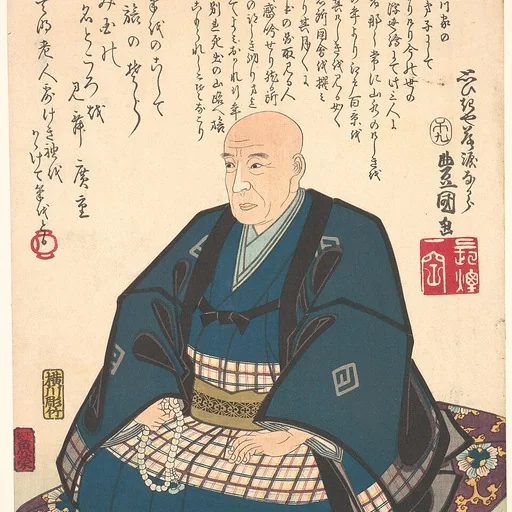
Utagawa Hiroshige (歌川 広重) or Andō Hiroshige (安藤 広重), born Andō Tokutarō (安藤 徳太郎; 1797 – 12 October 1858), was a Japanese ukiyo-e artist, considered the last great master of that tradition.

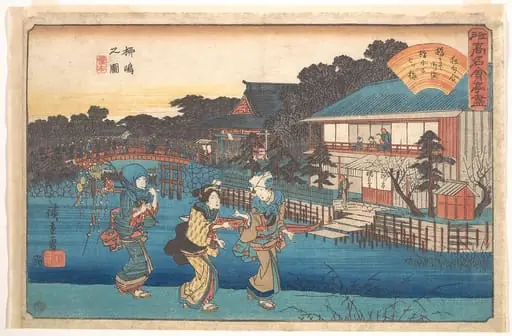 江戸高名会亭尽 柳島の図 橋本|Yanagishima no Zu
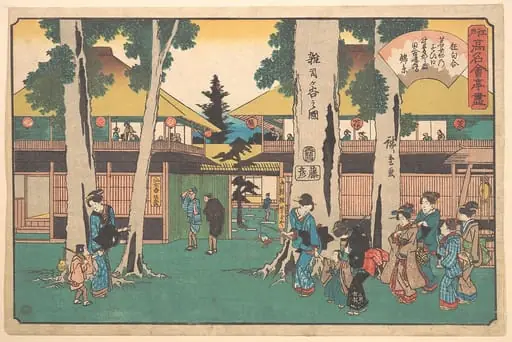 江戸高名会亭尽 雑司ヶ谷の図 茗荷屋|Zoshigaya no Zu (Myoga-ya)
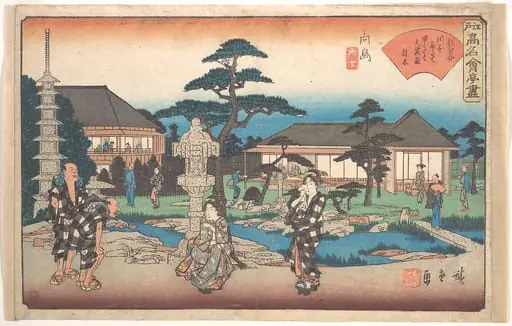 Mukōjima (Daikokuya)|江戸高名会亭尽 向島 大七|The Daikokuya at Mukojima
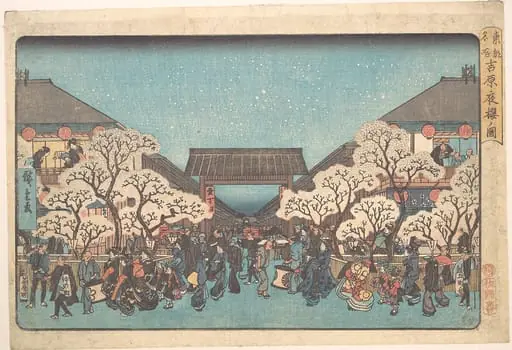 東都名所 吉原夜桜の図|Yoshiwara Yo Zakura no Zu
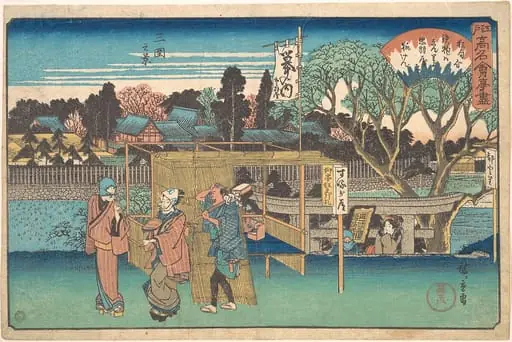 江戸高名会亭尽 三囲之景 出羽屋|Mimeguri no Kei (Toyoha-ya)
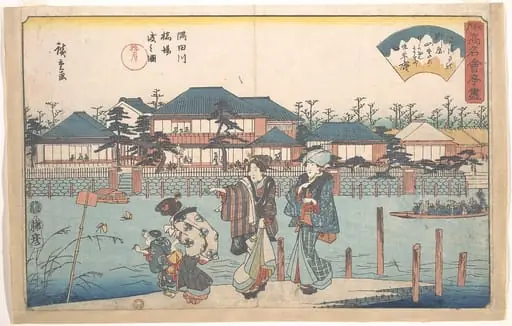 江戸高名会亭尽 隅田川橋場渡之図 柳屋|Sumidagawa Hashiba Watashi Zu (Yanagiya)
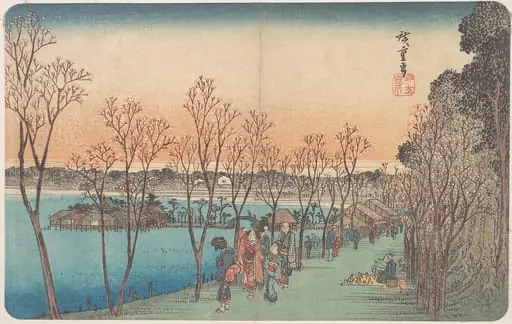 江戸名所 上野不忍の池|Ueno, Shinobazu no Ike
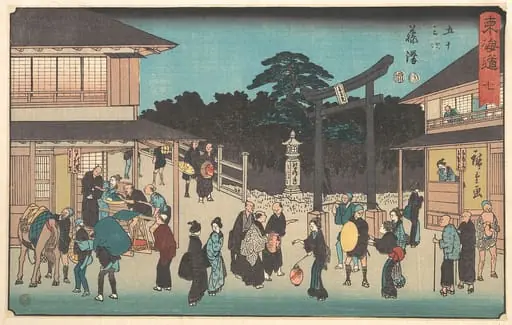 東海道五十三次 藤澤|Fujisawa
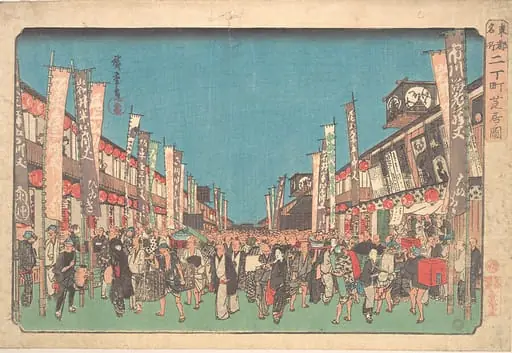 東都名所 二丁町芝居の図|Sakai Cho Shibai no Zu
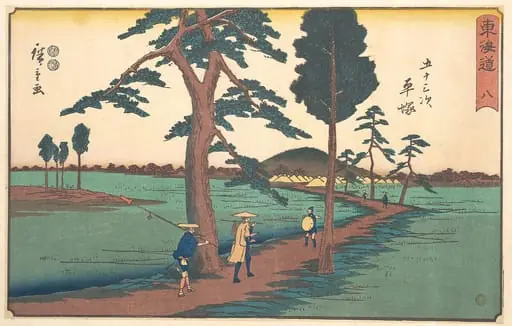 東海道五十三次 平塚|Hiratsuka
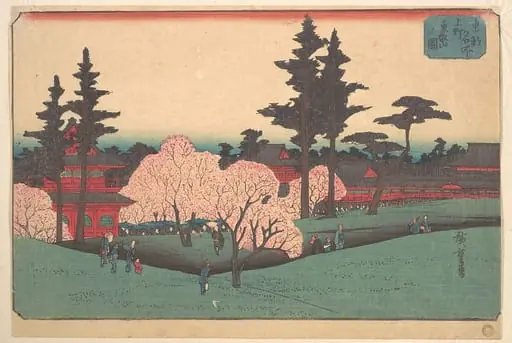 東都名所 上野東叡山ノ圖|Ueno Toezan no Zu
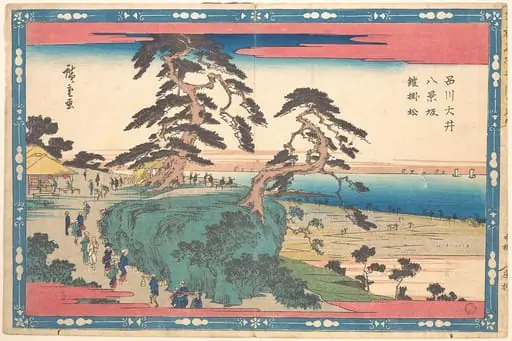 東都名所 品川大井 八景坂鎧掛松|Shinagawa Hakkei Zaka