Artwork
Eve and the Serpent
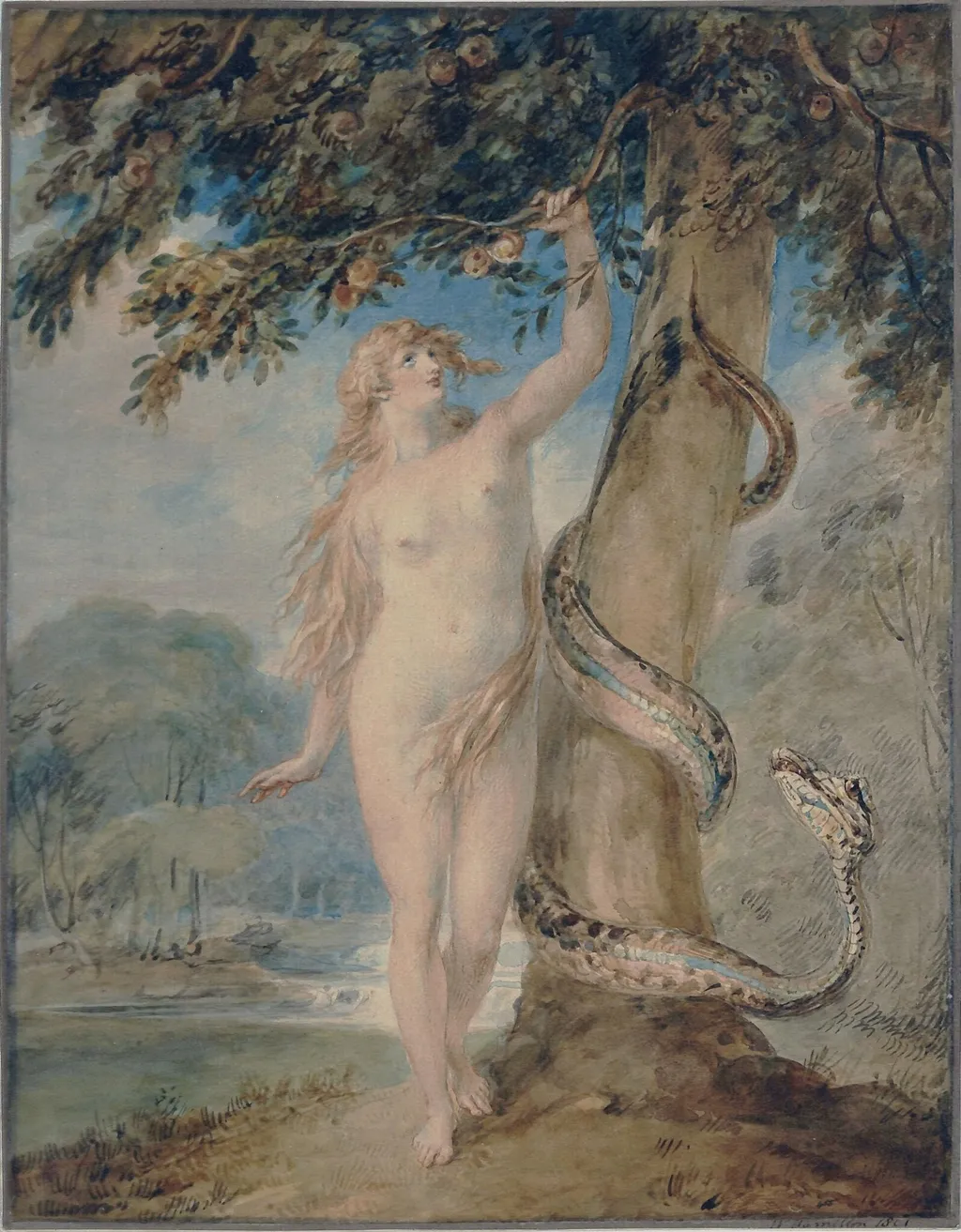
Eve and the Serpent is a watercolor work on paper by the British Romanticist artist William Hamilton. It dates from 1801 and is held in the collection of the Victoria and Albert Museum. This watercolour portrays the biblical episode of Eve encountering the serpent in the Garden of Eden.
About this work
Overview
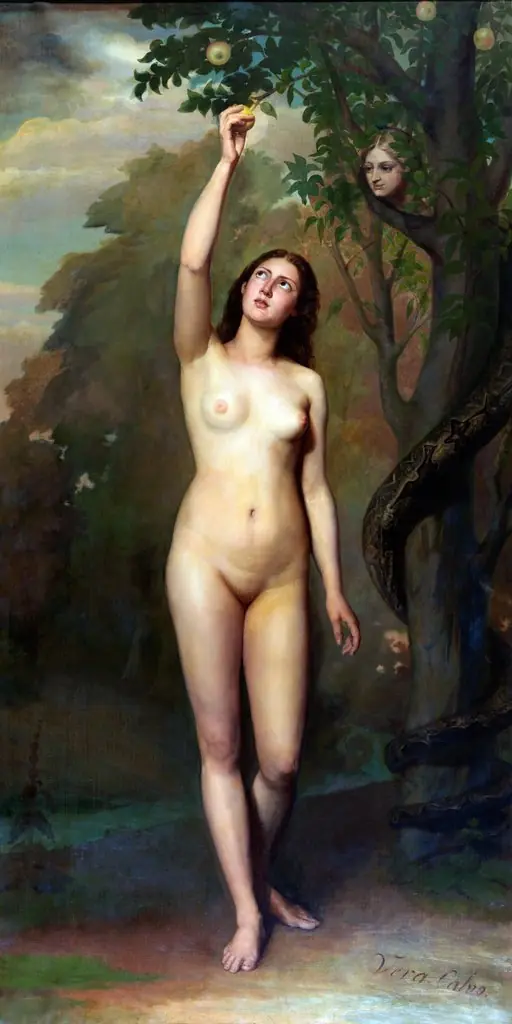
Executed in a delicate palette, the work shows a nude figure reaching for fruit while a coiled serpent watches from the tree.
This watercolour portrays the biblical episode of Eve encountering the serpent in the Garden of Eden. Executed in a delicate palette, the work shows a nude figure reaching for fruit while a coiled serpent watches from the tree. The artist signed and dated the piece, and it later served as the basis for an engraving by Francesco Bartolozzi, which appeared in the 1802 edition of Milton’s Paradise Lost, volume two.
Subject & Meaning
The composition presents Eve as a solitary, contemplative figure amid a verdant landscape, embodying the moment of temptation. Her outstretched hand and the serpent’s attentive gaze emphasize the narrative of choice and knowledge that underpins the Genesis account, inviting reflection on innocence and transgression.
Technique & Style
Rendered in soft, muted tones, the watercolour employs warm hues for the figure’s skin and hair against a cool blue sky and subtle greens of foliage. The artist’s handling of washes creates atmospheric depth, while the gentle transitions between light and shadow convey a tranquil yet charged mood characteristic of early Romantic sensibilities.
History & Provenance
After its creation, the original watercolour was reproduced as an engraving by the Italian printmaker Francesco Bartolozzi. This print was included in the second volume of the 1802 publication of John Milton’s Paradise Lost, issued by F. J. de Roveray, thereby extending the work’s visibility beyond its initial medium.
Context
The piece reflects the 18th‑century fascination with biblical subjects rendered through the emerging Romantic aesthetic, which favored emotive landscapes and a focus on individual experience. Its use in a literary edition underscores the period’s interdisciplinary engagement between visual art and poetry.
Artist & collection
Artist
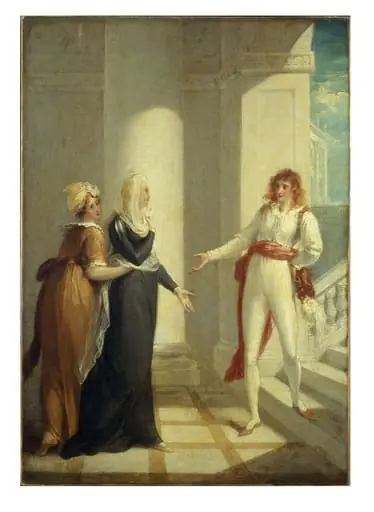
William Hamilton painted actors and scenes from plays in the late 1700s. His real paintings include Sarah Siddons as Jane Shore and a Twelfth Night scene with Maria, Olivia, and Viola. He also made a watercolor copy of…

![The Amorous Lion [Le lion amoureux], by Félix Bracquemond](https://artifactworldgallery.com/img/felix-bracquemond--the-amorous-lion-le-lion-amoureux--5d353e25984ceddb-w320.webp)