Artwork
Triton and Nymph
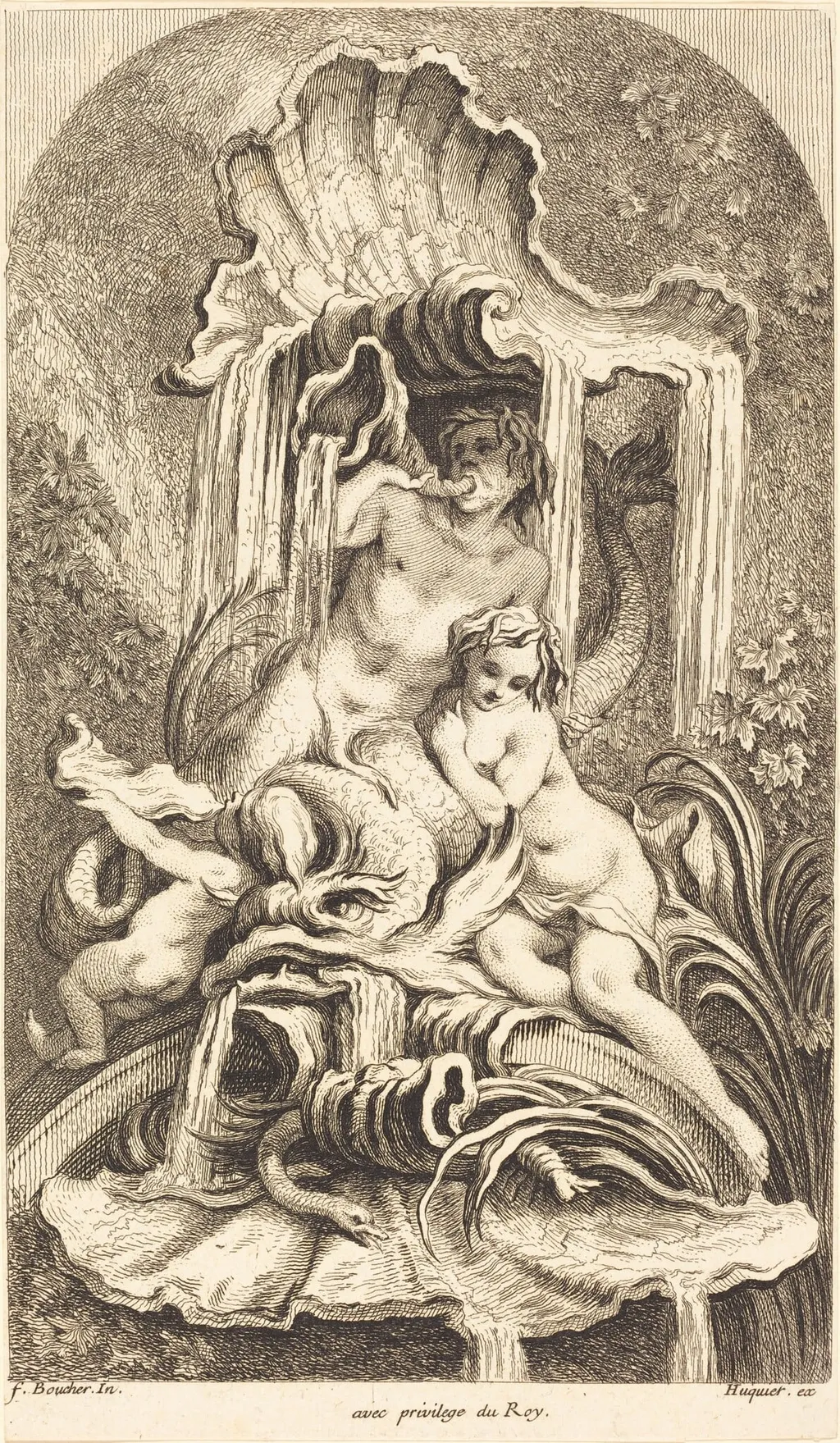
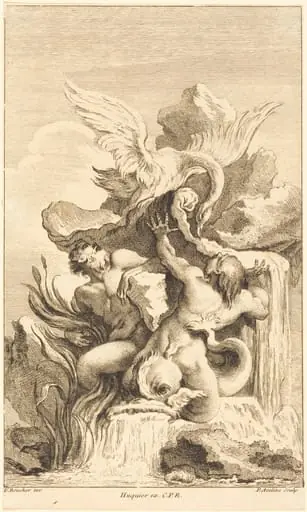
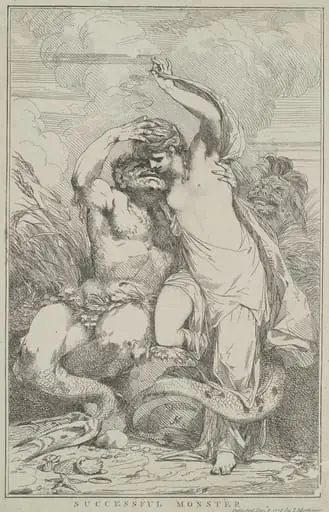
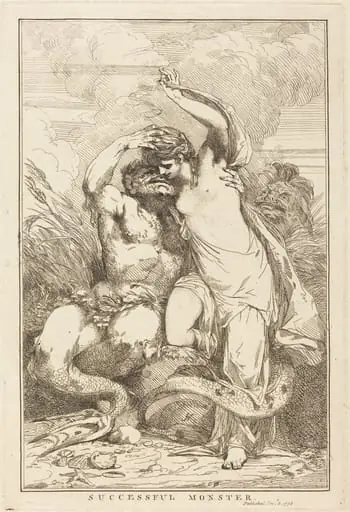
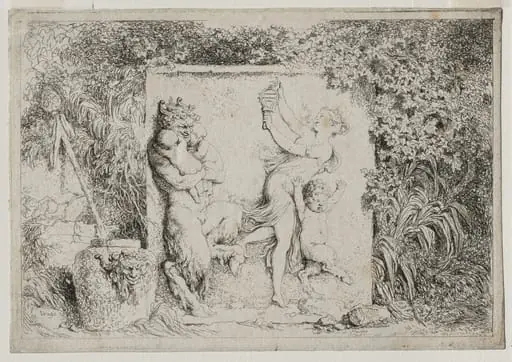
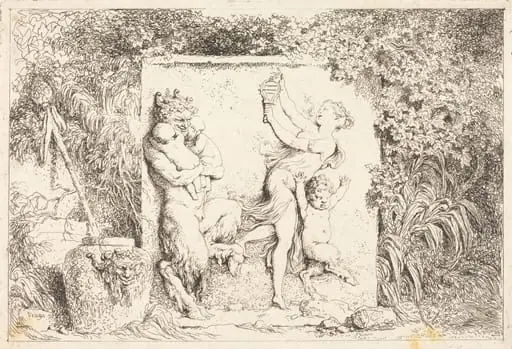
Triton and Nymph is an ink print by the Baroque artist Gabriel Huquier. It dates from 1736 and is held in the collection of the National Gallery of Art.
About this work
Overview
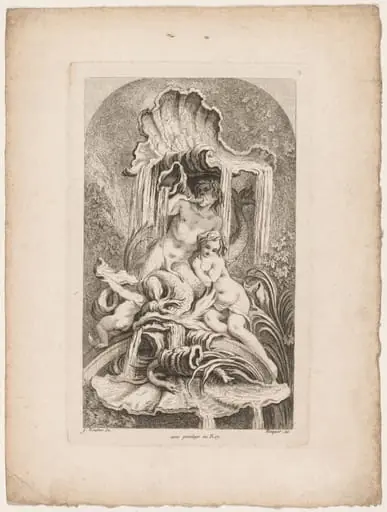
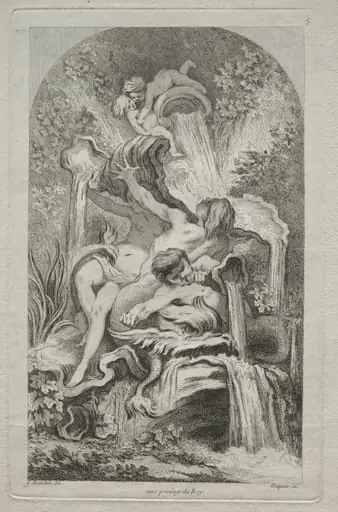
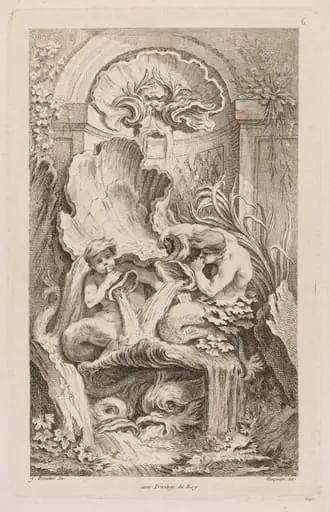
Gabriel Huquier produced this etching in 1736, capturing a mythological scene with precise line work. The print belongs to the tradition of French decorative arts, where classical themes were adapted for private collections. Its small scale and detailed execution suggest it was intended for intimate viewing rather than public display.
Subject & Meaning
The scene evokes the power and mystery of the sea, reflecting 18th-century fascination with ancient narratives as symbols of nature’s vitality.
The composition depicts Triton, a sea god from classical mythology, emerging from turbulent waters with a conch shell raised to his lips. A smaller figure, likely a nymph, clings to his arm, suggesting a moment of interaction between divine and natural forces. The scene evokes the power and mystery of the sea, reflecting 18th-century fascination with ancient narratives as symbols of nature’s vitality.
Technique & Style
Huquier employed etching to achieve sharp, fluid lines that define muscular form and churning waves. The contrast between dense, dark strokes and open areas creates depth and motion, giving the water a sense of weight and turbulence. Fine hatching and cross-contour lines model the body and foam, demonstrating mastery of chiaroscuro within the constraints of monochrome printmaking.
History & Provenance
Created during Huquier’s active years in Paris, this print was likely part of a series of mythological subjects circulated among collectors. Though no specific early ownership records are documented, its technical quality aligns with prints produced for the educated elite who favored classical imagery. It was reproduced in multiple impressions, typical of commercial printmaking practices of the period.
Context
In mid-18th-century France, mythological subjects were popular in decorative arts, serving as both aesthetic embellishment and cultural reference. Huquier, known for his etchings and designs for tapestries, contributed to a broader trend of translating classical themes into accessible graphic form. This work reflects the era’s interest in combining scholarly allusion with ornamental appeal.
Legacy
Though Huquier is not widely remembered today, his prints like this one influenced later generations of printmakers through their refined line quality and compositional clarity. The work remains a representative example of French Rococo-era graphic art, valued for its technical precision and evocative rendering of mythic narrative within a modest format.
Artist & collection


![Dousieme livre des Oeuvres de J. A. Messonnier [<i>sic</i>] Livre de Chandeliers de Sculpture en Argent, by Gabriel Huquier](https://artifactworldgallery.com/img/gabriel-huquier--dousieme-livre-des-oeuvres-de-j-a-messonnier-i-sic-i-livre-d--d48396ff912cb7bf-w320.webp)