Artwork
Untitled
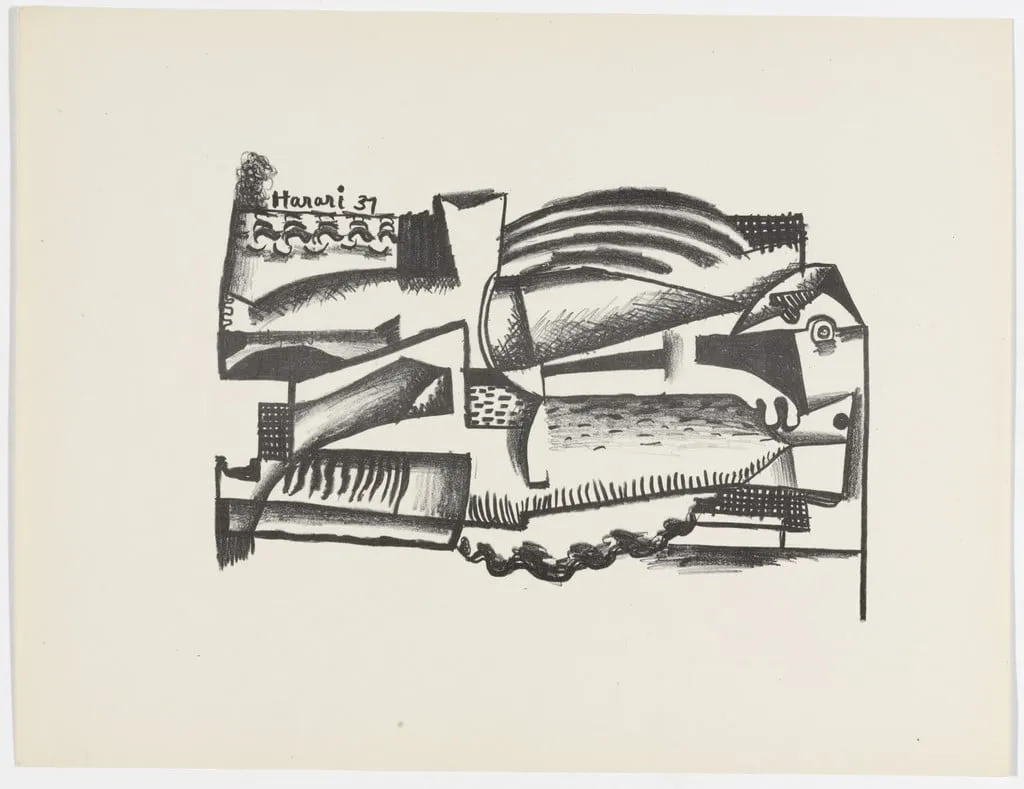
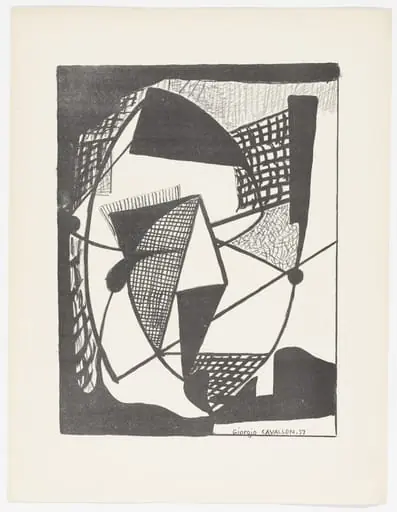
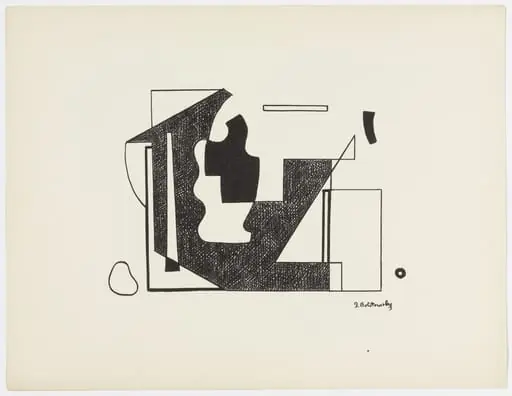
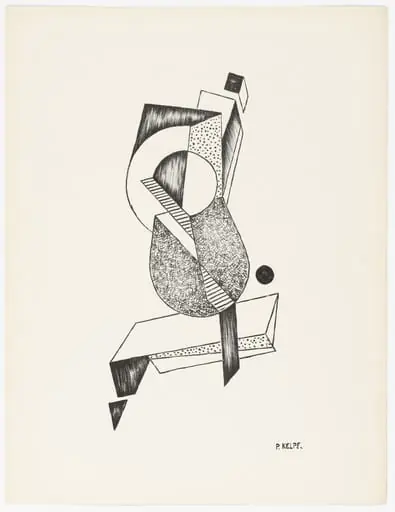
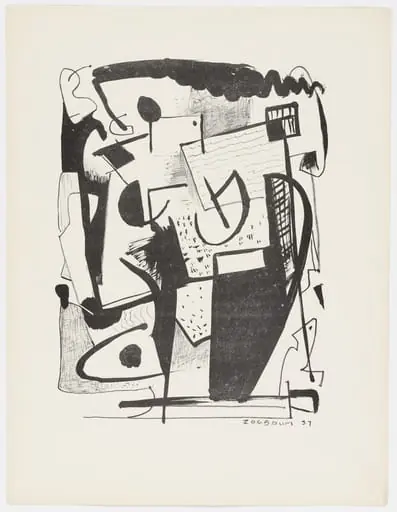
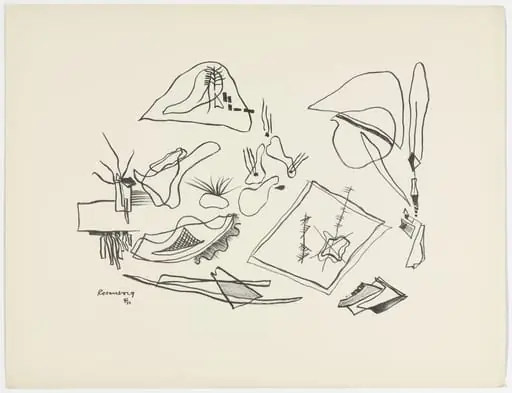
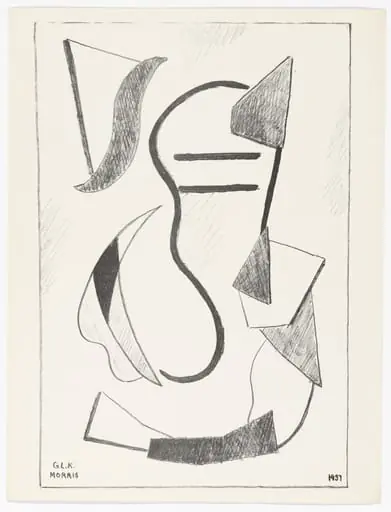
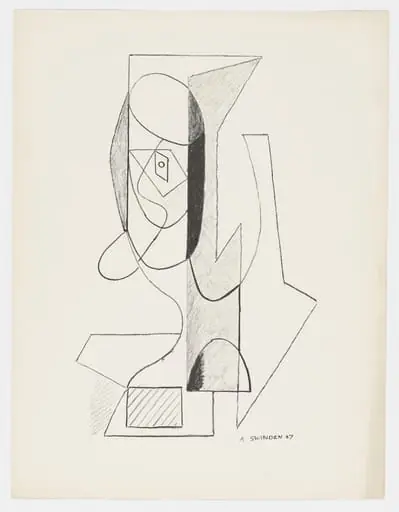
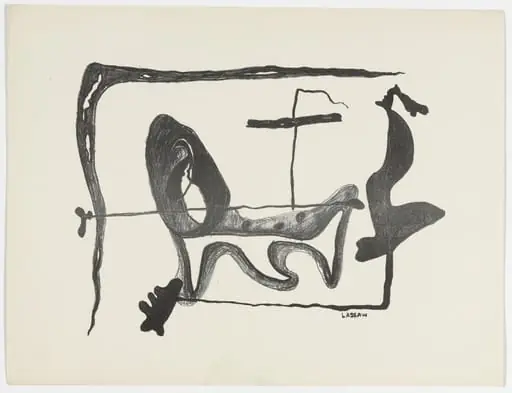
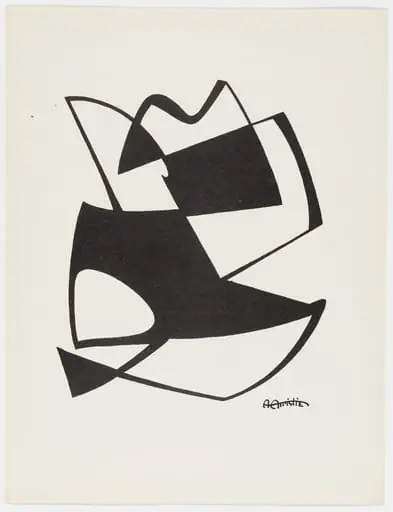
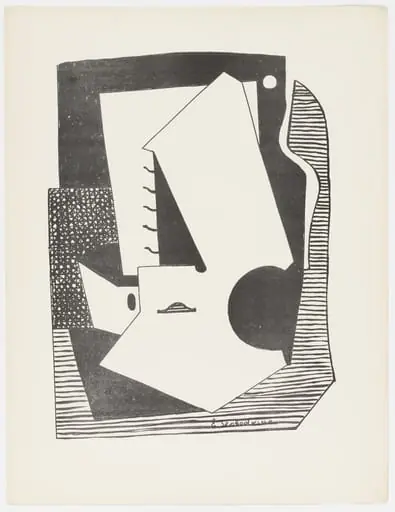
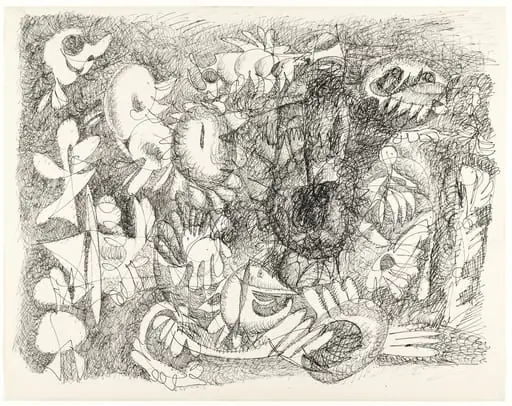
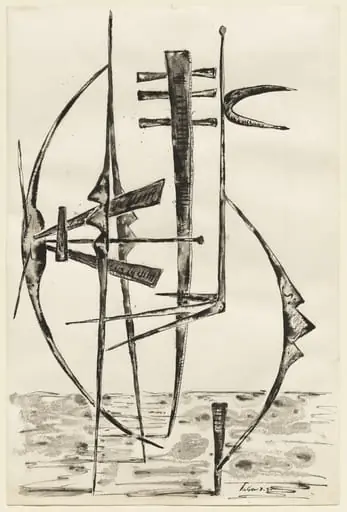
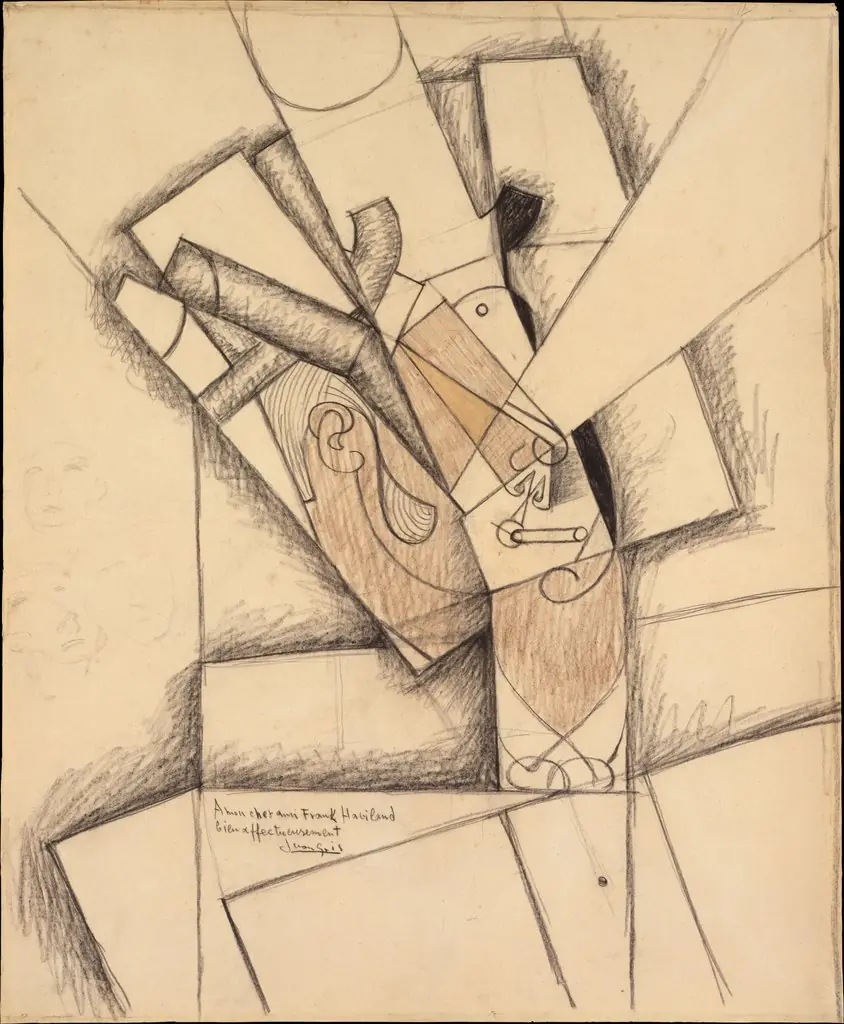
Untitled is an ink print by Hananiah Harari. It dates from 1937 and is held in the collection of the Museum of Modern Art.
About this work
You see a bed with a lumpy mattress, a nightstand with a lamp, and a dresser with a mirror.
This drawing looks like a messy sketch of a bedroom. You see a bed with a lumpy mattress, a nightstand with a lamp, and a dresser with a mirror. The lines are rough and uneven, almost like they were drawn quickly. The whole scene feels tilted and off-balance.
The artist signed it "Hanari 37" in the corner—short for Harari, 1937. This was one of 31 small prints they made that year.
If you like this style, look up lithography to see how it’s made.
Overview
Created in 1937, this lithograph is one of thirty-one small prints produced by Hananiah Harari that year. It is part of a cohesive series, each work on paper sharing a spontaneous, intimate quality. The piece is held in the collection of The Museum of Modern Art, where it represents Harari’s engagement with everyday domestic scenes through the medium of lithography, a technique allowing for direct, hand-drawn expression on stone.
Subject & Meaning
The image depicts a modest bedroom interior: a bed with a sagging mattress, a nightstand supporting a lamp, and a dresser with a mirror. The arrangement feels unstructured, as if captured in a fleeting glance rather than composed deliberately. The absence of figures and the tilted perspective suggest a private, unguarded moment—perhaps an observation of solitude or the quiet disorder of daily life.
Technique & Style
Harari employed lithography to achieve a loose, gestural line quality, mimicking the immediacy of a sketch. The uneven, hurried strokes and asymmetrical composition convey a sense of spontaneity. The artist signed the work as 'Hanari 37,' a personal abbreviation, reinforcing the informal, almost diary-like nature of the series. The medium’s capacity for tonal subtlety was used here to emphasize texture over precision.
History & Provenance
The print was made in 1937 during a period when Harari was actively exploring printmaking alongside his work as a painter and illustrator. It entered The Museum of Modern Art’s collection as part of a group of his lithographs acquired in the late 1930s. Its inclusion reflects the institution’s early interest in American artists working in experimental, non-monumental forms during the Depression era.
Context
In the late 1930s, American artists increasingly turned to intimate, observational subjects amid economic hardship and social change. Harari’s series aligns with this trend, rejecting grand narratives in favor of quiet domestic spaces. Lithography, accessible and affordable, allowed artists like him to produce multiple impressions of personal visions, fostering a more democratic approach to art-making during a time of widespread uncertainty.
Legacy
Harari’s 1937 lithograph series remains a quiet but significant example of American printmaking’s shift toward personal expression. While not widely exhibited, these works inform later generations of artists who valued immediacy and informal composition. The portfolio’s endurance in MoMA’s collection underscores its role in documenting a moment when art turned inward, finding meaning in the ordinary.
Artist & collection