Artwork
Untitled
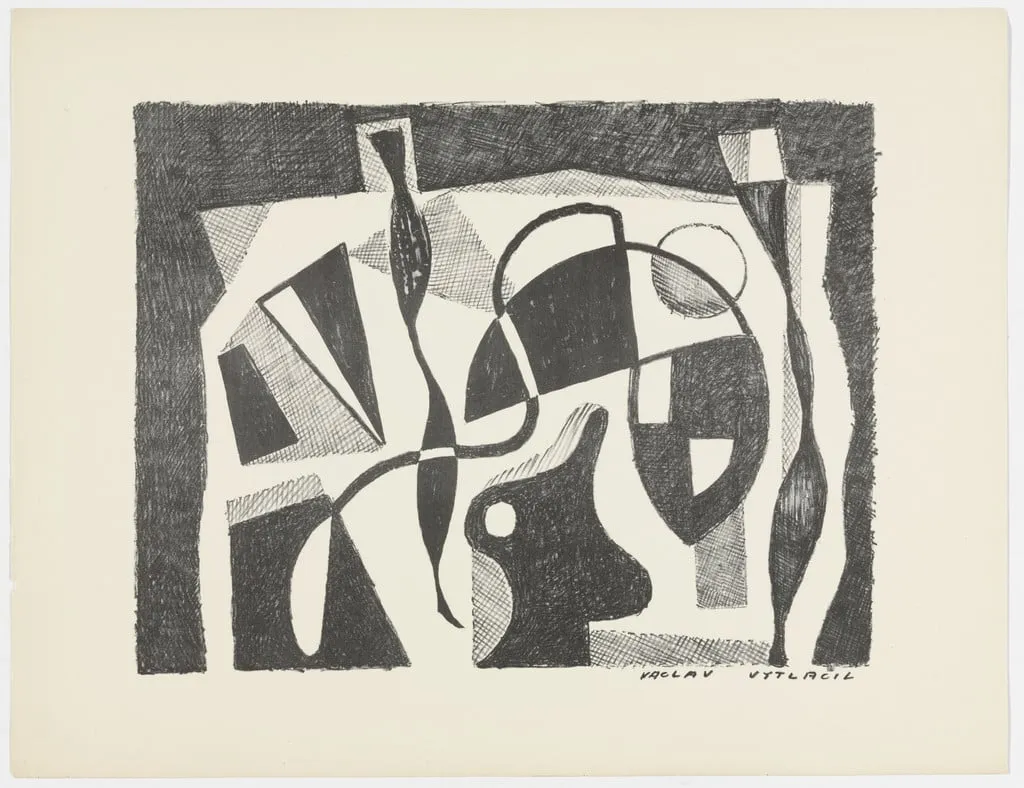
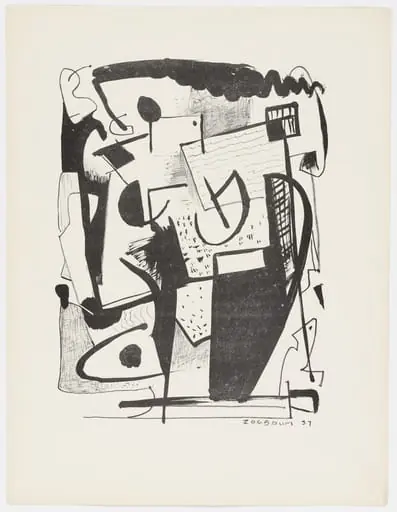
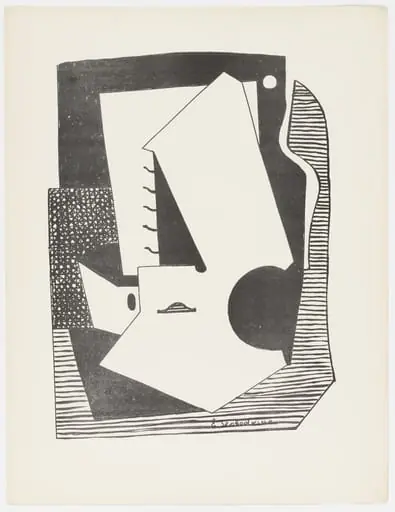
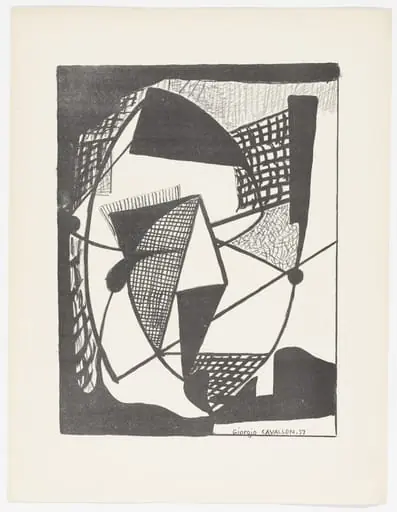
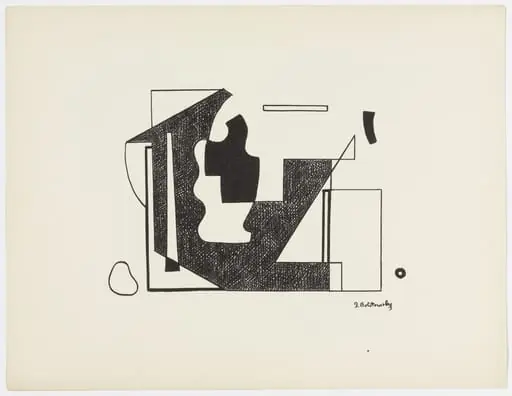
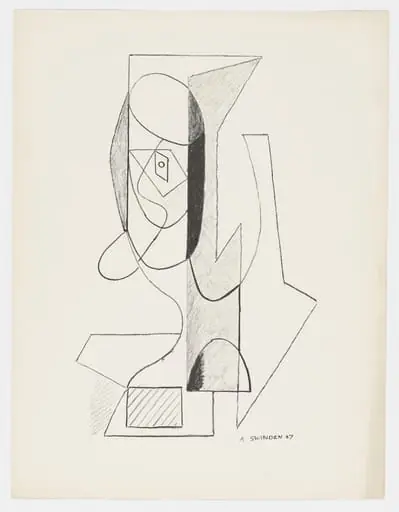
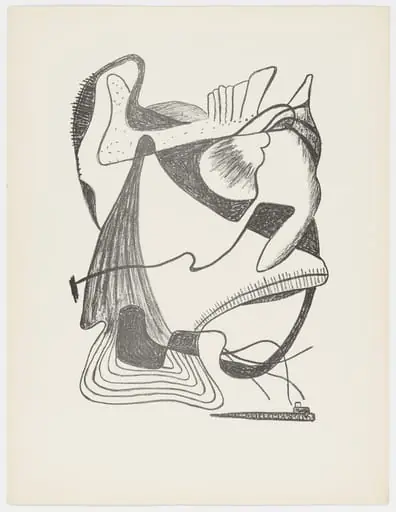
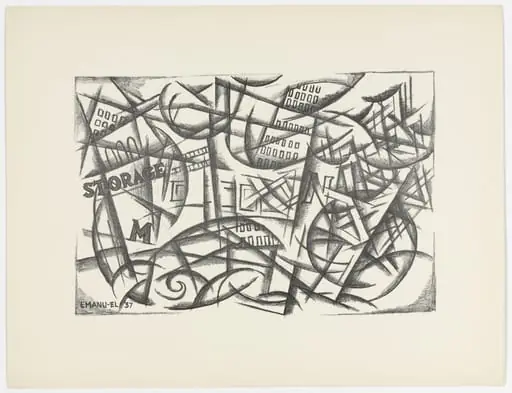
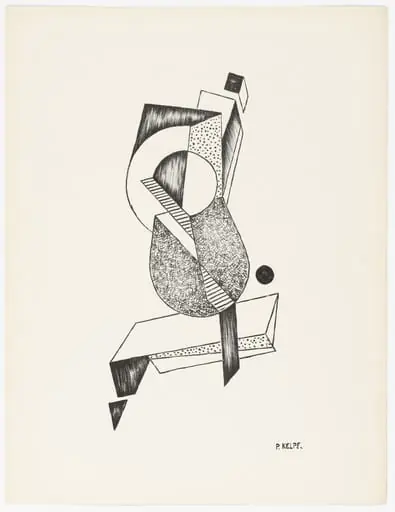
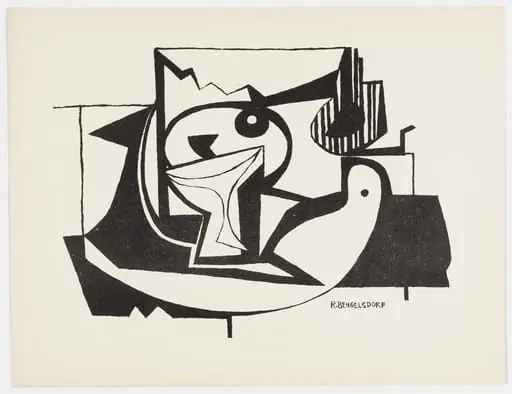
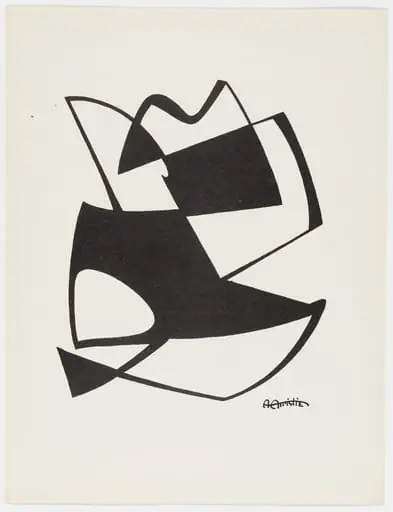
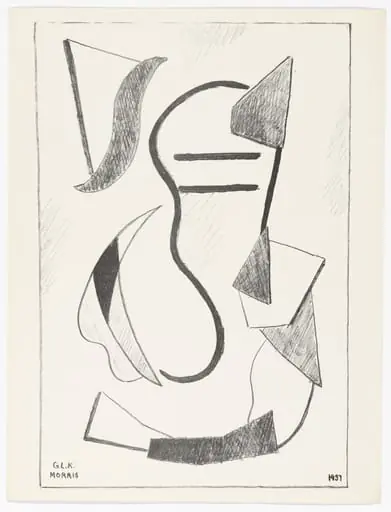
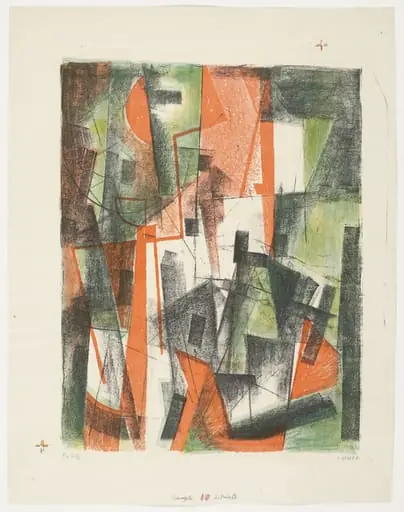
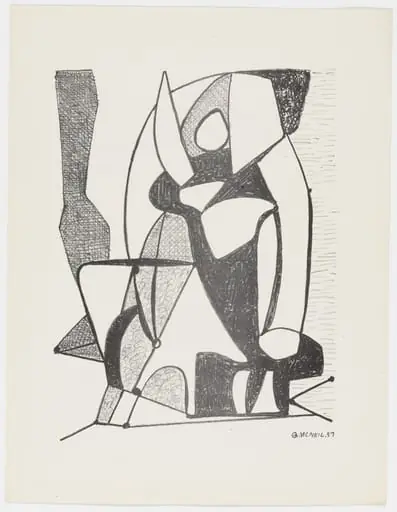
Untitled is an ink print by Vaclav Vytlacil. It dates from 1937 and is held in the collection of the Museum of Modern Art. Created in 1937, this lithograph is one of thirty-one works in a portfolio by American artist Václav Vytlacil.
About this work
Overview
Created in 1937, this lithograph is one of thirty-one works in a portfolio by American artist Václav Vytlacil. Produced during a period of intense engagement with European modernism, the piece exemplifies Vytlacil’s experimental approach to printmaking. It resides in the collection of The Museum of Modern Art, reflecting its significance within early 20th-century American graphic art.
Subject & Meaning
The absence of color and detail emphasizes form over representation, aligning with modernist tendencies to reduce subject matter to essential shapes.
The composition presents two abstract, overlapping forms—one suggesting a seated figure, the other a supporting structure like a chair or table. No narrative is explicit; instead, the work invites interpretation through spatial tension and fragmented geometry. The absence of color and detail emphasizes form over representation, aligning with modernist tendencies to reduce subject matter to essential shapes.
Technique & Style
Executed in black-and-white lithography, the image relies on sharp, angular lines and textured fills to create depth and movement. The background features a dense network of jagged strokes, evoking a structural grid or confinement. Forms are deliberately distorted and tilted, rejecting traditional perspective in favor of dynamic, non-naturalistic composition characteristic of early American modernism.
History & Provenance
Vytlacil produced this work during his formative years as a teacher and practitioner in New York, where he helped disseminate Hans Hofmann’s modernist theories. The portfolio was likely made for educational or exhibition purposes, and its inclusion in MoMA’s collection underscores its role in documenting the transition of European avant-garde ideas into American art practices of the 1930s.
Context
In the late 1930s, American artists were increasingly absorbing European modernist innovations, particularly through immigrant educators like Vytlacil. Lithography, once a commercial medium, gained new artistic credibility as a vehicle for abstraction. This work reflects a broader shift toward non-representational forms and expressive line, paralleling contemporaneous developments in Cubism and Expressionism.
Legacy
Vytlacil’s portfolio contributed to the legitimization of printmaking as a serious medium in American modernism. His emphasis on structural experimentation influenced a generation of students and artists. While not widely exhibited individually, works like this lithograph remain important references in studies of mid-century American graphic art and pedagogical innovation.
Artist & collection
Artist
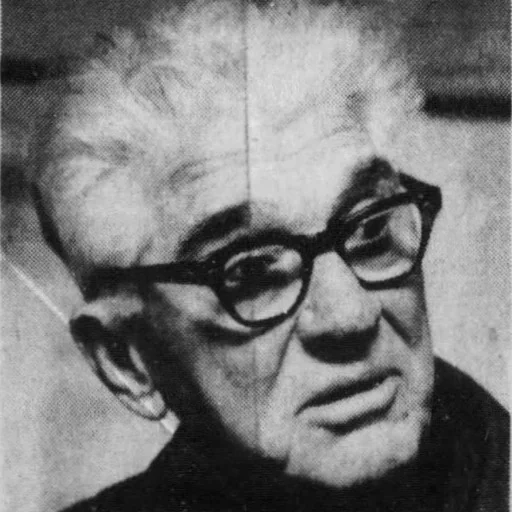
Vaclav Vytlacil (November 2, 1892 – January 5, 1984) was an American artist and art instructor. He was among the earliest and most influential advocates of Hans Hofmann's teachings in the United States.