Artwork
Erasmus (Didier Erasme)
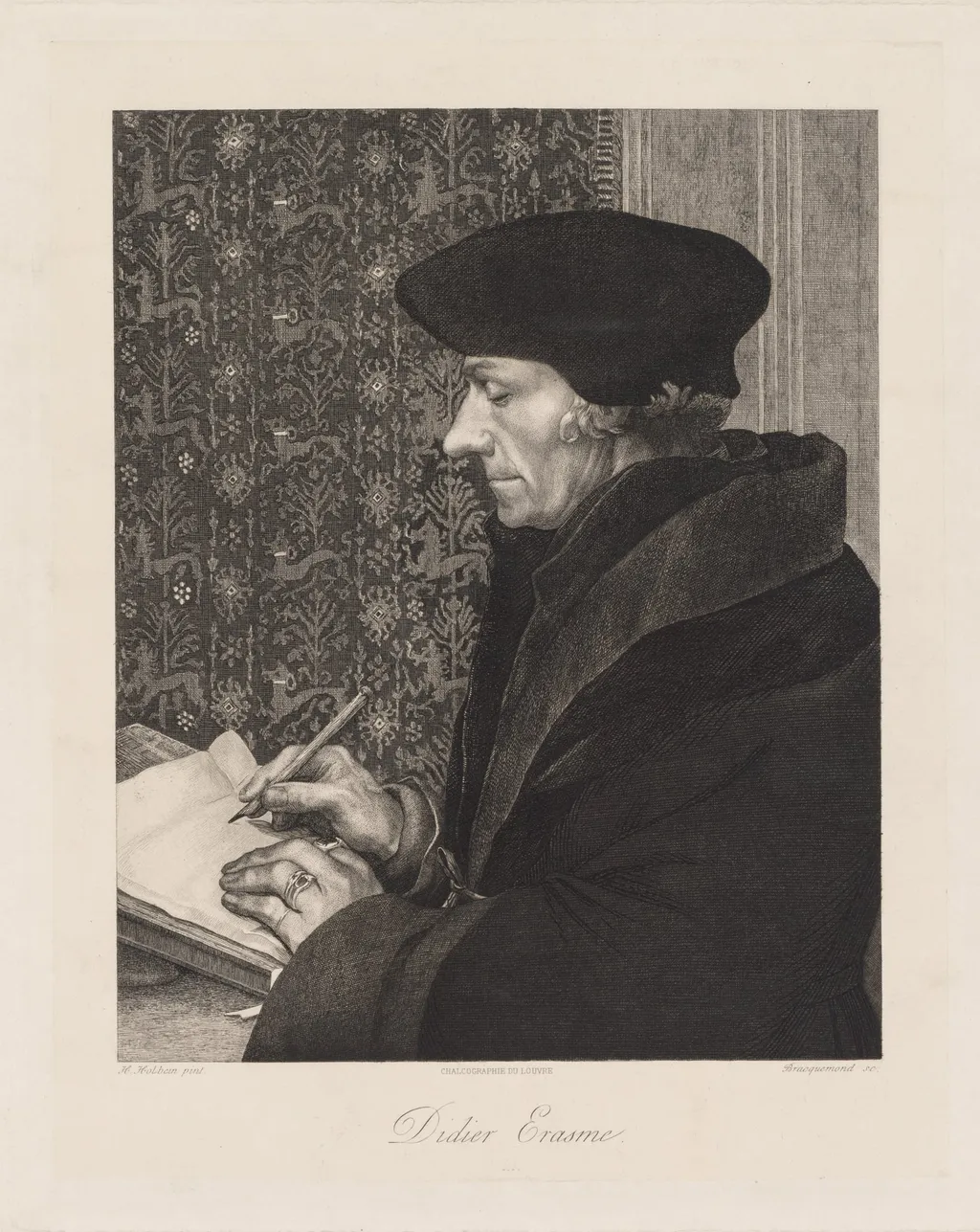
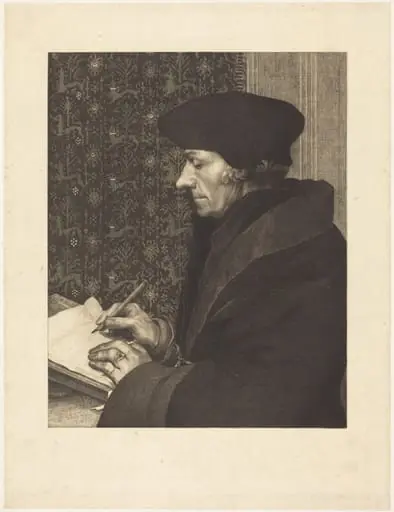
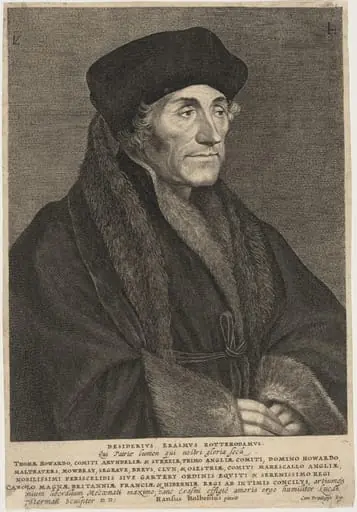
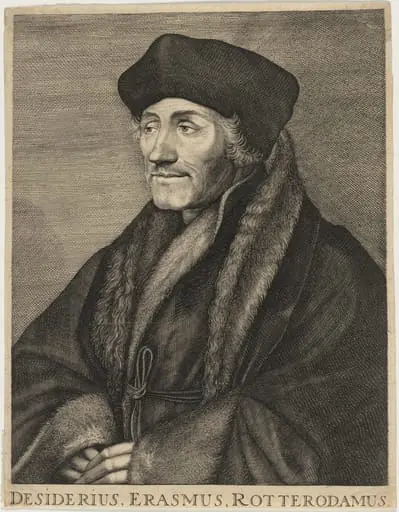
Erasmus (Didier Erasme) is a print by the Impressionist artist Hans Holbein the Younger. It is held in the collection of the Cleveland Museum of Art.
About this work
Overview
The image preserves the compositional precision and restrained tonality characteristic of Holbein’s portraiture, adapted for print media in the 19th century.
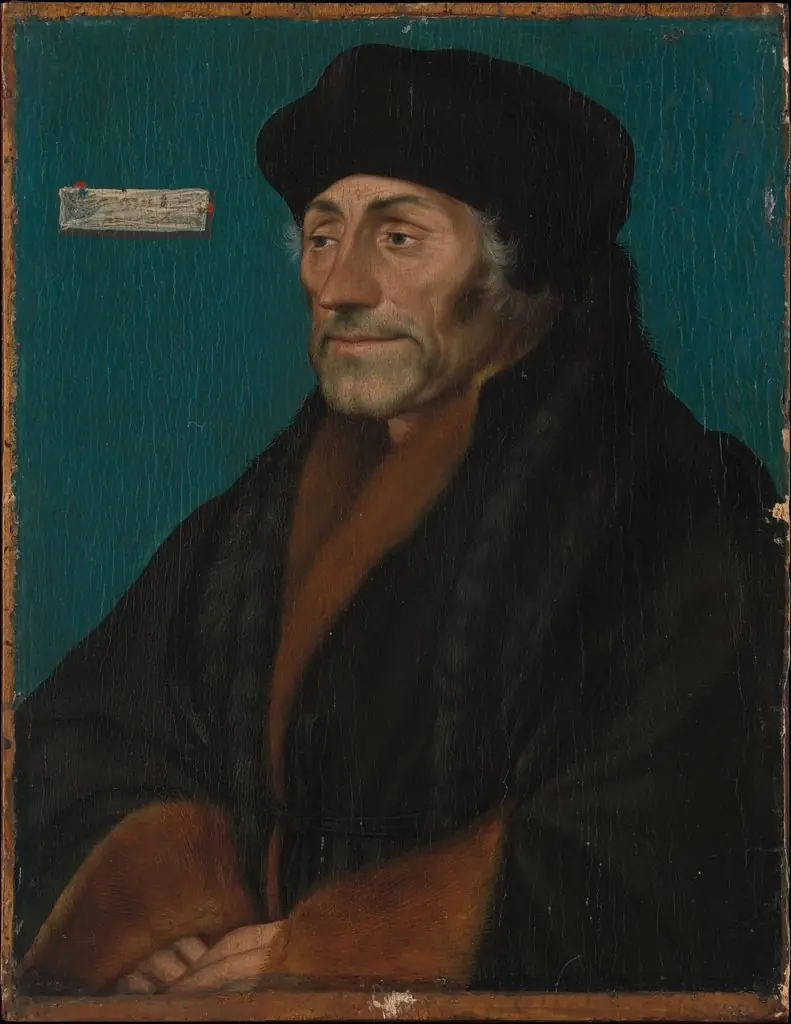
This black-and-white print depicts the humanist scholar Desiderius Erasmus, rendered in the style of Hans Holbein the Younger. Though dated 1863, it is not an original work by Holbein but a later reproductive print based on his earlier portrait. The image preserves the compositional precision and restrained tonality characteristic of Holbein’s portraiture, adapted for print media in the 19th century.
Subject & Meaning
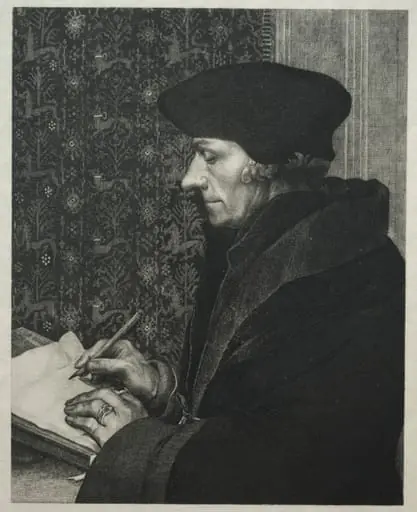
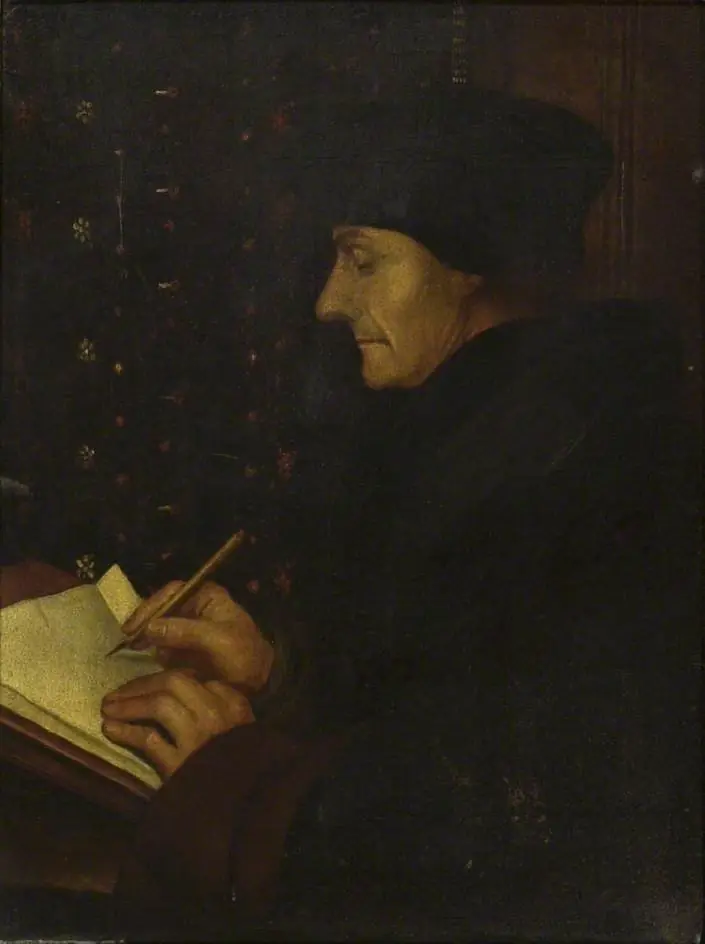
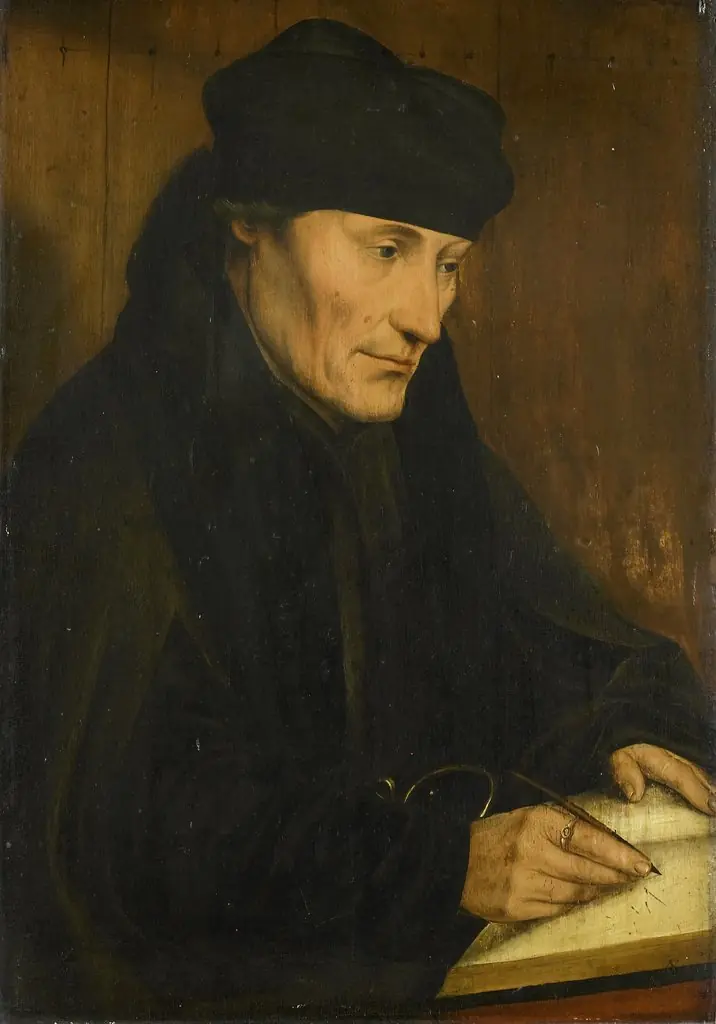
Erasmus is shown in quiet concentration, engaged in scholarly activity. His grip on the quill and the open book before him emphasize his identity as a writer and thinker. The fur-lined coat and dark hat signal his status, while the tapestry and window suggest a private, contemplative space. The scene reflects the Renaissance ideal of the intellectual at work, valuing reason and textual study.
Technique & Style
The print employs chiaroscuro to model form through subtle gradations of light and shadow, a hallmark of Northern Renaissance portraiture. Fine linework defines the texture of fabric, paper, and wood, while the window’s soft illumination draws attention to the scholar’s hands and manuscript. Though a reproduction, it retains the precision and tonal control associated with Holbein’s original.
History & Provenance
The original portrait by Holbein was painted around 1523 and became widely circulated through engravings. This 1863 print is a later reinterpretation, likely made to meet 19th-century demand for images of historical intellectuals. The signature 'Didier Erasme' reflects a French rendering of his name, indicating the print’s likely production in a Francophone context.
Context
In the 16th century, Holbein’s portraits of humanists like Erasmus helped shape the visual identity of the intellectual class. By the 19th century, such images were reprinted to honor Enlightenment values and the legacy of early modern scholarship. This print belongs to a broader trend of reviving Renaissance figures as cultural icons during the age of print expansion.
Legacy
Though not an original Holbein, this print preserves the enduring visual language of Erasmus’s persona. It demonstrates how Renaissance portraiture continued to influence 19th-century perceptions of scholarship and authority. The image remains a touchstone for the representation of the thinker in quiet, disciplined action.
Artist & collection
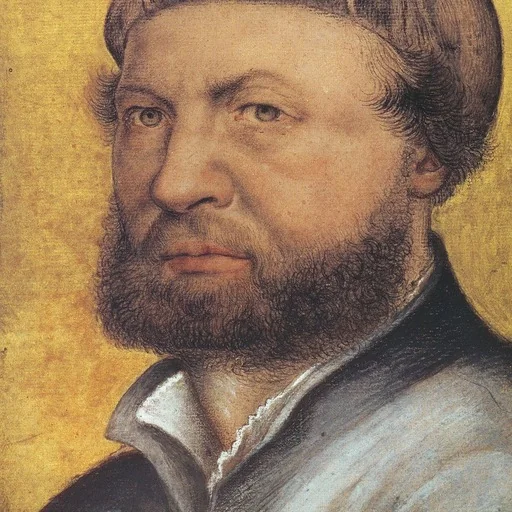
Artist
Hans Holbein the Younger (UK: HOL-byne, US: HOHL-byne, HAWL-; German: Hans Holbein der Jüngere; c.